When Parents Become Project Managers – and Why Children Shouldn’t Need One
Many parents describe everyday life as a constant mental puzzle: remembering schedules, giving reminders, staying one step ahead, and anticipating emotional reactions. For parents of children with ADHD or autism, this is often even more pronounced. But what actually happens when a parent unintentionally becomes the project manager of a child’s entire day – and how can we step out of that role without losing structure?

The invisible workload parents carry
In many families, it’s not the tasks themselves that are exhausting – it’s the responsibility of holding everything together.
Remembering gym days.
Reminding about brushing teeth.
Managing every transition.
This is often called mental load – the invisible planning that runs constantly in the background. For parents of children with neurodivergent needs, this load is often heavier, as children may need extra support to start, finish, or shift between activities.
The challenge?
When the parent always carries the structure, the child never gets the chance to truly own it.
When help turns into an obstacle
Most parents help out of care and love.
But too much verbal guidance can sometimes have the opposite effect:
- The child waits for instructions instead of taking initiative
- Independence decreases despite good intentions
- Relationships become defined by reminders rather than cooperation
For children with ADHD or autism, spoken reminders can also increase stress. Words disappear quickly, the feeling of “falling behind” grows – and conflicts arise that no one really wants.
Structure that doesn’t live in the parent’s voice
A key shift happens when structure is moved out of the parent and becomes something neutral and visible.
When a child:
- can see what needs to be done
- knows when it happens
- understands what comes next
…the need for constant adult prompting decreases.
This is where visual routines, clear steps, and predictability make a real difference – not as control, but as relief.
From supervisor to teammate
When structure no longer lives in your voice, something important changes:
- You no longer have to “nag”
- The child gets space to succeed independently
- Conversations shift from why it didn’t happen to how it went
Many parents describe this as moving from being a project manager to becoming a coach.
For the child, it often brings a new sense of competence and confidence.
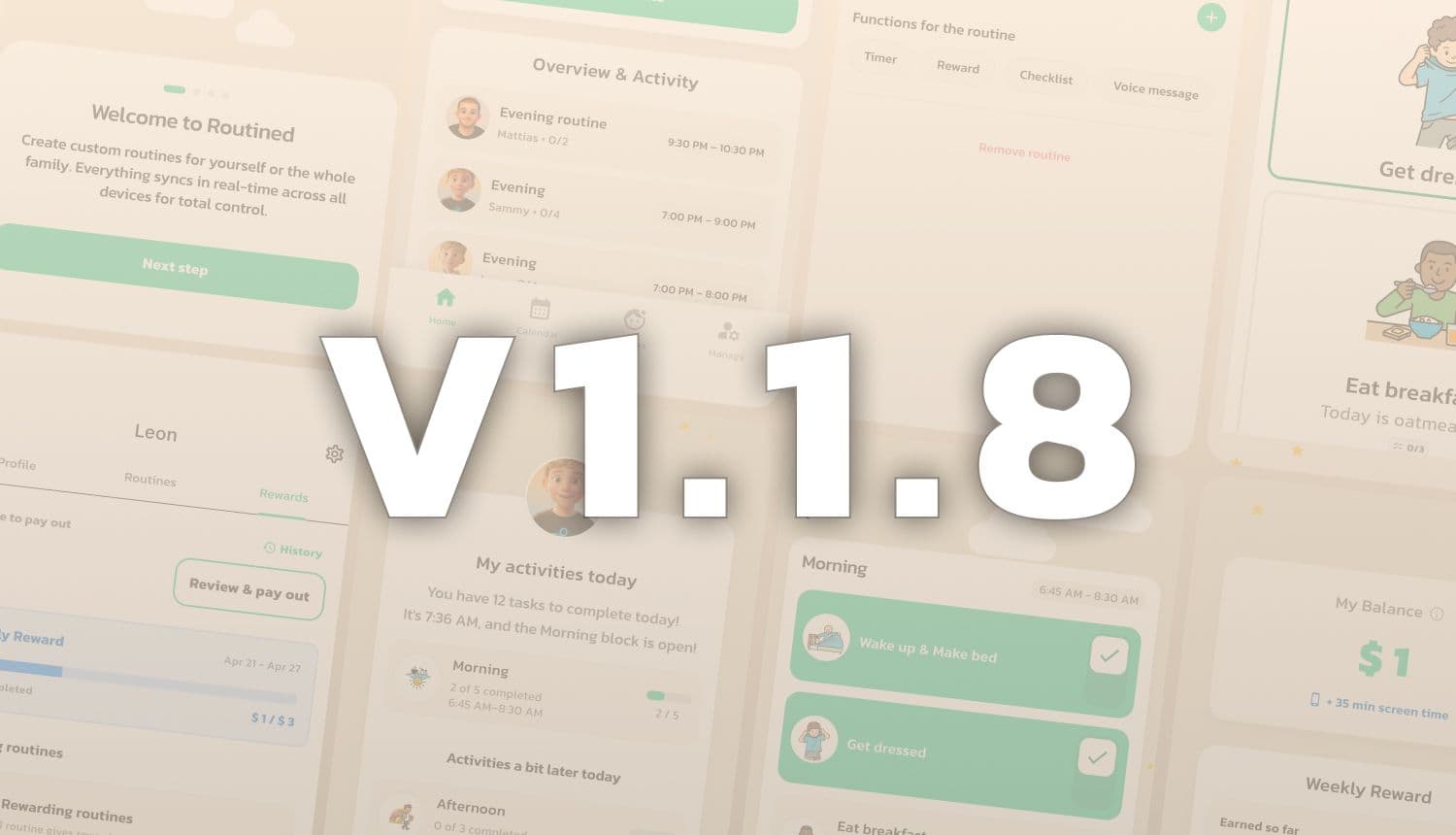
Digital tools like Routined are designed with this exact goal:
to make routines, visual supports, and checklists something the child can relate to independently – at their own pace, without emotional pressure.
Small steps, big impact
Stepping out of the project manager role doesn’t happen overnight. But you can start small:
- Choose one routine where the child gets more responsibility
- Make the steps clear and visual
- Allow time – perfection isn’t the goal
Every time a child succeeds without a reminder, something important grows. Not just the routine – but self-esteem.
Closing thoughts
Structure isn’t about controlling everyday life. It’s about making it understandable. When children receive the right support, in the right form, both they and their parents can breathe a little easier. Less mental load for you – more independence for your child. And that’s often where real change begins.