The whole day in a clear calendar
Add specific events in addition to daily routines — dental appointments, parties, homework quizzes, training sessions. With reminders and sharing between parents.
Predictability is key for many children with neurodevelopmental disorders. When the entire calendar is visible, anxiety about unexpected things decreases.
How the calendar works
A complement to daily routines — for specific occasions that do not recur every week.
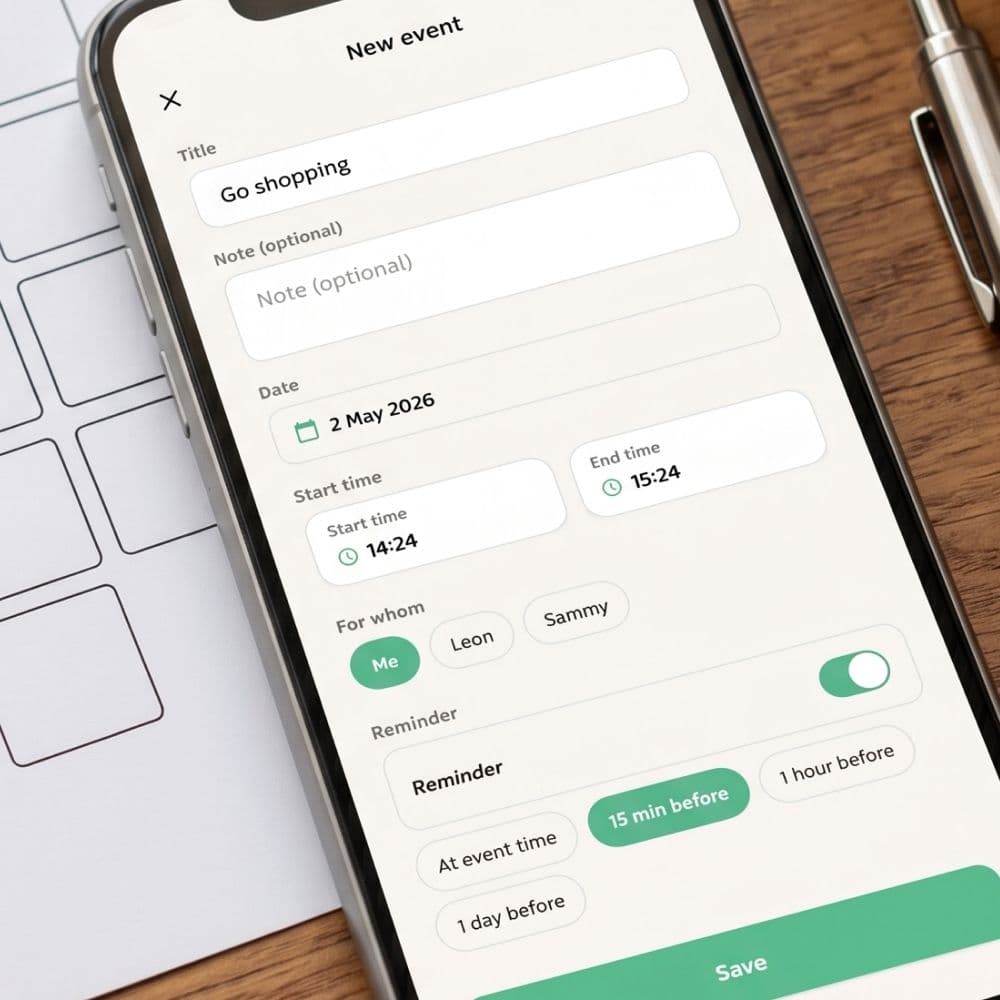
Specific occasions, day by day
Dentist appointments, parties, homework quizzes, doctor's visits. You set the date and time, add a title and an optional description. Recurring activities (training every Thursday) are handled via regular routine groups instead.
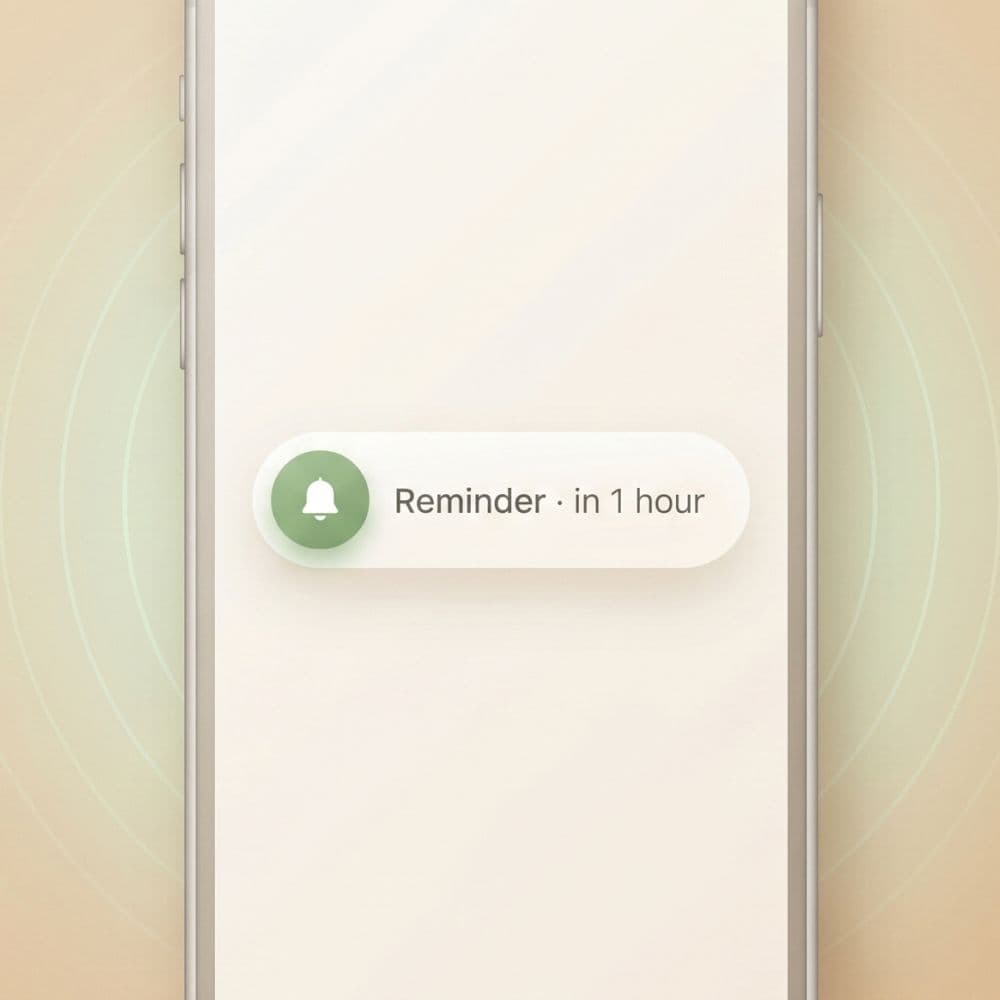
Get a reminder in good time
Activate reminders per event and choose how many minutes before you want to be notified. Good for calmly preparing the child for moments that may be anxious.
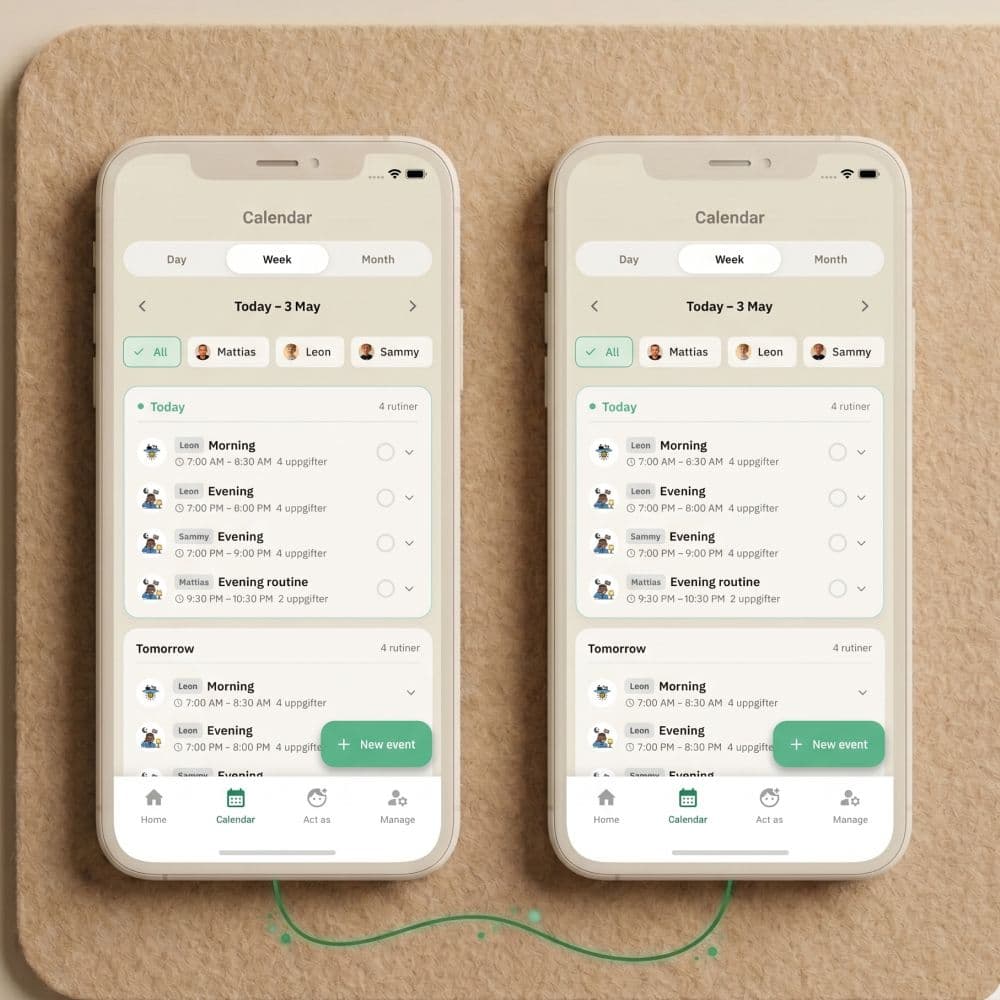
Both see the same calendar
When the partner is invited to the family account, you see the same calendar. One adds — the other sees directly. No one needs to double-note things in two apps.
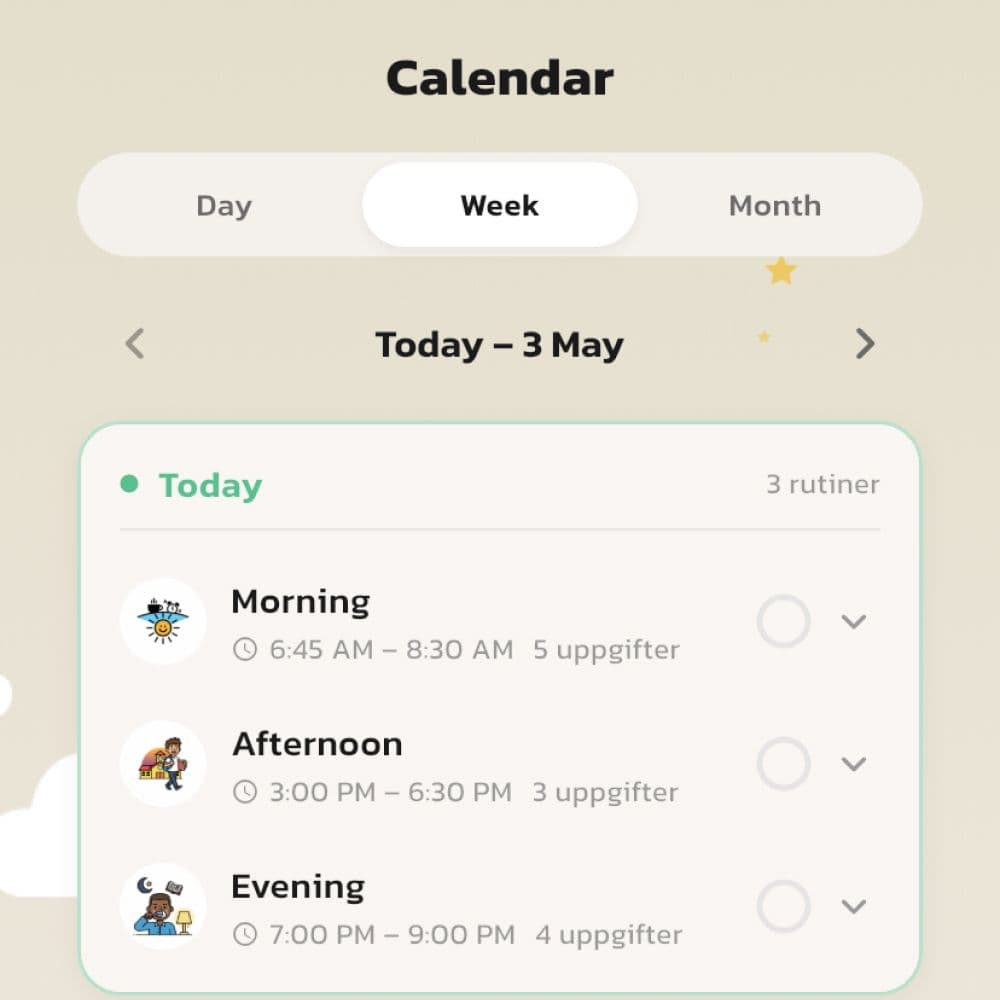
Upcoming events in the child's view
Mark an event as visible to the child and it will appear in the child's view next to the regular routines. Other events (adult meetings, care matters) you can keep to yourself.
The difference between a routine and an event
Routines are things that happen regularly — every morning, every evening, every Thursday. Recurring activities such as training or after-school care are built as routines with a weekday schedule, not as calendar events.
Events in Routined's calendar are specific one-time occasions — the dental appointment at 2:30 PM next Wednesday, the party on Saturday, the homework quiz on Friday. These are things that do not repeat in the same form and need to be visible on the correct date.
Why the calendar is important for NDD
Predictability reduces anxiety
For many children with autism, unexpected events are the primary source of stress. When the child can see "the dentist is on Wednesday, not today" much of the anxiety that would otherwise build up disappears.
Transitions become manageable
"We're going to the dentist in an hour" lands differently depending on whether the child has seen the event in the calendar during the day, or if it comes as a surprise. The reminder function helps you to distribute the information at the right pace.
The child can prepare themselves
Older children (8+) can start checking their own calendar in the morning — what's happening today, what do I need to pack. It's a first step towards independent planning.
Tips for using the calendar smartly
- Enter anxiety-inducing points (dentist, doctor's visits) in good time, so the child has time to mentally prepare over several days.
- Use a reminder 1 day before for major events, and 30–60 min before for minor ones. Adapt per child.
- Discuss the upcoming week together one evening — go through the calendar. It becomes a calm routine in itself.
- Keep certain events hidden from the child if the information would create unnecessary anxiety (adult matters, sensitive meetings).
Limitations to be aware of
- The calendar only supports one-time events. Recurring activities (every Thursday, every other week) are handled via regular routines with a weekday schedule.
- Events have a title and description as text — you cannot upload your own images per event at the moment.
- There is no synchronization with Google Calendar, iCal or other external calendar services at the moment. Everything stays within Routined.
Calendar for ADHD and autism
For children with ADHD, the calendar is an external memory — what they would otherwise forget or be surprised by becomes visible. For children with autism, it is a tool for predictability — what is going to happen appears well in advance, not suddenly.
Frequently asked questions
Ready to simplify everyday life?
Download Routined today and start the journey towards a calmer everyday life with your family.


* 14-day free trial included for new users.