How is your child really doing?
Mood tracking lets your child quickly show how they feel — five visual levels, one tap. As a parent, you see patterns over time in the statistics view.
It becomes a tool for conversation — not an interrogation. And often you discover things you would otherwise have missed.
How Mood Tracking Works
Designed to be so lightweight that it actually gets done — every day, or just sometimes.
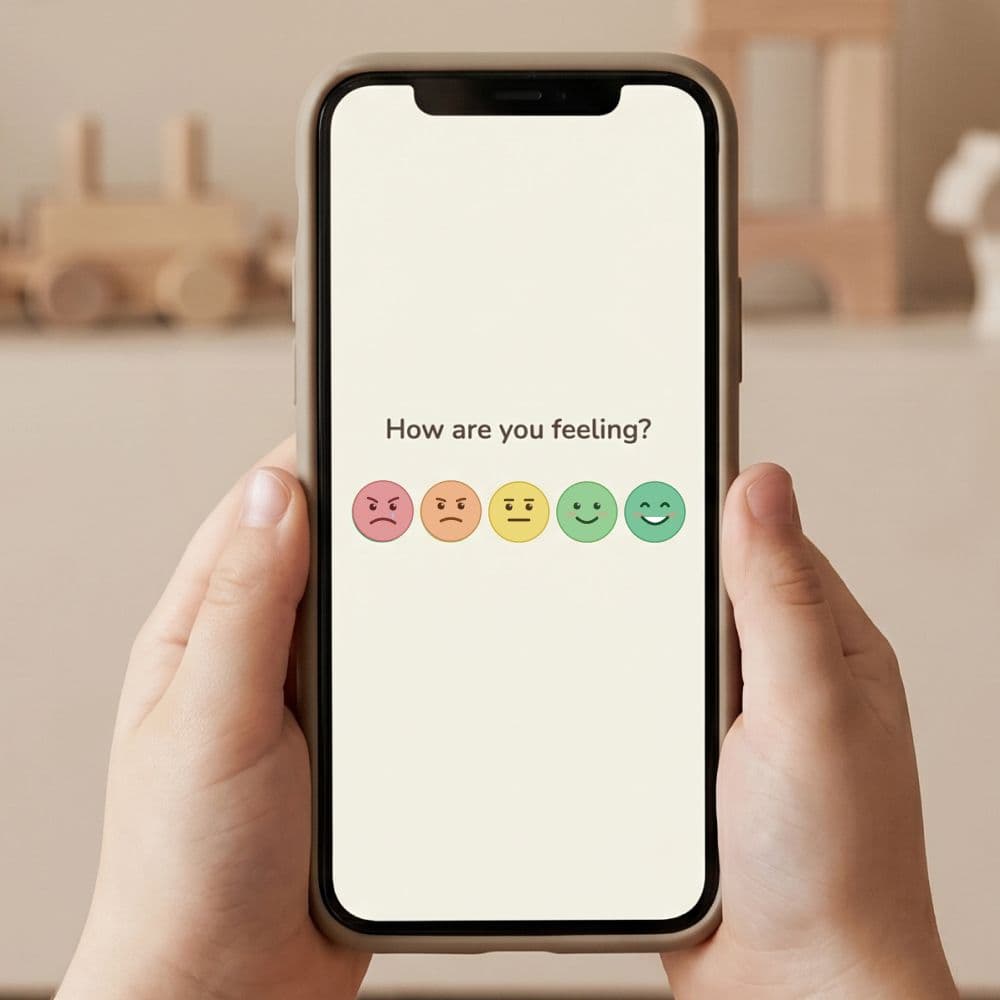
Visual Mood Icons
Five levels from happy to sad, presented as clear icons. The child taps one — nothing more. No words to write, no scales to interpret.
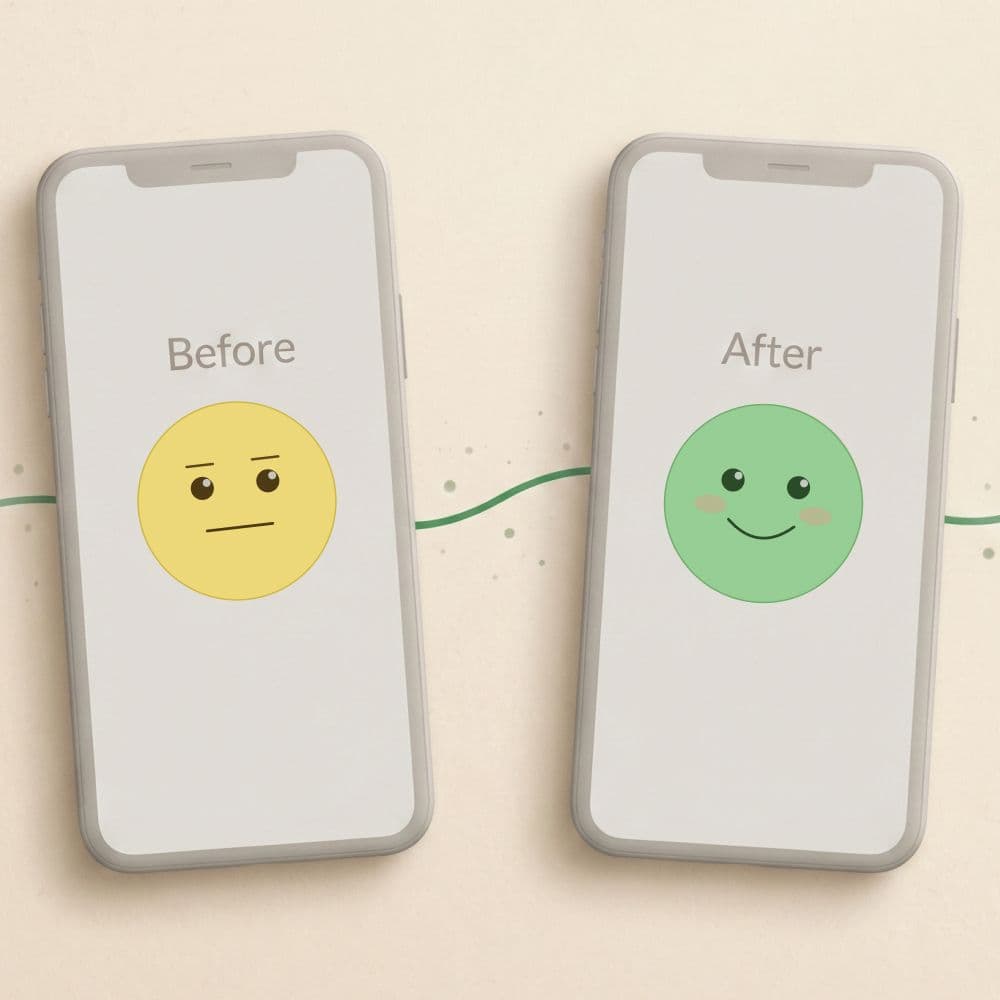
Activate Separately Per Routine
You choose per routine whether mood tracking should be done before, after, or both. It captures both the initial state and how the routine itself has affected the child.
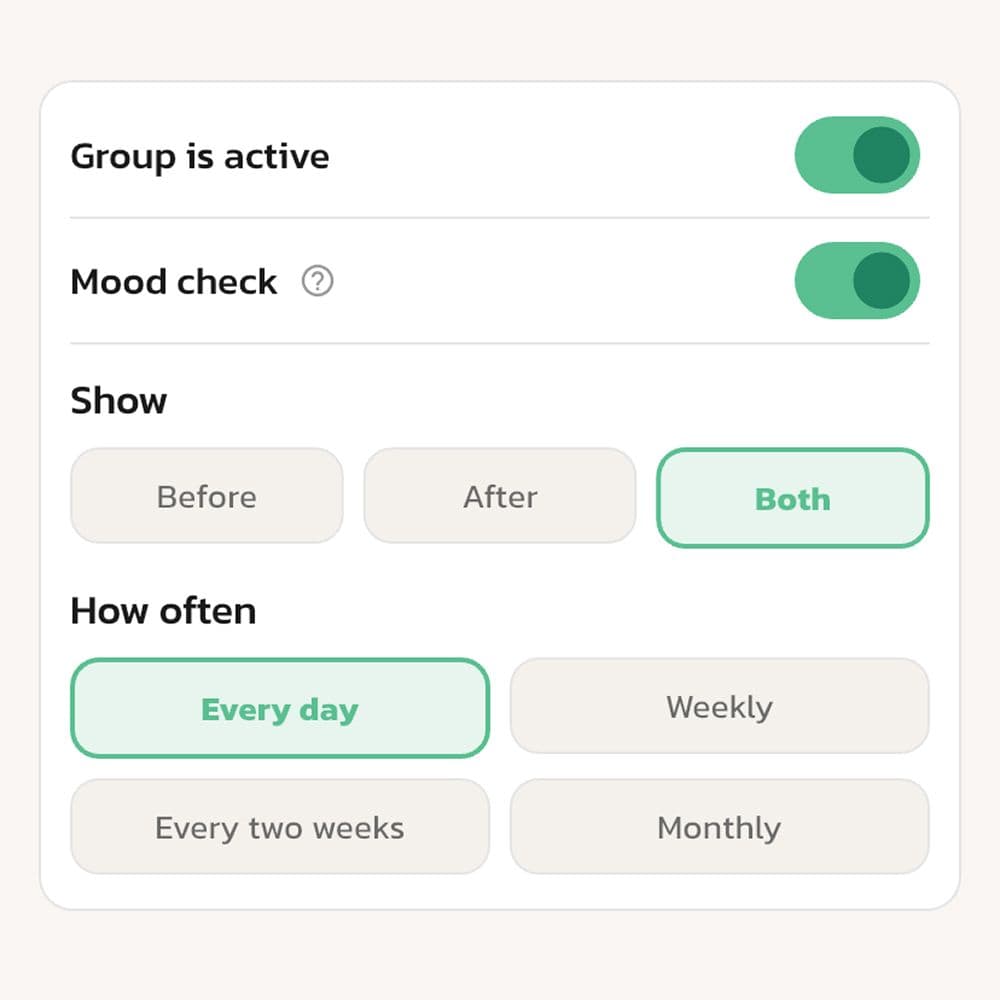
Daily, Weekly, or Less Often
Set how often mood tracking should be shown — every time the routine runs, once a week, every other week, or monthly. Good if daily becomes too much.
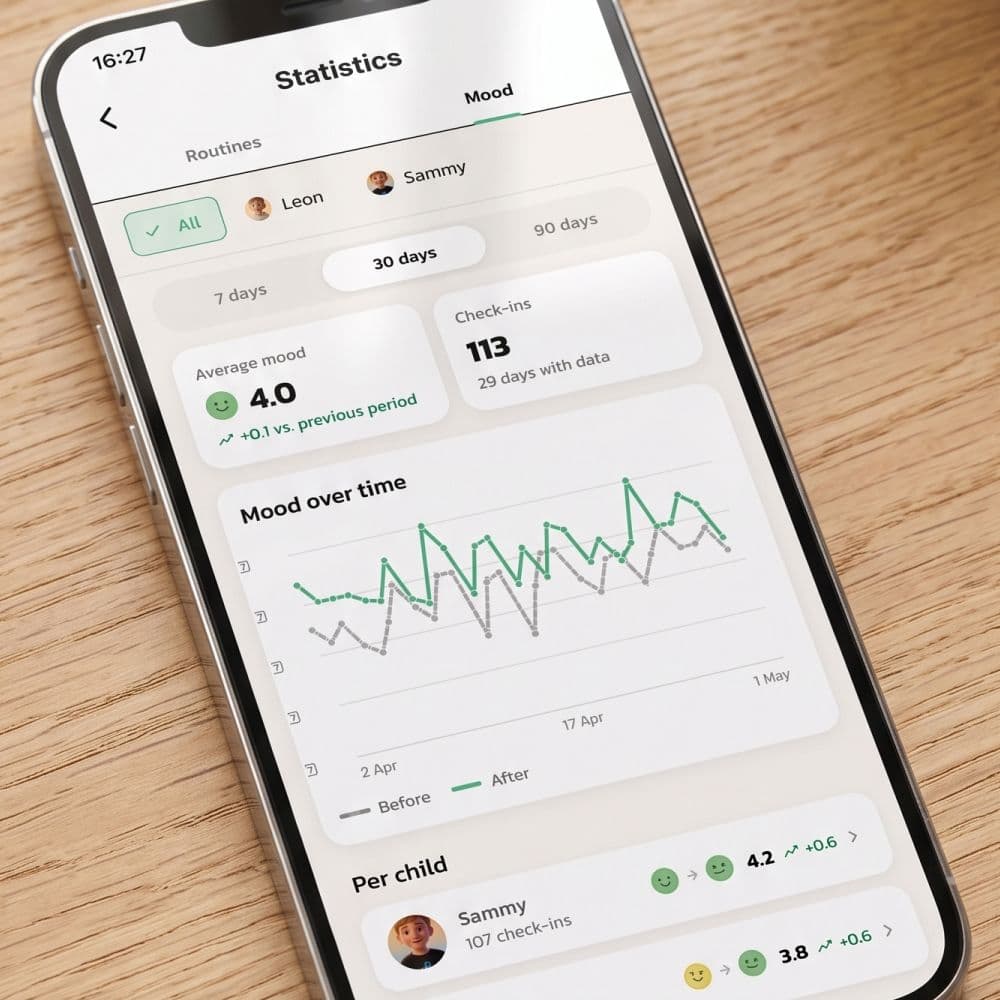
Patterns Over Time in Statistics
Everything is saved per child and per routine. In the statistics view, you see trends — whether the evening is always difficult, or if the morning has improved in the last month. The data stays in the app.

Not an Interrogation
Use the registration as an entry point for conversation: "I saw you were sad after bedtime yesterday — do you want to talk about it?" Never as scrutiny or judgment over the child.
Why Mood Tracking Is Valuable
Many children answer "fine" to the question "how was it?" regardless of how it actually was. It's not a lie — it's that the question is too broad. A simple button with five options is something entirely different: the child doesn't need to explain, just point. And you get data you otherwise never would have gotten.
Before, After, or Both — What Should You Choose?
Before the Routine
Good for seeing how the child enters an activity. Is the morning already difficult before we've even started? That says something about the night before, sleep, or something else — and has nothing to do with the morning routine itself.
After the Routine
Good for seeing what the routine left the child with. If the evening routine always ends with "sad" — then something in the sequence isn't working. That's data worth listening to.
Both
Most valuable — the difference between before and after shows whether the routine actually helped or hindered. A morning that starts "so-so" and ends "happy" is a good morning. A morning that starts "happy" and ends "sad" is a signal.
How Often Should You Do Mood Tracking?
Routined has built-in intervals — every routine run, weekly, every other week, or monthly. We recommend starting weekly. Daily often becomes too much for both the child (registration becomes routine) and for you (the data becomes noisy).
Weekly provides a good overview without feeling intrusive. Once you've seen a pattern you want to investigate further, you can temporarily switch to daily for a period.
What You Do With the Data
Mood tracking is a conversation tool, not a diagnosis. When you see a pattern — tell your child. "I've noticed that evenings have been a bit difficult this week. Is there anything bothering you?" Or simply: "How wonderful that mornings have gone so well lately."
Also use it to evaluate the routine's design: if the "after" feeling is systematically worse than the "before" feeling for a specific routine, try changing something — the order, length, reward, or simply what time of day the routine takes place.
Mood Tracking for ADHD and Autism
Many children with NDD have difficulty naming emotions — alexithymia is common, especially with autism. A visual scale with five levels completely bypasses the language requirement. The child doesn't need to say "I'm frustrated" — just point to the slightly grayer icon.
For children with ADHD who often change moods quickly, patterns over time become more valuable than individual registrations. It's not "sad yesterday" that's interesting — it's "sad three Fridays in a row after school."
Tips for Sensitive Children
- Explain that it's not a test. There's no right or wrong.
- Show that it's voluntary. Some days the child doesn't want to record — that's OK.
- Never talk about the data in a way that feels like scrutiny. It's your tool, not a report card.
Frequently Asked Questions
Ready to Simplify Everyday Life?
Download Routined today and start the journey towards a calmer everyday life with your family.


* 14-day free trial included for new users.