See what actually happens in everyday life
Completion per routine, mood trends over time, and history filtered by child — the overview you would otherwise have to keep in your head.
Not a scrutiny tool for the child. A basis for you as a parent to improve routines based on data — not guesswork.
What the statistics show
Everything is built automatically — every time the child uses a routine, data is saved without you having to do anything.
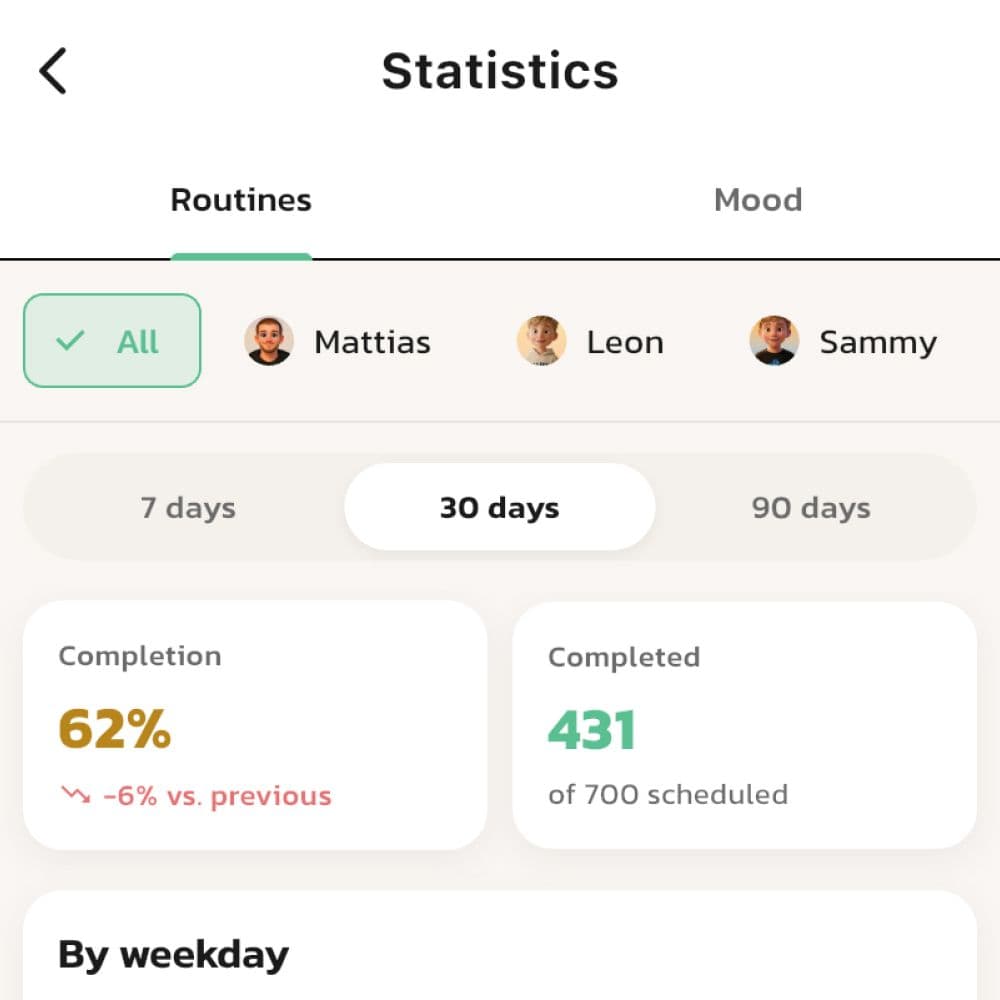
Filter by individual child
Select a child in the statistics view and see all data filtered. When you have multiple children, you see each one's development separately — without mixing up siblings or falling into the trap of comparing them.
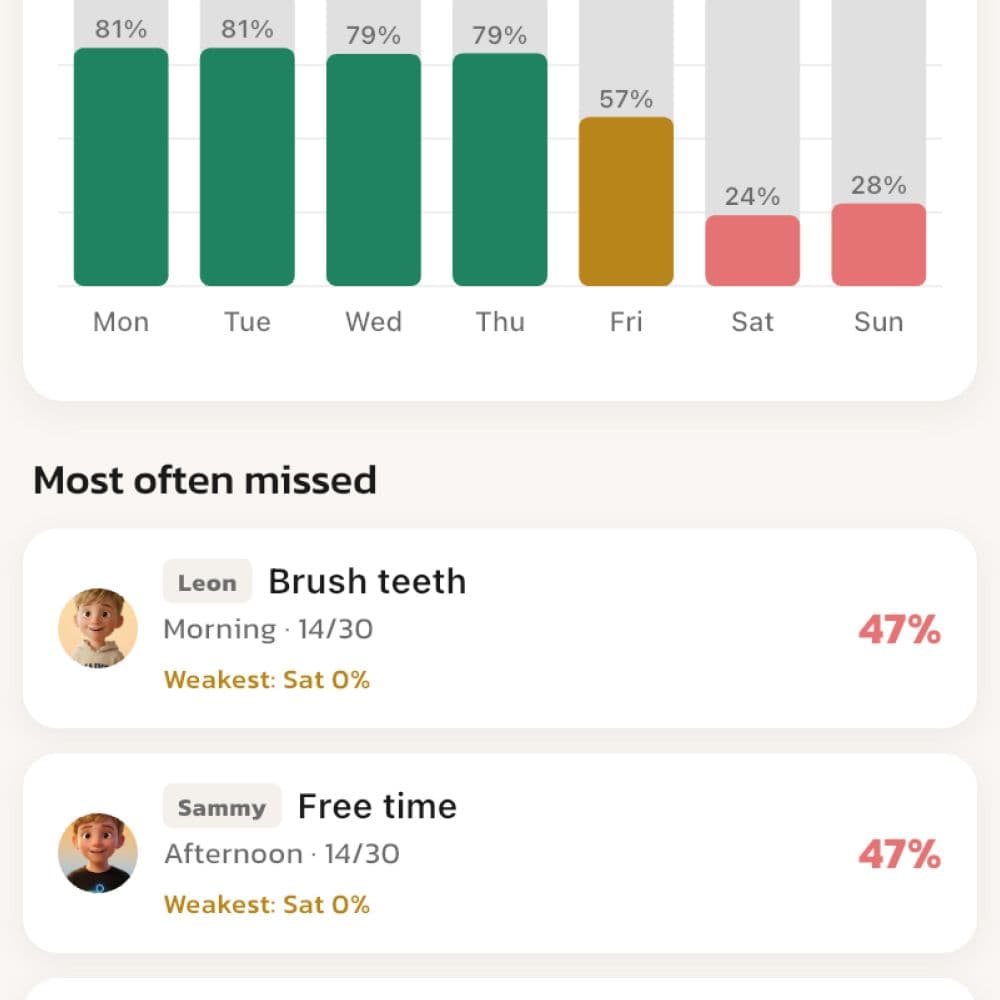
Which routines work well and which don't
Completion per routine is clearly displayed. You see if the morning routine is completed 90% of the days or only 50% — and get a concrete basis for adjusting if something needs to be changed.
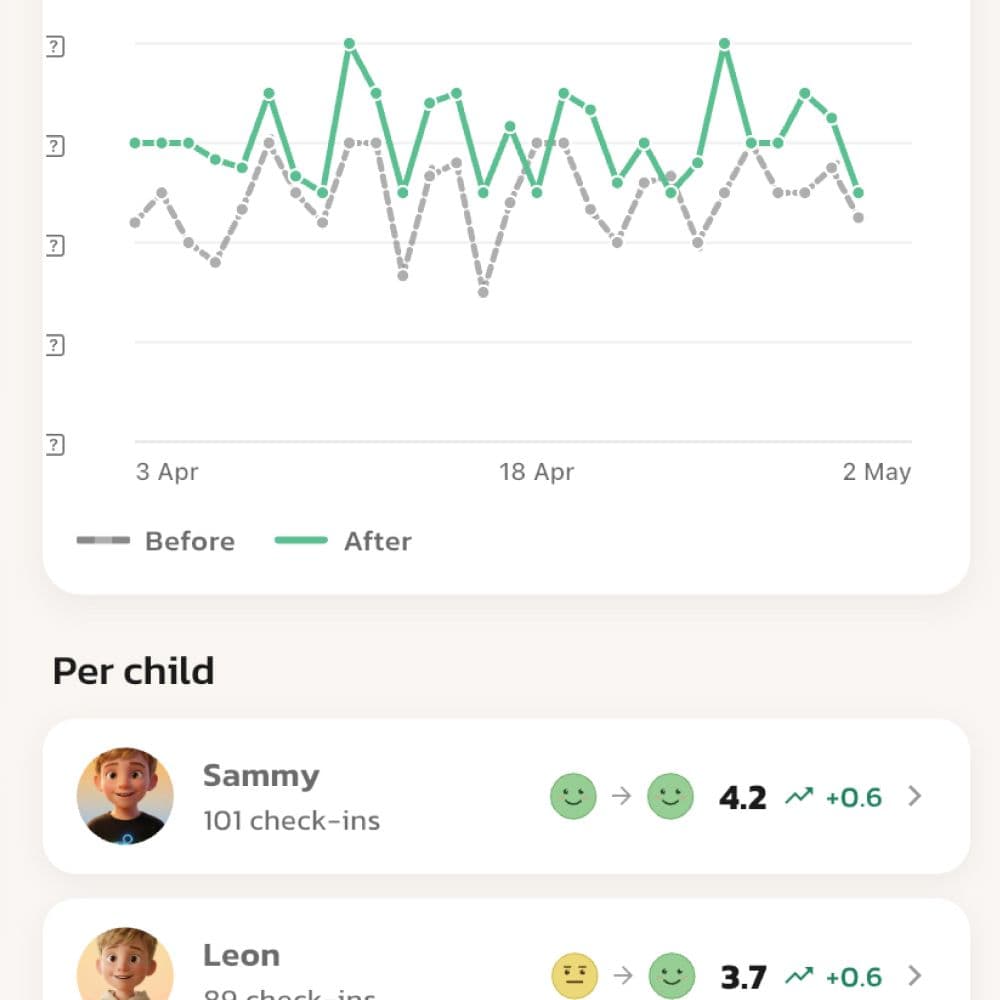
Separate tab for mood check
Mood registrations are shown in a separate tab with trends over time. The connection between routines and well-being becomes visible — something you often miss in the everyday hustle.
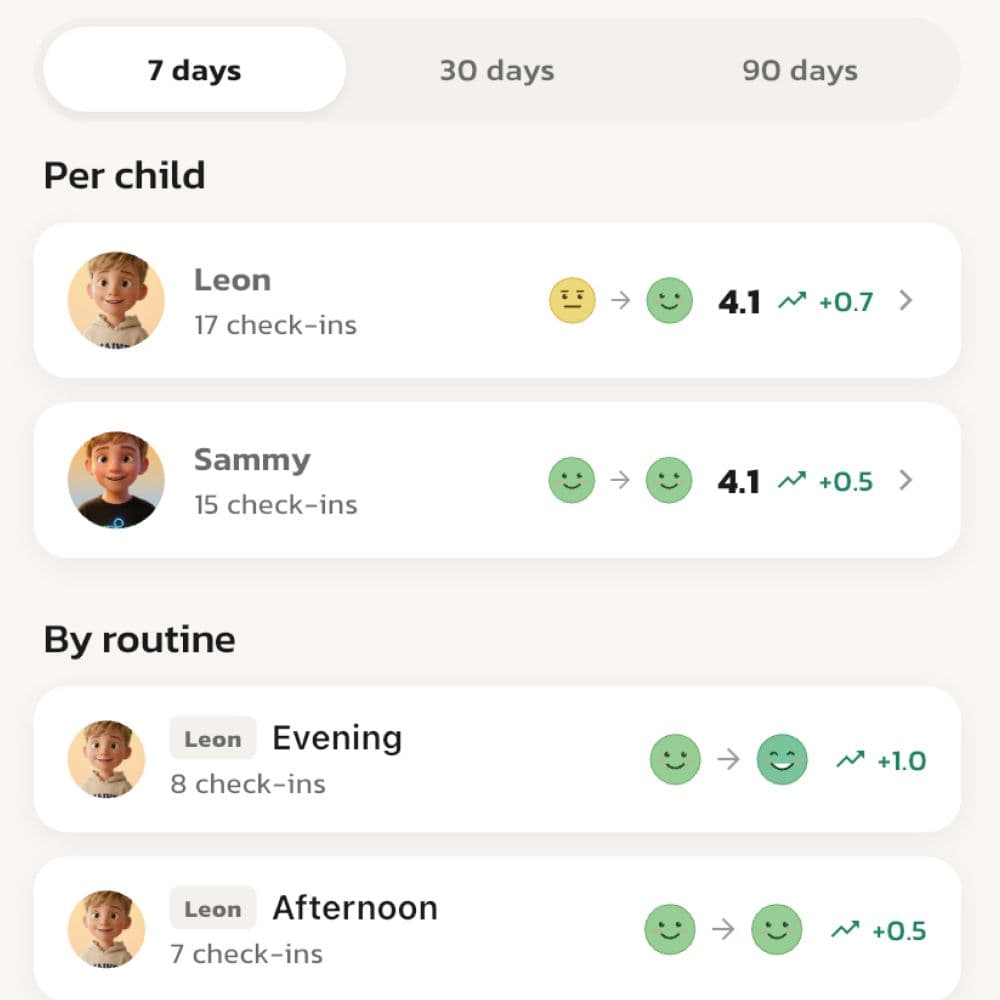
Last week and further back
The standard view shows the last seven days. If you need to go further back, you can load more history — all data is saved in your family account without a time limit.
Why statistics — without being a monitor
It's easy to fall into a supervisory role: check the app, point out what the child missed, create friction. That's not the point. The statistics are there for you — to see what works and what doesn't, and to be able to improve routines based on real patterns rather than guesswork.
It's much like how a good manager uses data: not to expose employees, but to see where the process needs improvement.
What you actually see
Completion per routine
How often is the entire routine completed? 90% is good. 50% suggests that the routine is too long or too difficult. 100% might mean it's too easy — maybe it's time to raise the bar?
Mood trends over time
If mood check is activated — see how the child's mood develops over time. Patterns like "always worse on Fridays" or "improvement last month" are valuable insights you would otherwise have missed.
History per day
The standard view shows the last seven days. You can load more history if you want to look further back — e.g., before a doctor's visit or to evaluate a new routine over a longer period.
How to avoid the trap
- Do not discuss statistics directly with the child in the form of "you only did the evening routine 3 out of 7 days" — that's an accusatory way to bring up the data. Use it to change the routine, not to scold.
- Do not compare siblings. The fact that two children have different statistics means nothing — children are different and have different starting points.
- Do not set goals based on numbers. "We will complete the morning routine 100% this week" turns the app into a competition tool, not an everyday tool.
When statistics show the routine isn't working
Change. Not the child, but the routine. That's the whole point — the tool adapts to life, not the other way around. If 50% completed morning routines is a sign that the morning is too tight, too many steps, or too early times — then it's time to adjust the design, not pressure the child.
For doctor's visits or habilitation
Statistics can be valuable to show during visits to child psychiatry (BUP), habilitation, or doctors. Patterns over several weeks — mood trends, which routines work, which don't — often provide a better basis for discussion than what you remember offhand.
Limitations to be aware of
- Data cannot currently be exported to external files (CSV, PDF) — you read it in the app. If you want to show something during a doctor's visit, you'll need to show the screen directly or take a screenshot.
- Statistics are visible to both parents in the family account — it's shared data, not private per parent.
- The child does not currently see their own statistics — they are in the parent's view.
Frequently asked questions
Ready to simplify everyday life?
Download Routined today and start the journey towards a calmer everyday life with your family.


* 14-day free trial included for new users.