Air out
Opening the window feels harmless to an adult. For a child who just settled into the room, it's a sudden sensory flip, cold, breezy, and suddenly the traffic is audible. The visual support below gives the warning that words alone don't carry.
 ♂
♂Air out
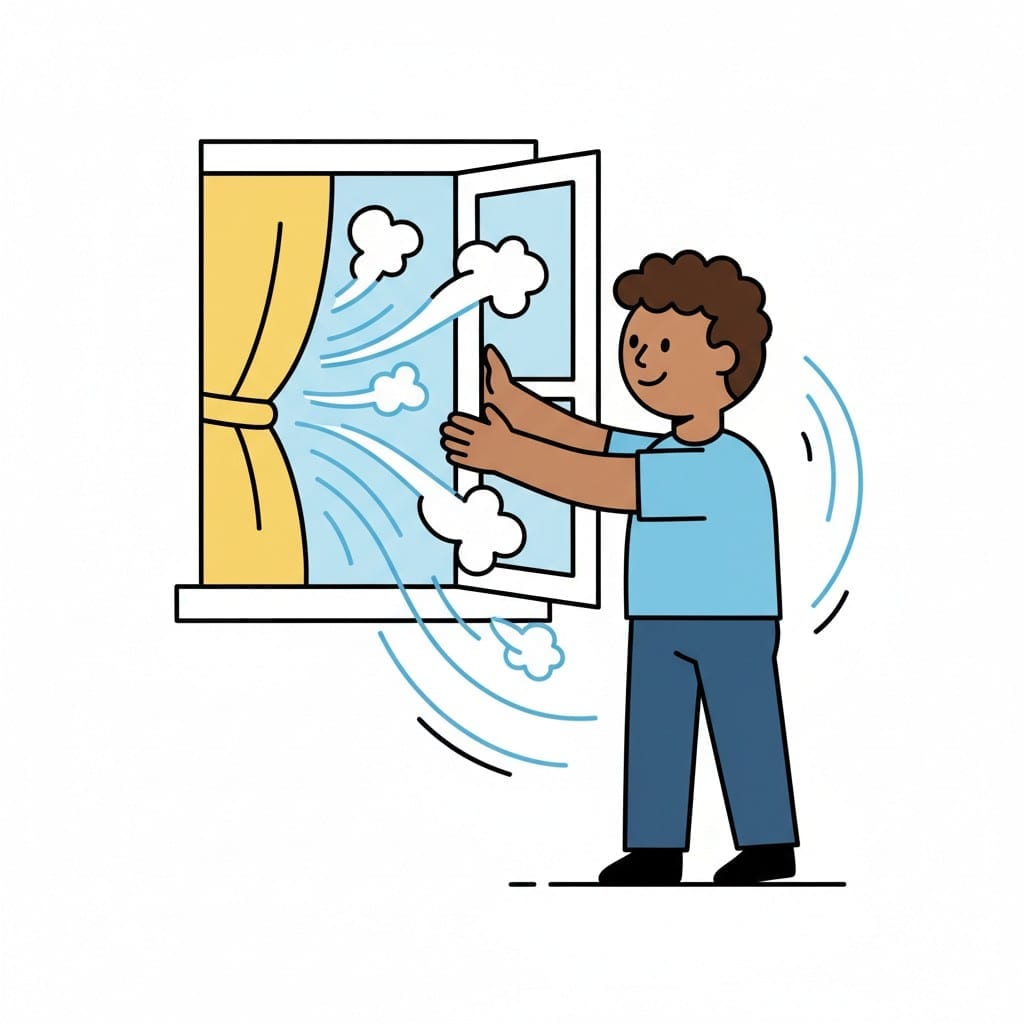
A boy opens a window to air out the room.
About this visual support
Airing out is one of those small actions that looks like nothing but can unsettle an entire afternoon. The room your child just settled into suddenly changes temperature, the wind moves papers around, and the street's soundscape pushes in. For someone working hard to hold a stable sensory environment, that's not a small thing.
Visual support for airing out works mostly as a warning. The image shows that the window opens, how long it stays open, and that it closes again afterwards. With the picture seen ahead of time, the cold air has a beginning and an end instead of just being a sudden scrape.
One concrete tip: tie airing out to a short, fixed moment, for example while teeth are being brushed or someone is in the bathroom. The sensory shift then happens while your child is already moving, not in the middle of an activity that took focus to start.
In the Routined app, airing out can sit as a recurring small step inside a household routine, so it ties into other moments instead of arriving as a surprise.
Use this image in a schedule
Build your own visual schedule with this image and download it as a print-ready PDF. Completely free.

More similar visual supports
Change sheets
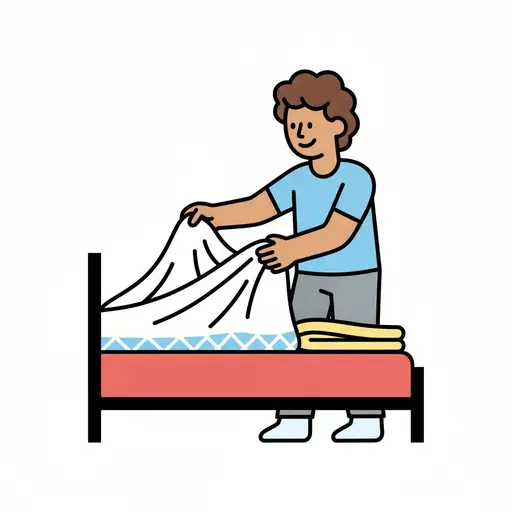
A child pulls the sheet off the bed, with clean linen folded beside it.
Do dishes
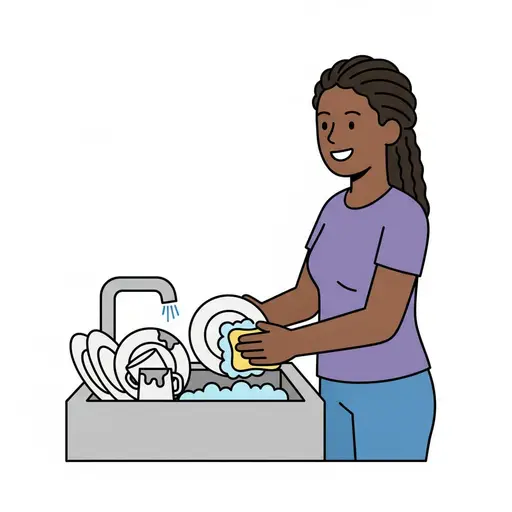
A person washes a plate with a yellow sponge at a sink full of dishes.
Empty dishwasher
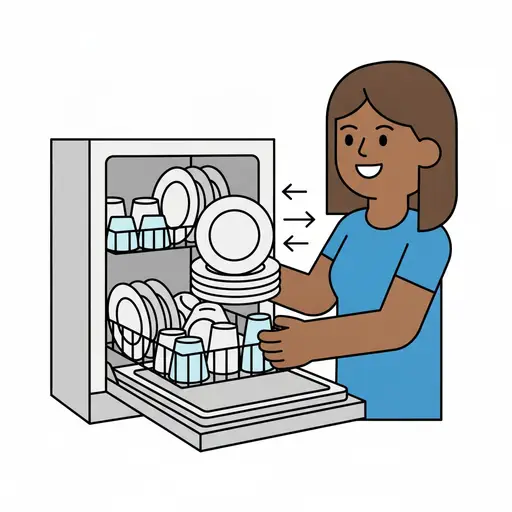
A woman in a blue top lifts a stack of plates and some cups out of the dishwashe...
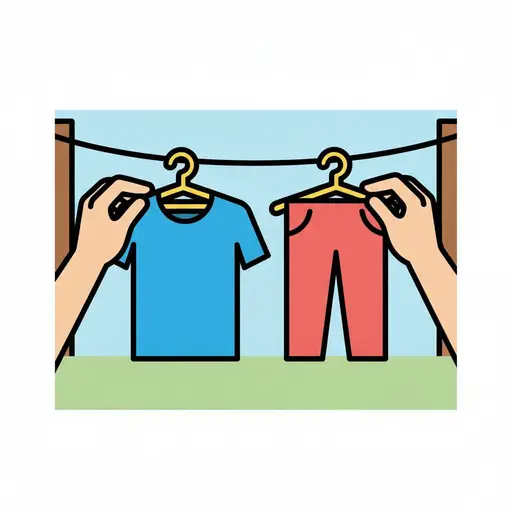
Hang up garments
Hands hang a shirt and a pair of trousers on hangers on an outdoor line.
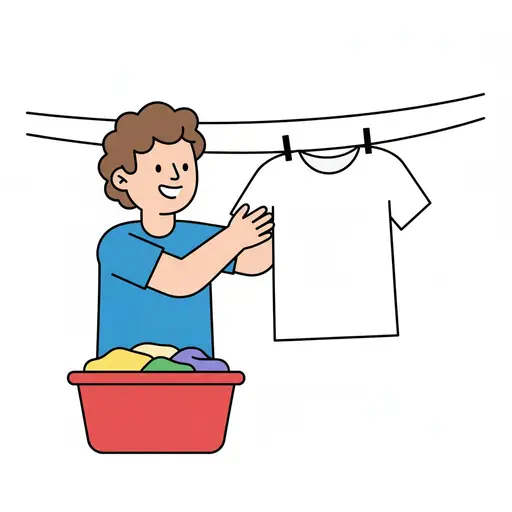
Laundry
A child hangs a white T-shirt on a line above a laundry tub.
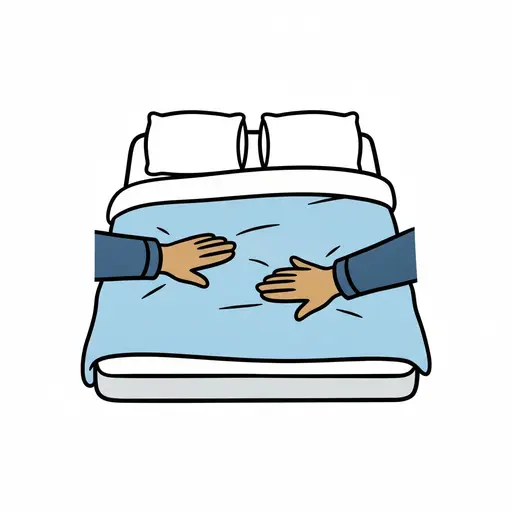
Make bed
Two hands smooth a blue cover on a bed with two white pillows.
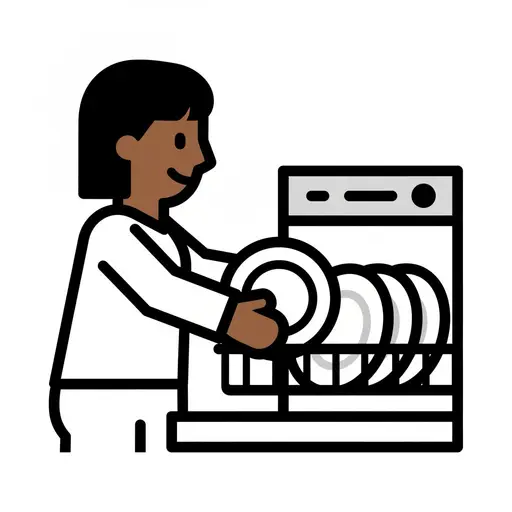
Run the dishwasher
A person with brown curly hair takes plates and a cup out of the bottom rack of ...
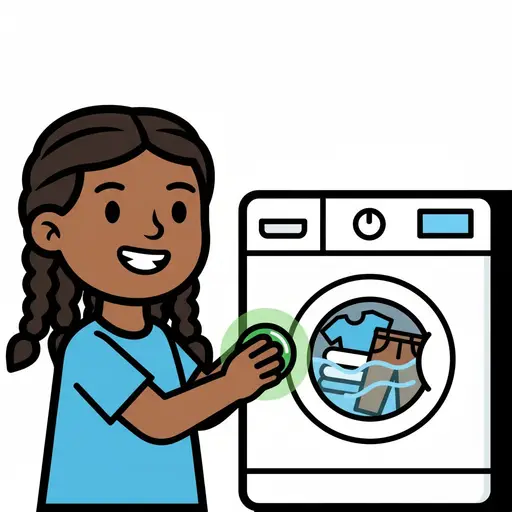
Start laundry
A girl presses the start button on a washing machine with clothes inside.
Take the visual supports with you
In Routined you build schedules from these pictures, add timers and voice instructions, and your child follows the day on their own.


* 14-day free trial, then $2.39 a month or $20.99 a year (US pricing). Cancel anytime.