Clean litter box
Cleaning the litter box is not technically hard, but the smell and the feel of sand on fingers make the whole task feel longer than it is. The visual support below shows just how short the chain really is.
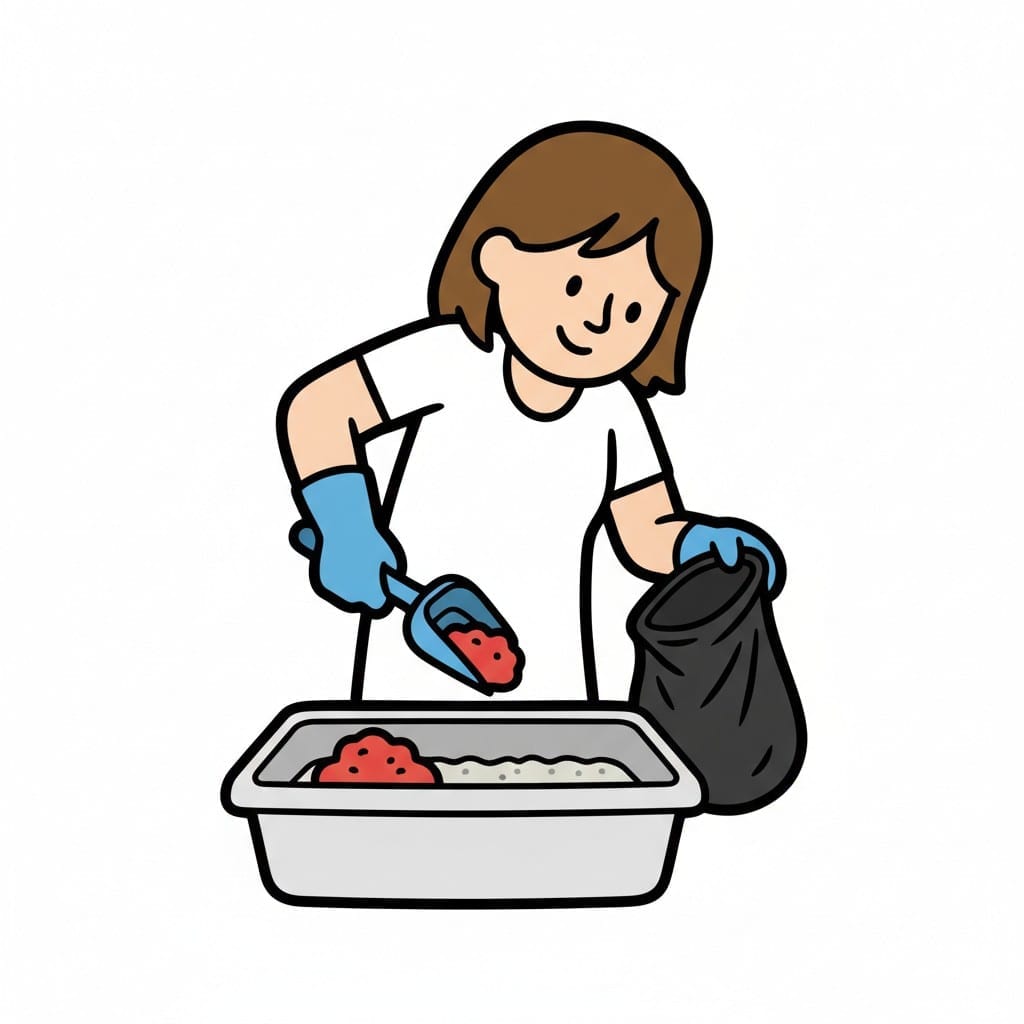 ♀
♀Clean litter box
A woman with brown shoulder-length hair and blue gloves cleans a litter box with a scoop, putting waste into a black trash bag.
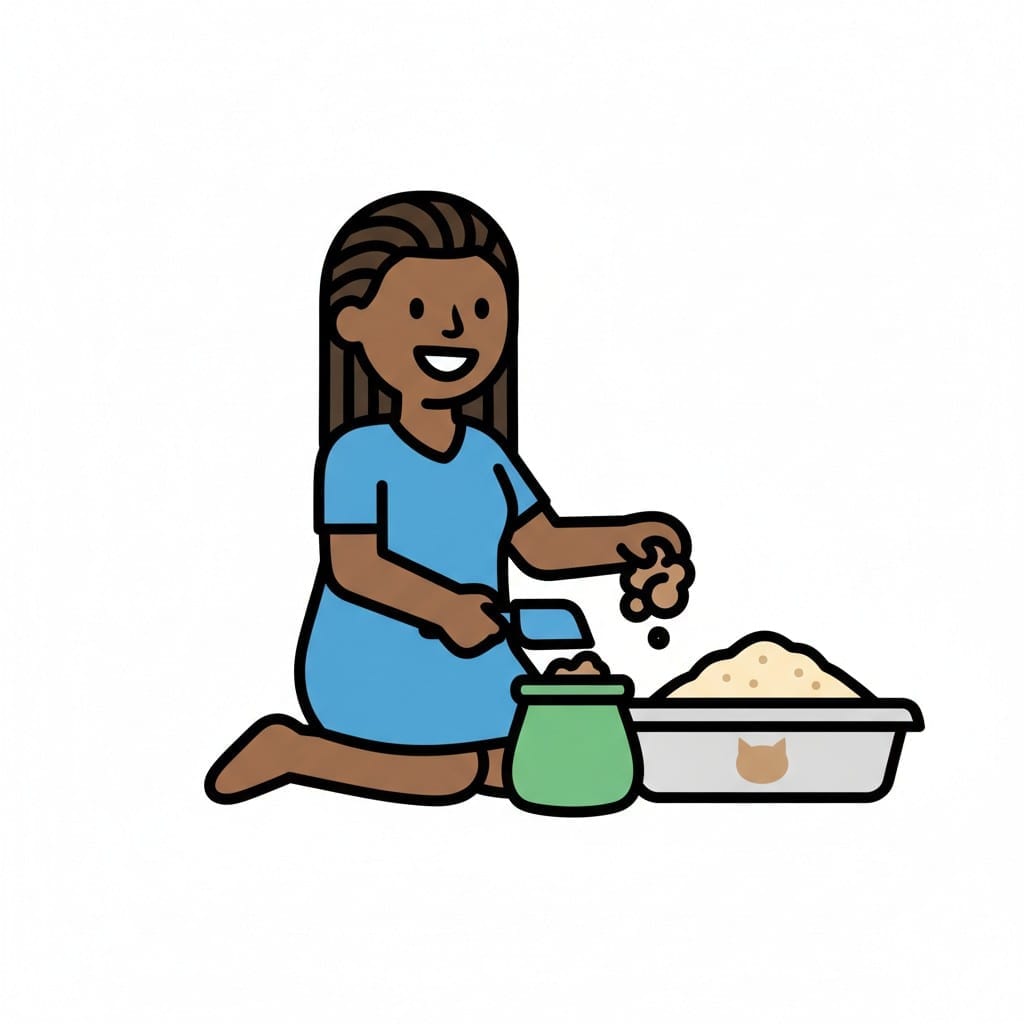 ♀
♀Clean litter box
A girl kneeling, using a scoop to put fresh cat litter into a litter box.
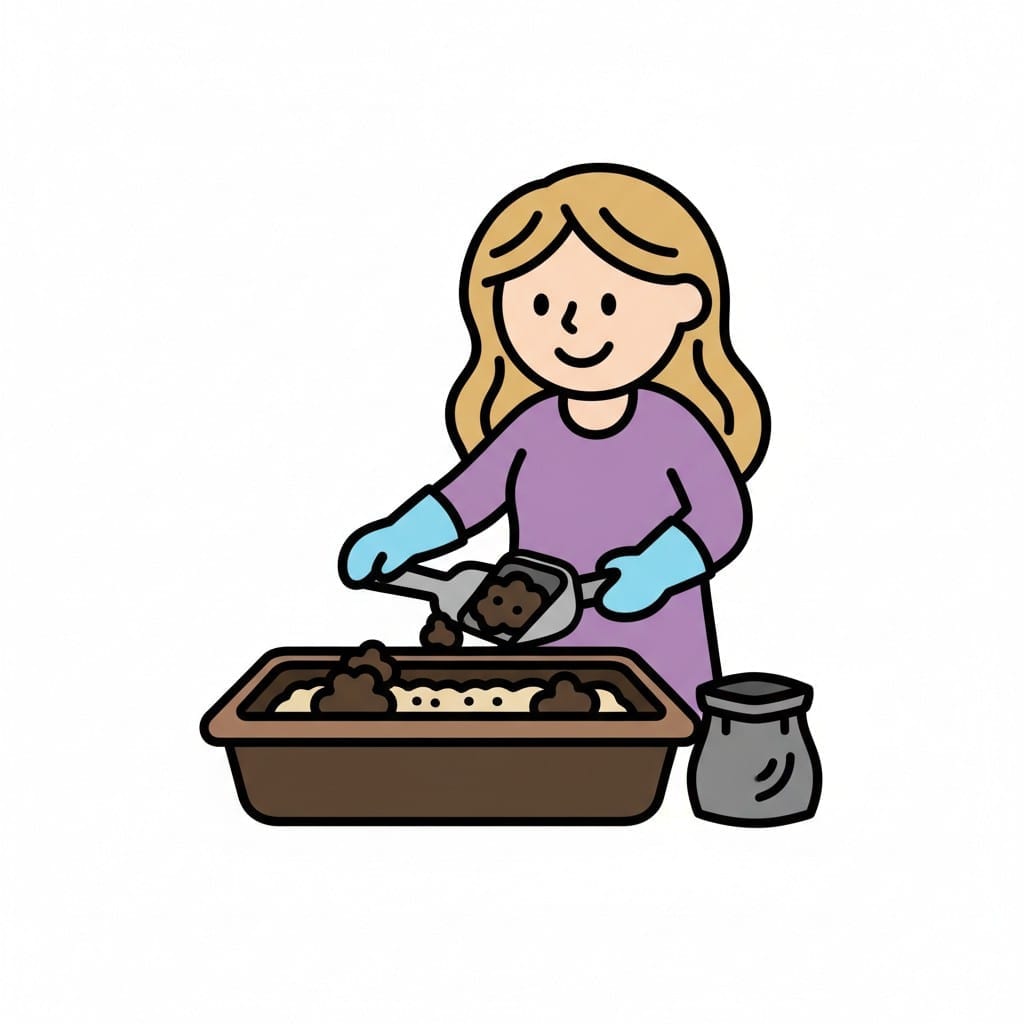 ♀
♀Clean litter box
A girl wearing gloves, using a scoop to remove used cat litter from a litter box.
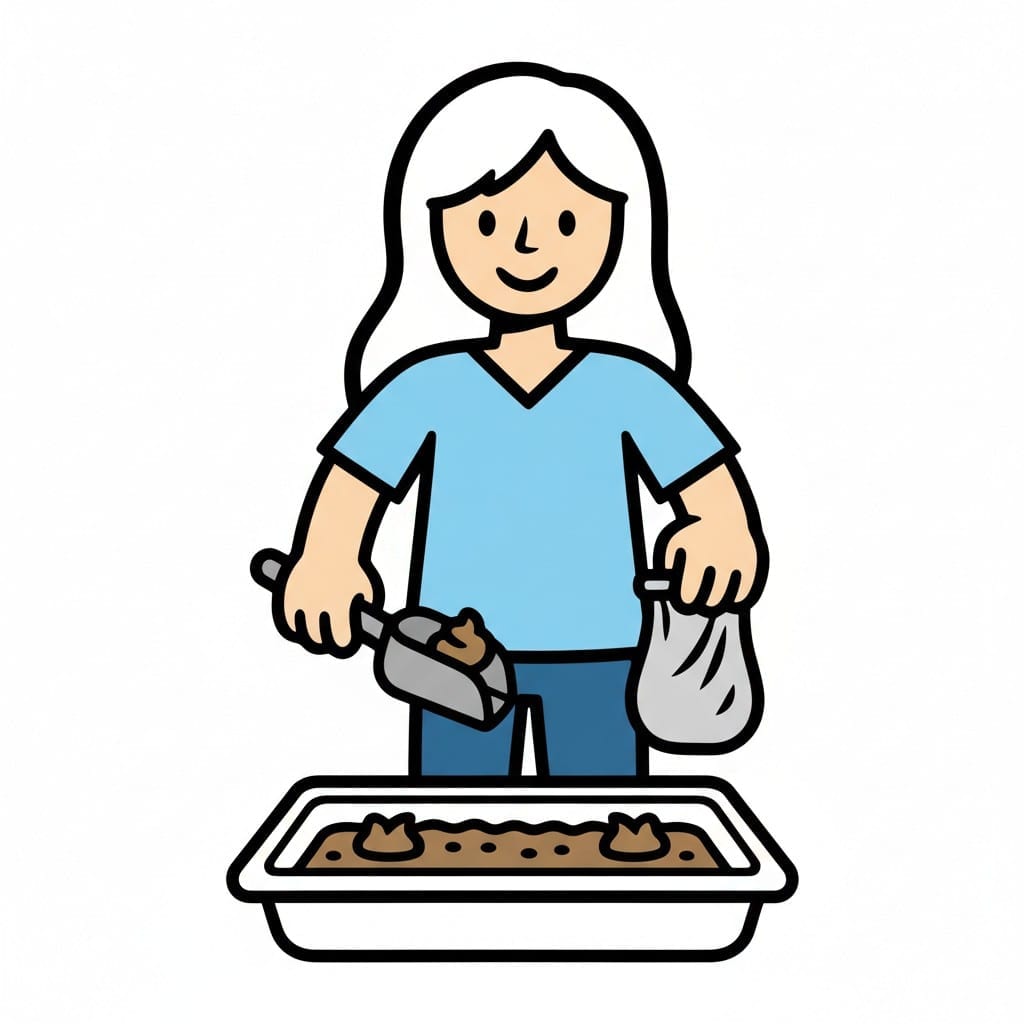 ♀
♀Scooping litter into a bag
A woman with long hair holds a scoop of used litter in one hand and a grey bag in the other above a litter tray.
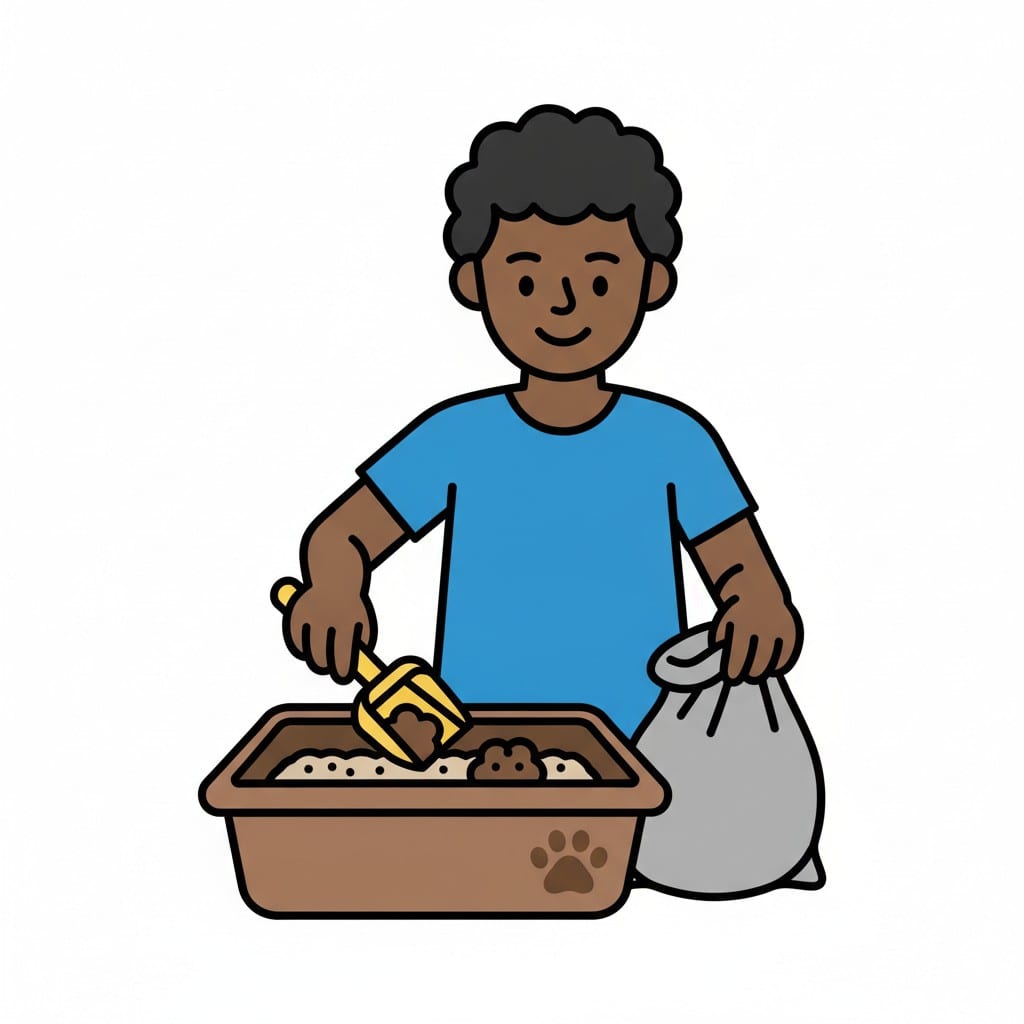 ⚲
⚲Clean litter box
A boy scoops waste out of the litter box with a scoop, with a bag beside him.
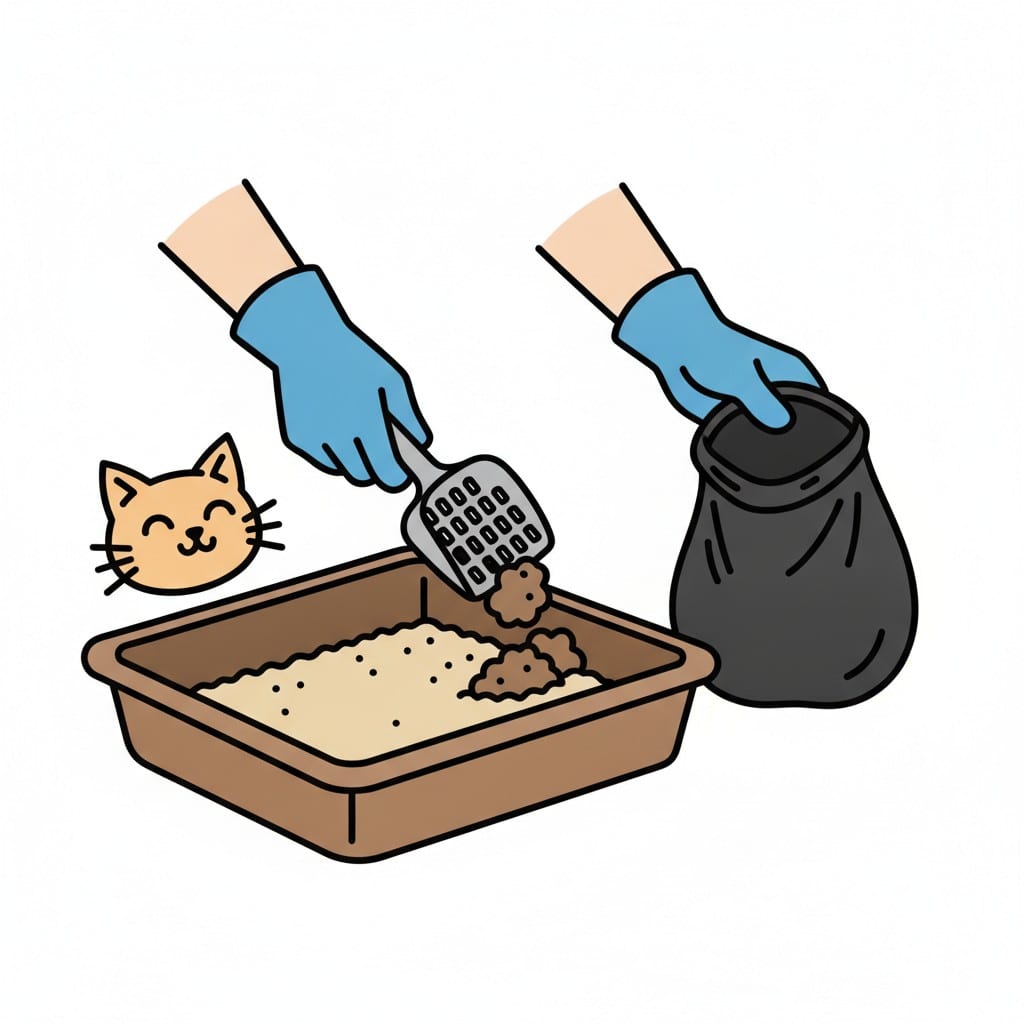 ⚲
⚲Clean litter box
Hands in blue gloves sift the litter box with a scoop and drop the clumps into a black bag while a cat watches.
About this visual support
The hard part of the litter box is not the movements, it is the sensory load. The smell is sharp in a way that latches onto the nose right away, and even with a scoop a few grains always end up on the fingers. That is why a child often drags it out, half-finishes, or claims to have forgotten. It is not unwillingness, it is a brain bracing for discomfort and delaying as long as it can.
Visual support helps by making it obvious how short the moment actually is. When a child sees four or five pictures in a row instead of one big vague task, the resistance shrinks. Scoop the clumps, drop them in a bag, tie the bag, top up fresh litter, wash hands. That last picture matters, it gives the unpleasant feeling a clear ending.
A practical tip: lay out everything before starting. Bag open, scoop in hand, fresh litter within reach. Then the whole job becomes one short event instead of a mission with small pauses where the smell can take over. Inside the Routined app you can put the chain on a timer so the child sees that the entire clean-up takes less than two minutes.
Use this image in a schedule
Build your own visual schedule with this image and download it as a print-ready PDF. Completely free.
More similar visual supports
Clean cage
A woman with brown hair, wearing a blue t-shirt and green gloves, cleans a hamst...
Scoop litter
Hands in yellow and blue gloves scoop clumps out of a grey litter box with a bla...
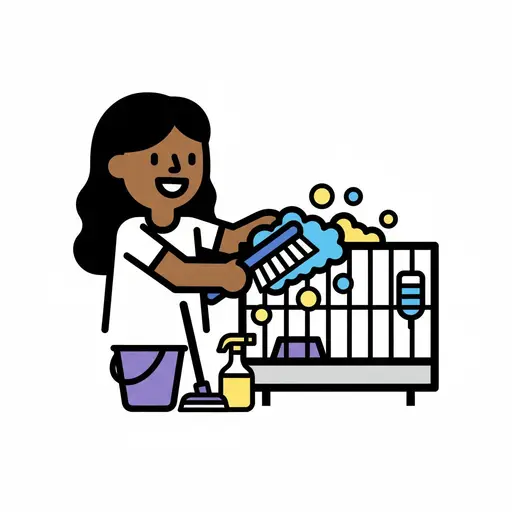
Deep clean cage
A person is scrubbing a pet cage with a brush and soapy water. A bucket and a sp...
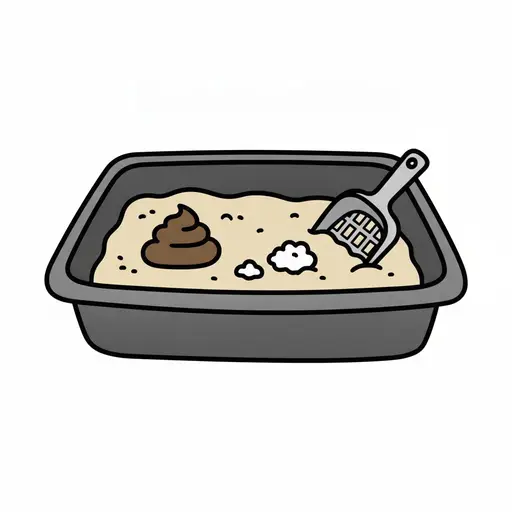
Clean the litter box
A litter box with litter, droppings and a scoop.
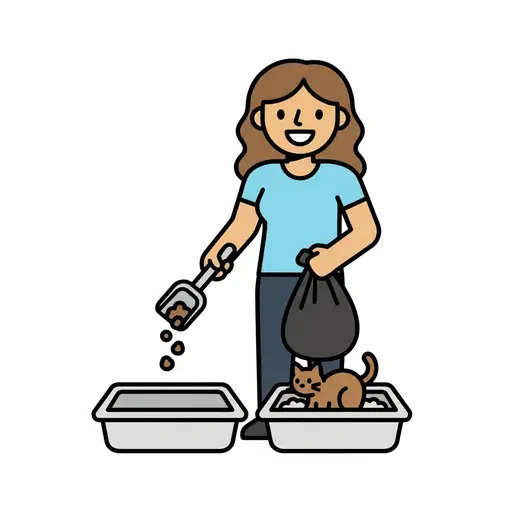
Clean litter boxes
A person cleans two litter boxes with a scoop and a trash bag next to a cat.

Muck out
A pile of manure with a shovel.
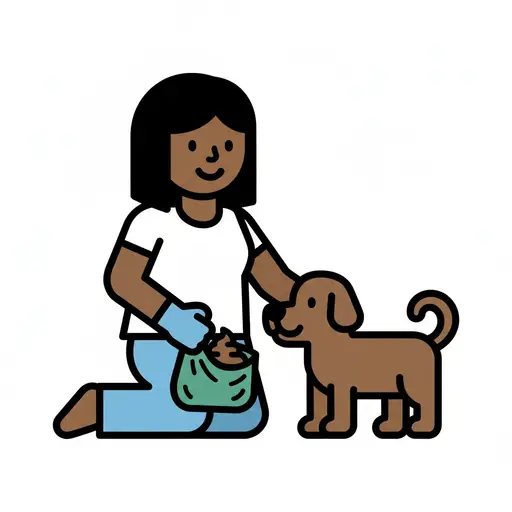
Pick up dog poop
A child kneels with a glove and puts dog poop into a bag next to a dog.
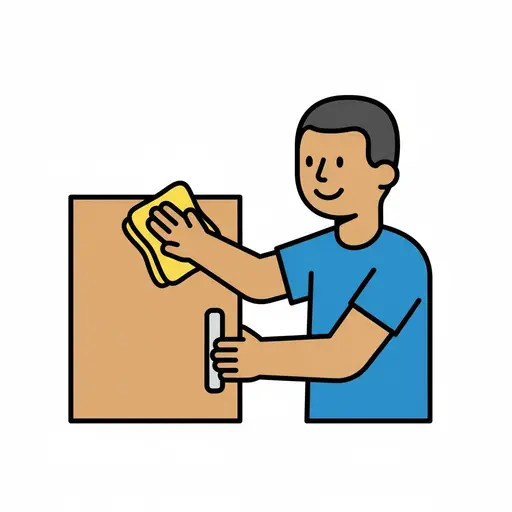
Wipe cabinets
A person wiping a cabinet with a yellow cloth.
This visual support in other languages
Take the visual supports with you
In Routined you build schedules from these pictures, add timers and voice instructions, and your child follows the day on their own.


* 14-day free trial, then $2.39 a month or $20.99 a year (US pricing). Cancel anytime.