Clean room
Cleaning a room isn't one task — it's a hundred tasks at once. The whole-room view can freeze the brain even when the will is there. The visual support below splits the work into steps a child can actually start on.
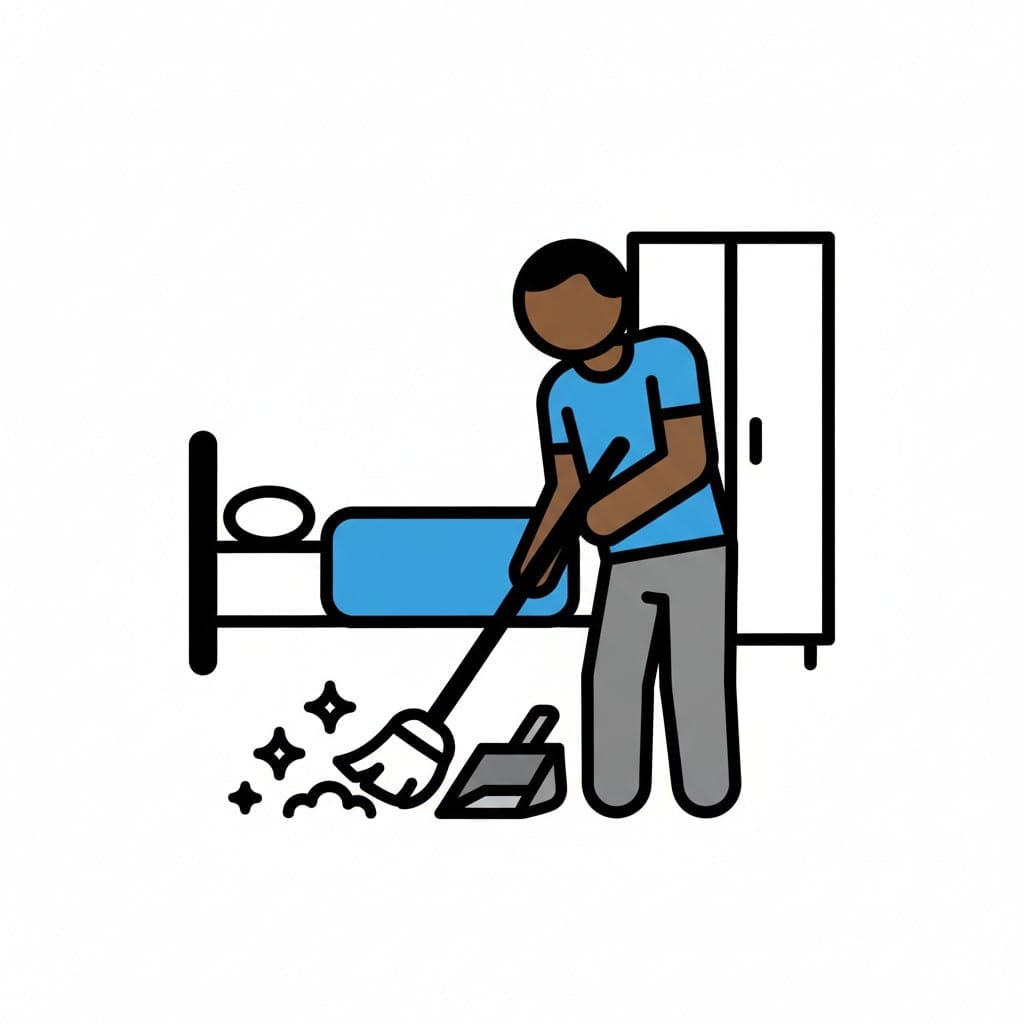 ♂
♂Sweeping the room
A person is sweeping the floor with a broom and dustpan next to a bed and wardrobe.
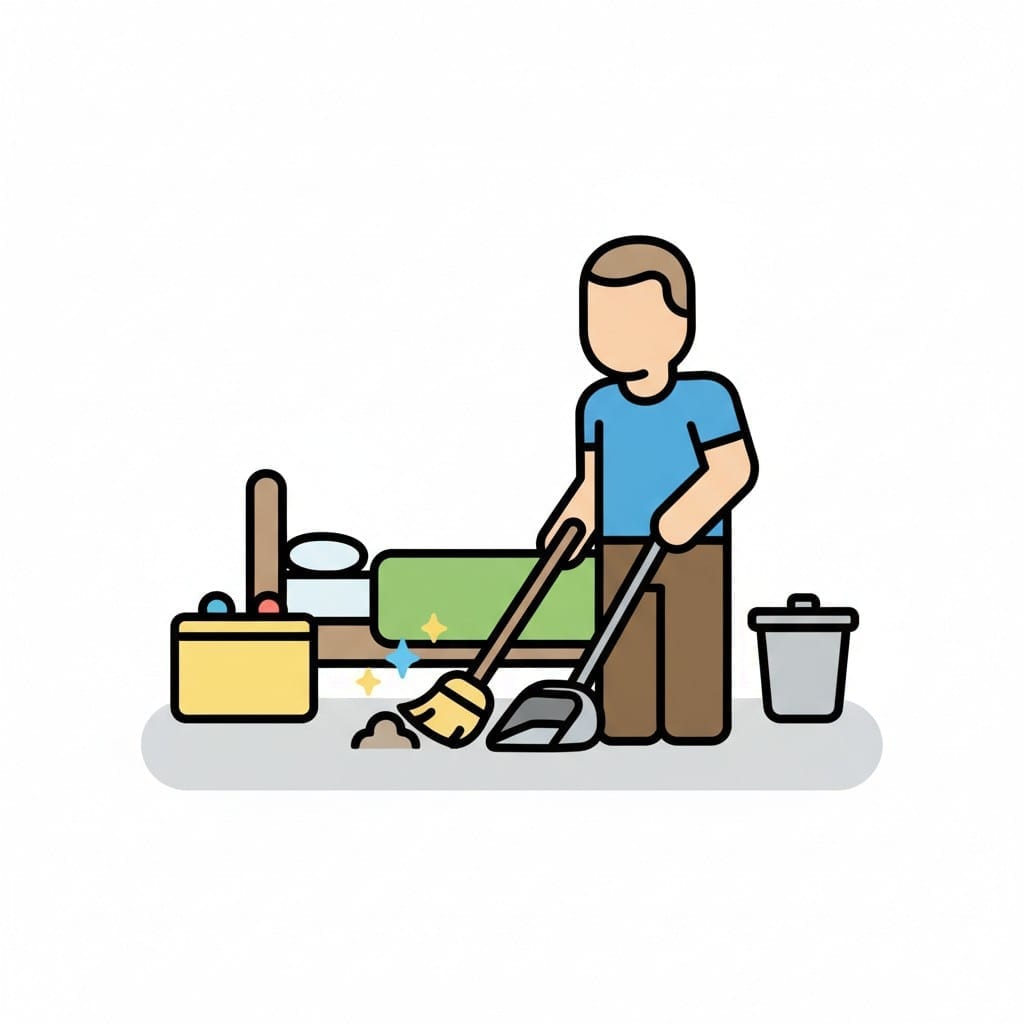 ♂
♂Sweeping the floor
A person is sweeping the floor with a broom and dustpan in a room with a bed and a trash can.
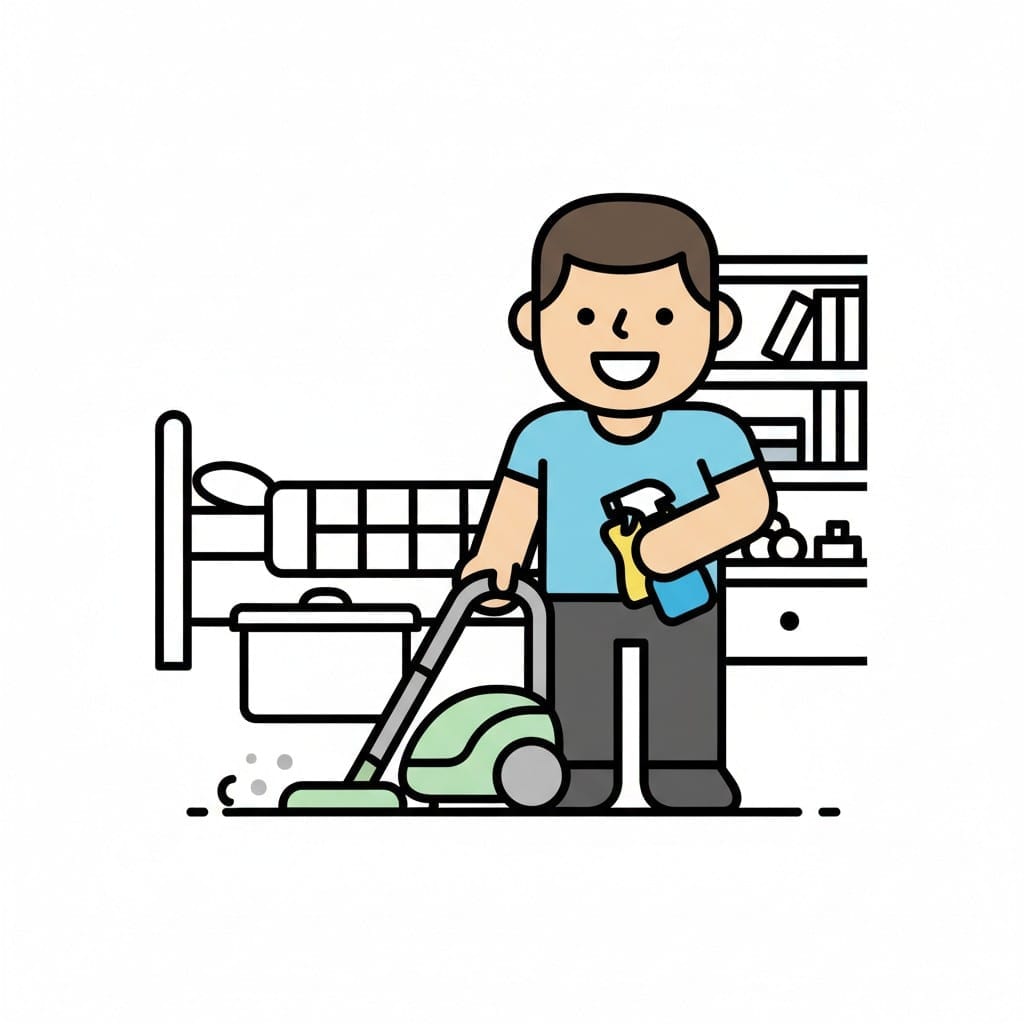 ♂
♂Vacuuming the room
A smiling person is vacuuming the floor and holding a spray bottle in a room with a bed and a shelf.
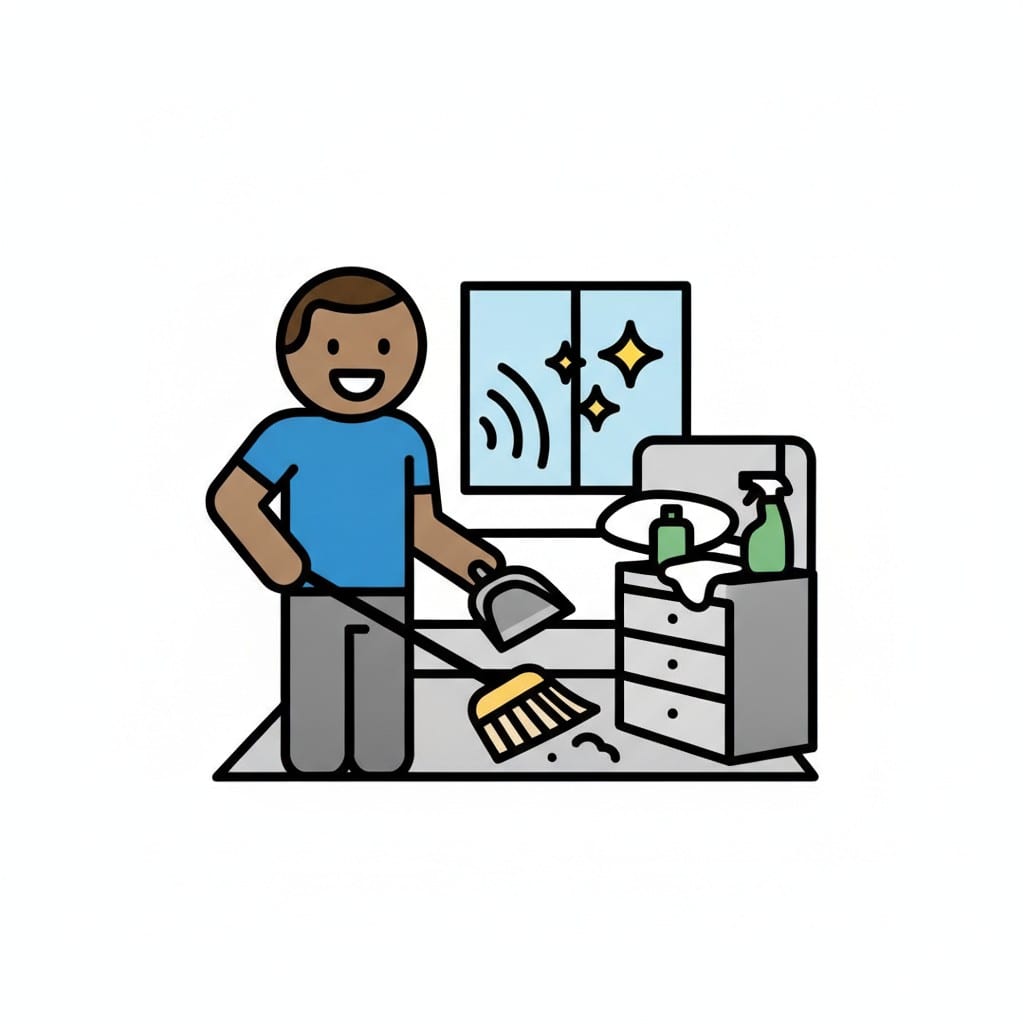 ♂
♂Sweeping into a dustpan
A man in a blue t-shirt sweeps crumbs into a dustpan in front of a gleaming window, with spray bottles on a chest of drawers beside him.
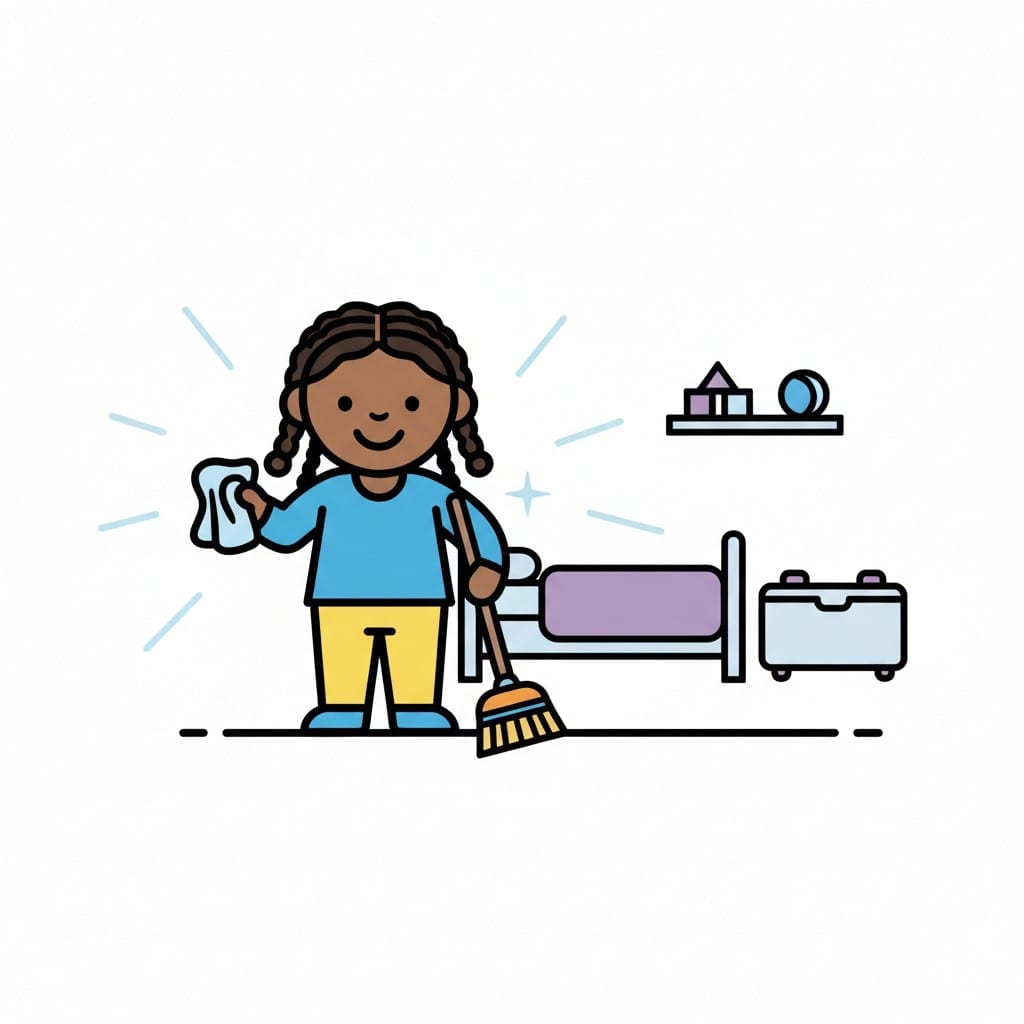 ♀
♀Cleaning with broom and cloth
A child is holding a cloth and a broom while cleaning a room with a bed in the background.
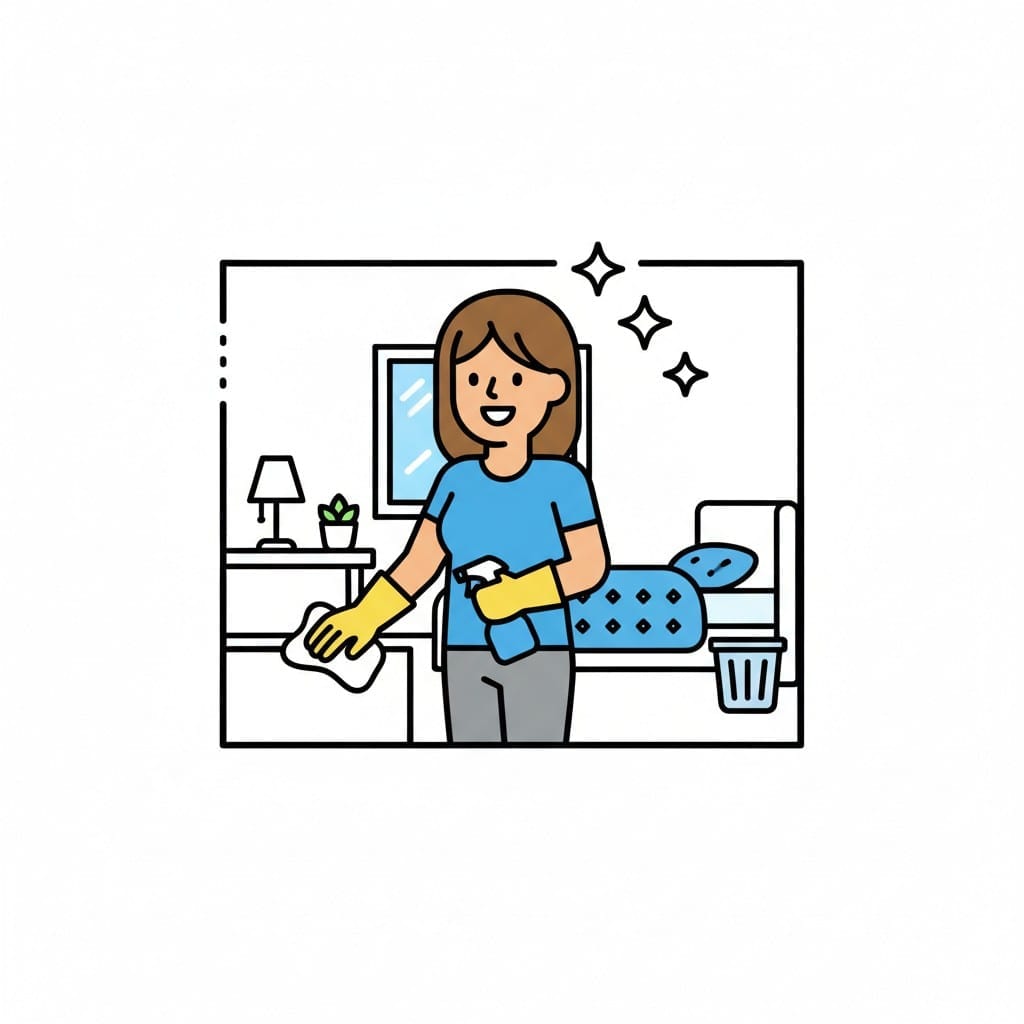 ♀
♀Wiping surfaces
A person wearing gloves is wiping surfaces with a cloth and a spray bottle in a room with a bed and a trash can.
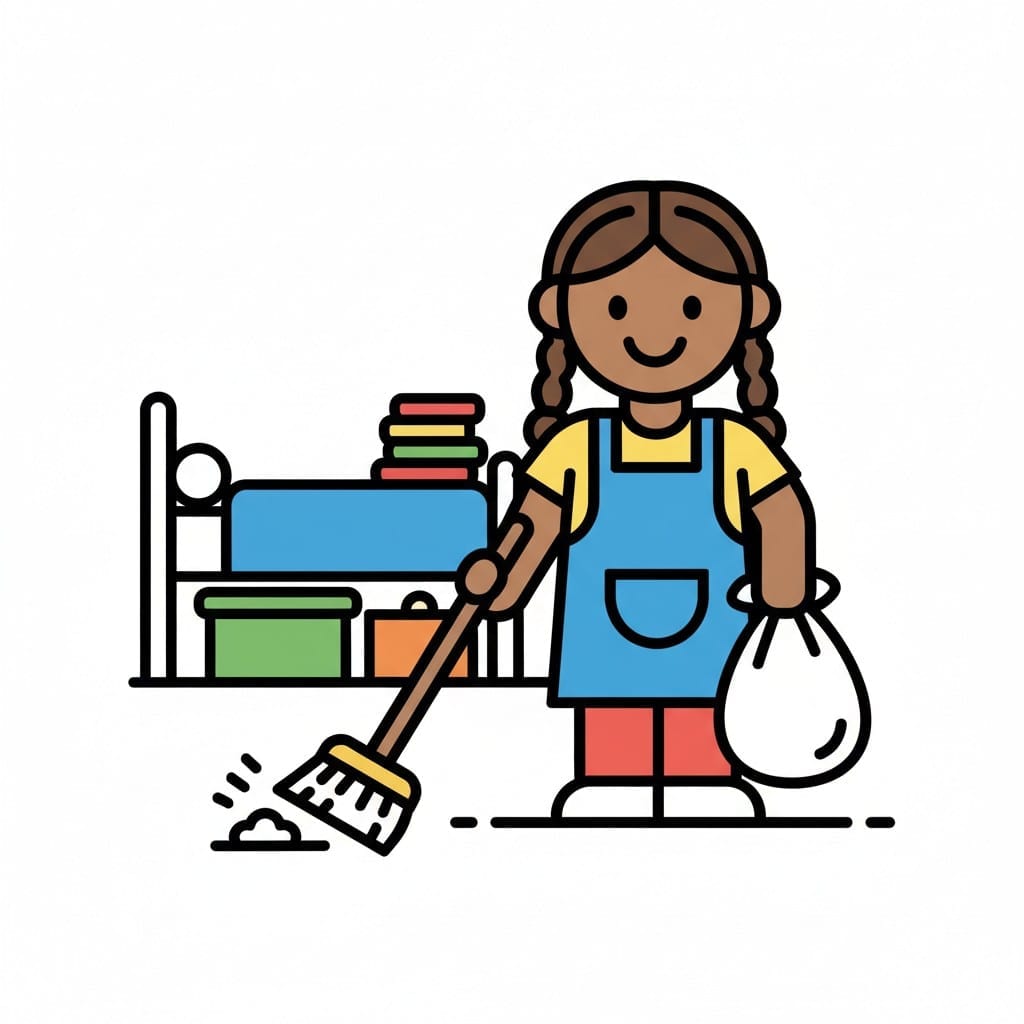 ♀
♀Sweeping and collecting trash
A child is sweeping the floor with a broom and holding a trash bag next to a bed.
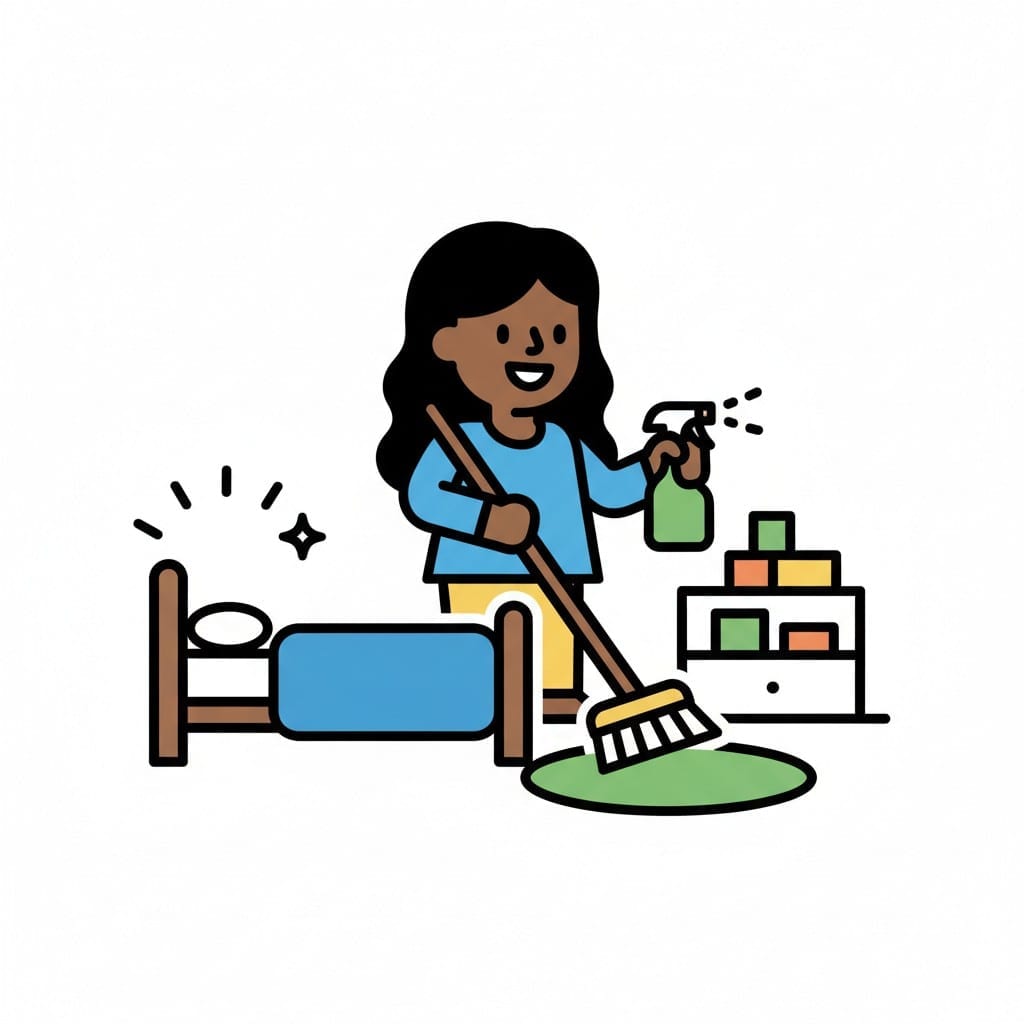 ♀
♀Sweeping and spraying in the room
A girl in a blue top sweeps a green rug with a broom while spraying cleaner from a bottle, next to a made bed and a shelf with boxes.
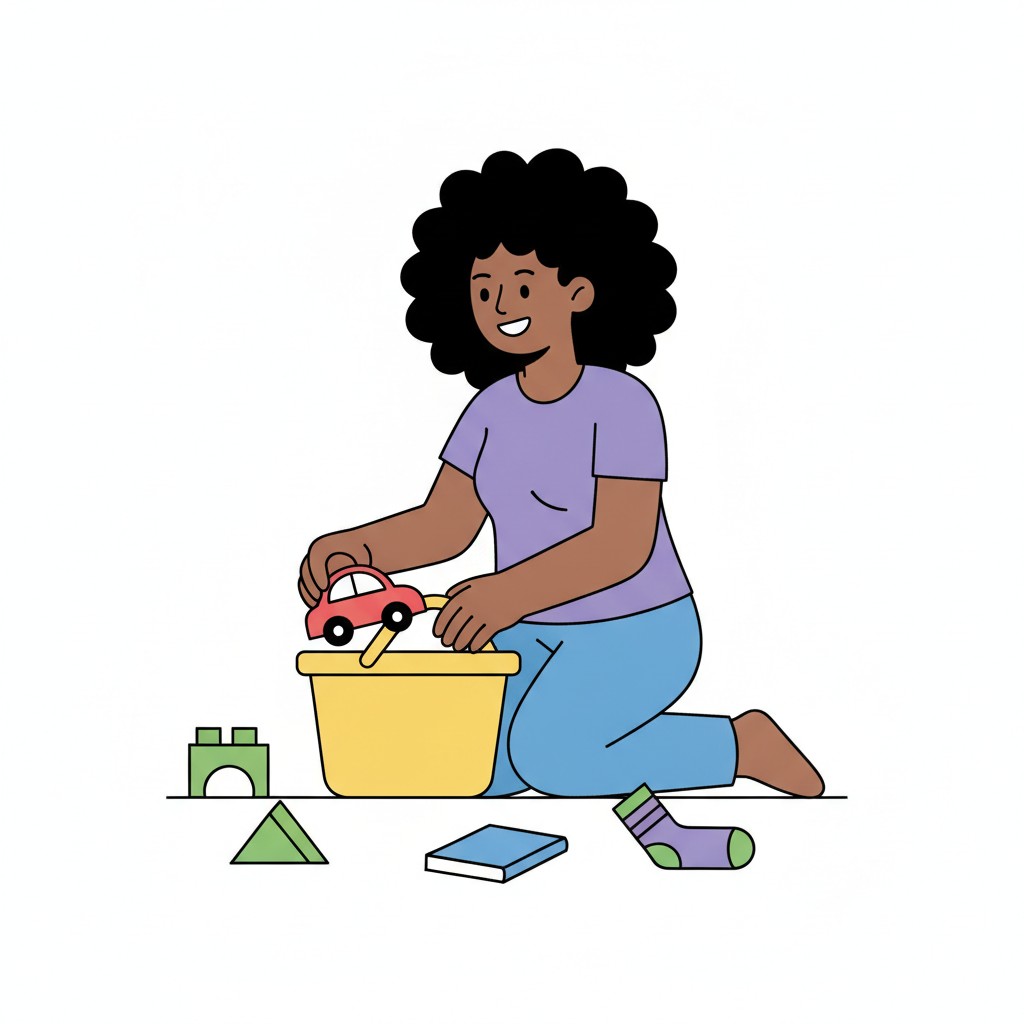 ♀
♀Tidy the room
A person kneels putting toys into a yellow tub, with blocks and a book on the floor.
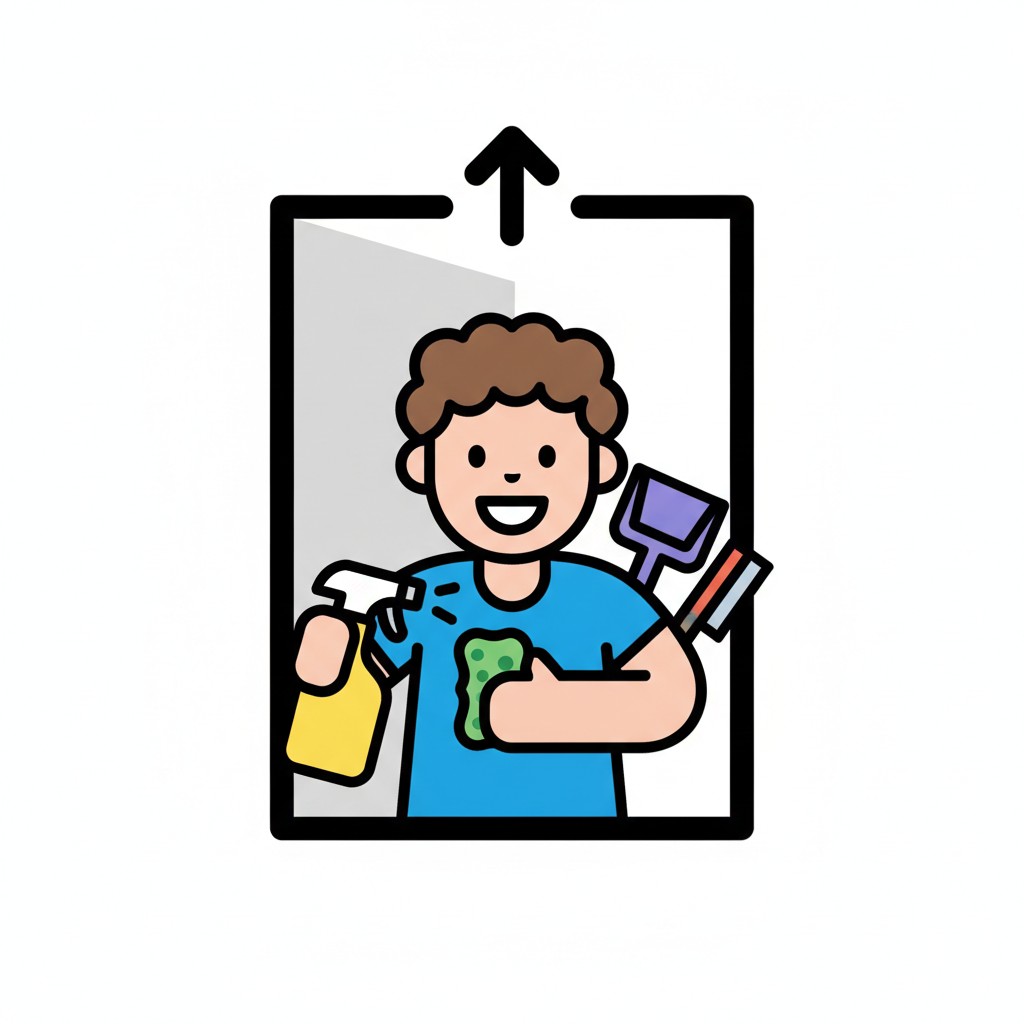 ⚲
⚲Time to clean the room
A happy child stands in a doorway with a spray bottle, a sponge and a dustpan.
About this visual support
Cleaning a room is not one task for the brain — it is a hundred tasks. A child doesn't see a messy room as a problem to solve; they see an impossible whole with no obvious entry point. Where to start? Toys? The bed? Clothes? The decision alone can trigger resistance, tears, or pure stillness.
Visual support solves this by chopping the whole into visible chunks. Once the child sees pick up toys followed by put clothes in the laundry basket followed by make the bed, the paralysing everything-at-once dissolves. Each chunk has its own entry and its own end.
A practical tip: start with one hot spot — a single surface, not the whole room. When that spot is done, move focus to the next. The visible win of one cleared surface often fuels the energy for the next.
If you want to build the room-cleaning routine digitally, the Routined app lets you stack the steps in the order that works for your child. You can try Routined for 14 days at no cost.
Use this image in a schedule
Build your own visual schedule with this image and download it as a print-ready PDF. Completely free.
More similar visual supports
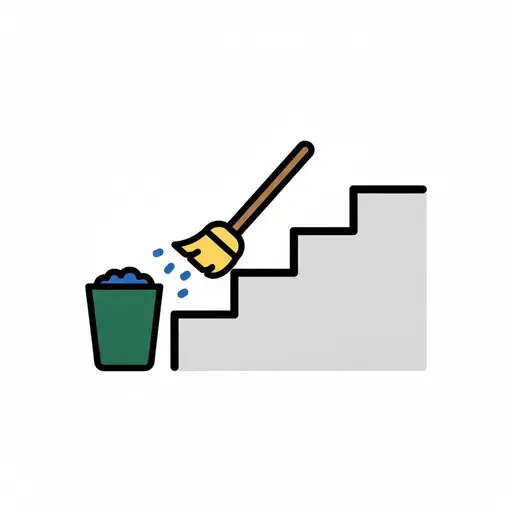
Clean the stairs
A broom sweeps a grey staircase, with a green bucket beside it.
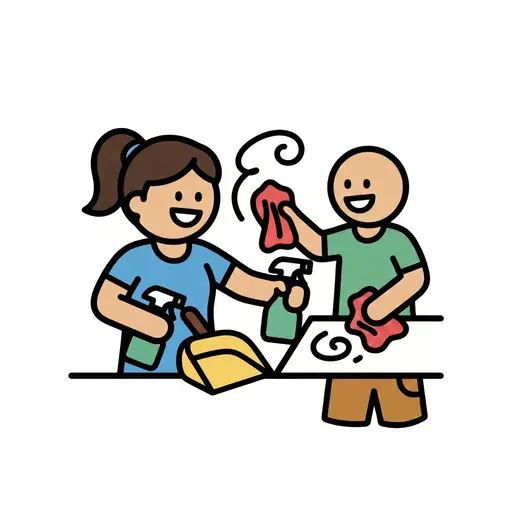
Help clean
Holding a spray bottle and a yellow dustpan, a girl with a ponytail cleans a tab...
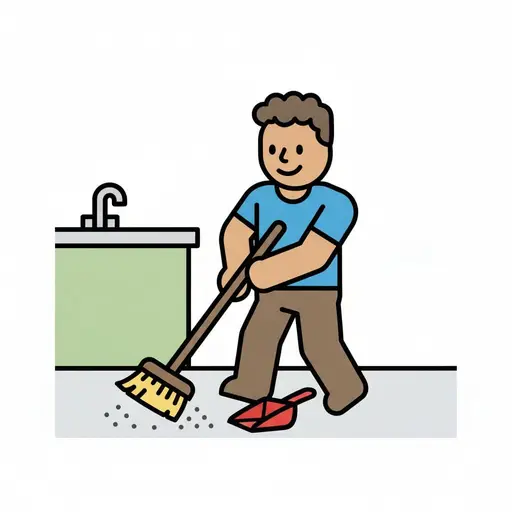
Sweep the kitchen
A person sweeps with a broom and red dustpan by a green kitchen unit.
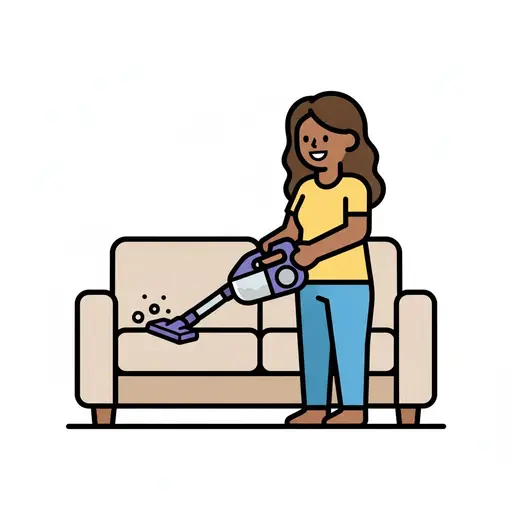
Vacuum the sofa
A person vacuums crumbs from a beige sofa with a handheld vacuum.
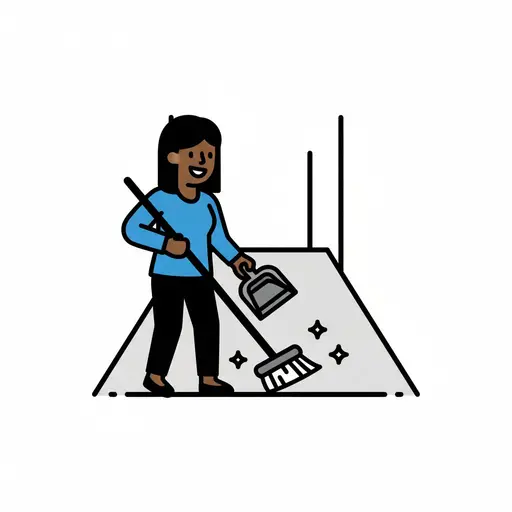
Clean the hallway
A child sweeping the hallway floor with a broom while holding a dustpan, with sp...
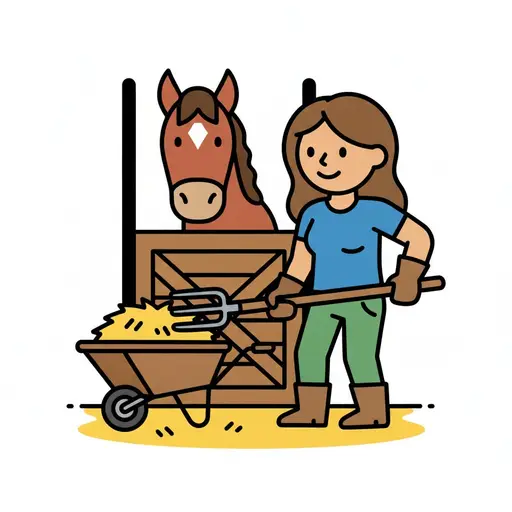
Do the chores
A person pushes a wheelbarrow of hay in a stable where a horse looks out of the ...
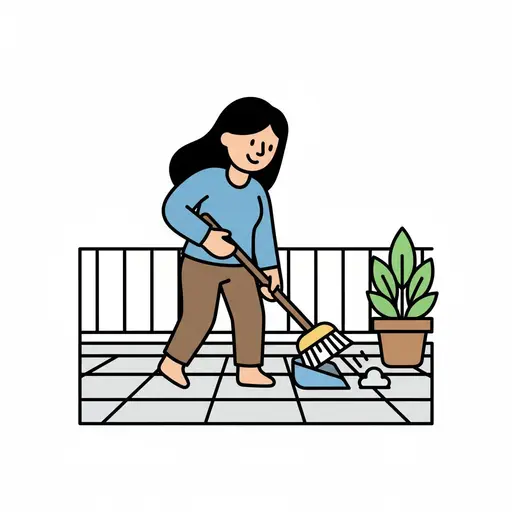
Clean the balcony
A child sweeping the balcony floor with a broom and dustpan, with a potted plant...

Chores
A boy holds a toothbrush and wipes with a sponge, with towels and a grocery bag.
This visual support in other languages
Take the visual supports with you
In Routined you build schedules from these pictures, add timers and voice instructions, and your child follows the day on their own.


* 14-day free trial, then $2.39 a month or $20.99 a year (US pricing). Cancel anytime.