Clean the kitchen
A kitchen is not one room, it is four rooms in one: the sink corner, the stove area, the dining table, and the floor. Without a visible starting point, the eye can wander forever. The visual support below gives that starting point.
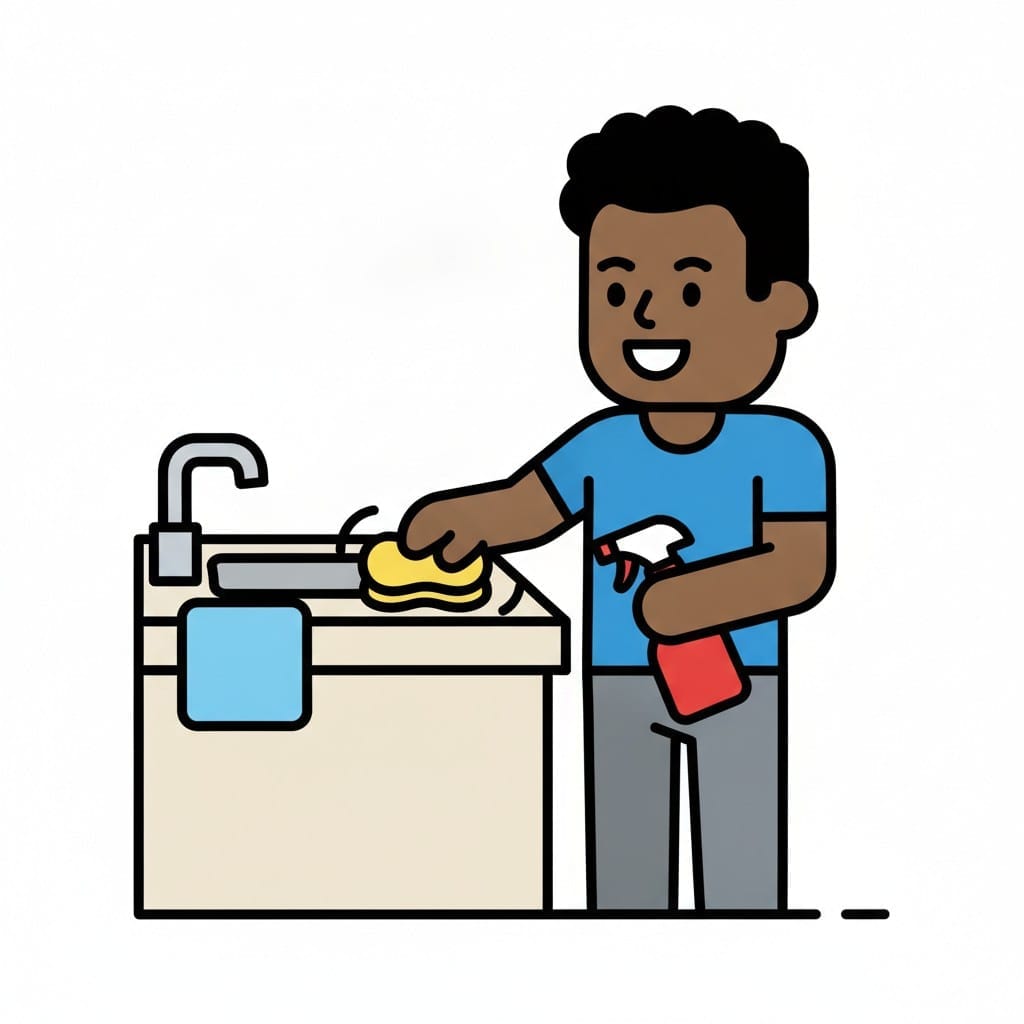 ♂
♂Person wiping the kitchen counter
A smiling person in a blue t-shirt wipes a kitchen counter by the sink with a yellow sponge while holding a red spray bottle in the other hand.
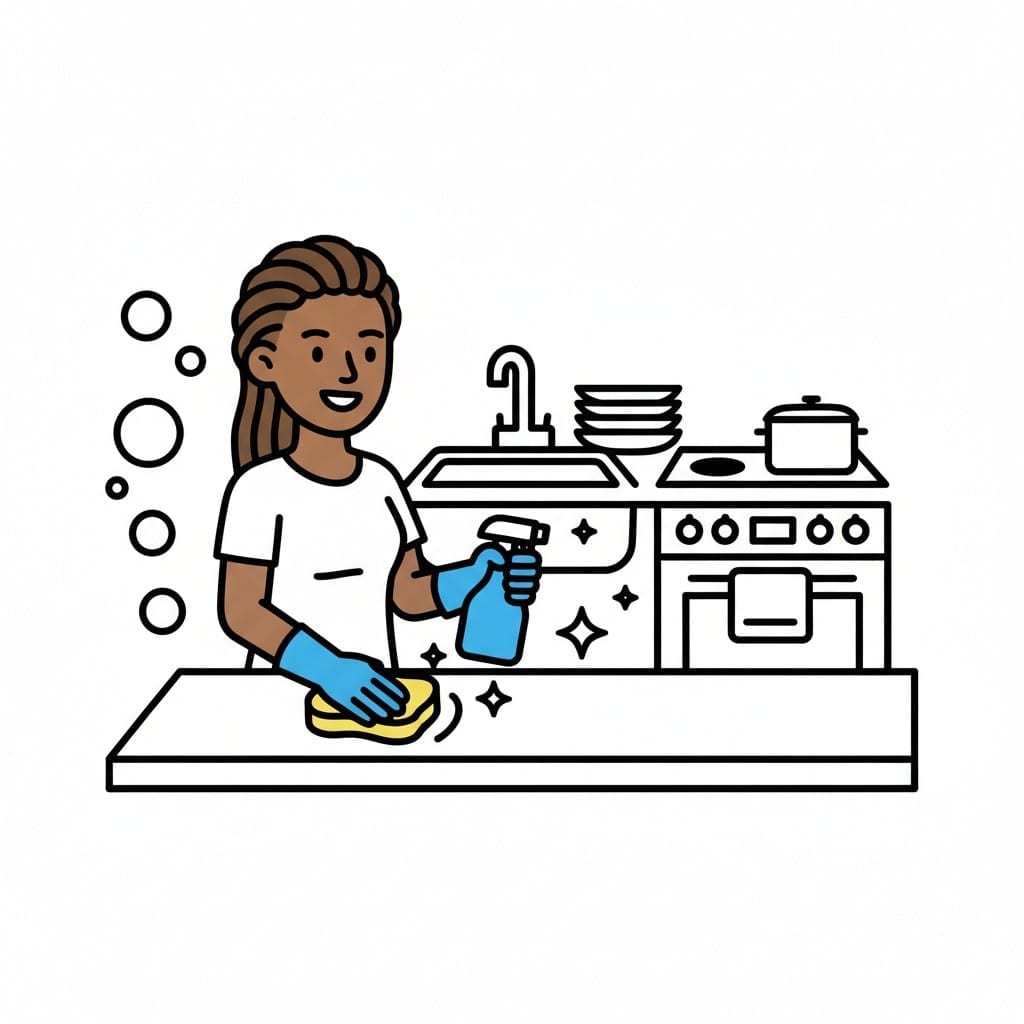 ♀
♀Clean the kitchen
A person cleaning a kitchen counter with a spray bottle and a sponge. A sink with dishes and a stove are in the background.
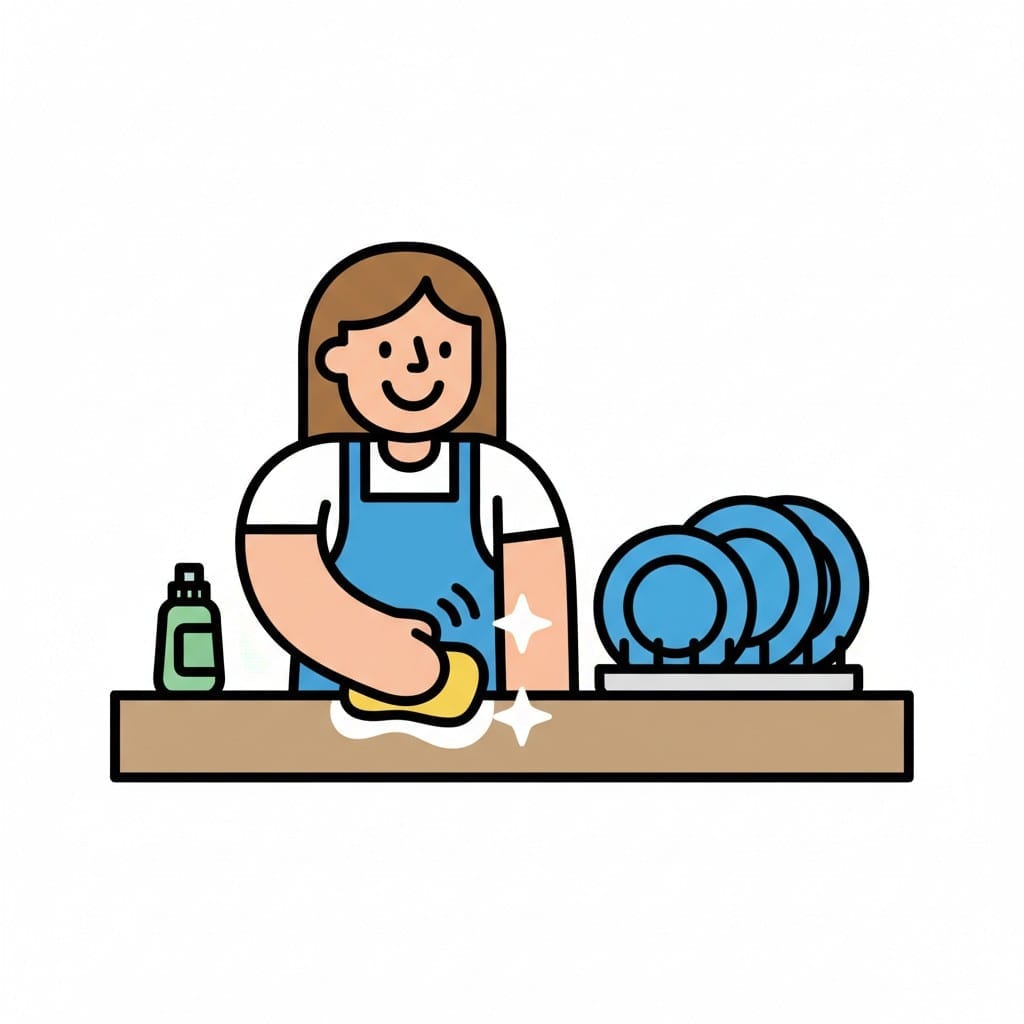 ♀
♀Wiping the kitchen counter
A woman in a blue apron wipes the kitchen counter with a yellow sponge, with washing-up liquid and blue plates in a drying rack beside her.
About this visual support
Some rooms are easy to clean because they have a clear shape. The bedroom has a bed, the living room has a sofa, everything orients itself around one large object. The kitchen does not work that way. It is made of several small work surfaces that do not connect visually, and without a plan to lean on, the child looks at all of it at once and sees nowhere to start. The whole job feels like a single blob, even though each part is doable.
This is where visual support does something quietly important: it says out loud which surface comes first. Counter empties, stove gets wiped, table gets cleared, floor gets swept. The order does not have to be perfect, but it has to exist and be visible. When a card is done, it gets ticked off, and the next surface takes over. The child does not carry the structure, the cards do.
A practical tip: always start at the sink counter, even if another surface looks worse. An empty counter gives a visible win early, and the rest of the kitchen suddenly feels smaller. Inside the Routined app you can build the whole chain with little check boxes the child presses themselves, which gives both structure and a sense of progress.
Use this image in a schedule
Build your own visual schedule with this image and download it as a print-ready PDF. Completely free.
More similar visual supports
Mop the floor
A girl mops the floor.
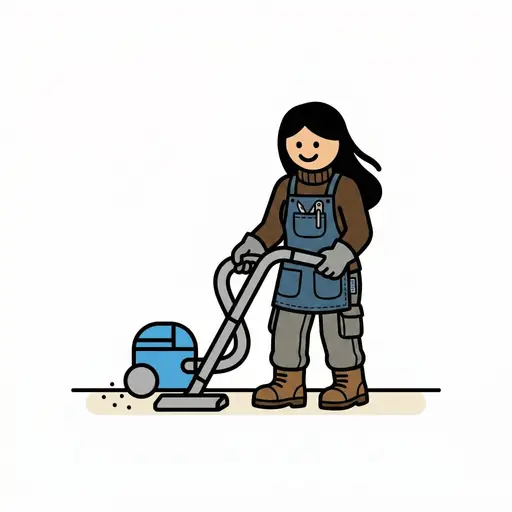
Vacuum room
A woman vacuuming the floor with a canister vacuum.
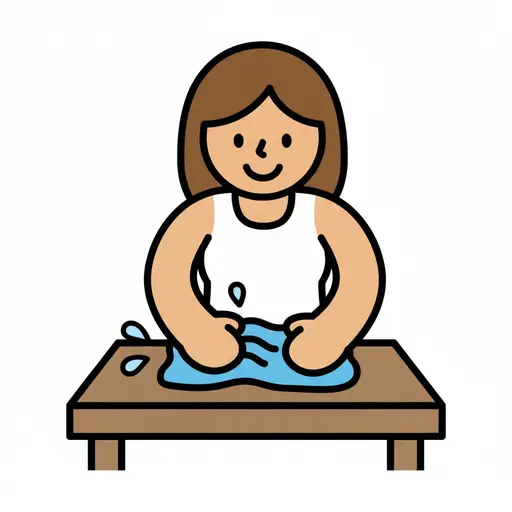
Wipe table
A woman wiping a table with a cloth.
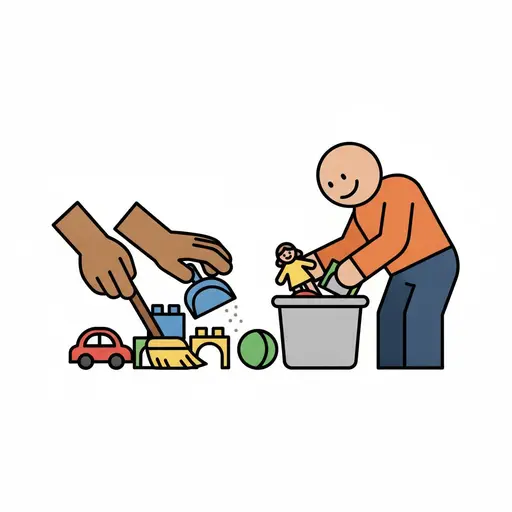
Clean up
An adult puts toys in a tub while two hands sweep up blocks and a toy car.
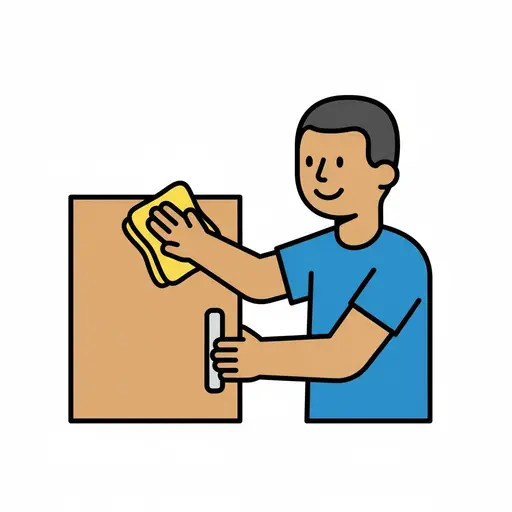
Wipe cabinets
A person wiping a cabinet with a yellow cloth.
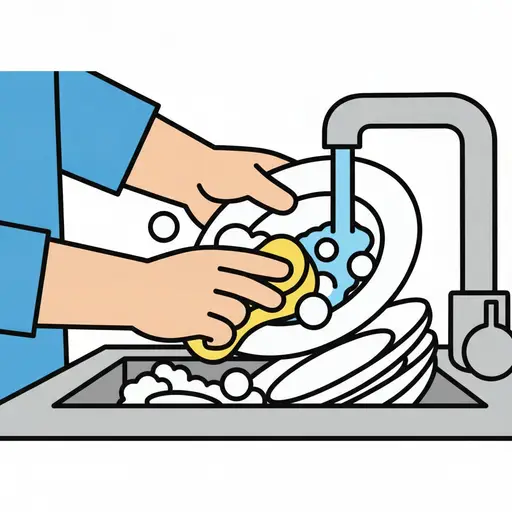
Hand wash dishes
Two hands wash a plate with a sponge under a running tap.
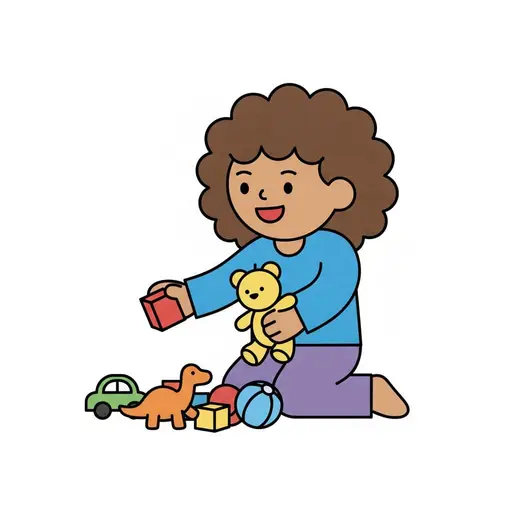
Put away toys
A child kneels holding a yellow teddy and a red block, with toys on the floor.
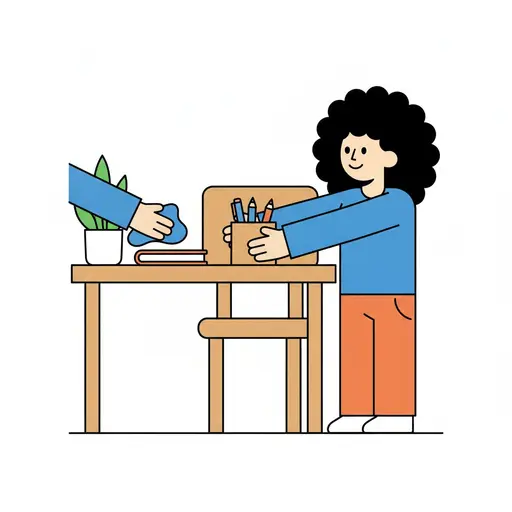
Tidy up desk
A girl sorts pens on the desk while a hand wipes it.
This visual support in other languages
Take the visual supports with you
In Routined you build schedules from these pictures, add timers and voice instructions, and your child follows the day on their own.


* 14-day free trial, then $2.39 a month or $20.99 a year (US pricing). Cancel anytime.