Clean up cars
The cars are mid-story when cleanup time arrives, and that abrupt cut is usually the hardest part. The visual support below gives the play a proper ending before the parking starts.
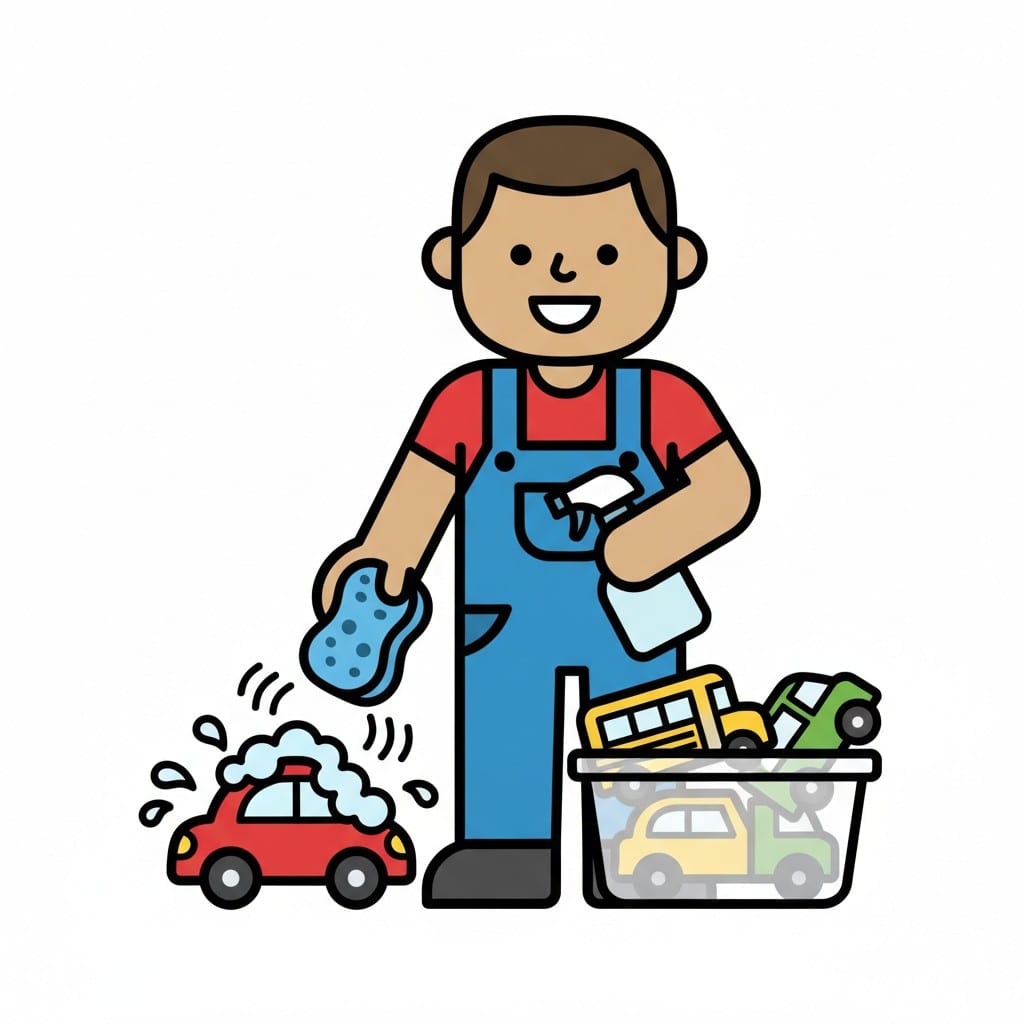 ♂
♂Clean toy cars
An illustrated boy in blue overalls and a red shirt washing a red toy car with a sponge and a spray bottle. Next to him is a clear bin filled with other toy cars.
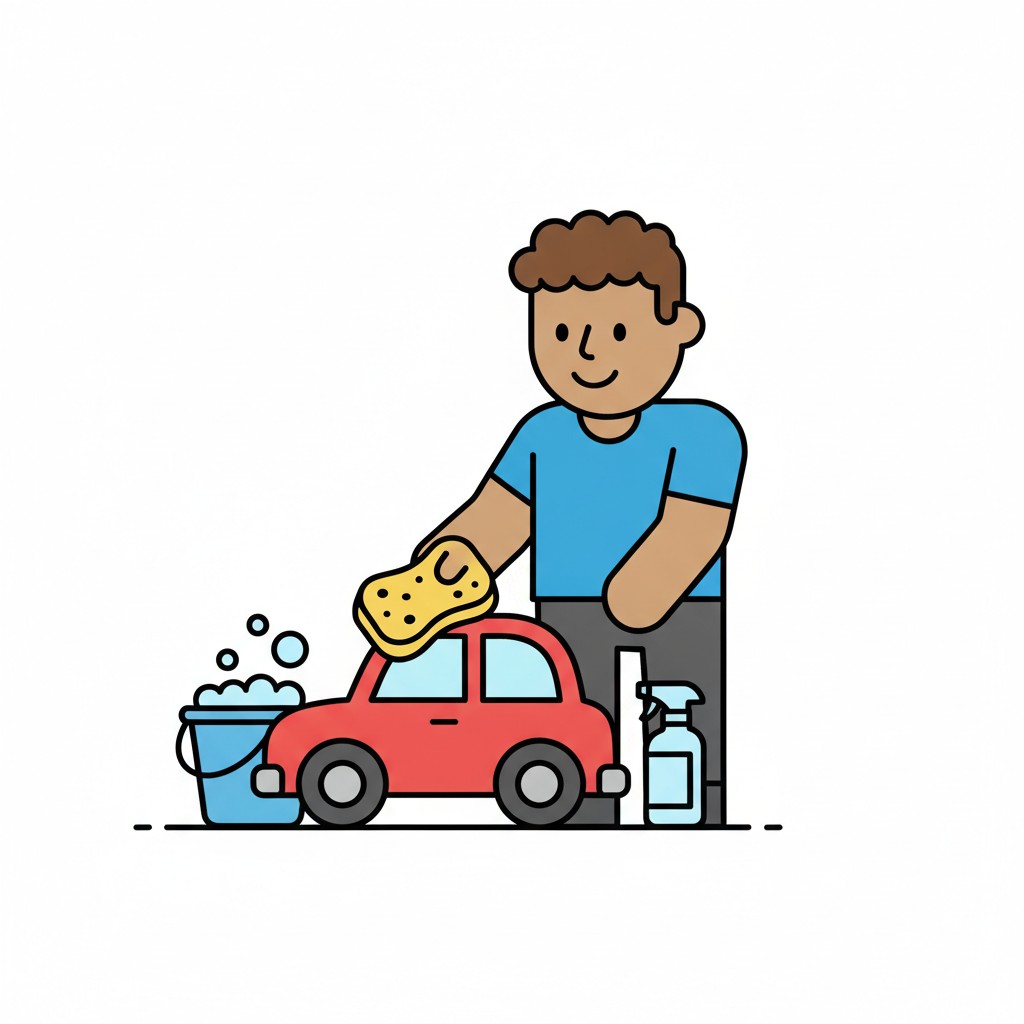 ♂
♂Boy washing toy car
A boy washes a red toy car with a sponge and a bucket of suds.
About this visual support
Cleaning up cars is rarely a fight against tidying itself. It is the story on the floor that protests. The red one is heading to the garage, the blue one just crashed, and suddenly everything is supposed to disappear into a box. For a child living inside the play, it is not clutter that needs to leave, it is a running story being silenced.
That is why visual support works best when it starts inside the play, not outside it. The first card can show the cars driving home, the second show them parking in a box or on a shelf, the third show the garage closing for the night. Cleanup becomes the last scene of the story instead of an interruption. The child gets to finish something rather than abandon it.
One concrete tip: decide on a fixed parking spot for the cars before you begin. A box, a mat, the edge of a shelf, the same place every time. Then the cars know where they are going, and your child does not have to make decisions in the middle of the ending. In Routined you can build the scenes into a short routine with the same images each time, so the ending becomes familiar.
Use this image in a schedule
Build your own visual schedule with this image and download it as a print-ready PDF. Completely free.

More similar visual supports
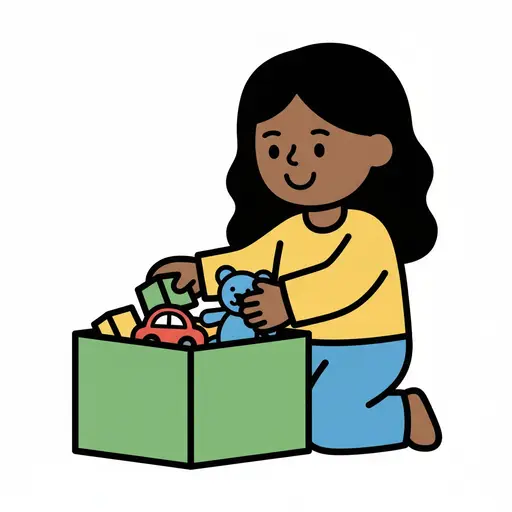
Clean up toys
A girl kneels and puts toys into a green box.
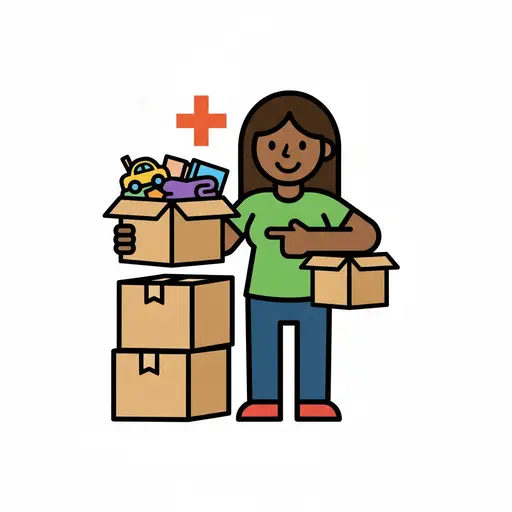
Pick up things
A woman stands by a stack of boxes with things inside.
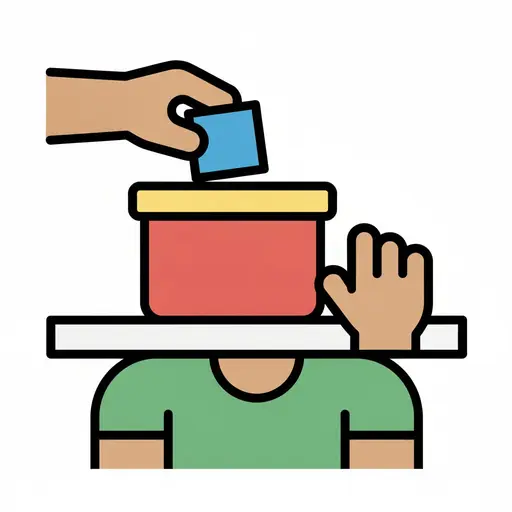
Put away
A hand places a blue block into a red container on a shelf.
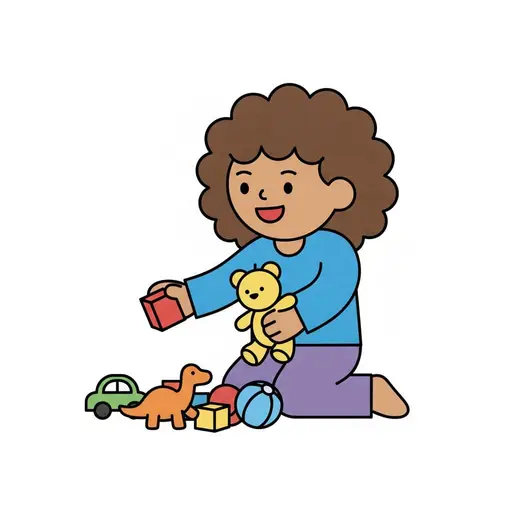
Put away toys
A child kneels holding a yellow teddy and a red block, with toys on the floor.
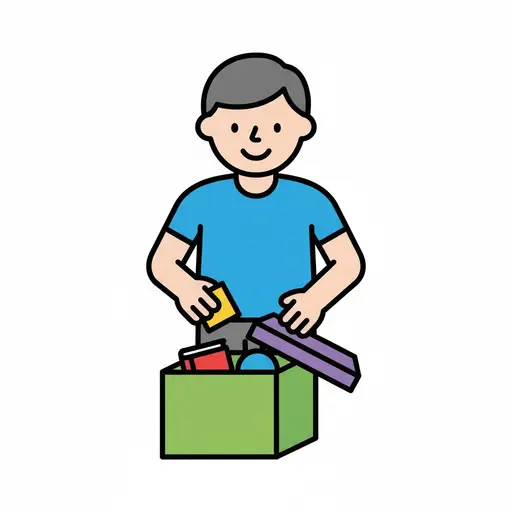
Put things away
A person puts things down into a green box with a lid beside it.
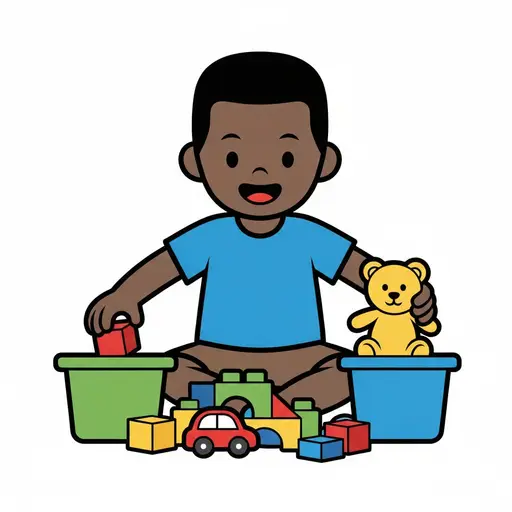
Sort toys
A boy sorts blocks and toys into a green and a blue bin.
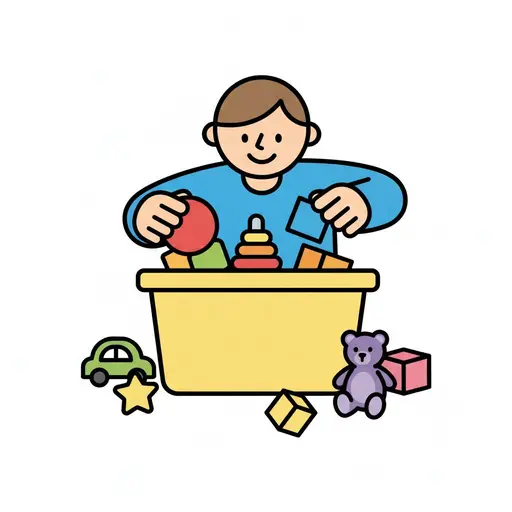
Straighten up
A child puts toys into a yellow tub, with a car, a teddy and a block on the floo...
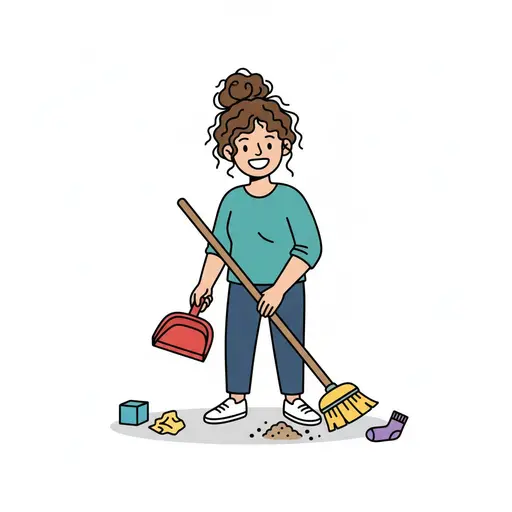
Tidy up
A smiling person with hair in a bun sweeps dirt on the floor with a broom while ...
Take the visual supports with you
In Routined you build schedules from these pictures, add timers and voice instructions, and your child follows the day on their own.


* 14-day free trial, then $2.39 a month or $20.99 a year (US pricing). Cancel anytime.