Dirty clothes
Yesterday’s smell, a stain catching the light, a favourite top your child refuses to part with. The pictures below turn the difference between dirty and clean into something you can simply point at.

Dirty clothes
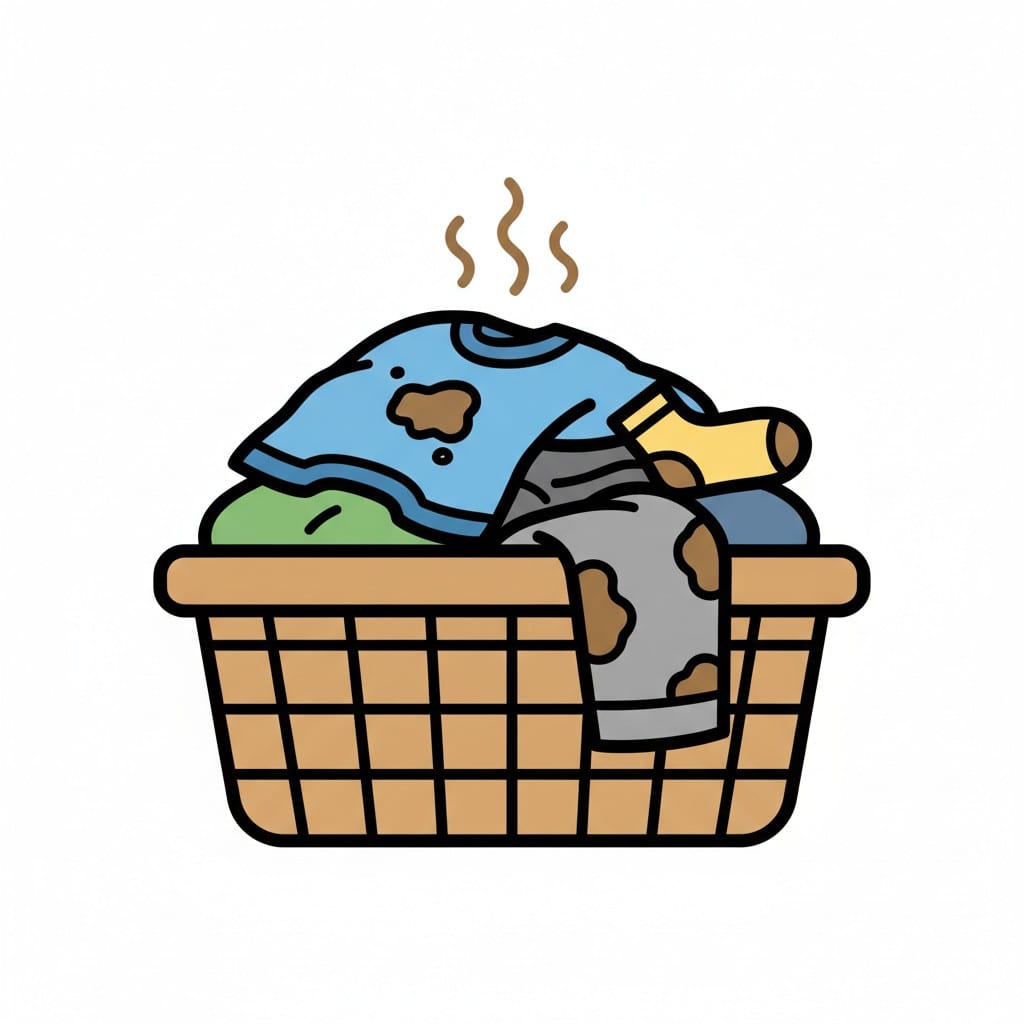
A pile of dirty clothes and a sock, indicating a bad smell.
Dirty clothes
A basket of stained clothes giving off a bad smell.
About this visual support
Dirty clothes are rarely just about the wash. A favourite top might smell faintly but feel safe, a sock can look fine yet hide a dark line under the foot, a hoodie gets worn three days running because the fabric sits right against the skin. For children who read their bodies more loudly than other signals, trusting an adult voice over their own comfort is genuinely hard.
That is where pictures come in. When a child sees an image of a stained shirt or a sock in the laundry basket, the decision moves away from your voice and into something they can study calmly. Their eyes do the work, not the nagging.
One practical tip: don’t forget the smell test. It sounds obvious but children often miss that a clean-looking jumper still needs washing. Let your child hold the item an arm’s length from the nose and decide. That small bit of autonomy often gets the favourite shirt into the basket without a fight. In the Routined app you can pair these pictures with a short wash-day routine and a reminder, and the 14-day trial is enough to see if it clicks at home.
Use this image in a schedule
Build your own visual schedule with this image and download it as a print-ready PDF. Completely free.
More similar visual supports
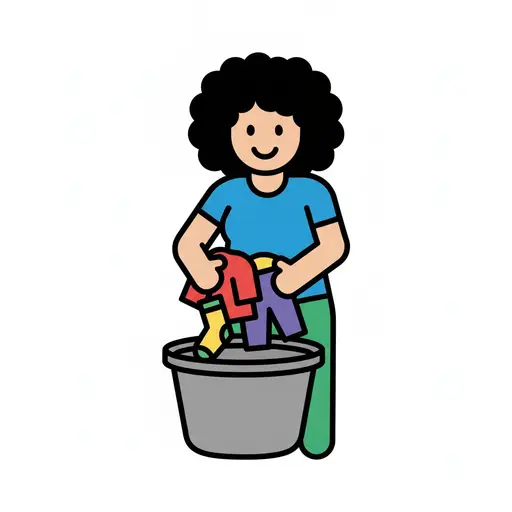
Put dirty clothes
A girl pushes dirty clothes down into a grey tub.
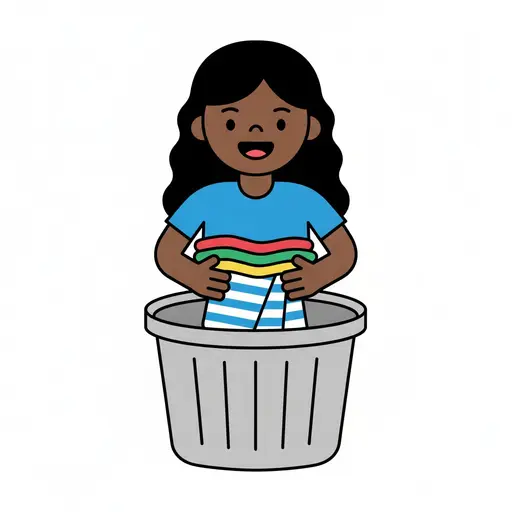
Put in the laundry basket
A child puts a pile of clothes into a laundry basket.
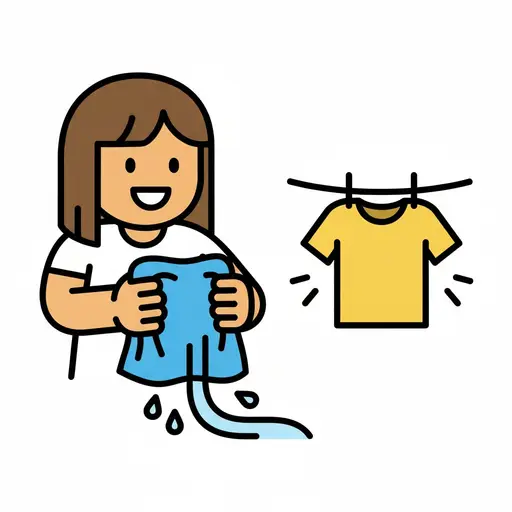
Dry
A person wrings water out of a blue piece of clothing, while a yellow t-shirt ha...
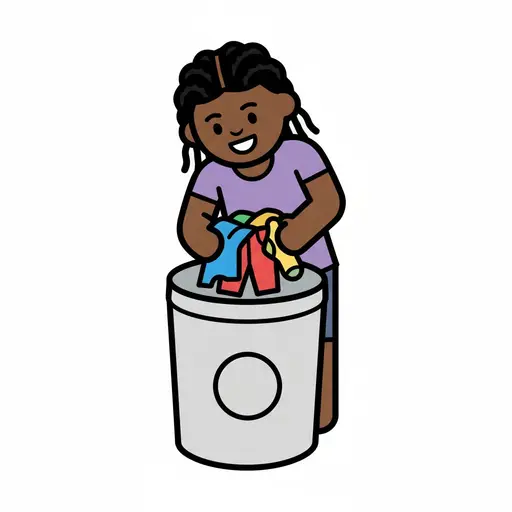
Gather dirty laundry
A girl putting dirty clothes into a laundry basket.
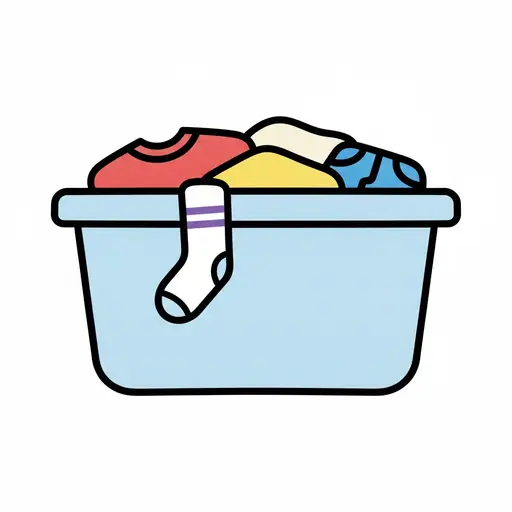
Laundry basket
A light blue plastic tub is full of red, yellow and blue clothes, with a white s...
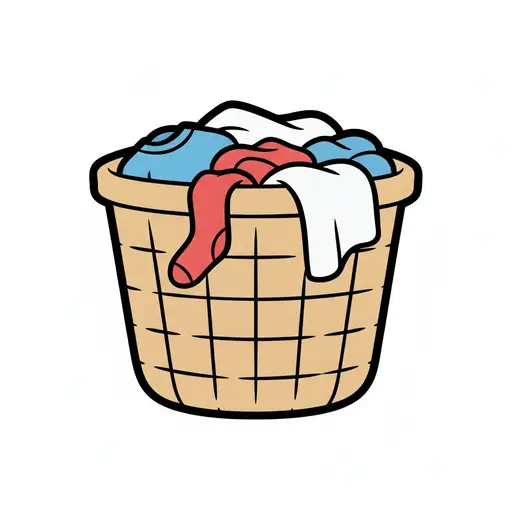
Laundry in basket
A woven wicker basket packed with laundry, a red sock and a white towel spilling...
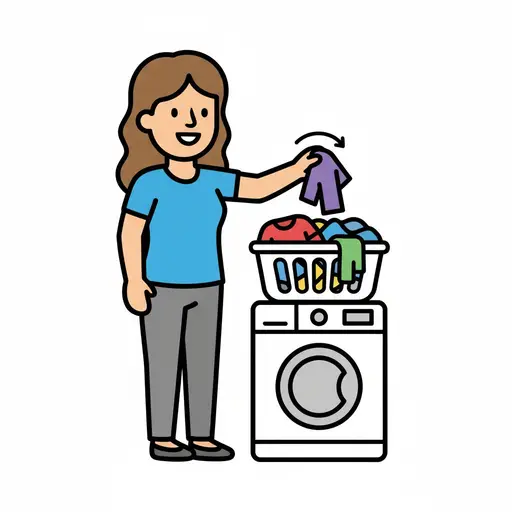
Put clothes in the laundry basket
A person places a piece of clothing into a laundry basket on top of a washing ma...
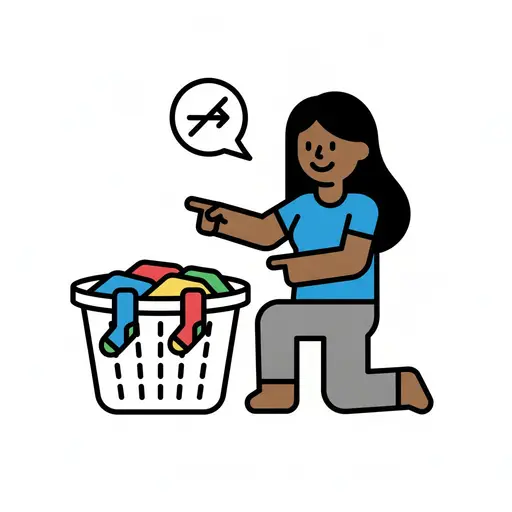
Hand in laundry
Kneeling on the floor, a girl with long hair points towards a white basket fille...
This visual support in other languages
Take the visual supports with you
In Routined you build schedules from these pictures, add timers and voice instructions, and your child follows the day on their own.


* 14-day free trial, then $2.39 a month or $20.99 a year (US pricing). Cancel anytime.