Do dishes
Doing the dishes is one of the few daily chores with no visible finish line. The pile shrinks, but hands stay wet, warm and greasy. The visual schedule below shows that even an open-ended task has firm sub-steps.
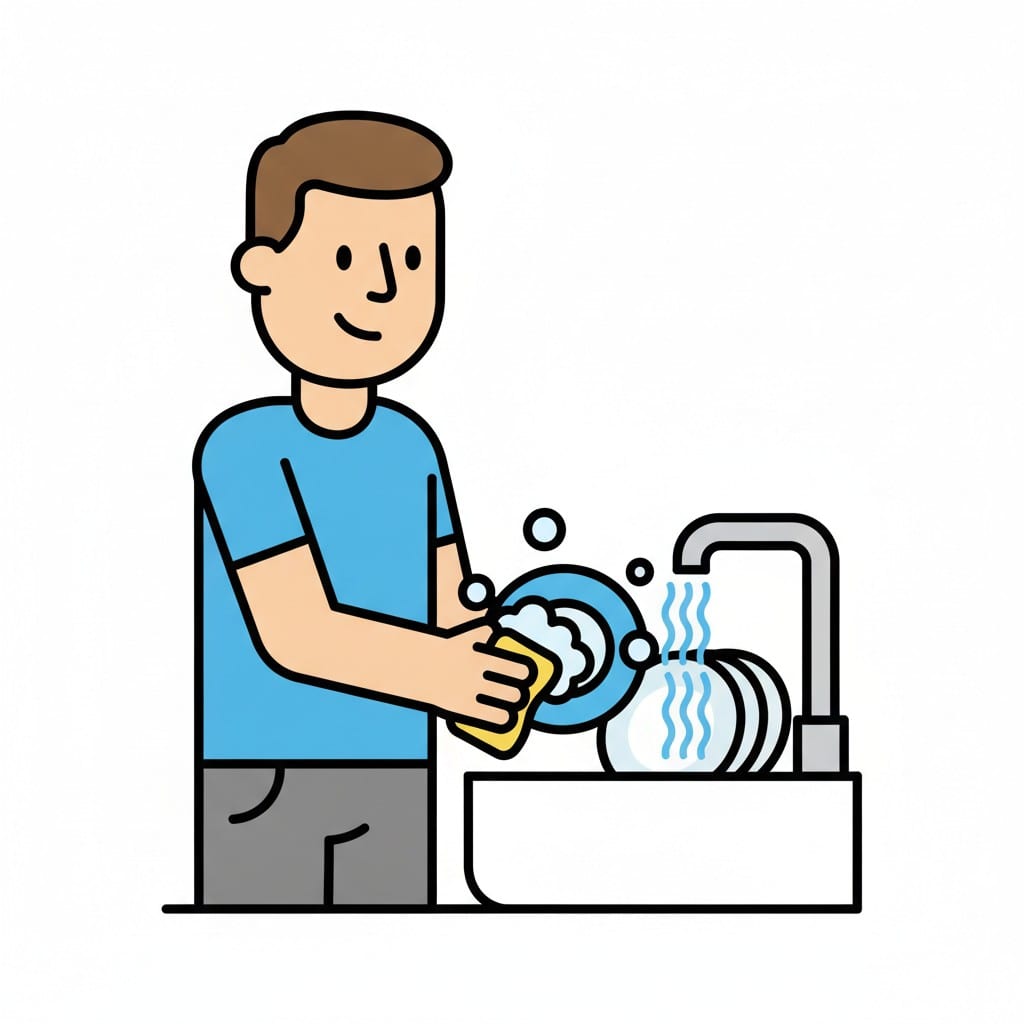 ♂
♂Do dishes
A person washes a plate with a sponge under running water.
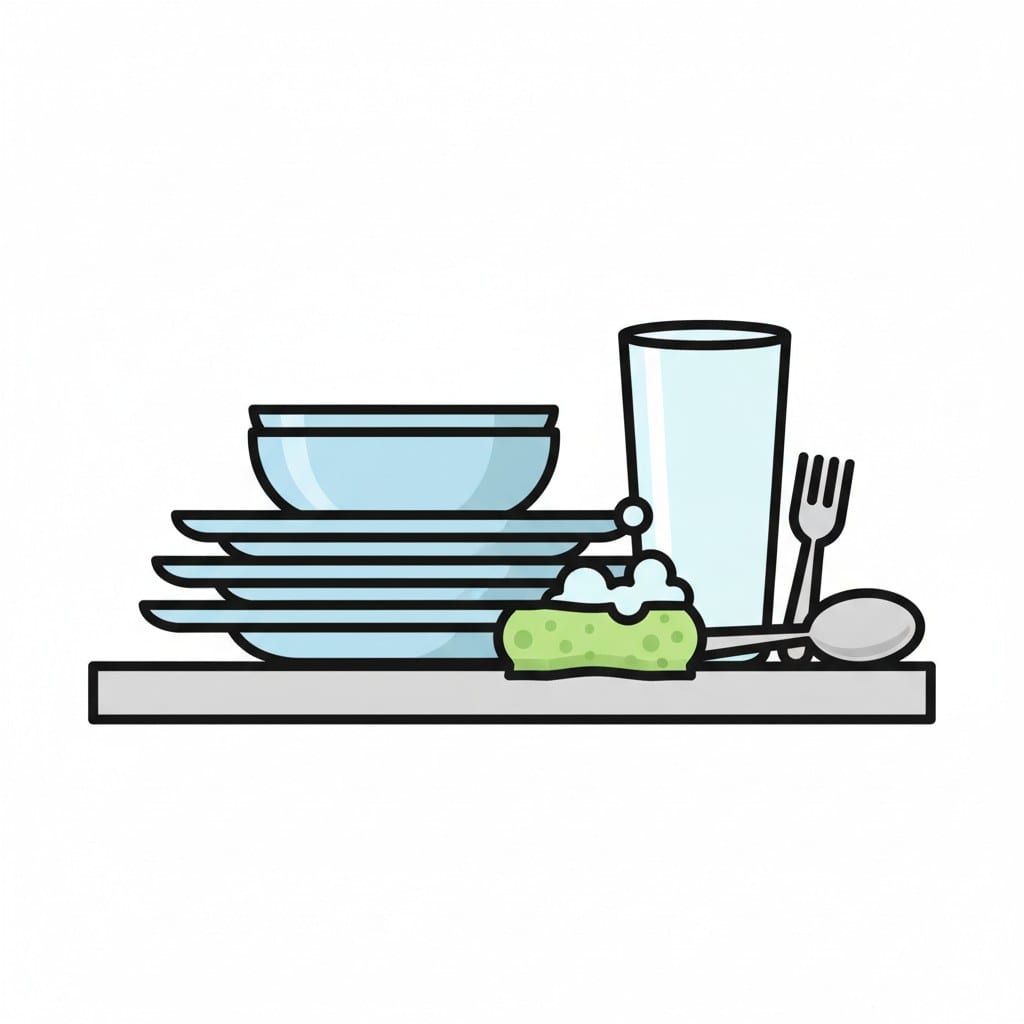
Dishes
Plates, bowls, a glass and cutlery stacked on the counter, with a soapy sponge.
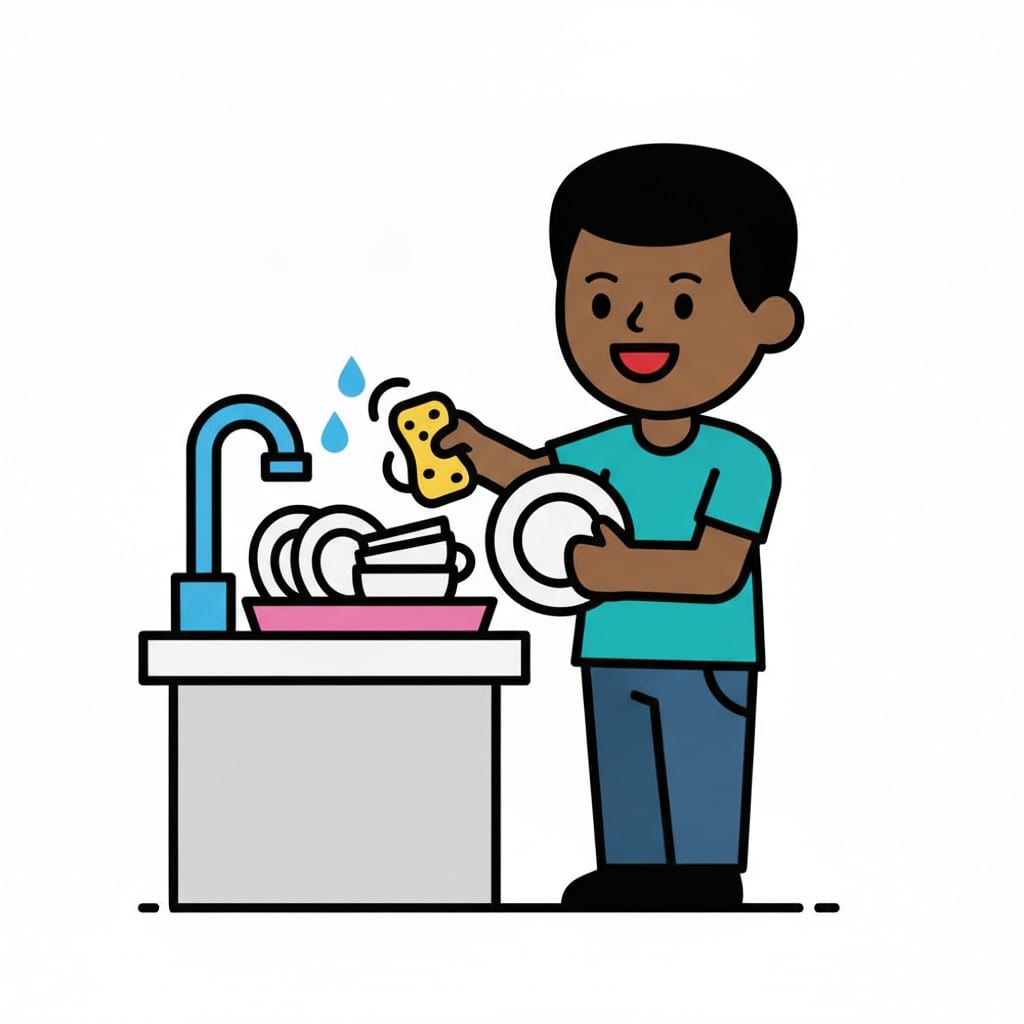 ♂
♂Washing up with a sponge
A happy boy scrubs a plate with a yellow sponge at the sink with a pile of dishes.
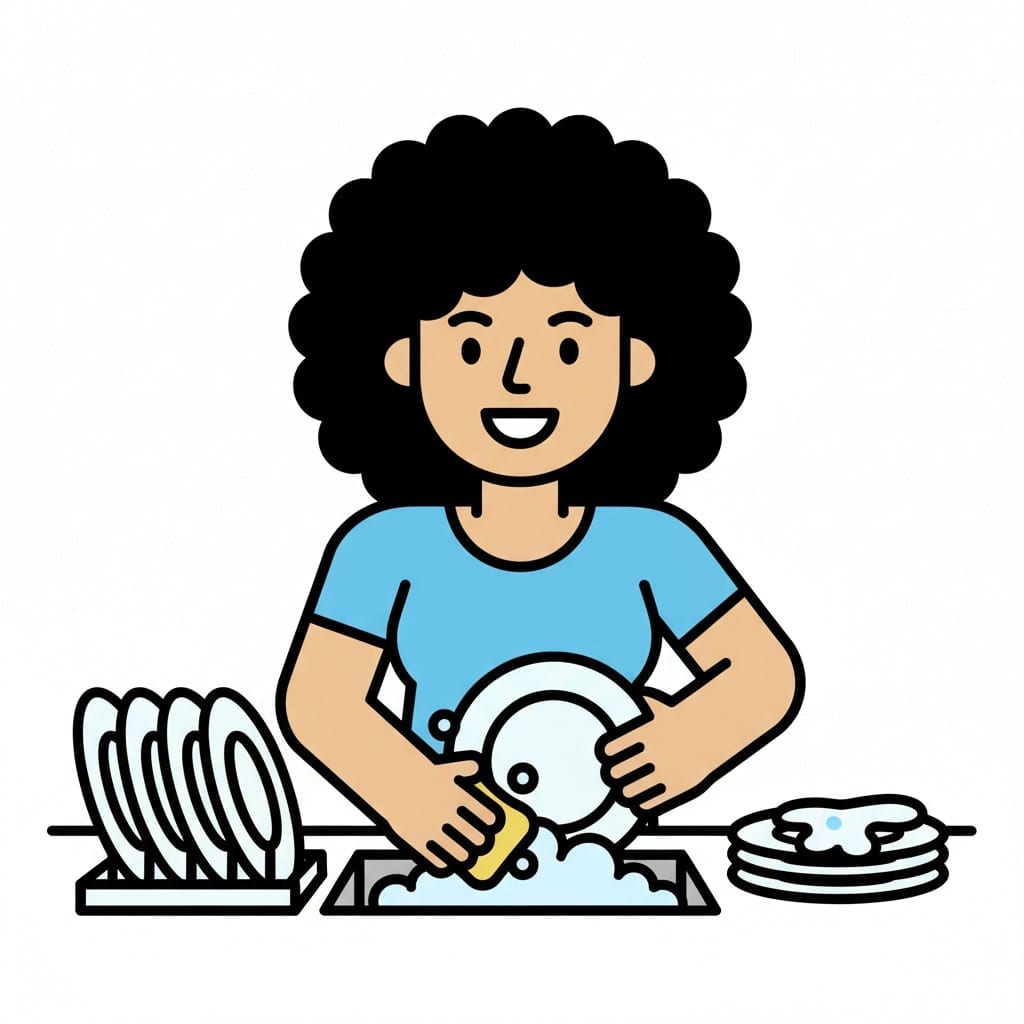 ♀
♀Do dishes
A person washes a plate over a soapy sink with a drying rack and clean plates beside.
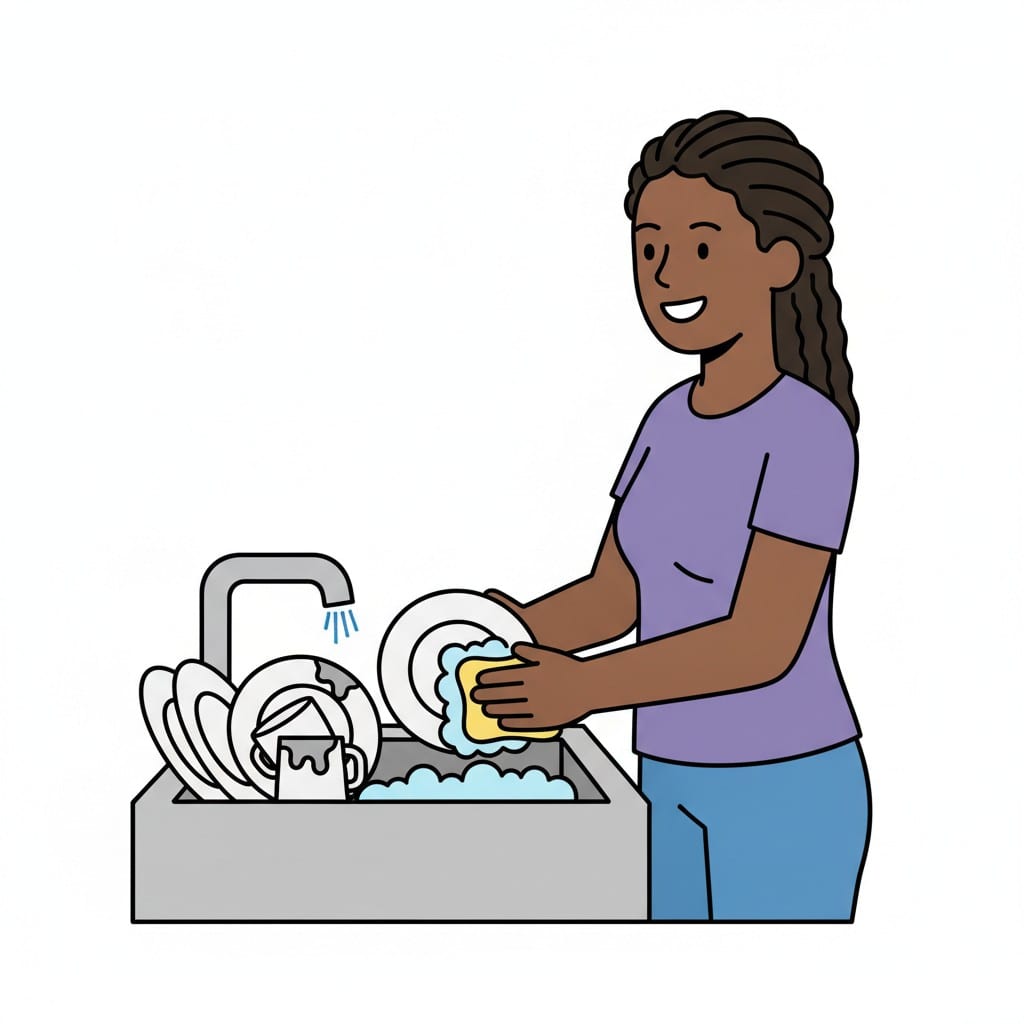 ♀
♀Do dishes
A person washes a plate with a yellow sponge at a sink full of dishes.
About this visual support
Grease on the fingers, food bits drifting up from the water, the smell that lingers in the suds. Many children get stuck not in the washing itself but in the sensory experience of having to keep going until everything is done. Because the finish line is unclear, the urge to stop after the third plate is strong.
The pictures give something to look at instead of counting how many dishes are left. Scrape, wet, soap, rinse, place on the rack, each one its own card. The sequence repeats until the sink is empty, and that repetition becomes the visible rhythm that replaces the missing finish line.
A concrete tip: split the dishes into two piles before you start, glasses on one side and plates on the other. Each pile then becomes a sub-victory with a clear end. In the Routined app you can save the dish sequence and turn on a timer per step, so even the thankless rinsing has a far edge to it.
Use this image in a schedule
Build your own visual schedule with this image and download it as a print-ready PDF. Completely free.
More similar visual supports
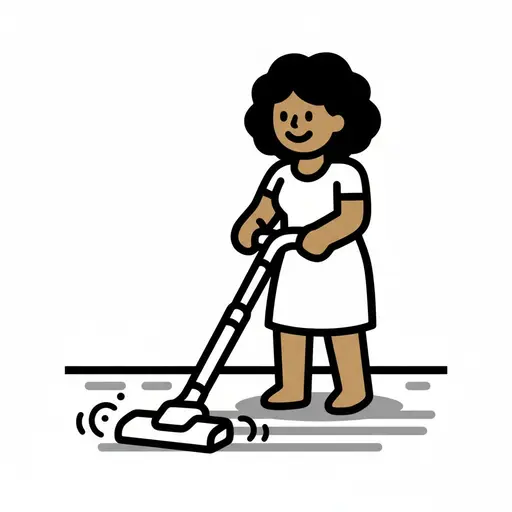
Vacuum the floor
A woman in a white dress runs a vacuum cleaner with a long wand across the floor...
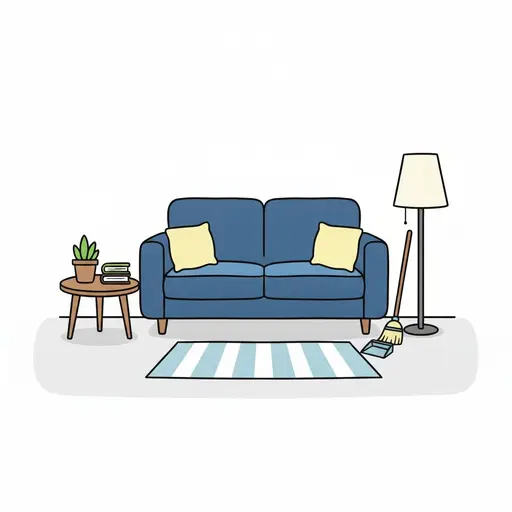
Clean the living room
A living room with a blue sofa, floor lamp and side table, with a broom leaning ...
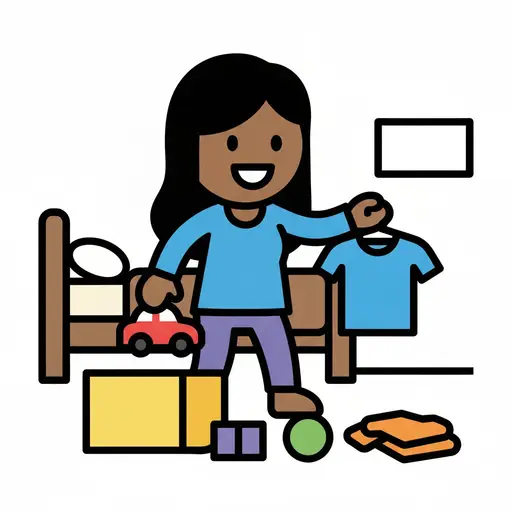
Clean your room
A child tidies their room, holding up a shirt among toys and boxes.
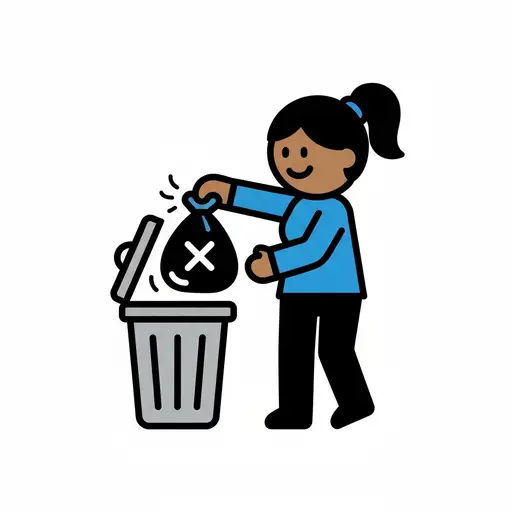
Throw out trash
A girl drops a bag of trash into an open bin.
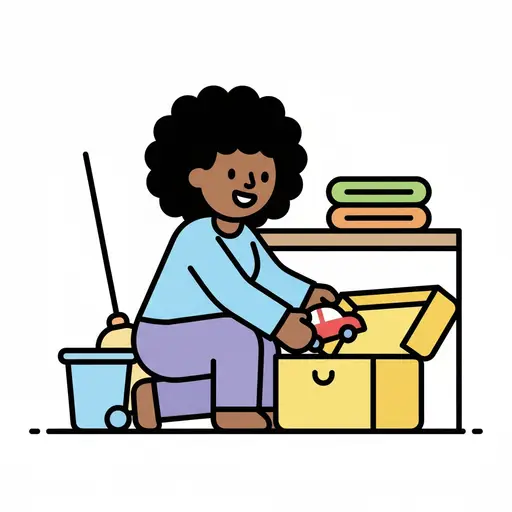
Straighten up the room
A woman puts toys into a yellow box with cleaning things nearby.
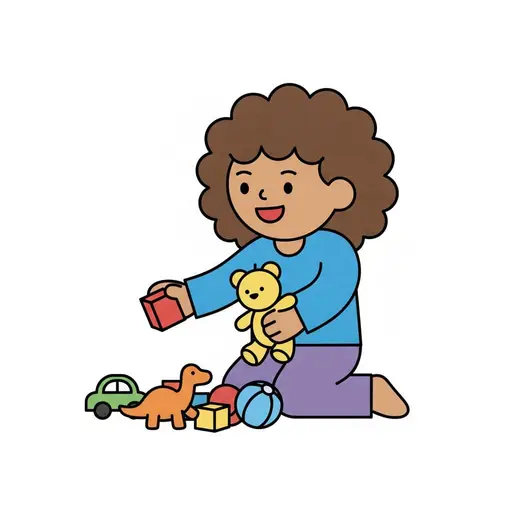
Put away toys
A child kneels holding a yellow teddy and a red block, with toys on the floor.
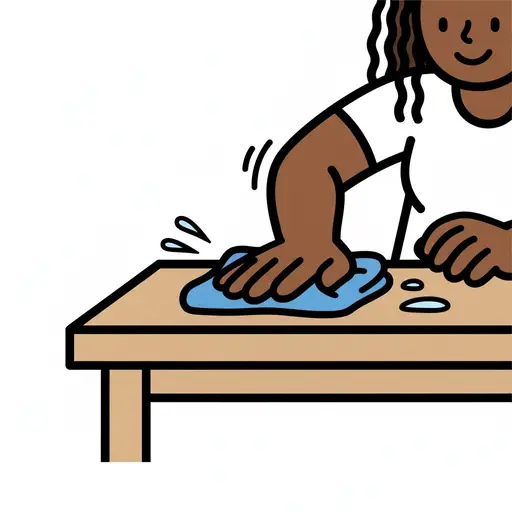
Wipe the desk
A child wipes a wooden desktop with a blue cloth.

Wash car
A boy washing a red car with a sponge and a bucket of foam.
This visual support in other languages
Take the visual supports with you
In Routined you build schedules from these pictures, add timers and voice instructions, and your child follows the day on their own.


* 14-day free trial, then $2.39 a month or $20.99 a year (US pricing). Cancel anytime.