Do laundry
Doing laundry is a long chain: basket, hallway, machine, button. For many children it stalls at the floor pile. The steps below break the job into small images you can tackle one at a time.
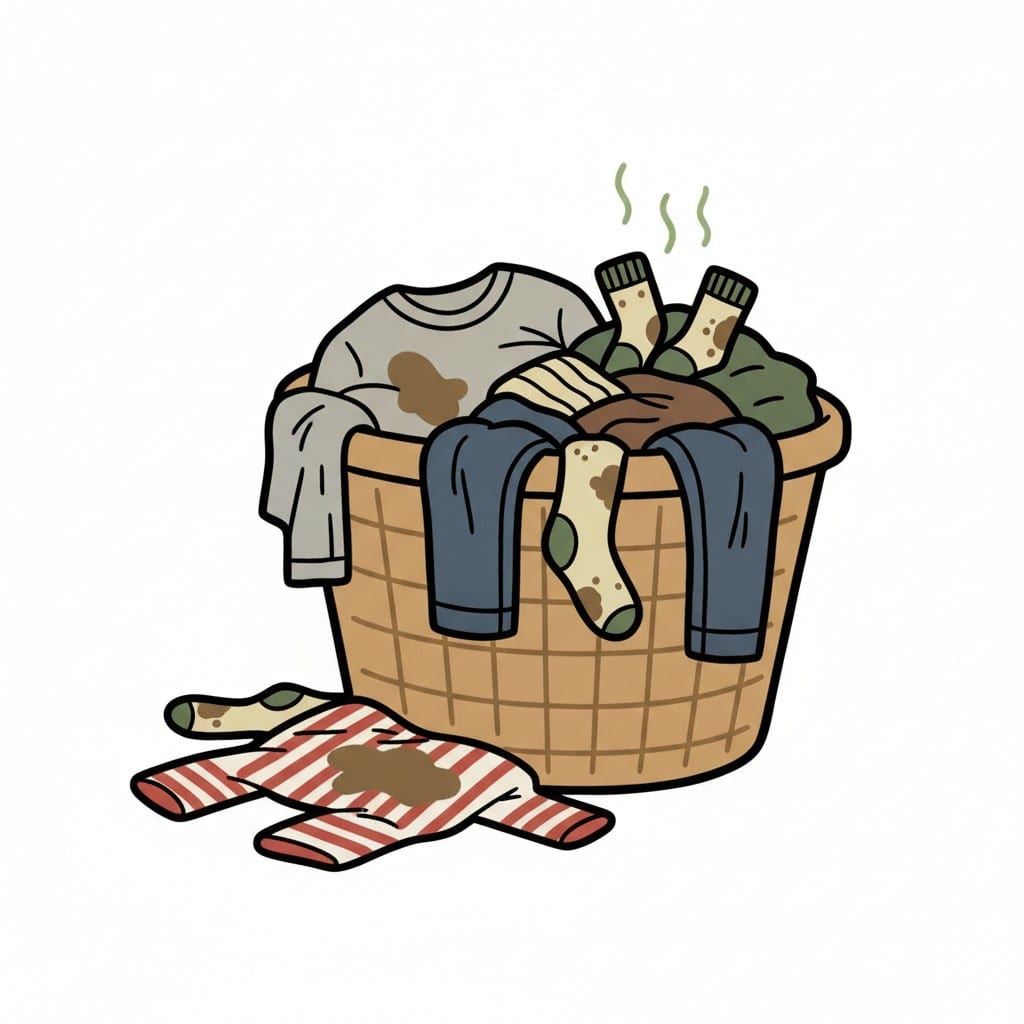
Full laundry basket
A woven basket overflows with dirty clothes, with stained socks and a striped shirt lying on the floor beside it.
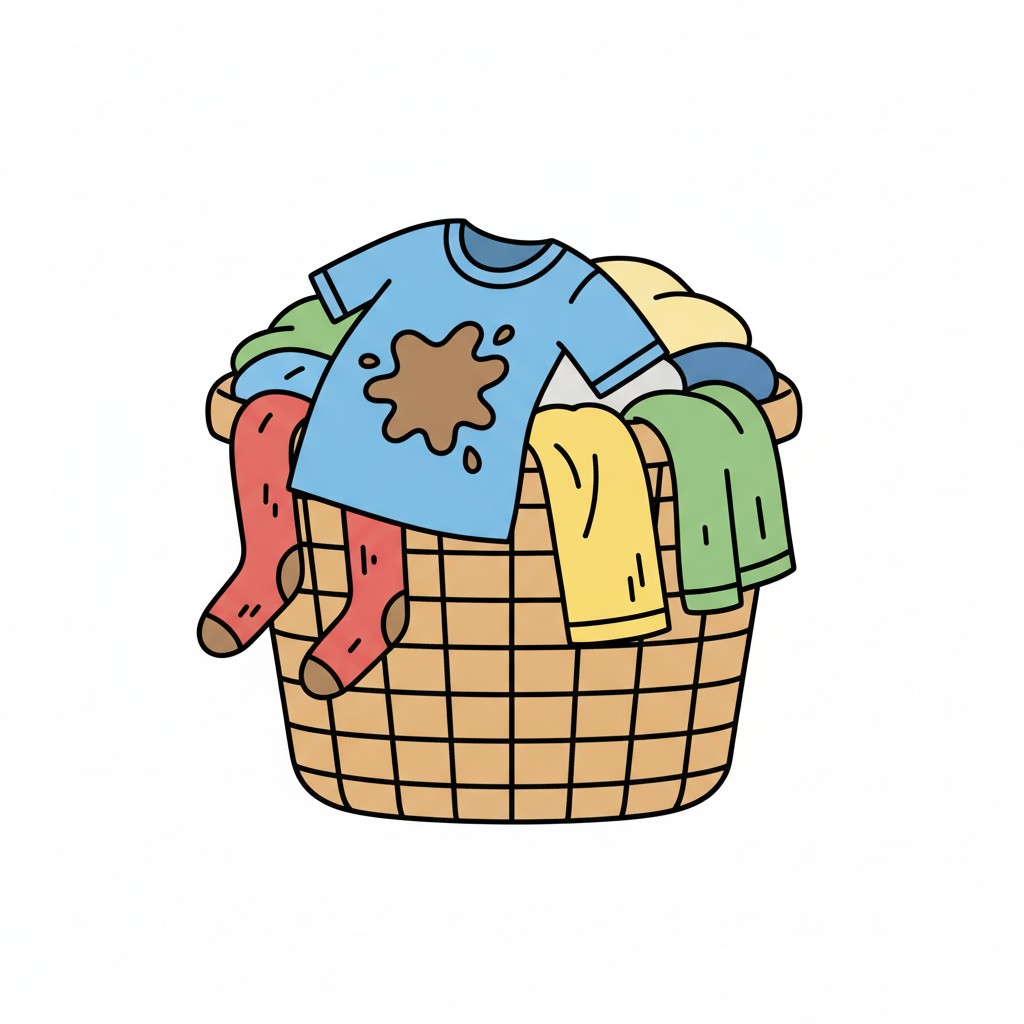
Dirty laundry
A laundry basket full of clothes with a stained T-shirt on top.
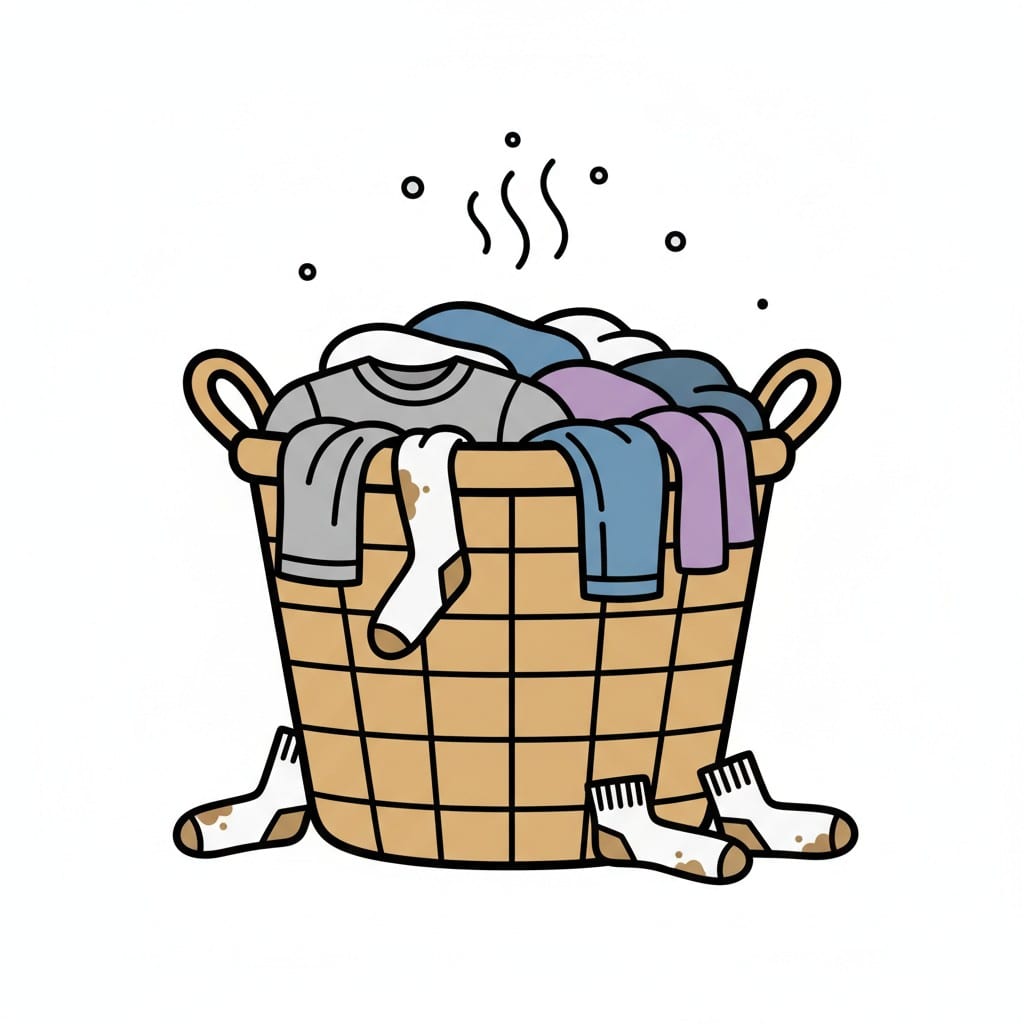
Dirty laundry
A large woven basket filled with dirty clothes, including socks with stains on the floor around the basket, with steam symbols indicating a bad smell.
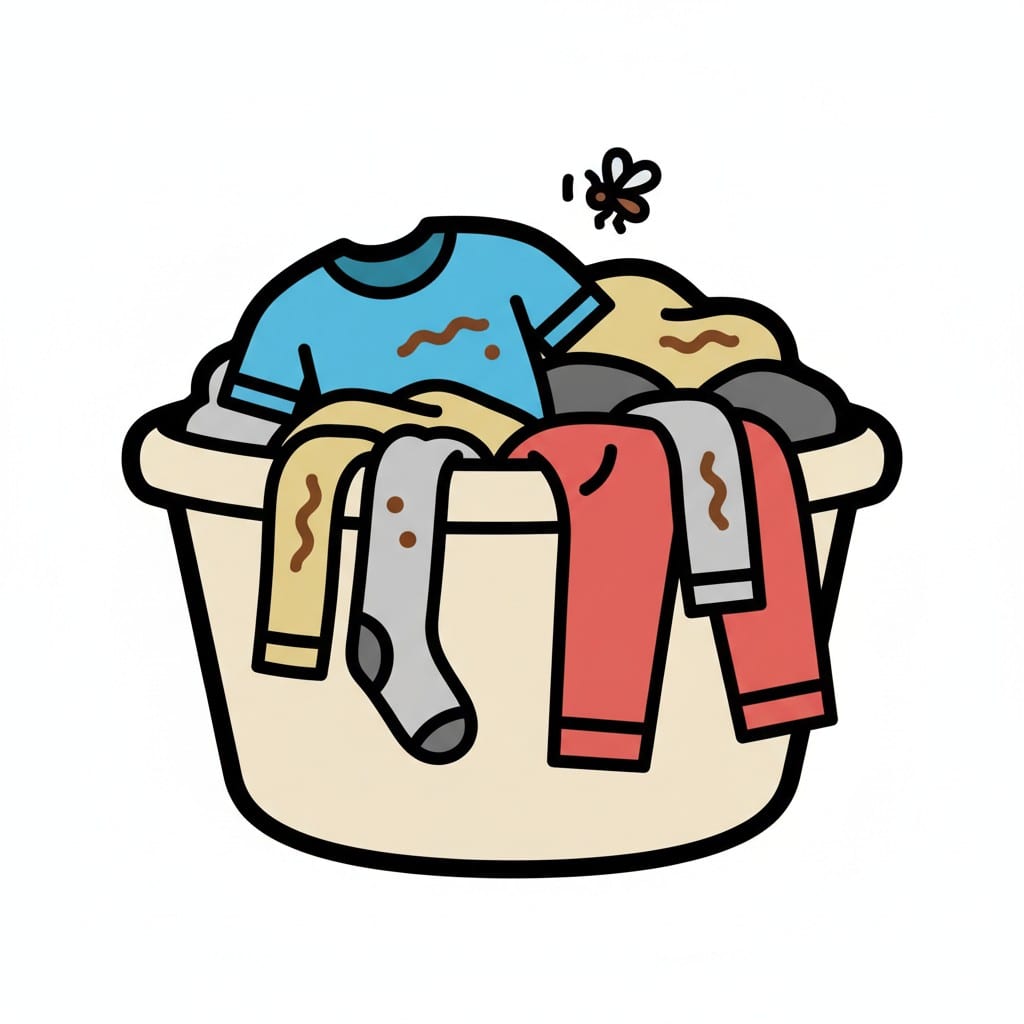
Dirty laundry
A laundry tub filled with dirty clothes, including a blue shirt with wavy brown lines indicating stains, and a fly flying above.
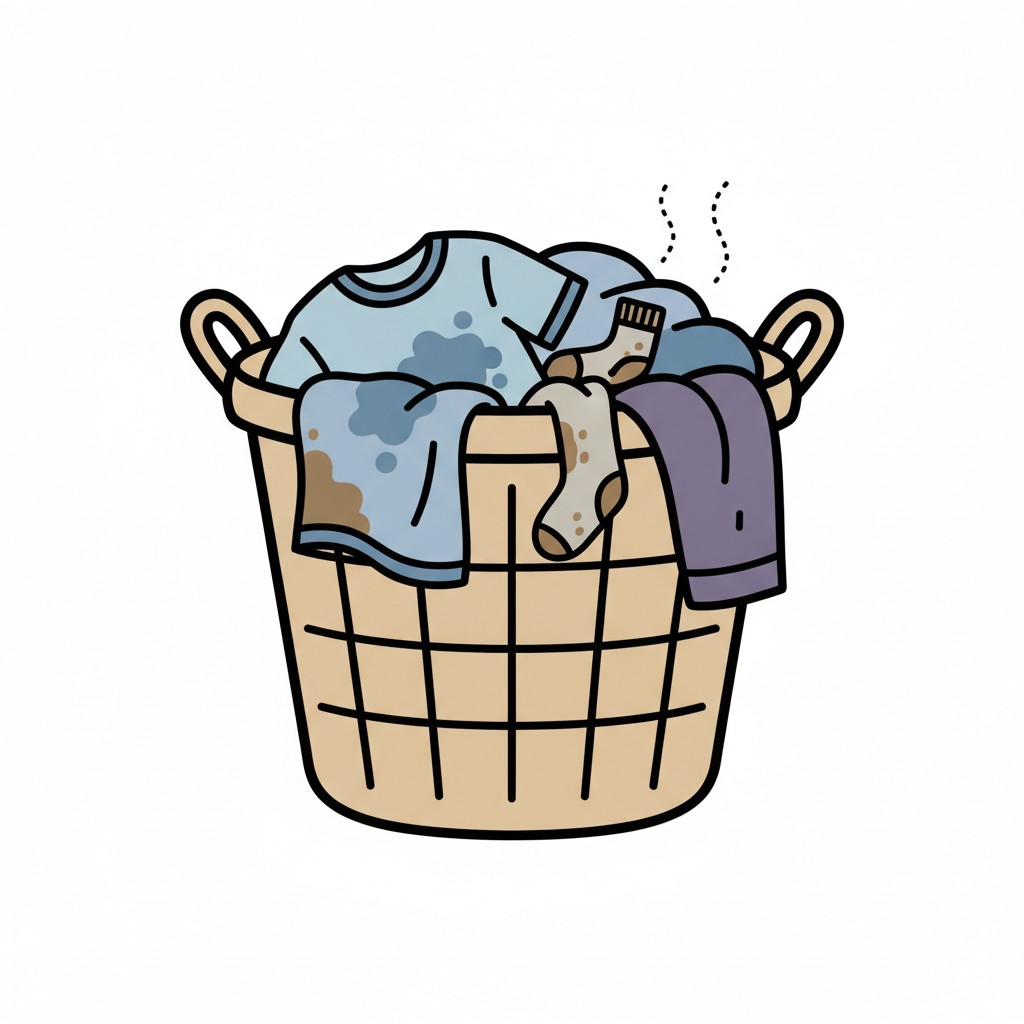
Basket of dirty laundry
A wicker basket filled with dirty clothes and socks.
About this visual support
Picture laundry from a child’s point of view: a crumpled heap by the bed, a basket parked somewhere, a humming warm room. It is not one task, it is at least five. For a child whose executive function is shaky, the chain often snaps at the first step, and the heap stays put.
A visual schedule gives every step its own square to point at. Sort darks from lights, carry the basket to the machine, open the door, load, pour detergent, close, choose a programme, press start. Once the whole chain sits in front of the child at the same time, the brain can stop guessing what comes next and just do what is shown.
One practical tip: keep the detergent-dose picture stuck to the machine itself, not just inside the app. Dose is the question that comes up every single time, and a sticker next to the cap answers it on the spot. Beyond that, the schedule works best when your child gets to own one sub-step independently before taking on the rest at their own pace. In the Routined app you can chain the cards into a wash-day routine with a start button, and the 14-day trial is enough to give it a real go.
Use this image in a schedule
Build your own visual schedule with this image and download it as a print-ready PDF. Completely free.

More similar visual supports
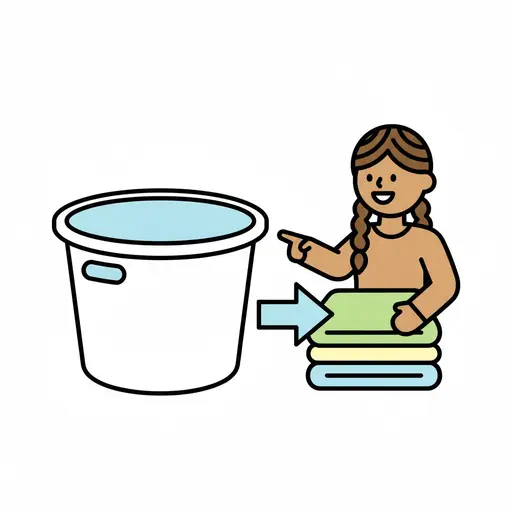
Empty laundry
A person points at an empty white basket with a blue arrow from a stack of folde...
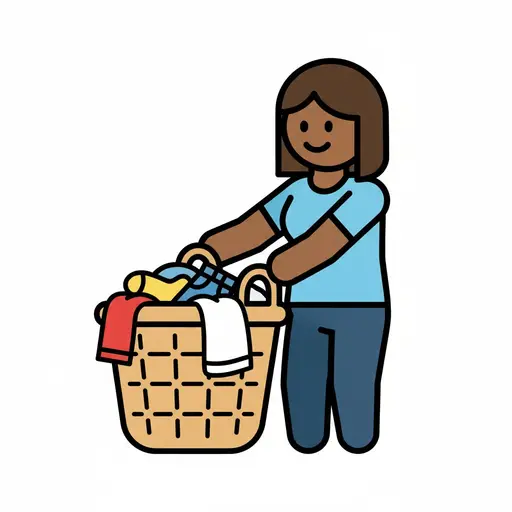
Get laundry
A woman is standing next to a laundry basket filled with clothes.
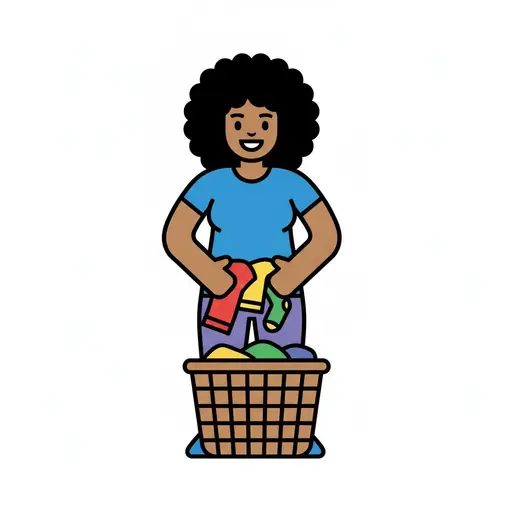
Put clothes in laundry basket
A girl drops dirty clothes into a wicker basket.
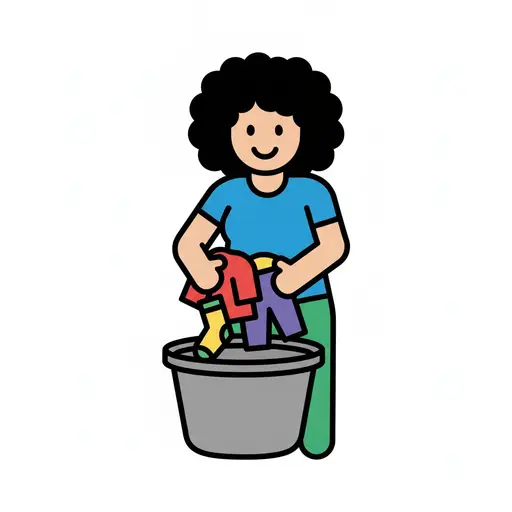
Put dirty clothes
A girl pushes dirty clothes down into a grey tub.
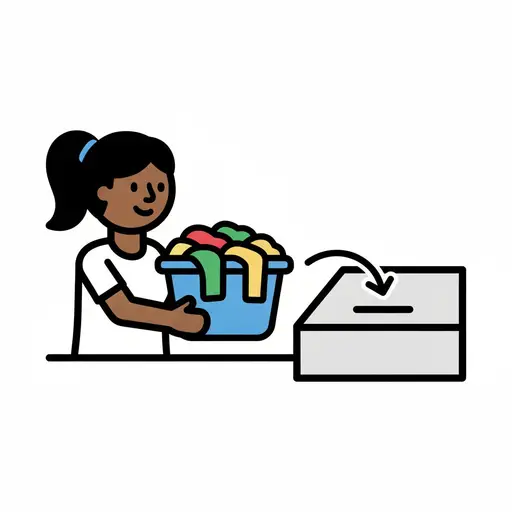
Drop off laundry
A girl with a ponytail holds a blue basket of colourful clothes while an arrow p...
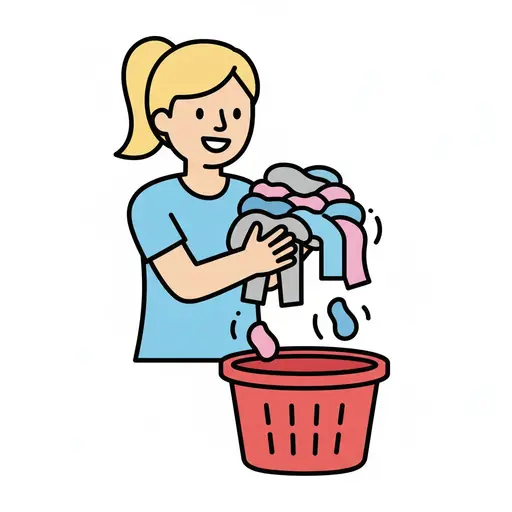
Drop the laundry in the basket
A girl lets an armful of dirty clothes fall into a red laundry basket.
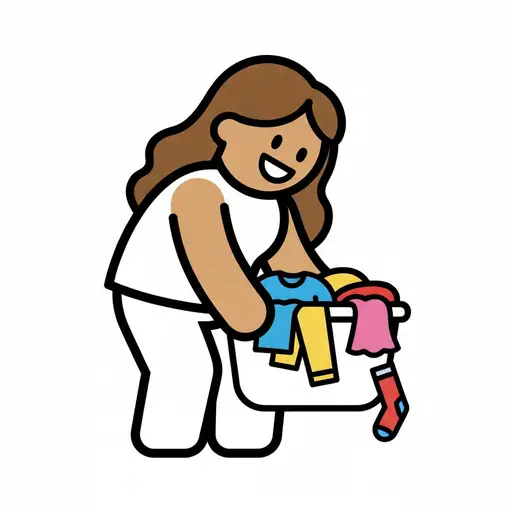
Fetch the laundry
A woman bends down and puts clothes into a laundry basket.
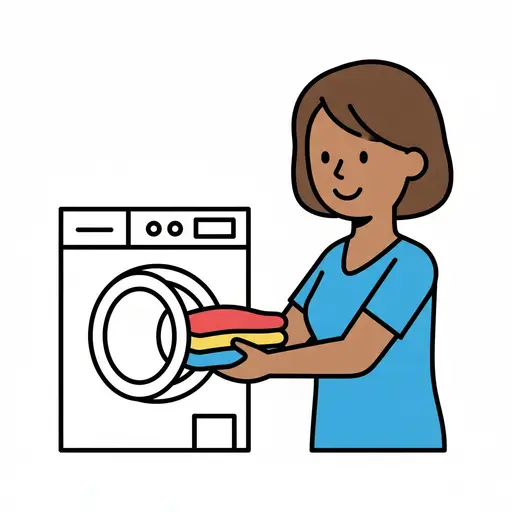
Fill Washing Machine
A girl puts colorful clothes into a washing machine.
Take the visual supports with you
In Routined you build schedules from these pictures, add timers and voice instructions, and your child follows the day on their own.


* 14-day free trial, then $2.39 a month or $20.99 a year (US pricing). Cancel anytime.