Dry
Laundry is done when it feels dry, not when the clock says so. The visual support below gives the whole process a shape, so the wait becomes something the child can picture instead of an empty stretch.
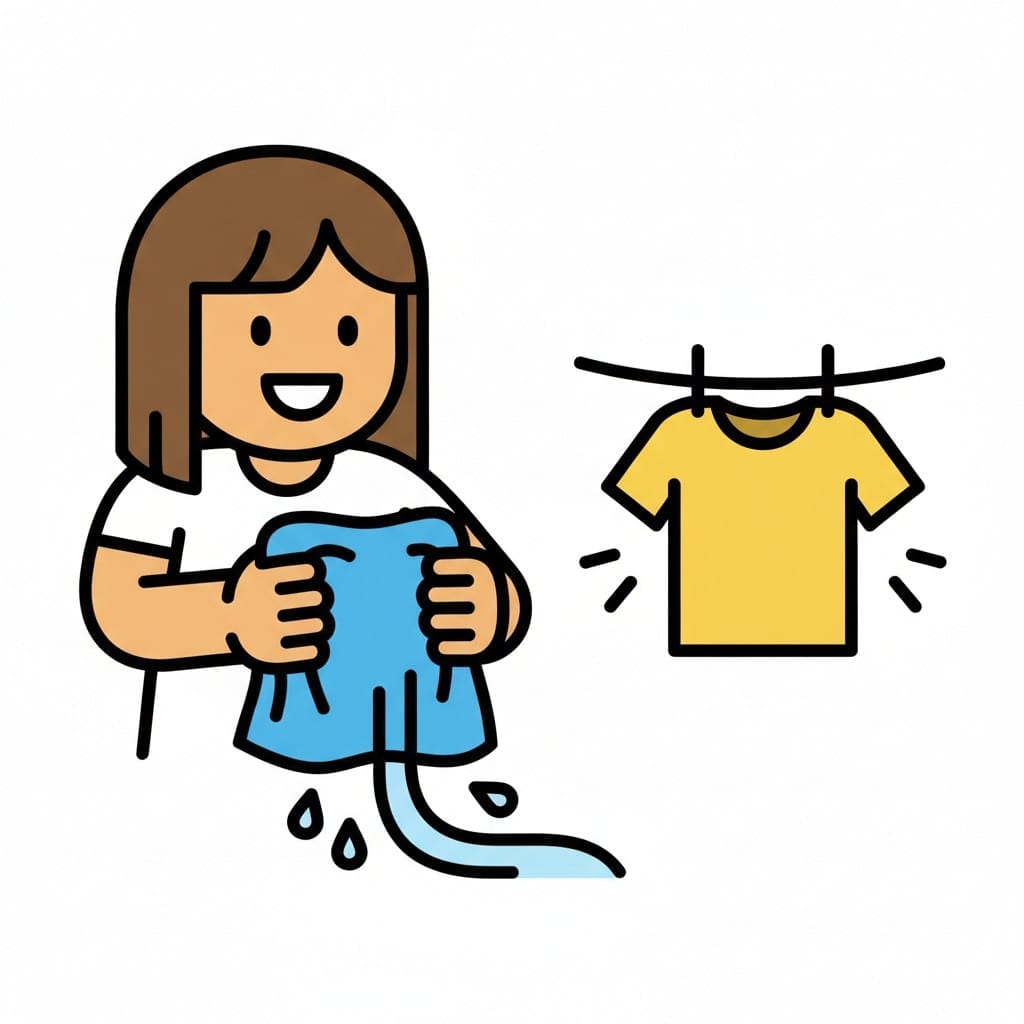 ♀
♀Dry clothes
A person wrings water out of a blue piece of clothing, while a yellow t-shirt hangs to dry on a line.
About this visual support
Drying is one of the chores where time perception gets blurry. A clock cannot tell you when the jeans are dry, and you cannot calculate it in advance either. Thick trousers take longer than thin tees, cold weather is not the same as windy weather, and a tumble dryer behaves differently depending on how full it is. For many children and teens the task feels like it never quite ends, which makes skipping it tempting.
A visual support gives drying a visible arc: hang up or start the dryer, wait, feel, take down or take out, fold if needed. With the steps laid out, the waiting becomes part of the routine instead of a loose moment that floats. It also makes it clear that done-feels-dry is an active decision, not a magical instant that someone else has to declare.
One concrete tip: include a picture of a hand pinching a seam or a sock cuff, the spot that dries last. That gives the child a real check-point and removes the guessing about whether the laundry is finished. The whole laundry chain, from sorting to folding, can be built as a sequence in Routined, free for 14 days.
Use this image in a schedule
Build your own visual schedule with this image and download it as a print-ready PDF. Completely free.

More similar visual supports
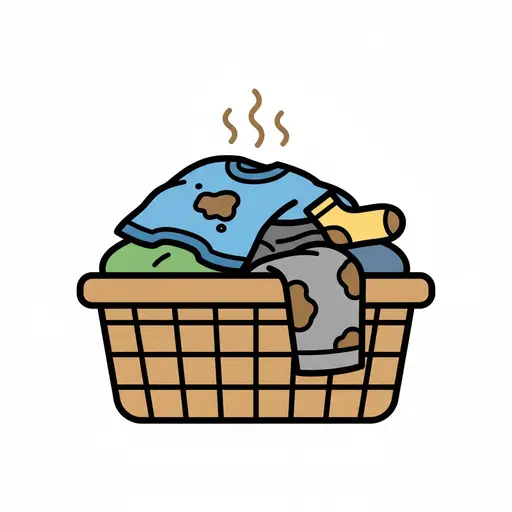
Dirty clothes
A basket of stained clothes giving off a bad smell.
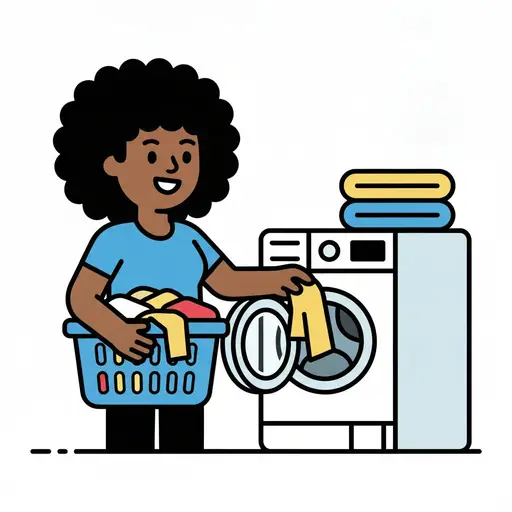
Do the washing
A person holds a laundry basket and loads yellow clothes into a washing machine.
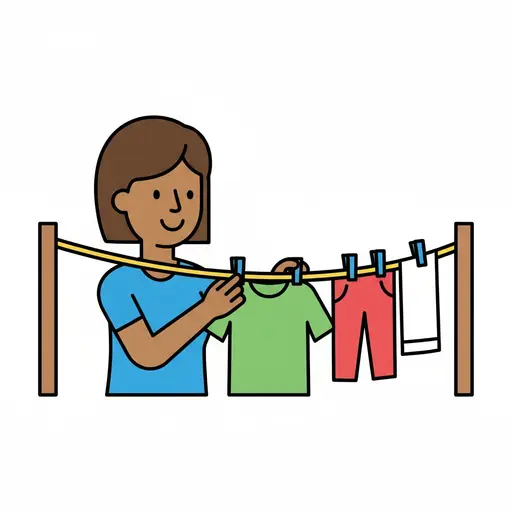
Hang laundry
Using clothespins, a woman fastens a green t-shirt to a washing line strung betw...
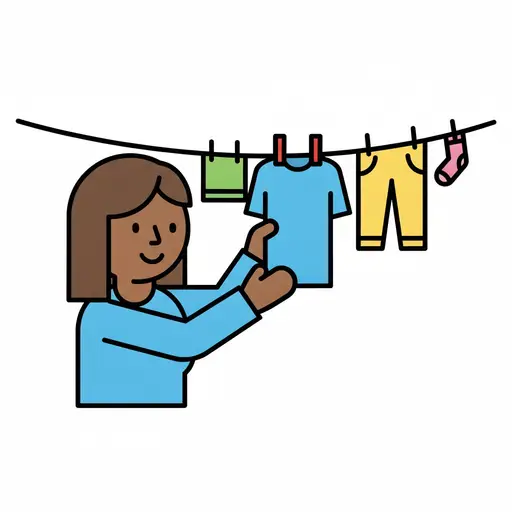
Hang Up Laundry
Reaching upwards, a long haired woman hangs a blue t-shirt on the washing line a...
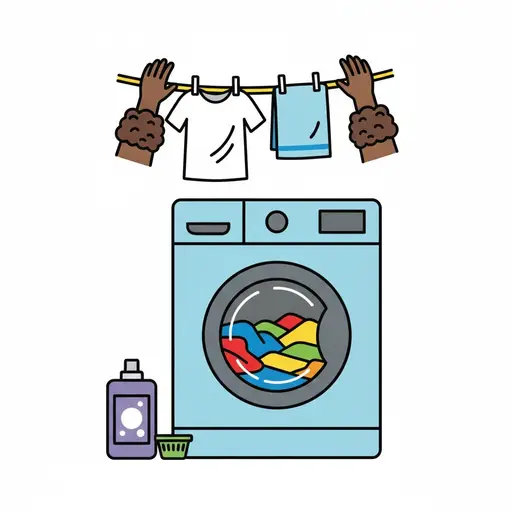
Run the washing machine
A washing machine full of coloured clothes and detergent, with hands hanging lau...
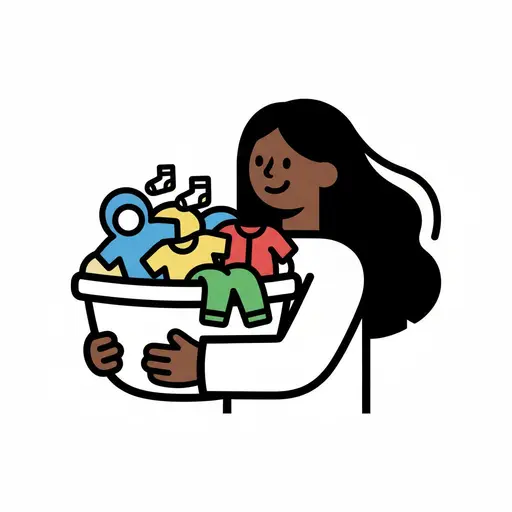
Bring children's clothes
A woman holds a basket filled with colorful children's clothes.
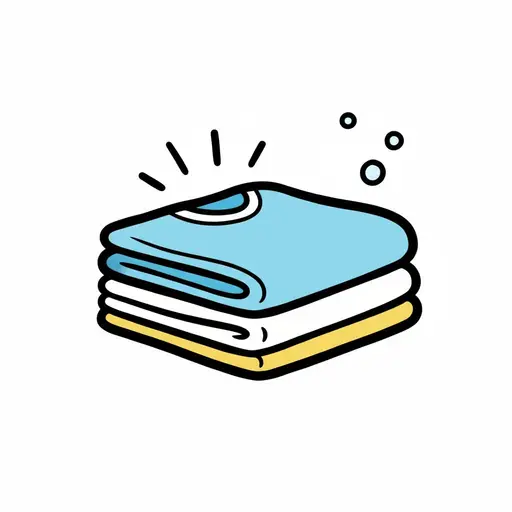
Clean clothes
A stack of clean, folded laundry. A light blue shirt, a white shirt, and a yello...
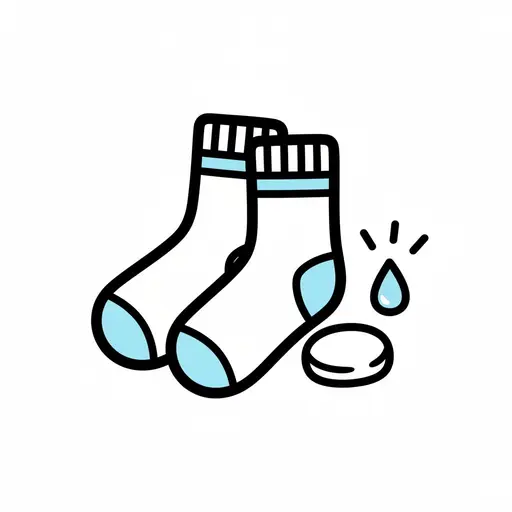
Clean socks
Illustration of two clean socks, a bar of soap, and a water droplet.
Take the visual supports with you
In Routined you build schedules from these pictures, add timers and voice instructions, and your child follows the day on their own.


* 14-day free trial, then $2.39 a month or $20.99 a year (US pricing). Cancel anytime.