Empty dishwasher
Plates stacking up, glasses wobbling, cutlery scattered across the counter. When each category has its own place in a set order, the child can keep up without dropping things. The visual support below shows the steps.
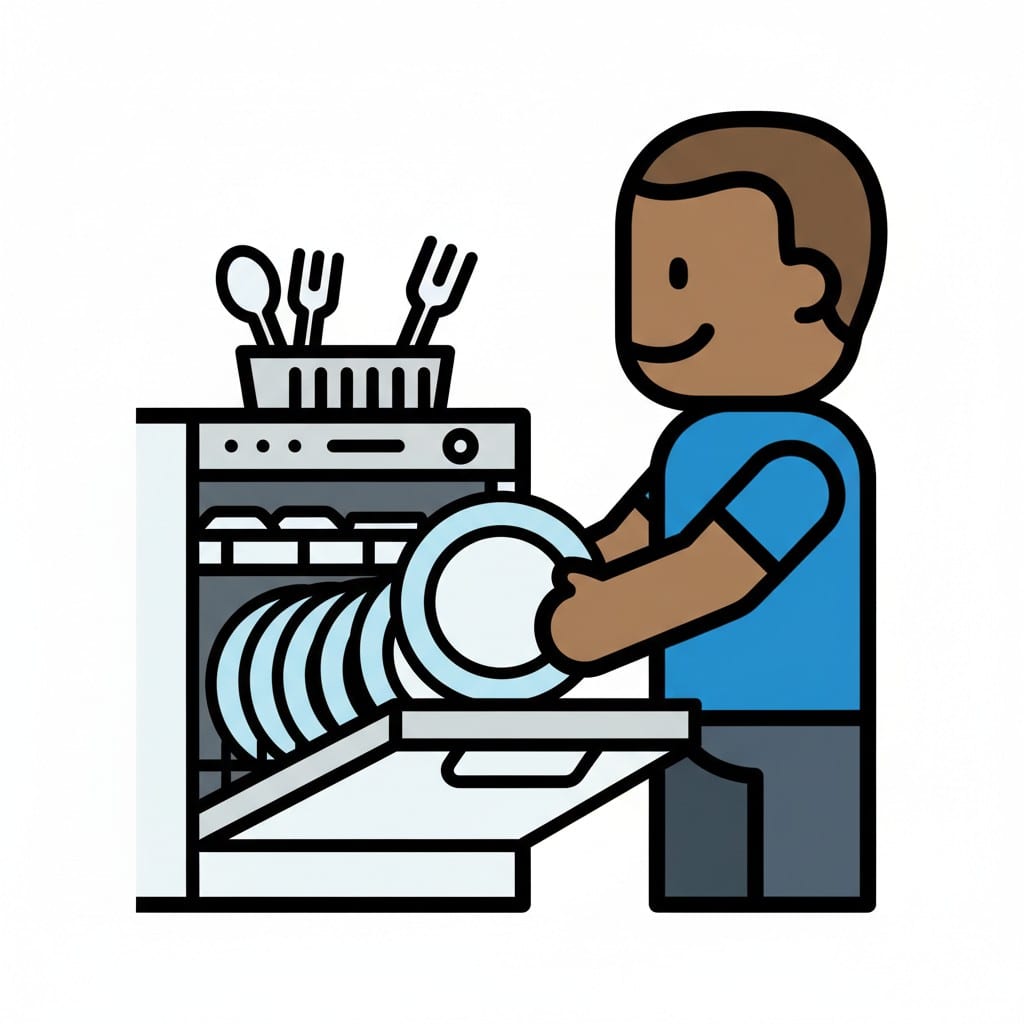 ♂
♂Empty dishwasher
An illustration of a man emptying a dishwasher, taking out a plate.
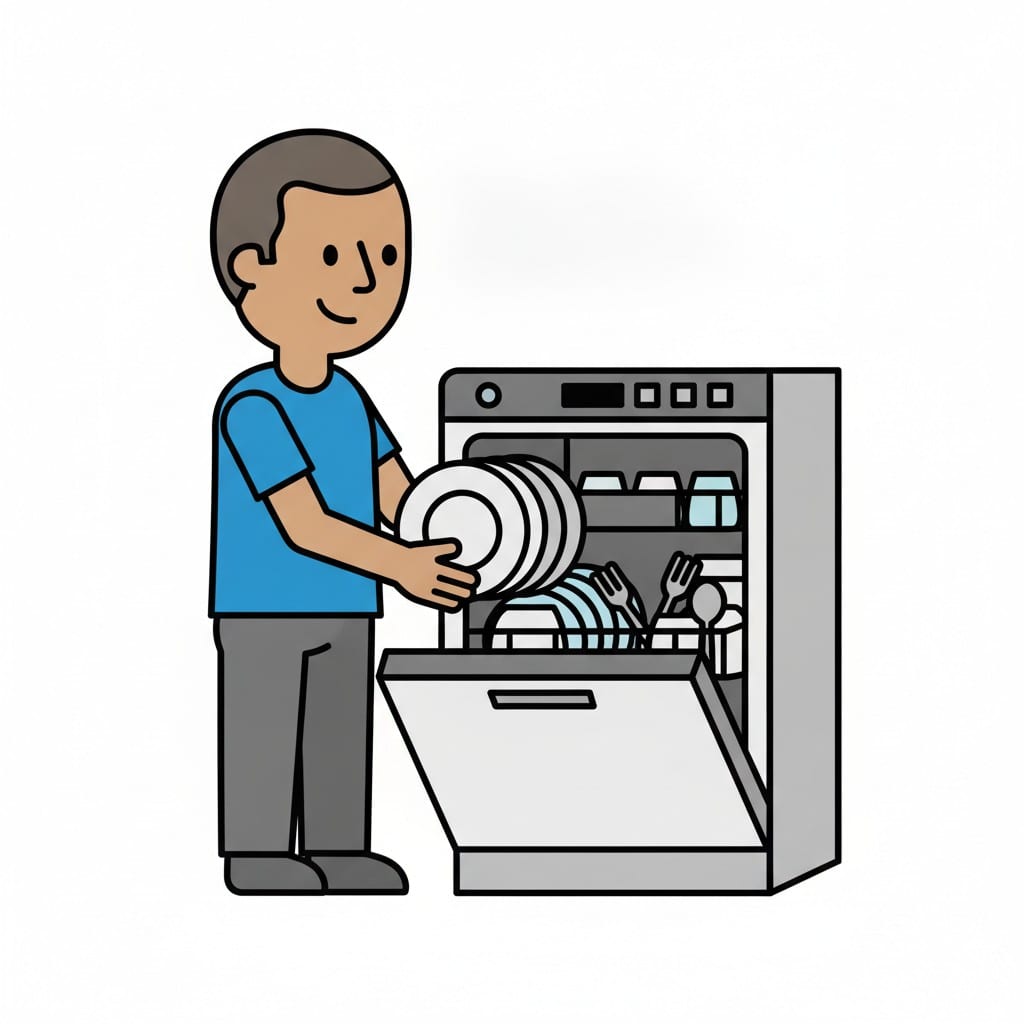 ♂
♂Empty dishwasher
A person lifts a stack of clean plates out of an open dishwasher.
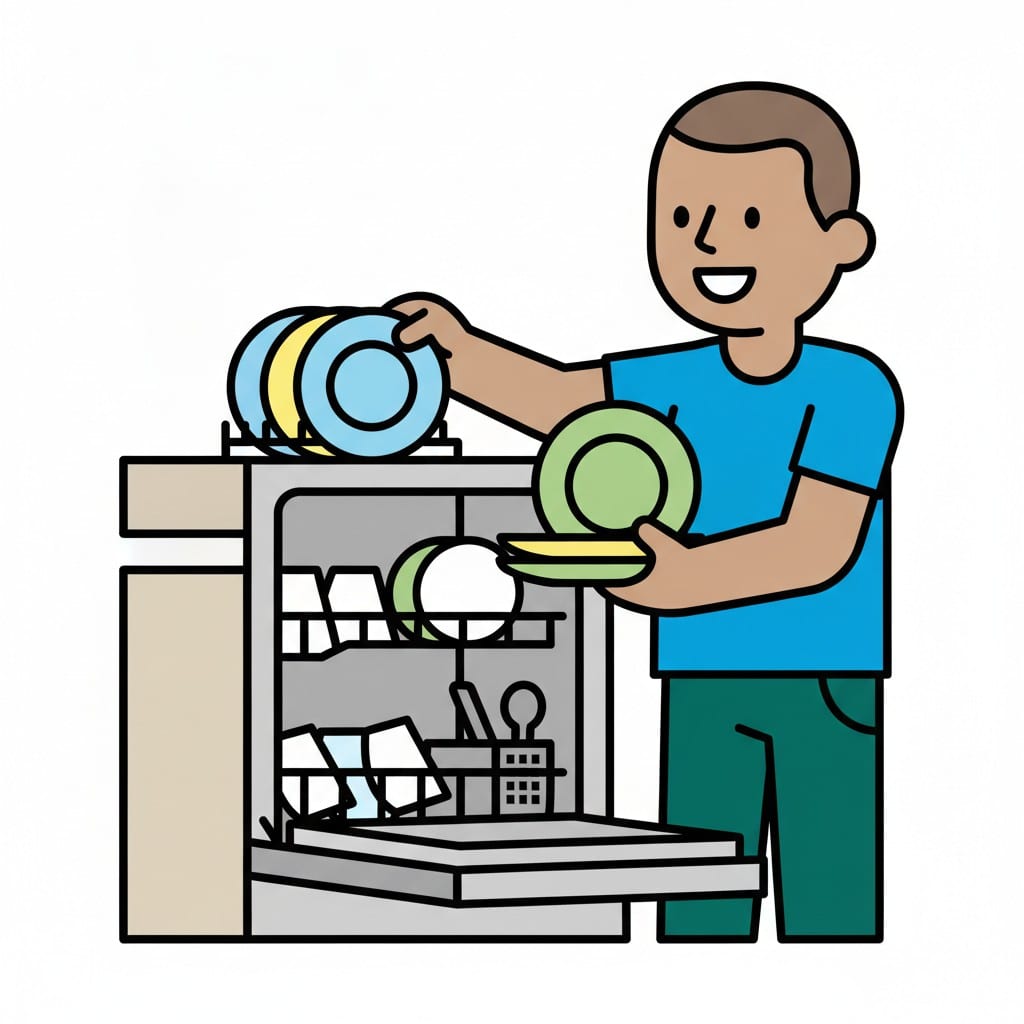 ♂
♂Empty dishwasher
A person takes plates out of an open dishwasher and stacks them on the counter.
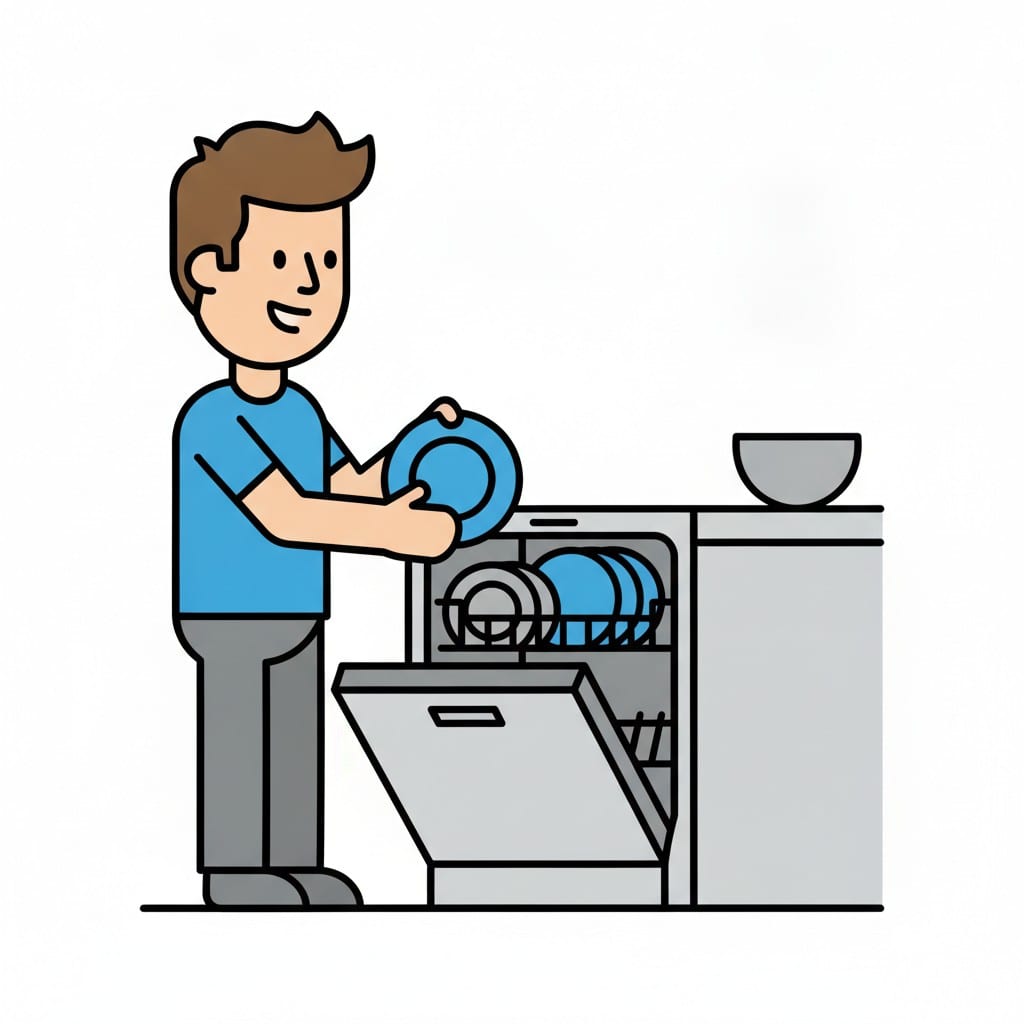 ♂
♂Emptying the dishwasher
A man takes a plate out of the dishwasher.
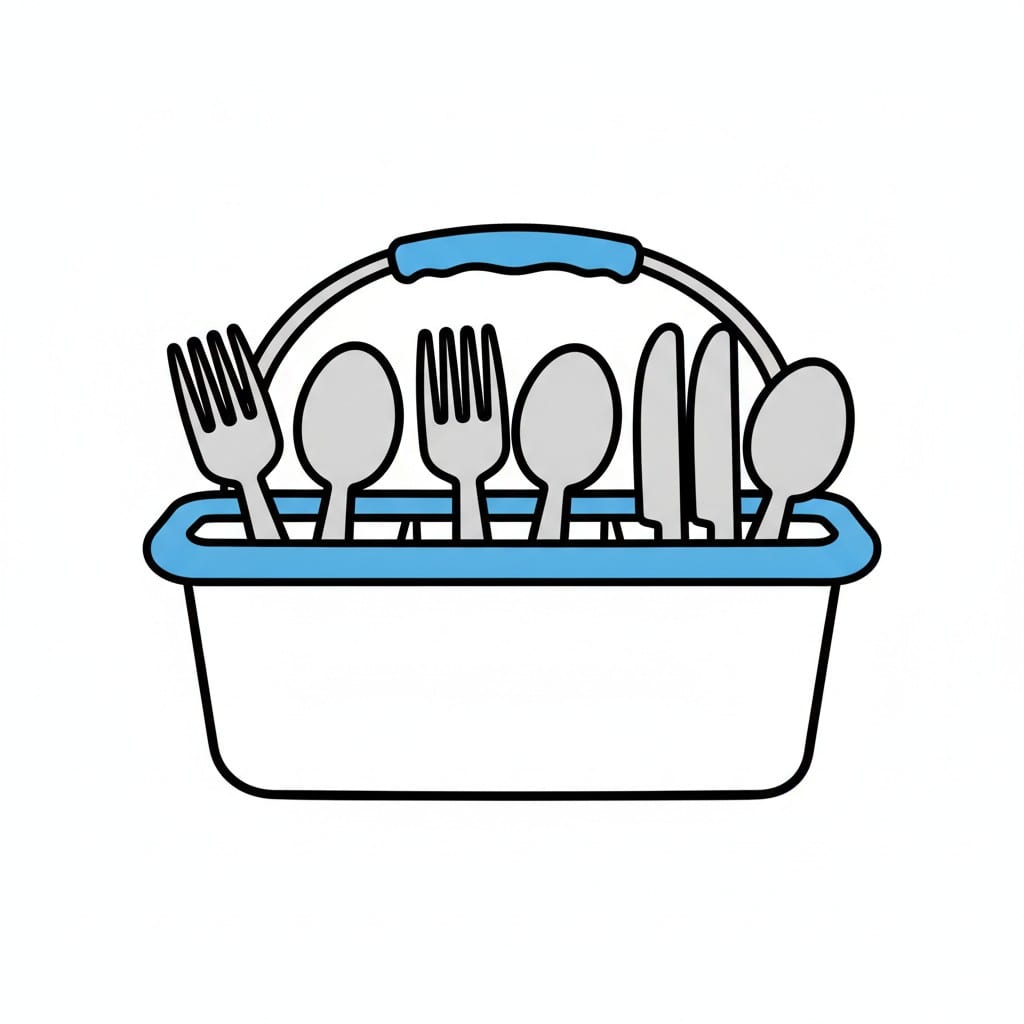
Cutlery basket
A cutlery basket with forks, spoons and knives.
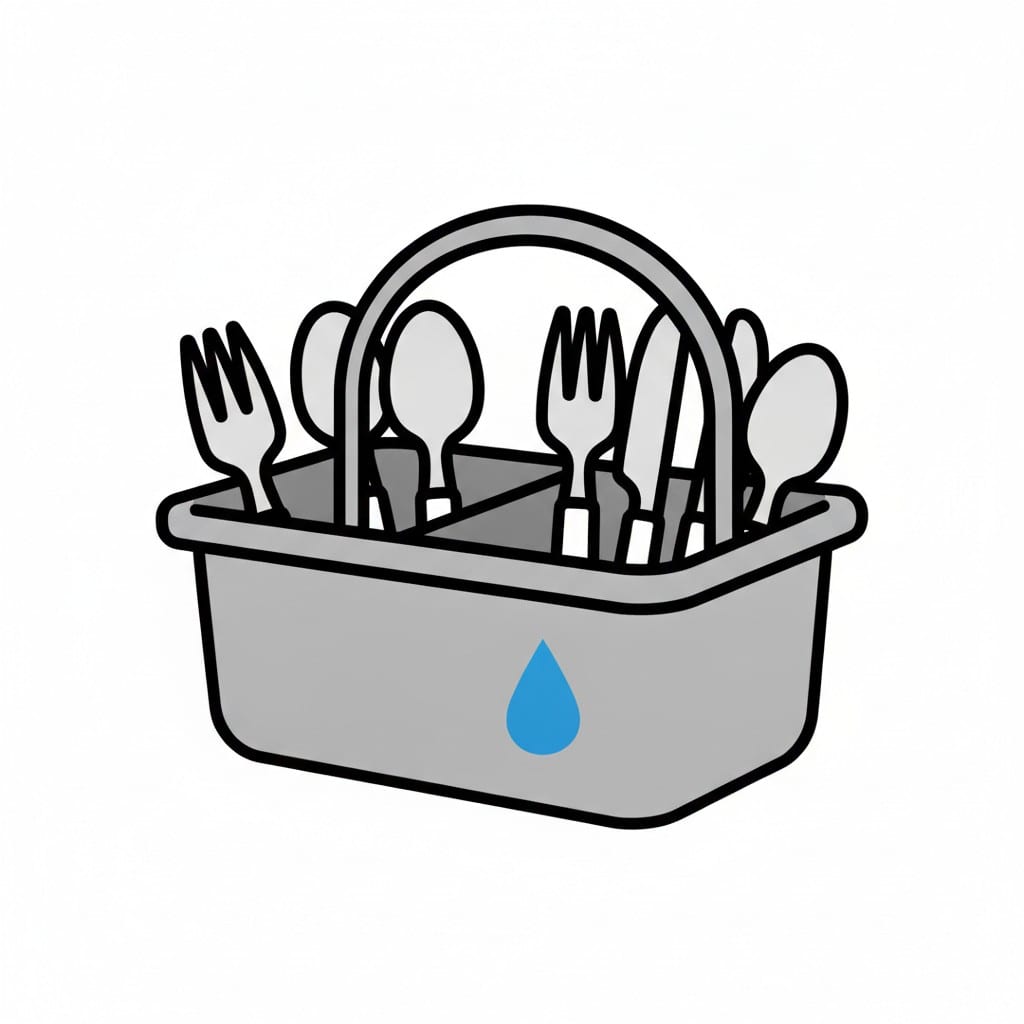
Clean cutlery basket
A grey cutlery basket with clean cutlery and a water drop.
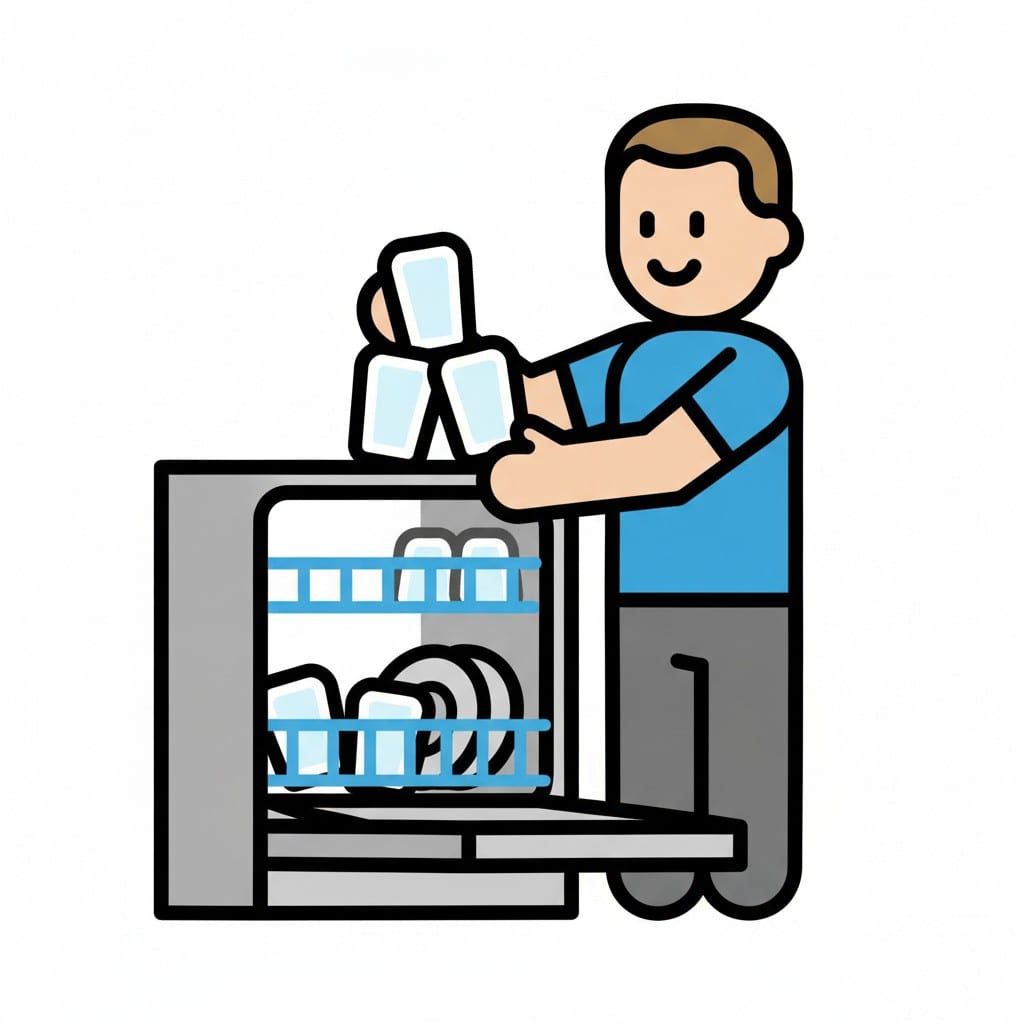 ♂
♂Unloading the glasses
A man takes glasses out of the dishwasher.
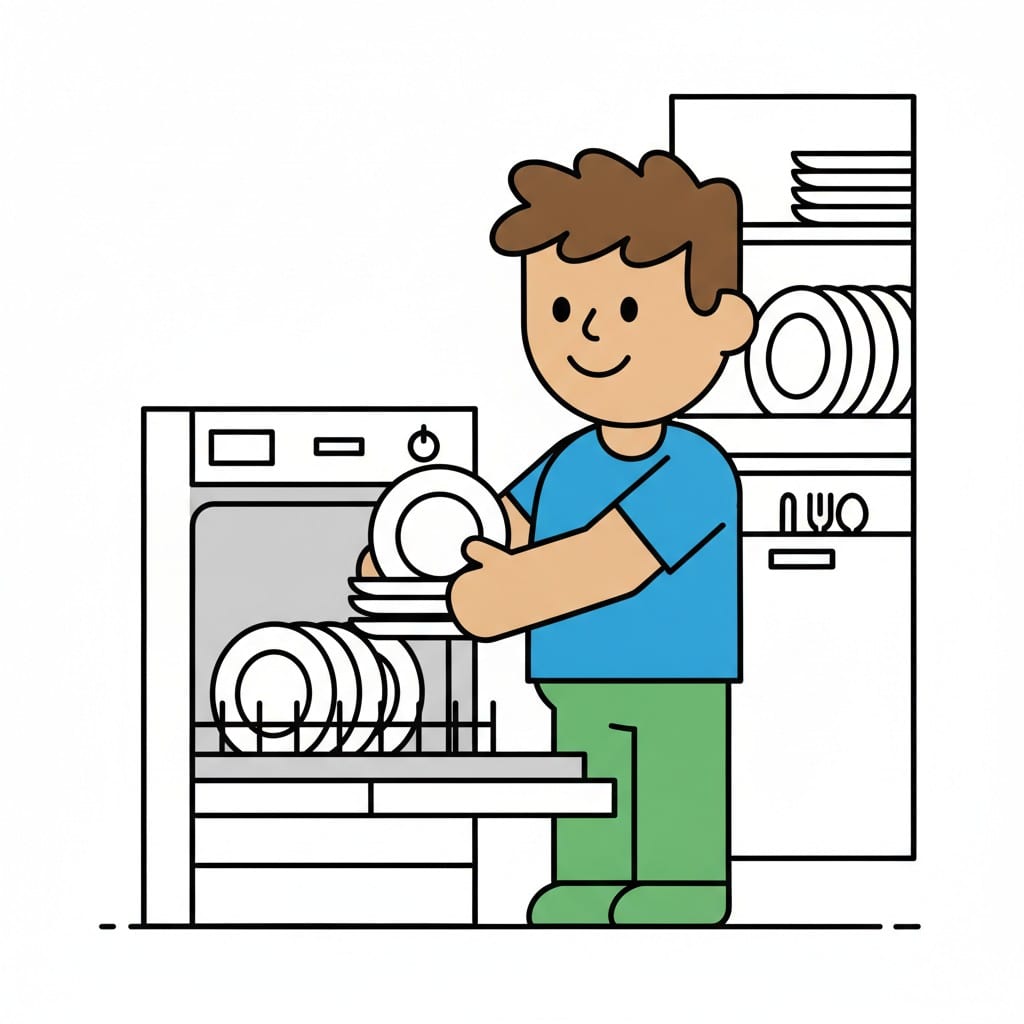 ♂
♂Unloading the dishes
A boy takes plates out of the dishwasher and puts them in the cupboard.
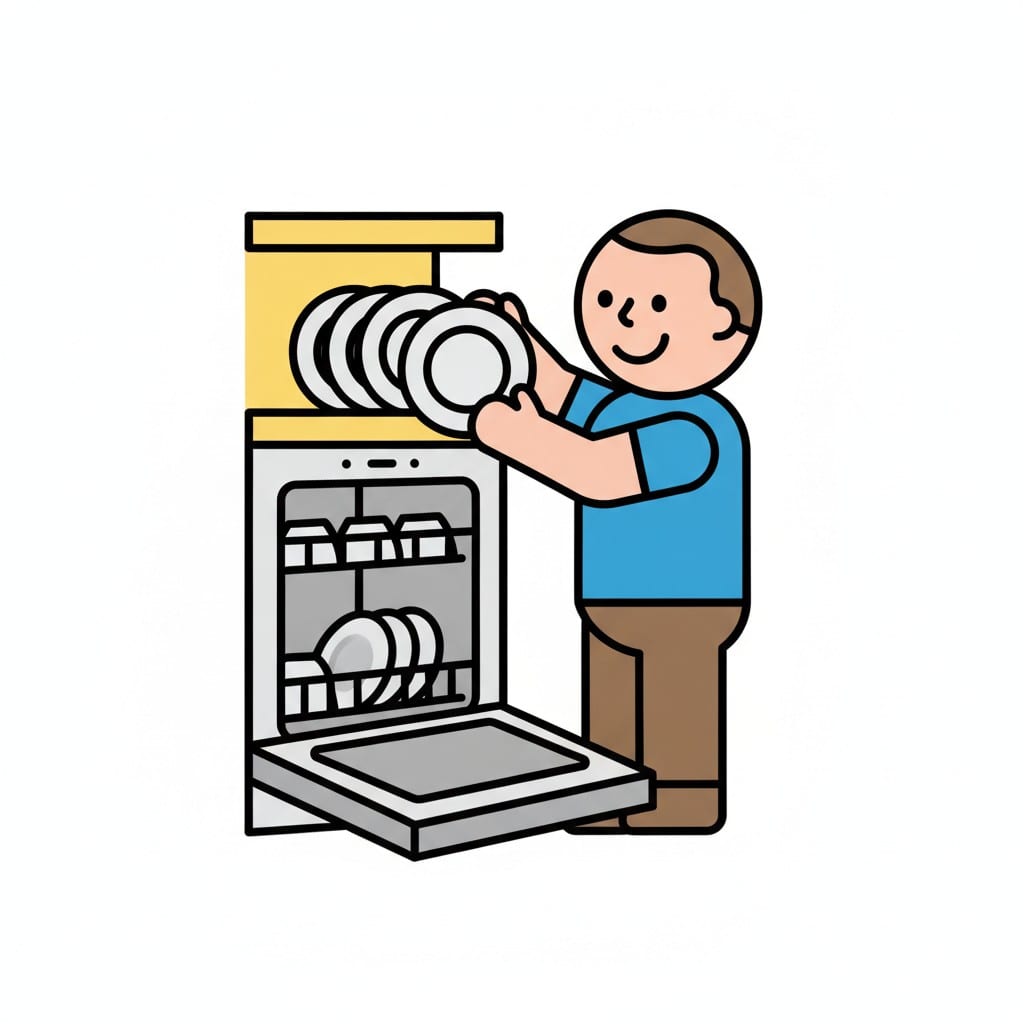 ♂
♂Putting clean plates away
A boy puts clean plates on a shelf above the dishwasher.
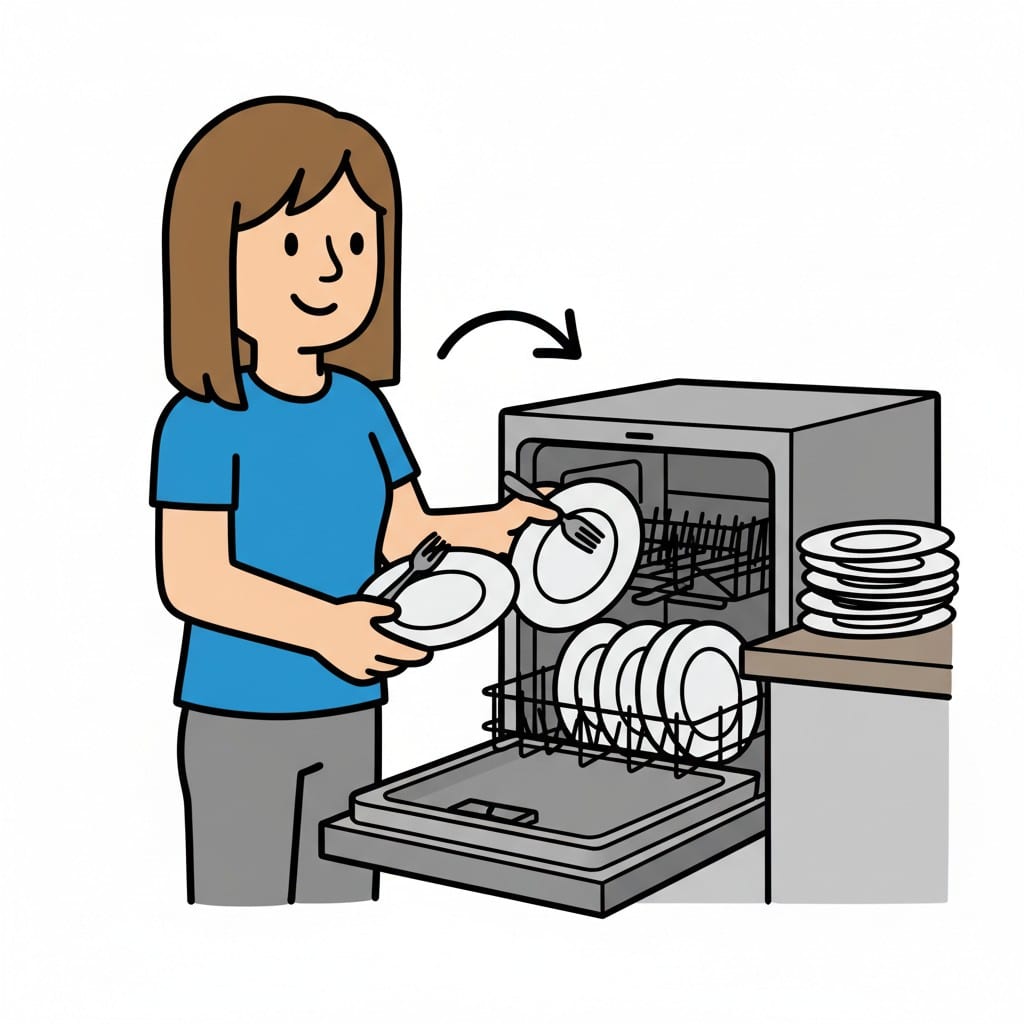 ♀
♀Empty dishwasher
A woman is emptying the dishwasher. She is taking out clean plates and forks, placing them on the counter next to it.
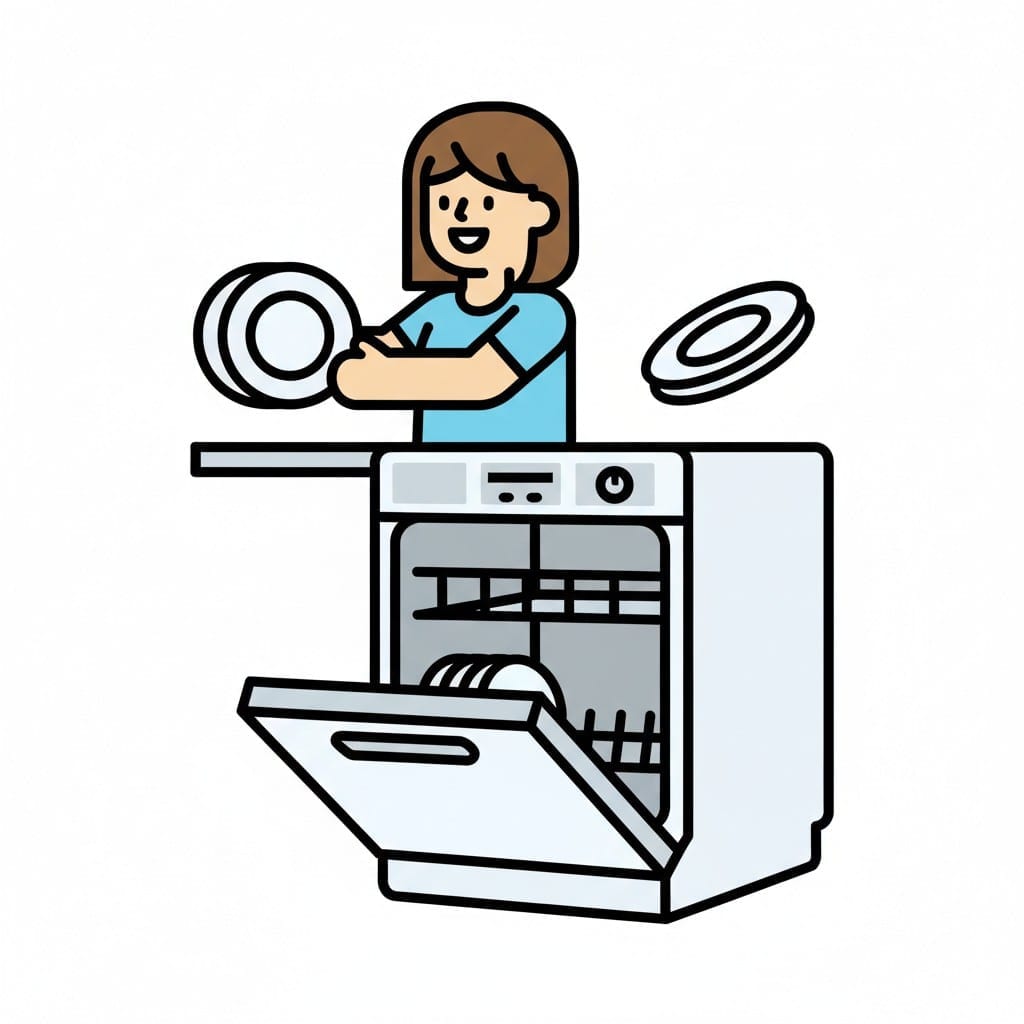 ♀
♀Woman lifting plates out of the dishwasher
Standing at an open dishwasher, a woman lifts clean plates up towards the counter.
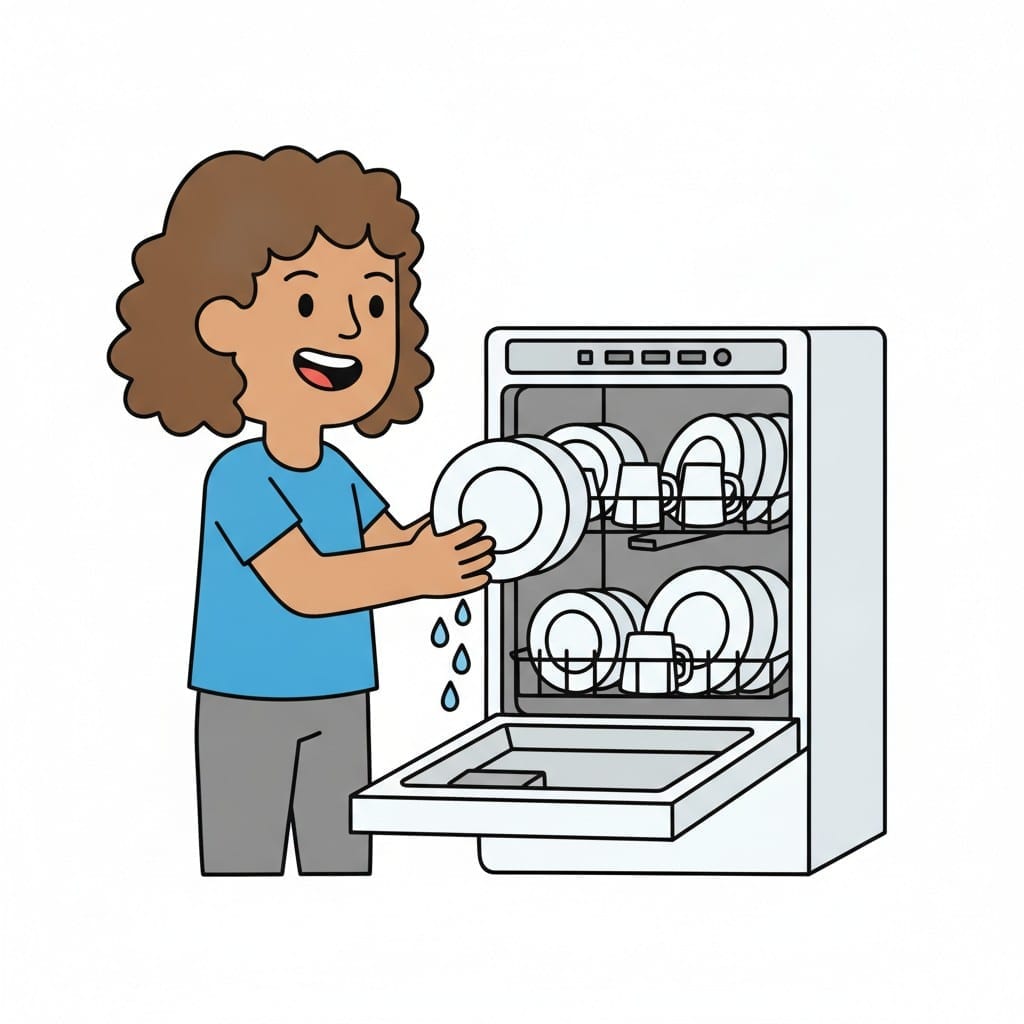 ♀
♀Woman taking a wet plate from the dishwasher
A smiling woman with curly hair pulls a plate from a full dishwasher while drops of water fall from it.
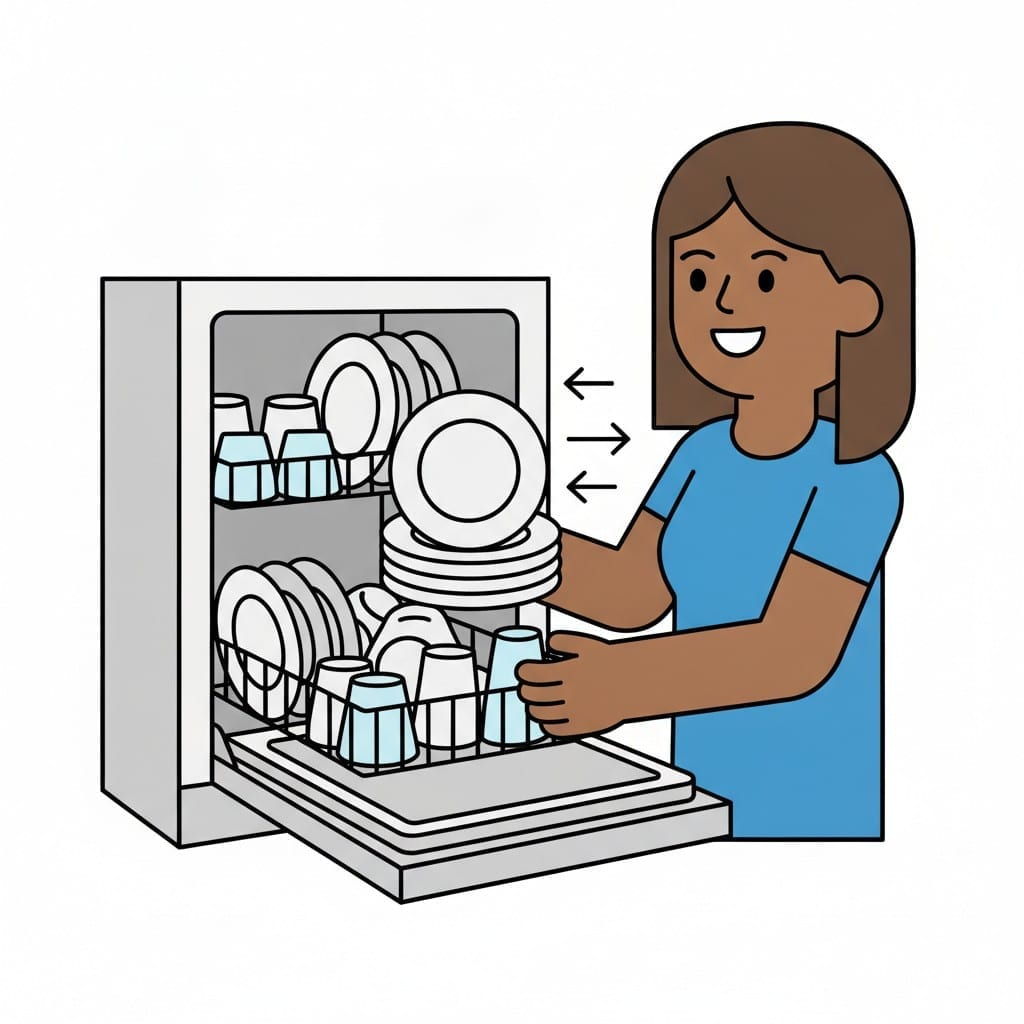 ♀
♀Woman unloading plates and cups
A woman in a blue top lifts a stack of plates and some cups out of the dishwasher, with arrows showing the direction.
About this visual support
Emptying the dishwasher is really several small sorting tasks lined up after each other. Plates need balancing, glasses need to be carried without knocking together, and cutlery has to land in the right slots of the drawer. When all of it happens at once, things slip from hands or the child freezes mid-task without knowing where the next item belongs.
With the images, each group of items gets its own point in the sequence: plates first, then glasses, then cutlery. The child finishes one category before the next begins, which keeps the arms from being overloaded and the fine motor control intact. The visual support acts like a checklist moved through one block at a time.
One concrete tip: put a slightly chipped plastic cup at the top of the drawer as a reminder of why glasses get their own turn. It anchors the sequence in something the child can actually see. In the Routined app you can save the steps as a recurring chore with a time estimate, so the child knows roughly how long the task takes.
Use this image in a schedule
Build your own visual schedule with this image and download it as a print-ready PDF. Completely free.
More similar visual supports

Turn on the dishwasher
A hand selects a programme on a dishwasher with dishes inside.
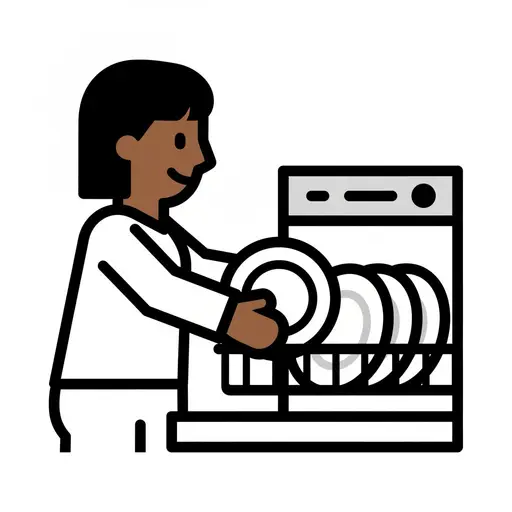
Run the dishwasher
A person with brown curly hair takes plates and a cup out of the bottom rack of ...

Fill the dishwasher
A person fills the dishwasher with plates and cutlery.
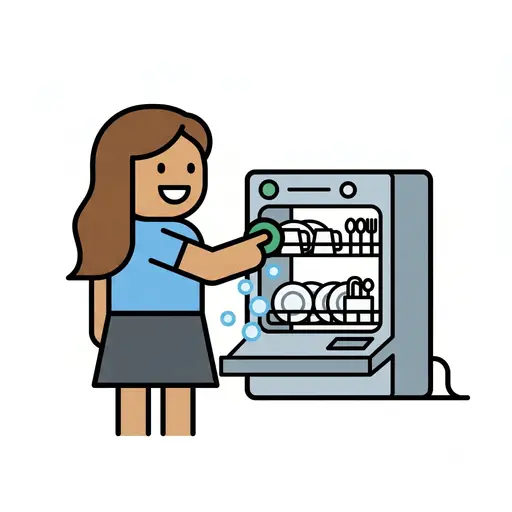
Use the dishwasher
A girl presses the button on an open dishwasher filled with plates and cutlery.
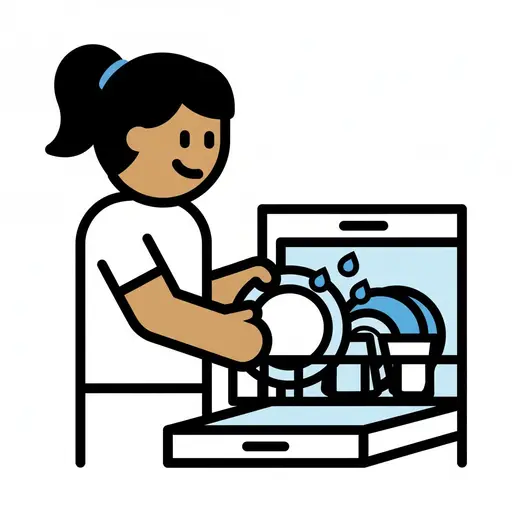
Dishwasher chores
A woman is placing a plate into an open dishwasher, with other dishes already in...
Vacuum the floor
A woman in a white dress runs a vacuum cleaner with a long wand across the floor...
Help with the dishes
A child washes a plate while another hand helps out.
Dishwasher
An open dishwasher with cups in the top rack and plates in the bottom.
This visual support in other languages
Take the visual supports with you
In Routined you build schedules from these pictures, add timers and voice instructions, and your child follows the day on their own.


* 14-day free trial, then $2.39 a month or $20.99 a year (US pricing). Cancel anytime.