Get brother
Breaking off your own play to fetch a little brother often means two wills that are not in sync. The steps below make it clear what happens next, so fetching stops being a tug of war.
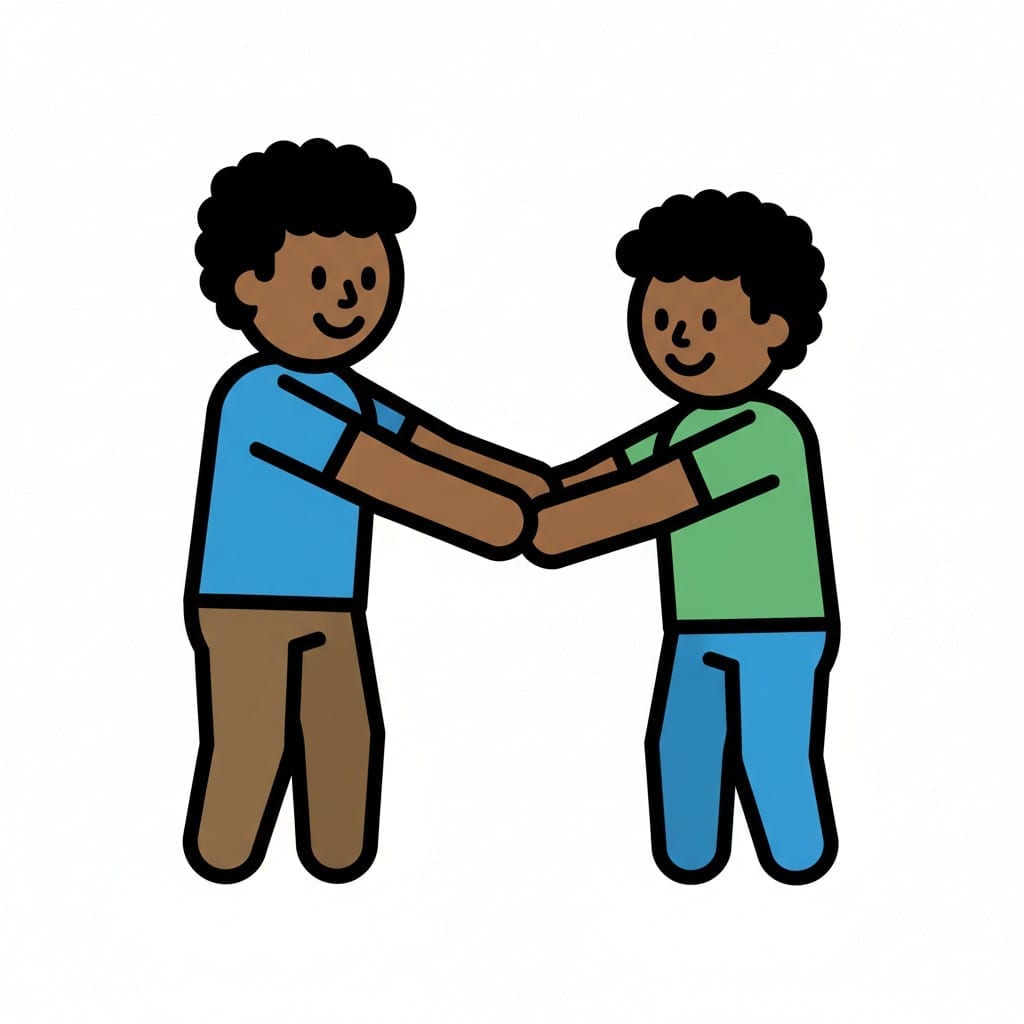 ♂
♂Get brother
Two boys stand facing each other holding hands.
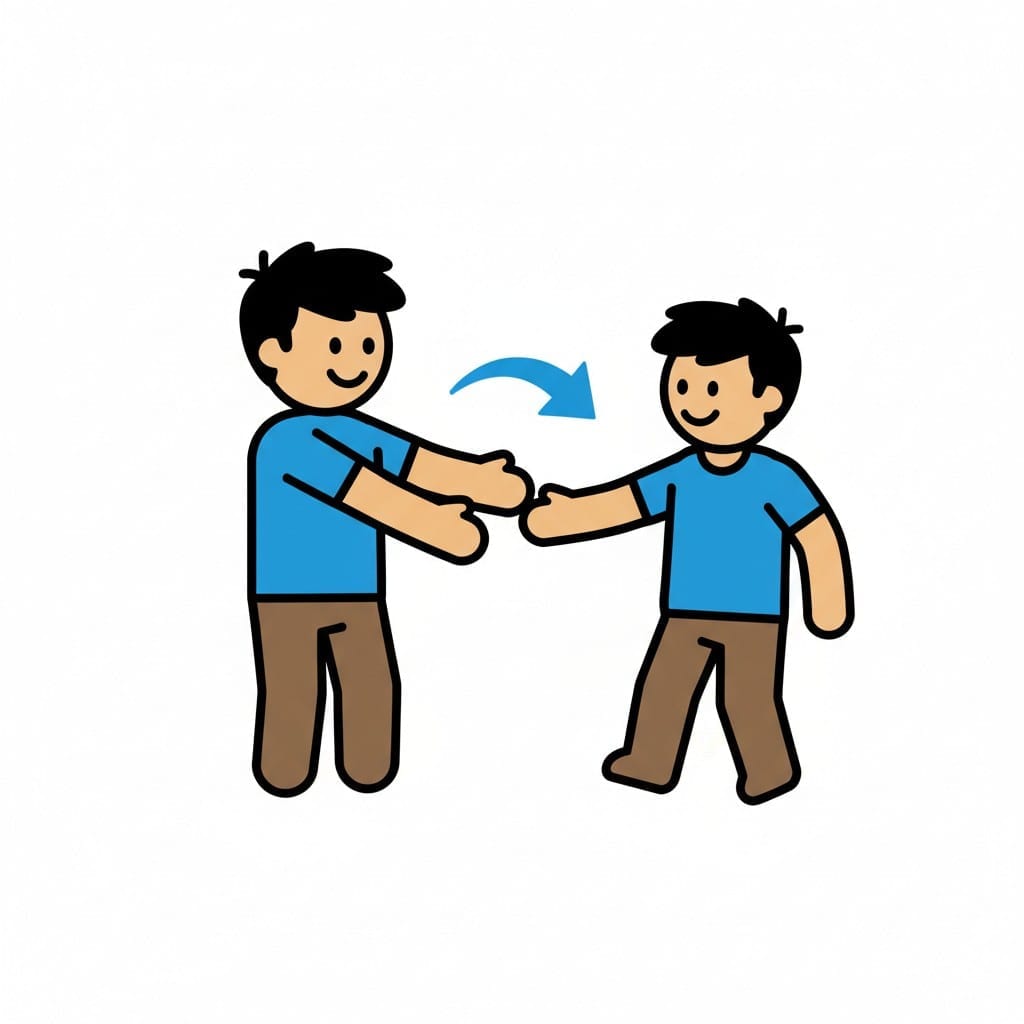 ♂
♂Get brother
A boy leads another boy forward with an arrow showing the direction.
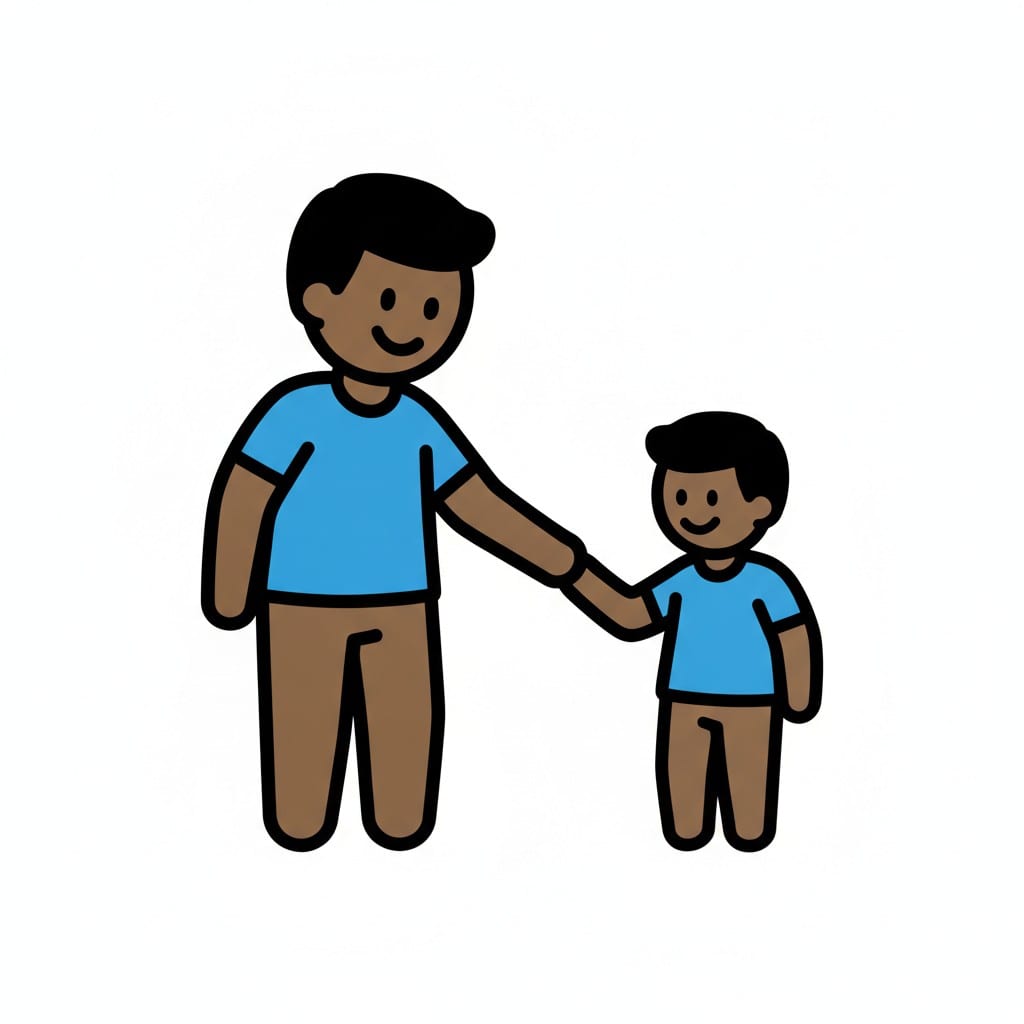 ♂
♂Older boy holding his little brother by the hand
An older boy in a blue t-shirt holds his younger brother by the hand, and both are smiling.
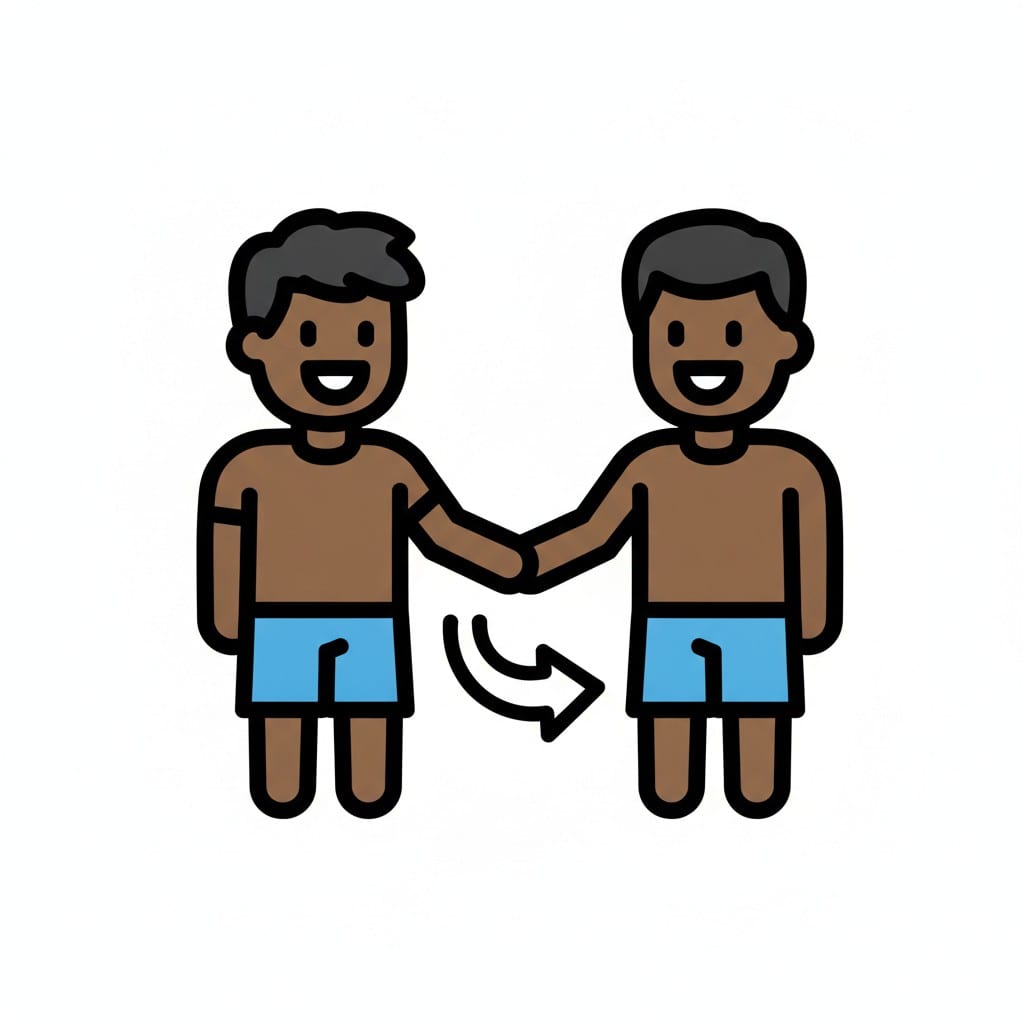 ♂
♂Two brothers with an arrow between them
Two smiling boys join hands while an arrow points from one boy to the other.
About this visual support
Fetching a brother sounds like a small favour, but in practice two children meet who are each in the middle of something. One has to put down something fun, the other has to break off and come along, and both move at their own pace. The friction lives where the two wills collide, not in the stretch of hallway between rooms.
Visual support helps by making the transition visible to both at once. With a picture for finishing the game, one for going to fetch, and one for what you will do next, the children see that fetching has an end and a point. Coordinating gets easier when nobody has to decode a shout through a closed door.
A concrete tip: let the first card say finish what I am doing rather than go now, giving the child a few seconds to pause their own play before moving toward their sibling. That small buffer takes the edge off much of the resistance. For families where transitions and sibling teamwork often grate, a fixed picture sequence in Routined gives both children the same map to follow.
Use this image in a schedule
Build your own visual schedule with this image and download it as a print-ready PDF. Completely free.
More similar visual supports
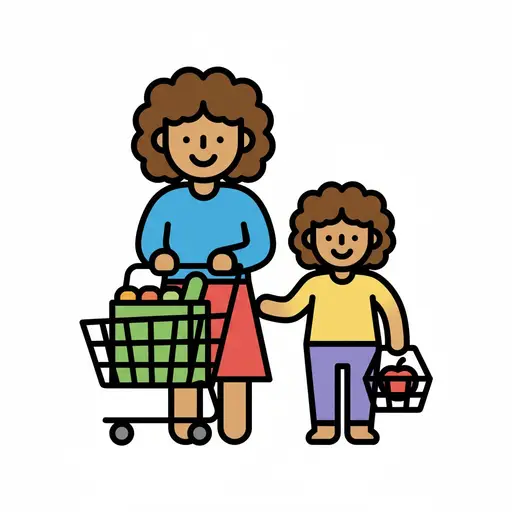
Shop with mom
A parent pushes a cart full of groceries while a child holds a basket with an ap...
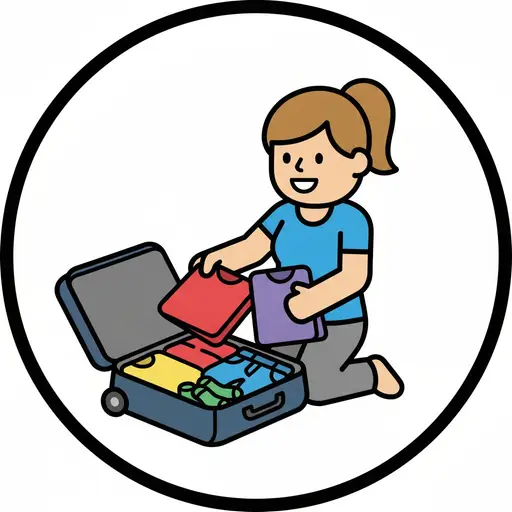
Pack clothes
A girl kneels and places colourful shirts into an open suitcase.
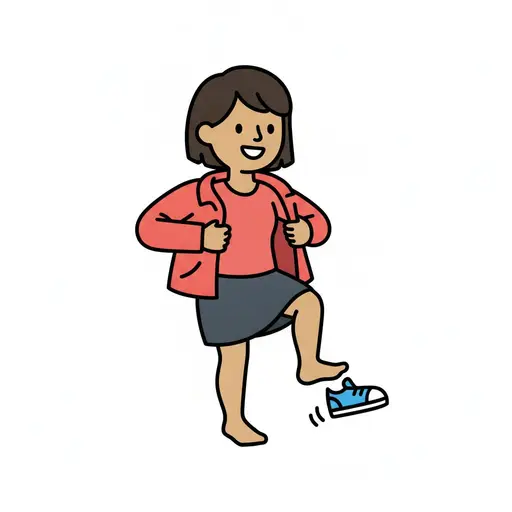
Shoes Jacket Off
A girl in a jacket stands barefoot holding a pair of shoes in her hand.
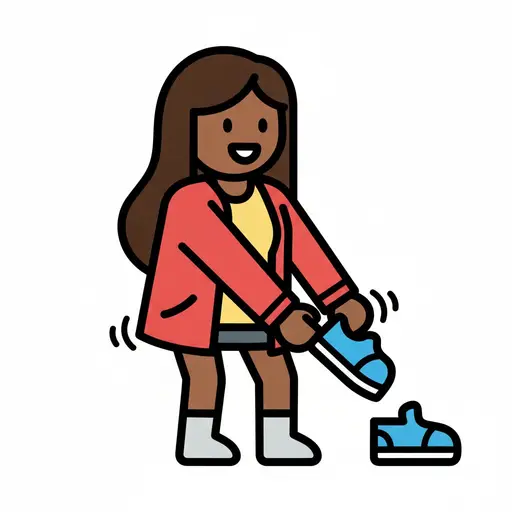
Remove Your Shoes and Jacket
A girl bends over and pulls off her shoe.
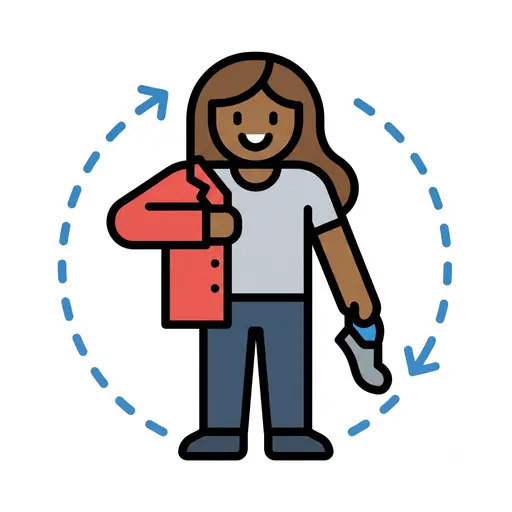
Remove Shoes and Jacket
A girl takes off her red jacket and a shoe, with arrows showing the motion.
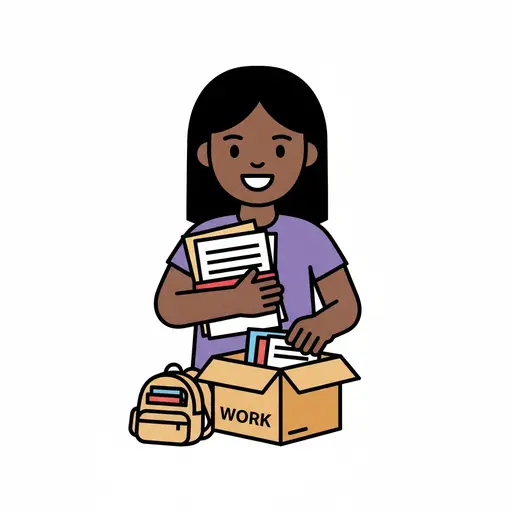
Pack work things
A woman holds a stack of papers and lowers them into a cardboard box for work, w...
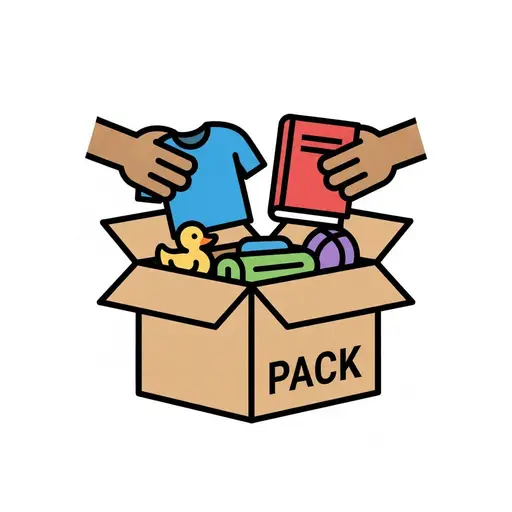
Pack things
Hands put a shirt and a book into a cardboard box that already holds toys.
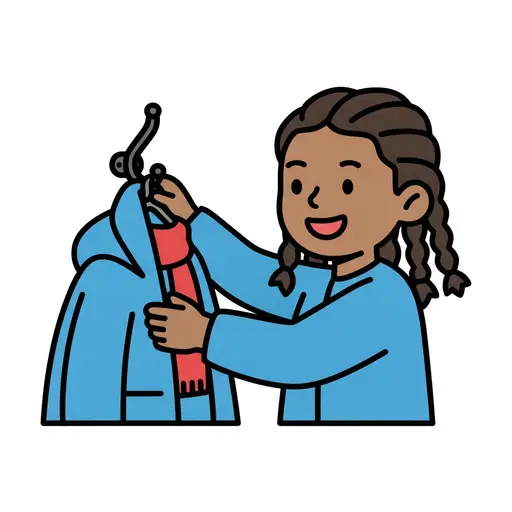
Hang up outerwear
A girl with braids hangs a blue hooded jacket and a red scarf on a hook.
This visual support in other languages
Take the visual supports with you
In Routined you build schedules from these pictures, add timers and voice instructions, and your child follows the day on their own.


* 14-day free trial, then $2.39 a month or $20.99 a year (US pricing). Cancel anytime.