Get note
A note looks harmless but asks three questions at once: where is it, what does it say, why does it matter right now. For a child with a full working memory, one answer is often all that fits. The steps below hold all three.
 ♂
♂Man pointing at note
A person points at a yellow note they are holding in their hand.
 ♂
♂Person holding out note
A simple illustration of a person holding out a white note.
About this visual support
Getting a note is simple on paper, but it is exactly an executive micro-task. To succeed, a child has to hold the location of the note, the content it carries and the moment when it needs to be handed over – all in parallel. Three threads at once is a lot for many children, especially in the middle of another activity or a transition between rooms.
A visual schedule pulls the threads apart. One picture for where the note lives, one for who it goes to, and a final one for what happens after delivery. When each sub-step is visible, the child can finish the errand without asking for help three times on the way, and the risk of the note ending up forgotten in a jacket pocket drops.
A tip that genuinely helps here: give the note a fixed home by the front door or in the school bag, so the fetch always starts and ends in the same spot. After a week, the memory load is cut in half. To anchor this as a recurring step in the week, Routined keeps the sequence in one place.
Use this image in a schedule
Build your own visual schedule with this image and download it as a print-ready PDF. Completely free.

More similar visual supports
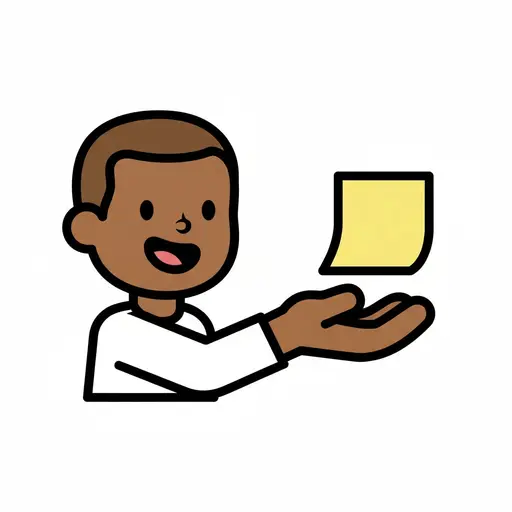
Take yellow note
A person is holding a yellow sticky note in their open palm.
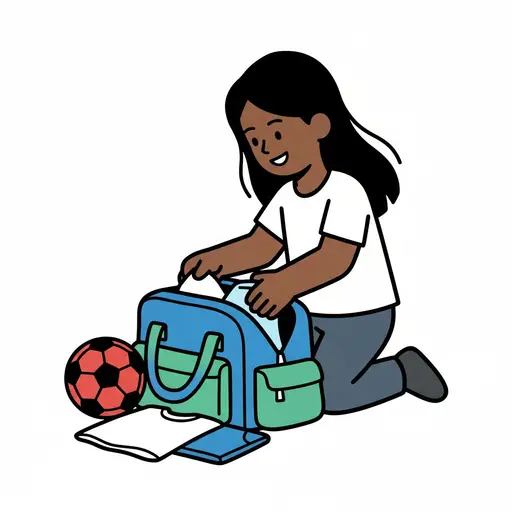
Unpack school sports bag
A girl kneels and unpacks a blue and green sports bag. A soccer ball and papers ...
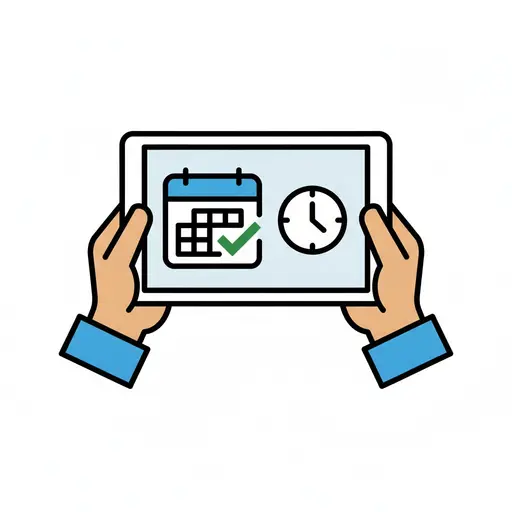
See schedule
Two hands hold a tablet showing a schedule with a tick and a clock.
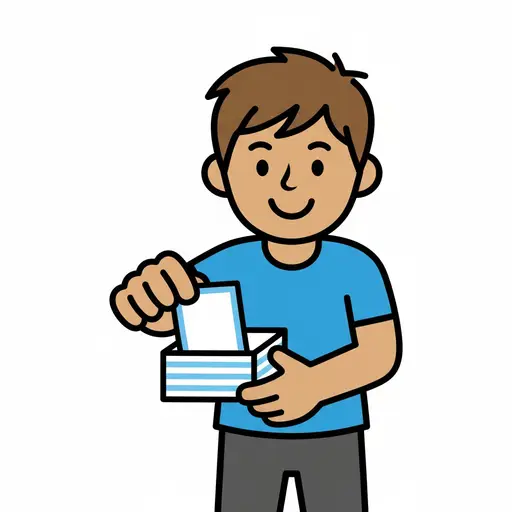
Take a slip
A cartoon boy is taking a slip of paper from a striped box with a happy expressi...
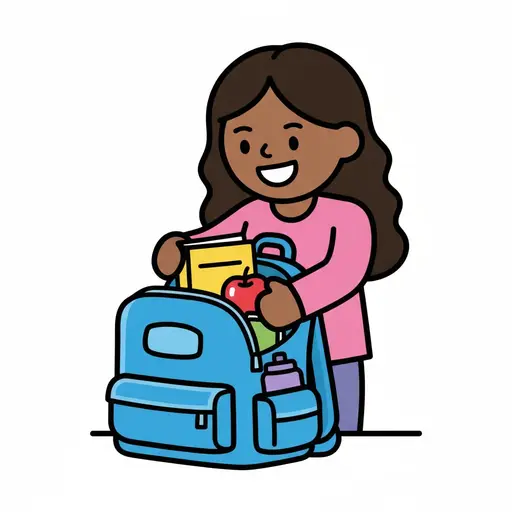
Unpack the backpack
Books, an apple and a water bottle come out of a large blue backpack.
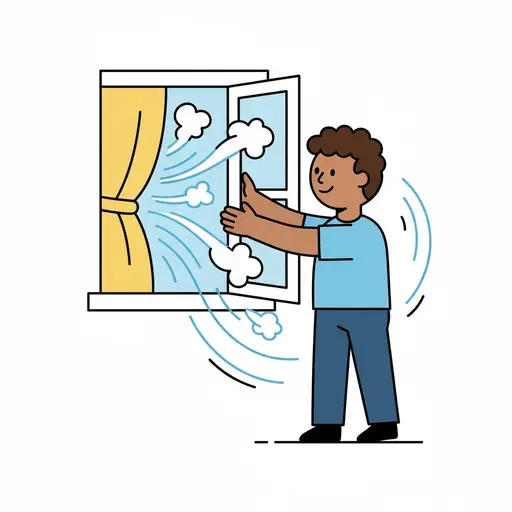
Air out
A boy opens a window to air out the room.
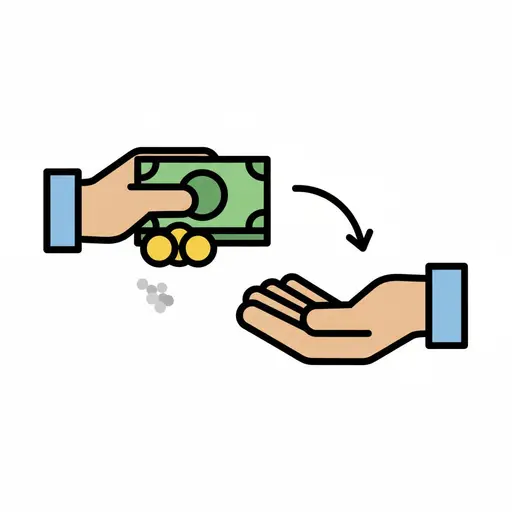
Allowance
One hand passes a banknote and coins to another open hand.

Allowance included
A hand receives a banknote and a coin from a wallet, with an arrow indicating mo...
Take the visual supports with you
In Routined you build schedules from these pictures, add timers and voice instructions, and your child follows the day on their own.


* 14-day free trial, then $2.39 a month or $20.99 a year (US pricing). Cancel anytime.