Load/Unload Dishwasher
Loading and unloading are two opposite jobs, and the child is expected to switch between them. Where do you start? When is it done? The cards below keep the two directions apart so the task has visible edges.
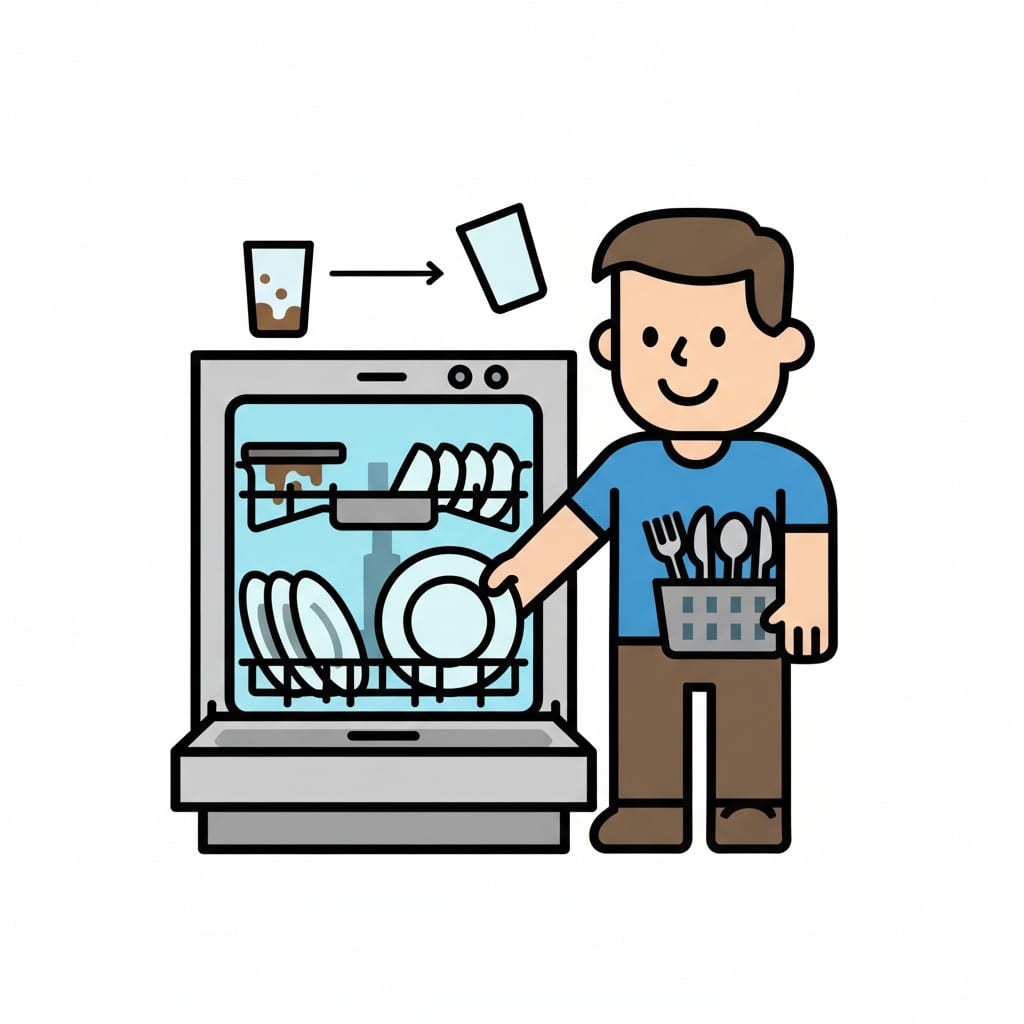 ♂
♂Loading and unloading dishwasher
A man puts in a plate and holds the cutlery basket, with a dirty and a clean glass.
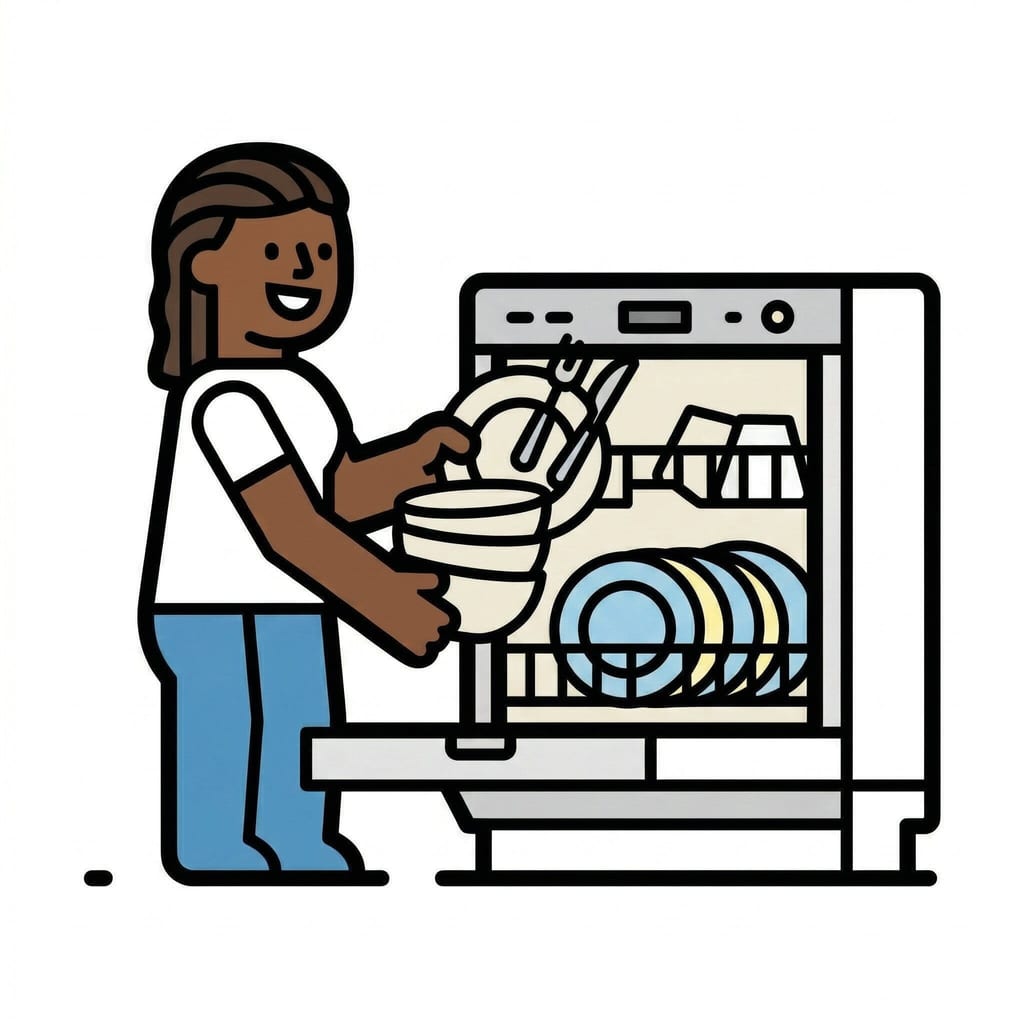 ♀
♀Loading dishwasher
A person loading dishes into a dishwasher.
About this visual support
What makes load-and-unload tricky is that the brain has to head in two opposite directions, usually in one breath. Unloading means moving from the machine to the cupboard. Loading means moving from the counter or table into the machine. Each one is logical on its own, but switching mid-flow turns the kitchen confusing, especially when the machine is half empty and half full at the same time.
The pictures here split the task into two separate sequences with a clear handover between them. The unload card marks that the machine is now empty before the load card even appears. That way the child is not juggling two open jobs but finishing one and starting another, which the body can actually follow.
A concrete idea: lay the cards in two rows on the kitchen table or counter, unload row on top, load row below, and flip a card as each step is done. When the top row is complete, the bottom one begins. In Routined you can save the whole sequence as a recurring after-dinner routine, so the order does not have to be rebuilt every time.
Use this image in a schedule
Build your own visual schedule with this image and download it as a print-ready PDF. Completely free.

More similar visual supports
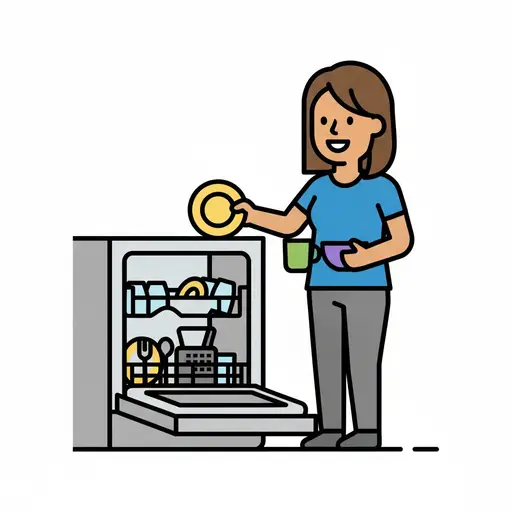
Load the dishes
A woman puts plates and cups into the dishwasher.
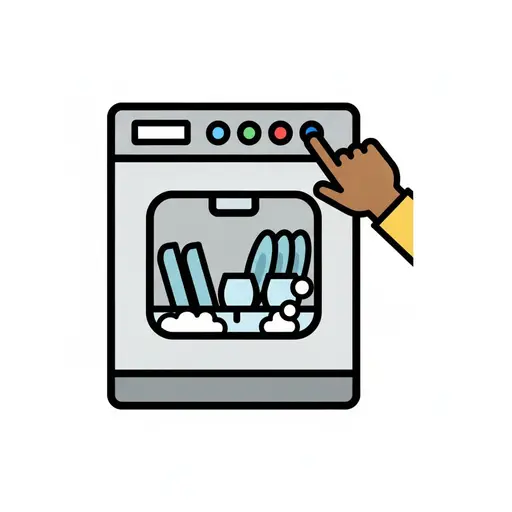
Turn on the dishwasher
A hand selects a programme on a dishwasher with dishes inside.
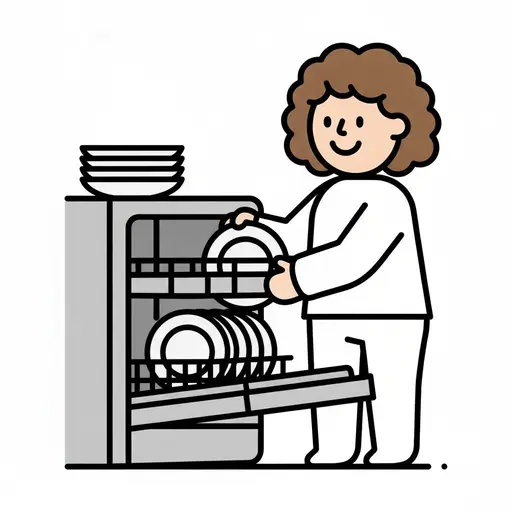
Unload the dishwasher
Seen from the side, a woman with curly hair takes a plate from the dishwasher wh...
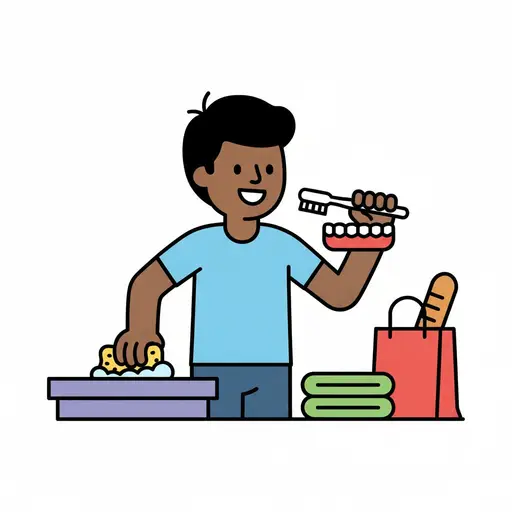
Chores
A boy holds a toothbrush and wipes with a sponge, with towels and a grocery bag.

Clean socks
Illustration of two clean socks, a bar of soap, and a water droplet.
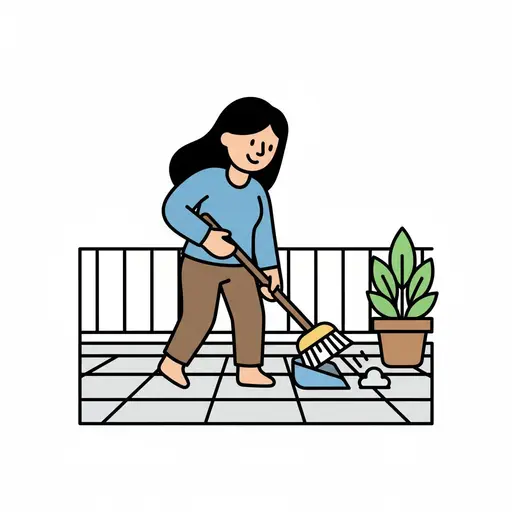
Clean the balcony
A child sweeping the balcony floor with a broom and dustpan, with a potted plant...

Clean the bathroom
A white toilet sparkles with yellow stars next to a mop standing in a blue bucke...
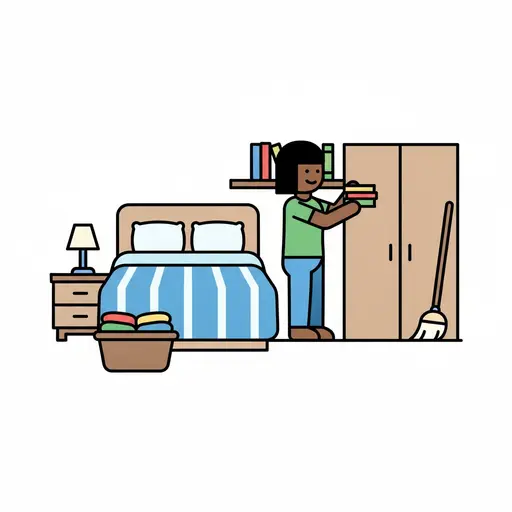
Clean the bedroom
A girl in a green top places books on a shelf in a bedroom with a made bed, a ni...
Take the visual supports with you
In Routined you build schedules from these pictures, add timers and voice instructions, and your child follows the day on their own.


* 14-day free trial, then $2.39 a month or $20.99 a year (US pricing). Cancel anytime.