Lock the Door
Was it really locked, and where did the key go? That small uncertainty can follow you long after the door shuts. The steps below turn locking into something you can check once and then let go of.
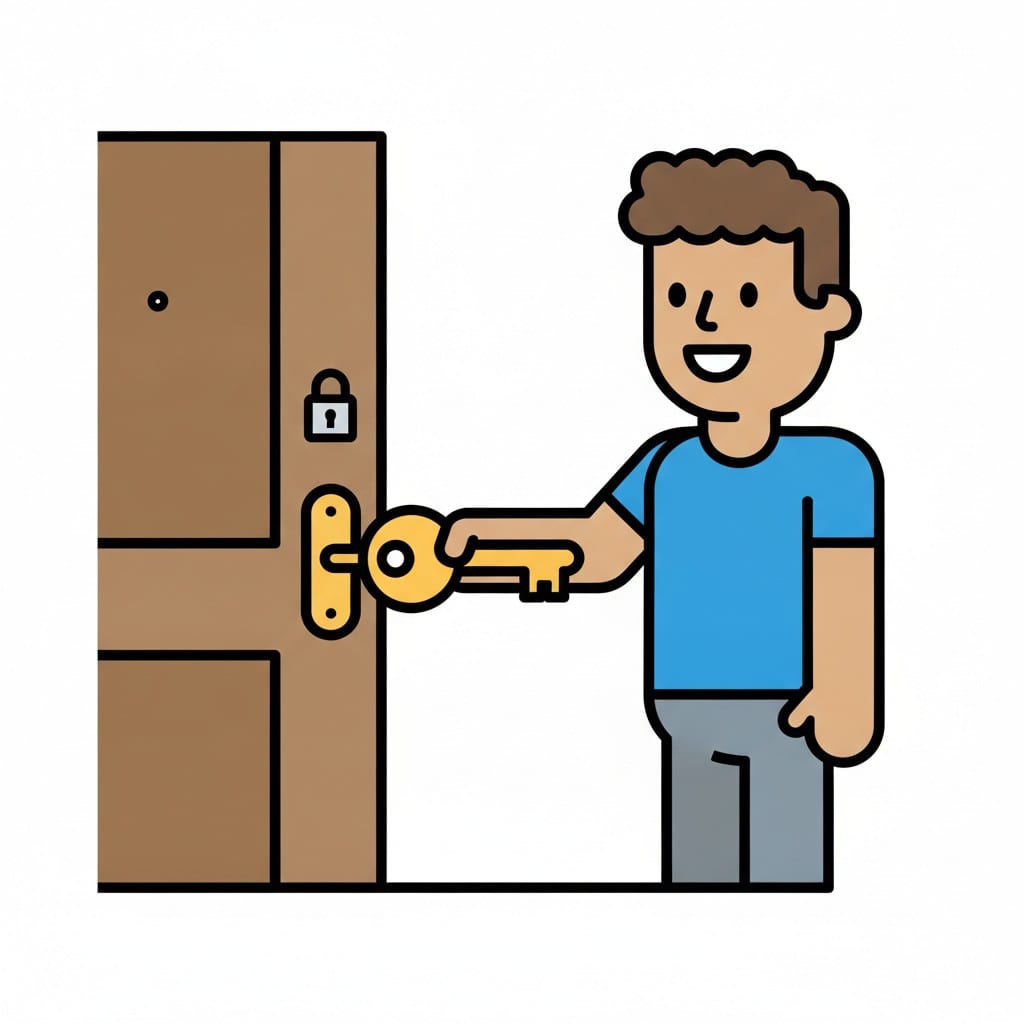 ♂
♂Locking the door
A man turns the key in the door lock.
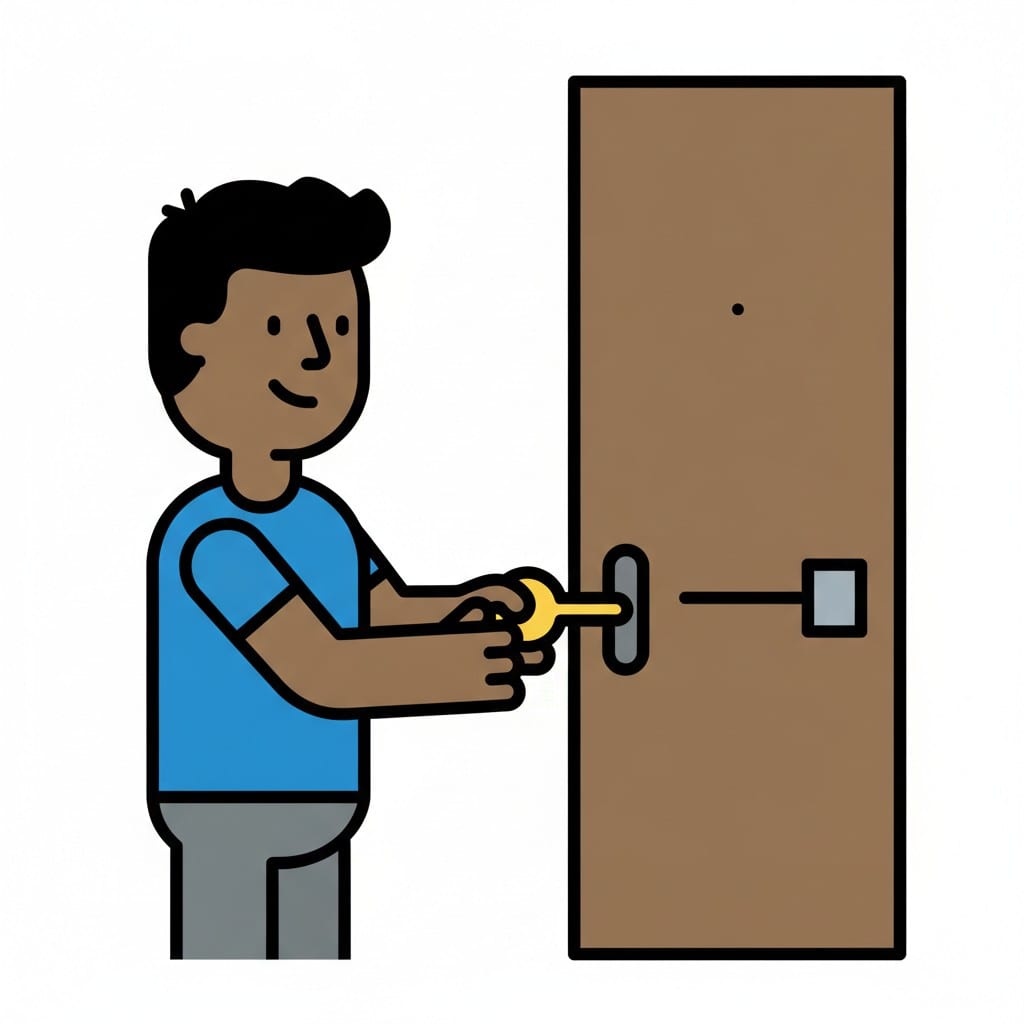 ♂
♂Boy locking the door
A boy puts the key into the lock of a brown door.
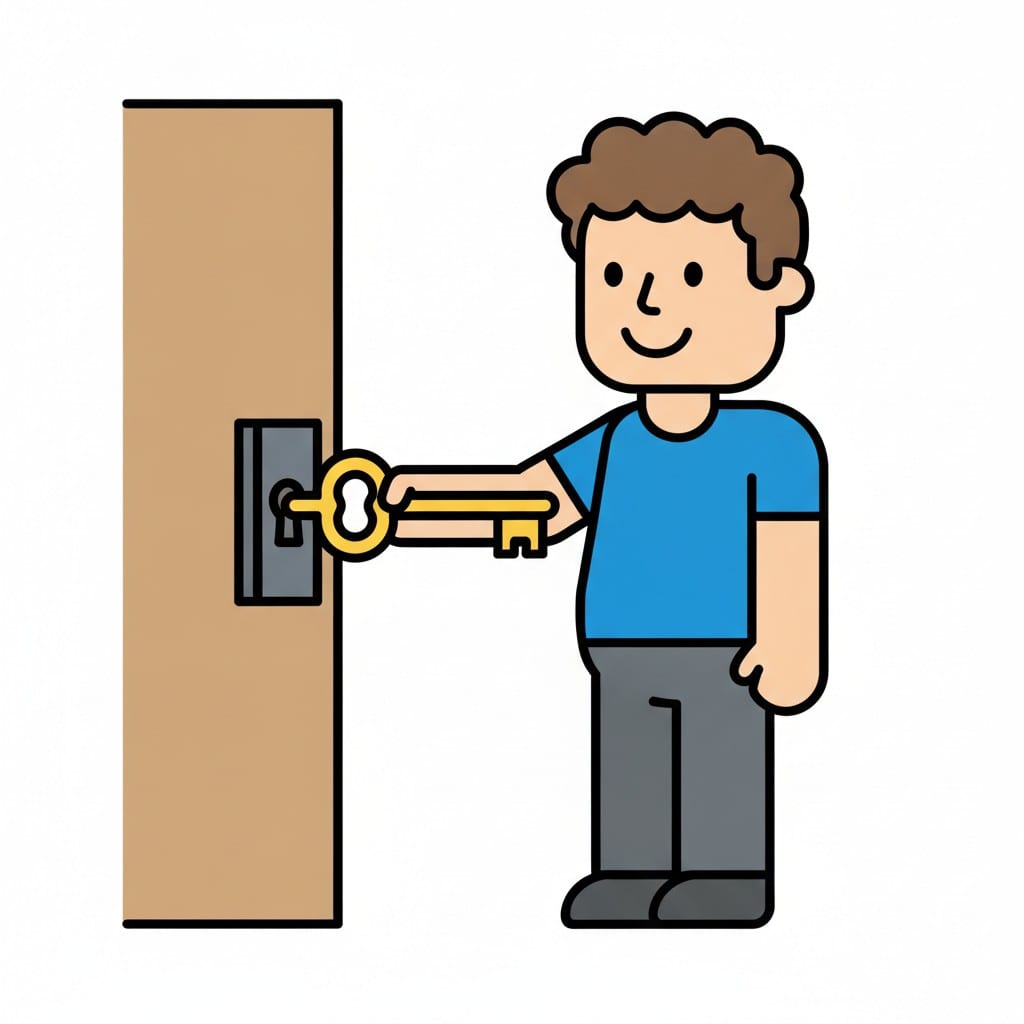 ♂
♂Using the key
A boy unlocks a door with a large key.
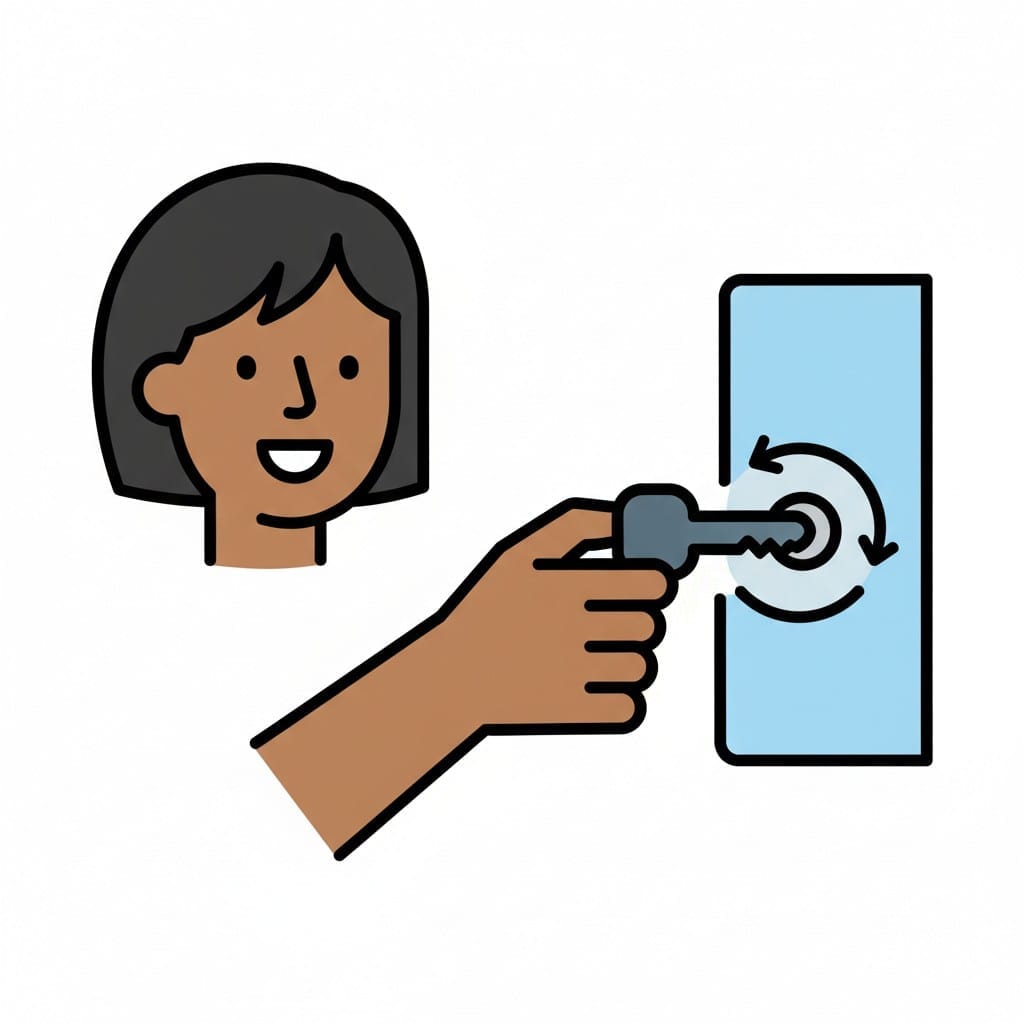 ♀
♀Locking the door
A girl turns a key in a lock on a door with an arrow showing the locking motion.
About this visual support
Locking the door looks like a single motion, but several questions sit inside it at once. Did I turn it all the way? Is the key still in the lock or in my pocket? That hesitation about whether you got it right or forgot something is what turns a simple action into a small worry as the family heads out.
A visual schedule breaks the invisible into visible steps. One picture for turning the lock, one for tugging the handle to feel it hold, and one for where the key belongs give the child an order to follow and a clear point where the task is done. Once the check is made in pictures, there is nothing left to dwell on.
A concrete tip: make the last step a fixed home for the key, the same hook or pocket every time, and let the picture show exactly that spot. The key then never becomes a loose thread. Safety around the door is worth the extra clarity, especially for a child who gets stuck in uncertainty. To have the same steps ready each time you leave, you can add them in the Routined app.
Use this image in a schedule
Build your own visual schedule with this image and download it as a print-ready PDF. Completely free.
More similar visual supports
Daily routines
Illustration of a daily routine showing a clock with sun and moon, and symbols f...
Keys
A key ring with two keys and a car key fob.
Preschool morning routine
Three panels show a girl getting up with her toothbrush, eating breakfast beside...
Pack clothes
A girl kneels and places colourful shirts into an open suitcase.
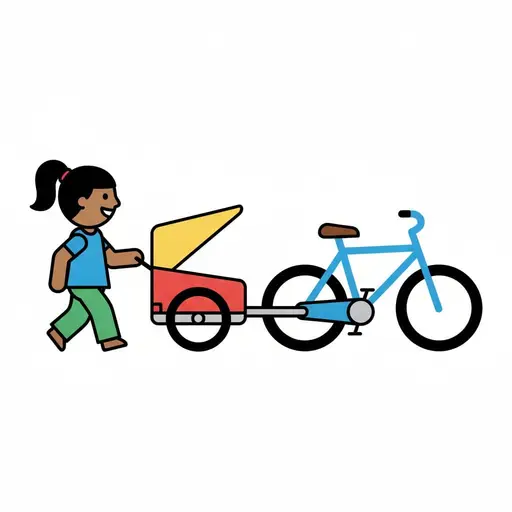
Go to the bike trailer
A girl with a ponytail walks up to a bicycle with a red and yellow child trailer...
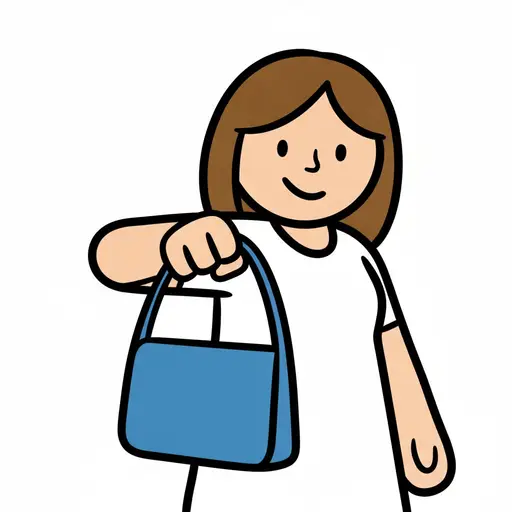
Take the bag
A smiling girl holds a blue bag by its handle.
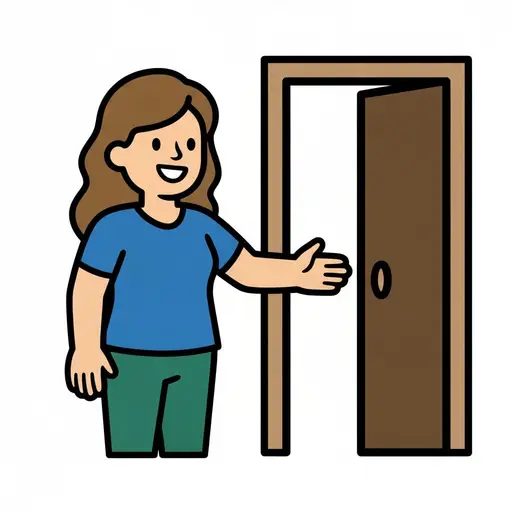
Go inside
A smiling woman stands by an open door and gestures with her hand to come in.

Helmet
A smiling face wearing a yellow helmet.
This visual support in other languages
Take the visual supports with you
In Routined you build schedules from these pictures, add timers and voice instructions, and your child follows the day on their own.


* 14-day free trial, then $2.39 a month or $20.99 a year (US pricing). Cancel anytime.