Make bed
The duvet is heavy and refuses to lie straight, the pillows slide off, and the result feels pointless when the bed will be slept in again tonight. The visual support below gives a short, fixed order the child can follow alone.
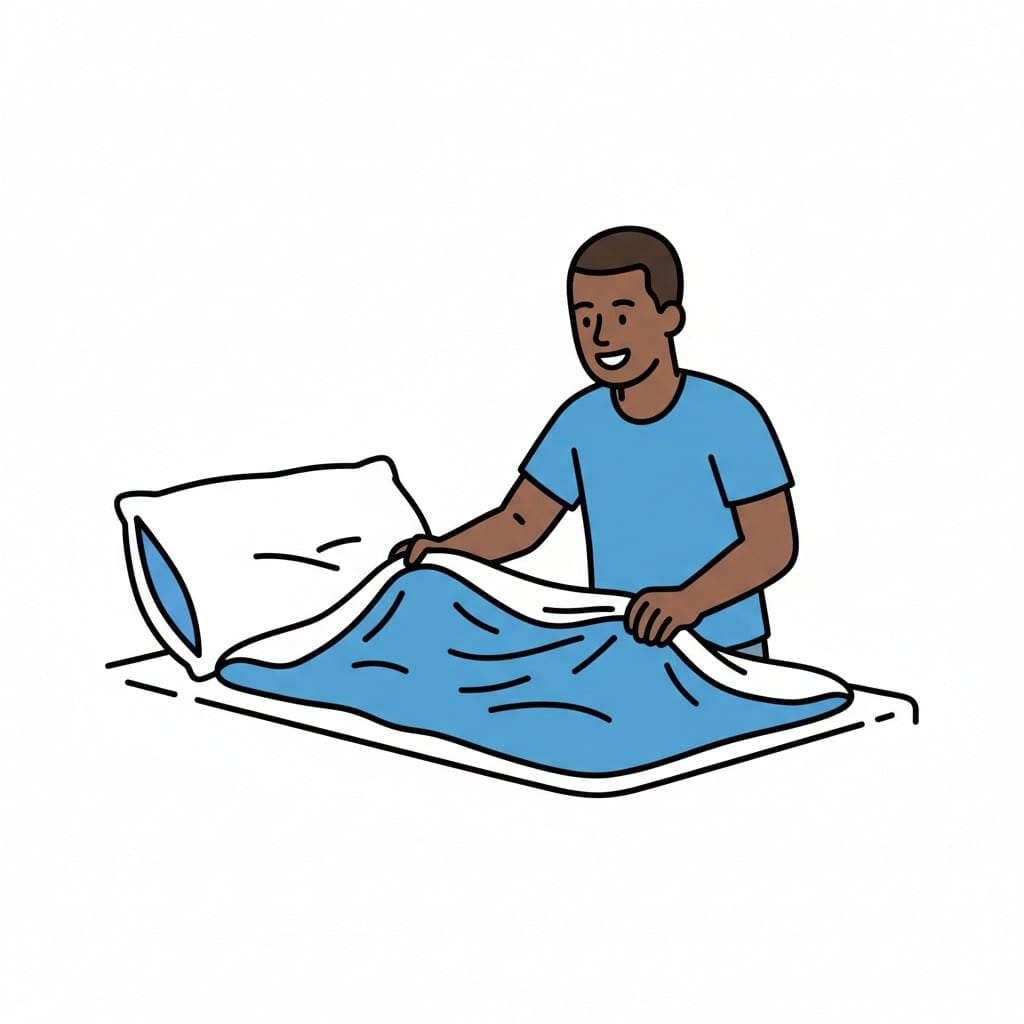 ♂
♂Making the bed
A person pulling up the duvet to make the bed.
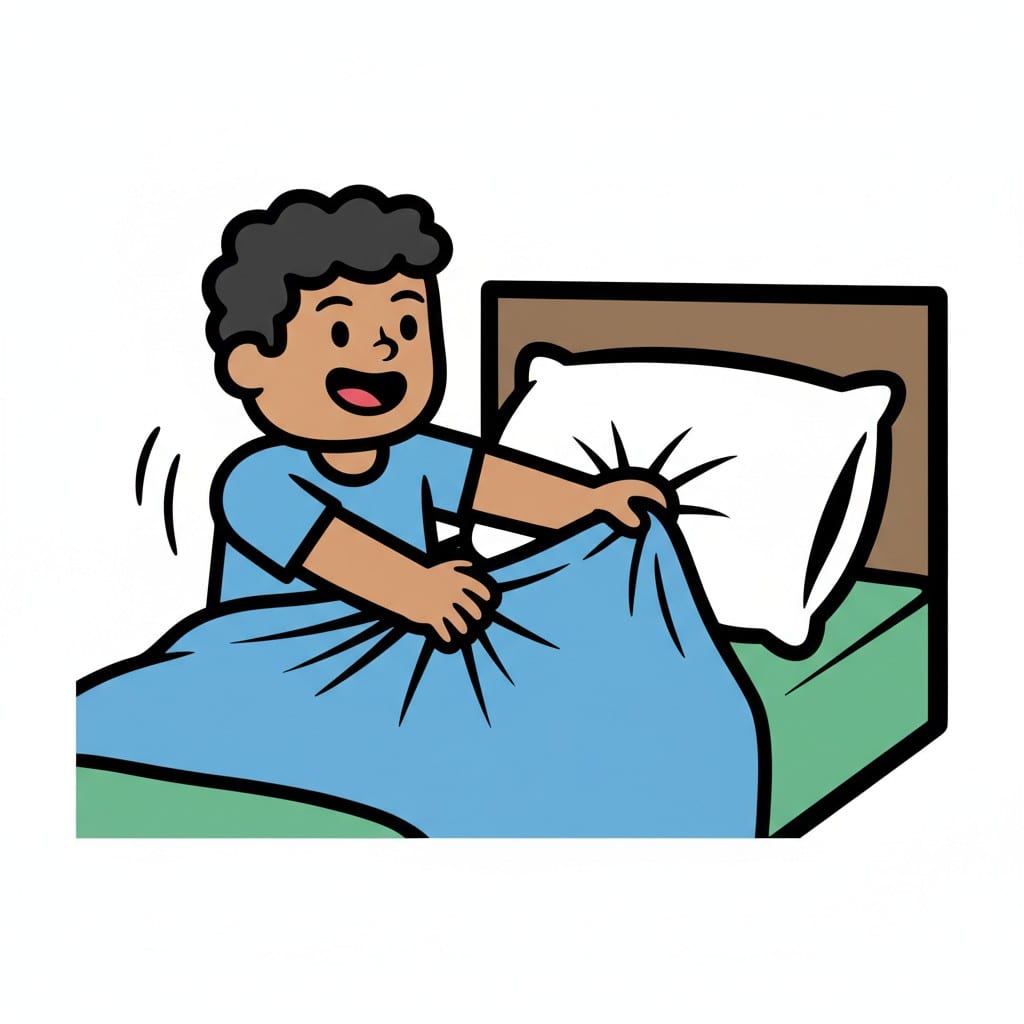 ♂
♂Make bed
A boy is making his bed, pulling up the duvet over the pillow.
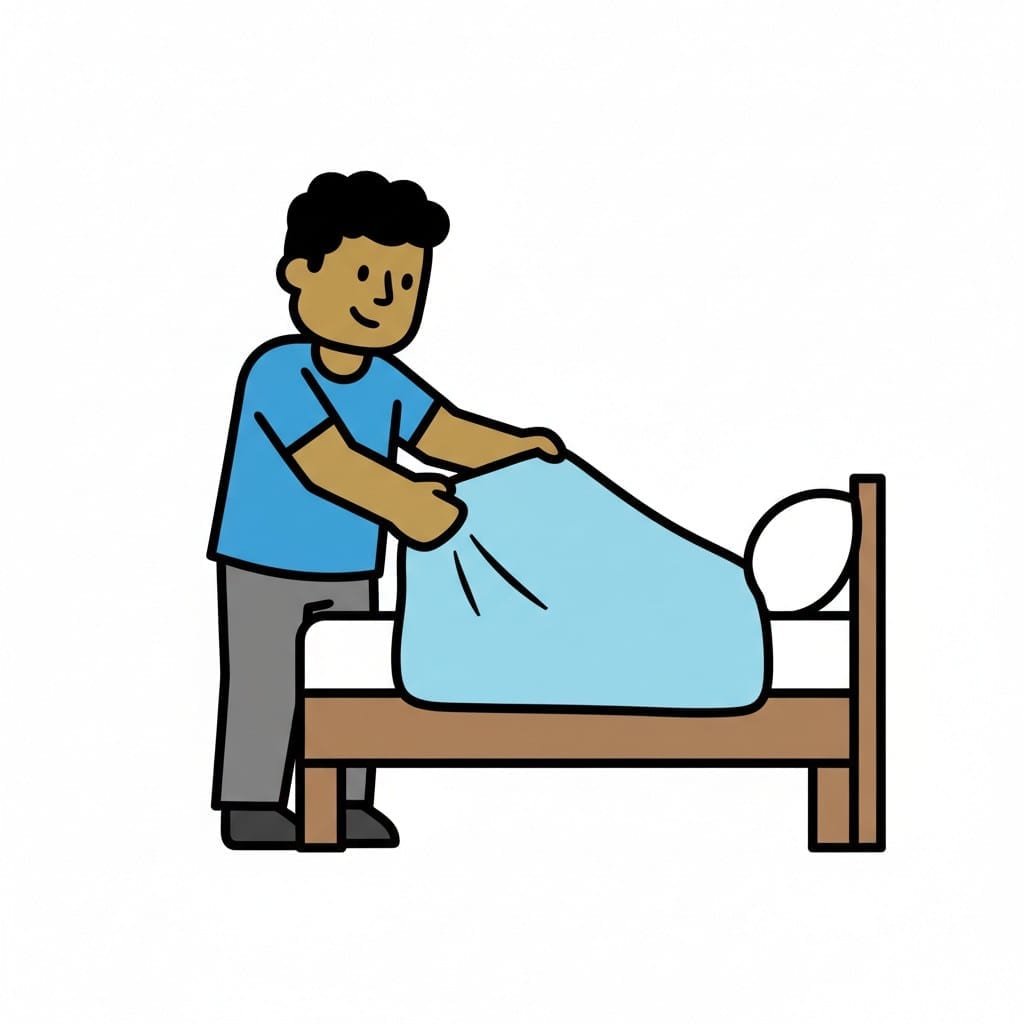 ♂
♂Make bed
A boy making the bed with a blue blanket.
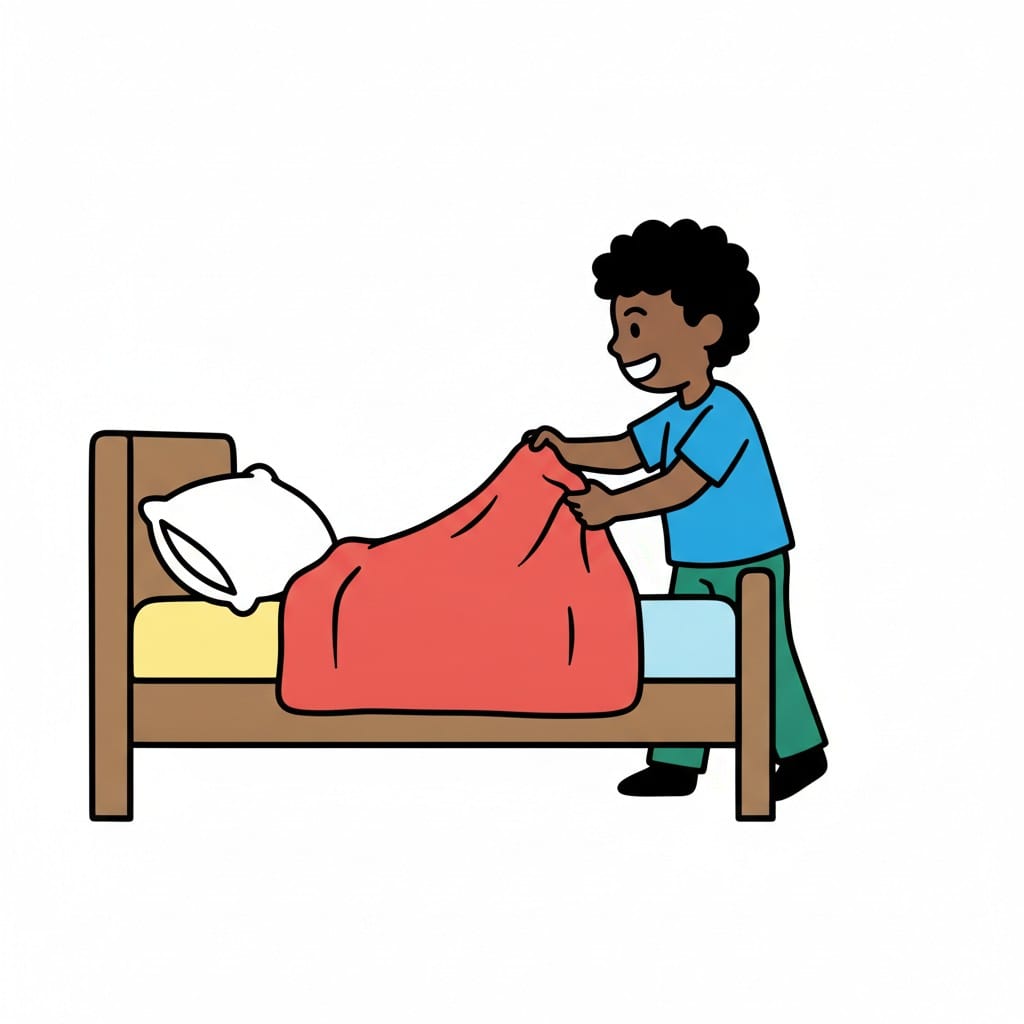 ♂
♂Boy making the bed
A boy pulls a red blanket over the bed.
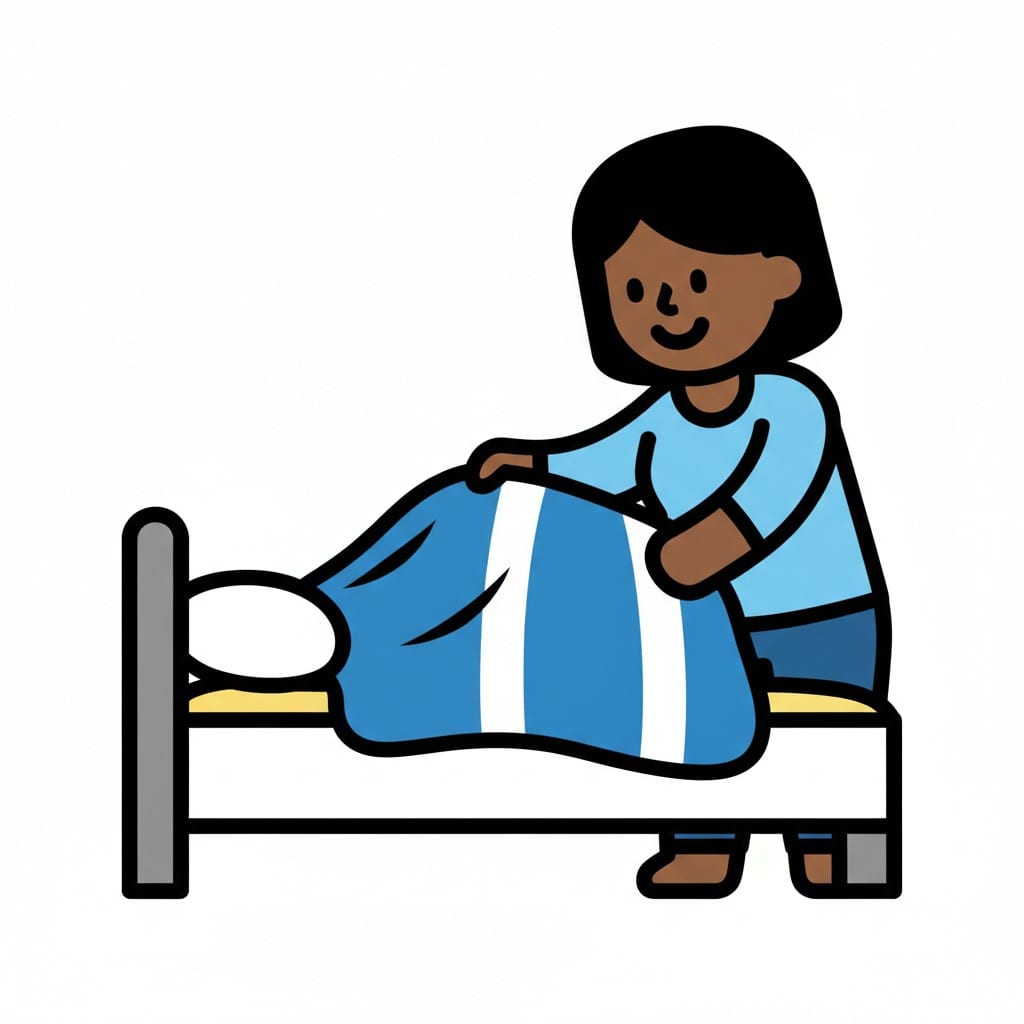 ♀
♀Make bed
A person making a bed with a blue blanket.
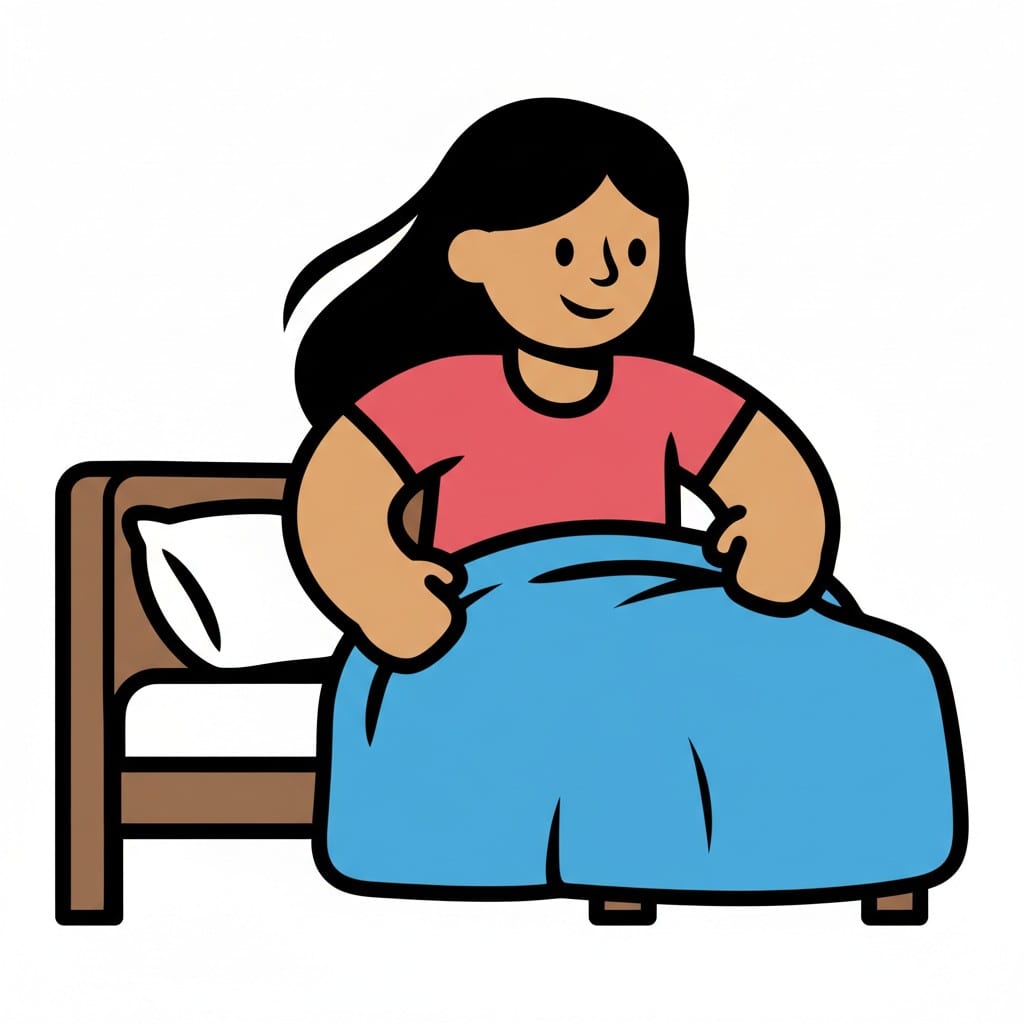 ♀
♀Make bed
A girl with long dark hair pulling a blue blanket up on a bed.
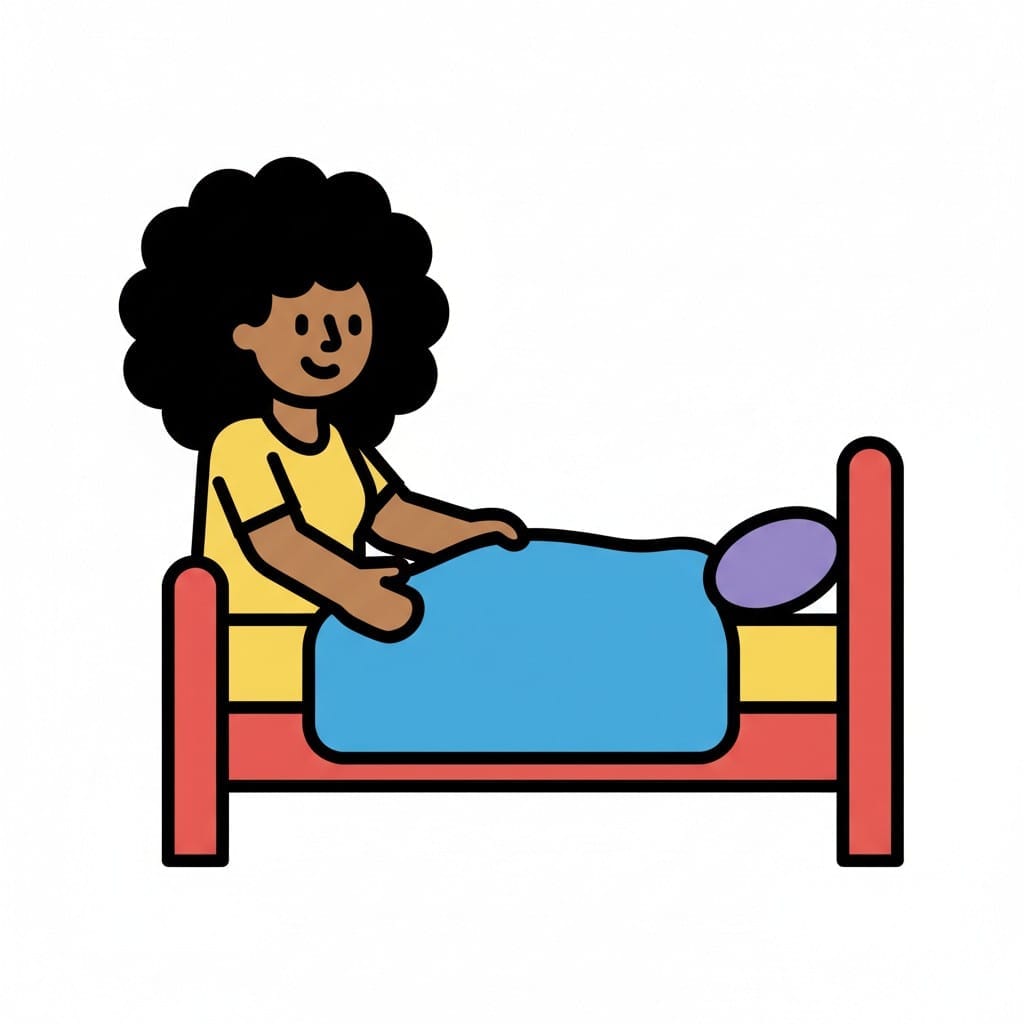 ♀
♀Make bed
A girl with curly dark hair pulling a blue blanket up on a bed with a red frame.
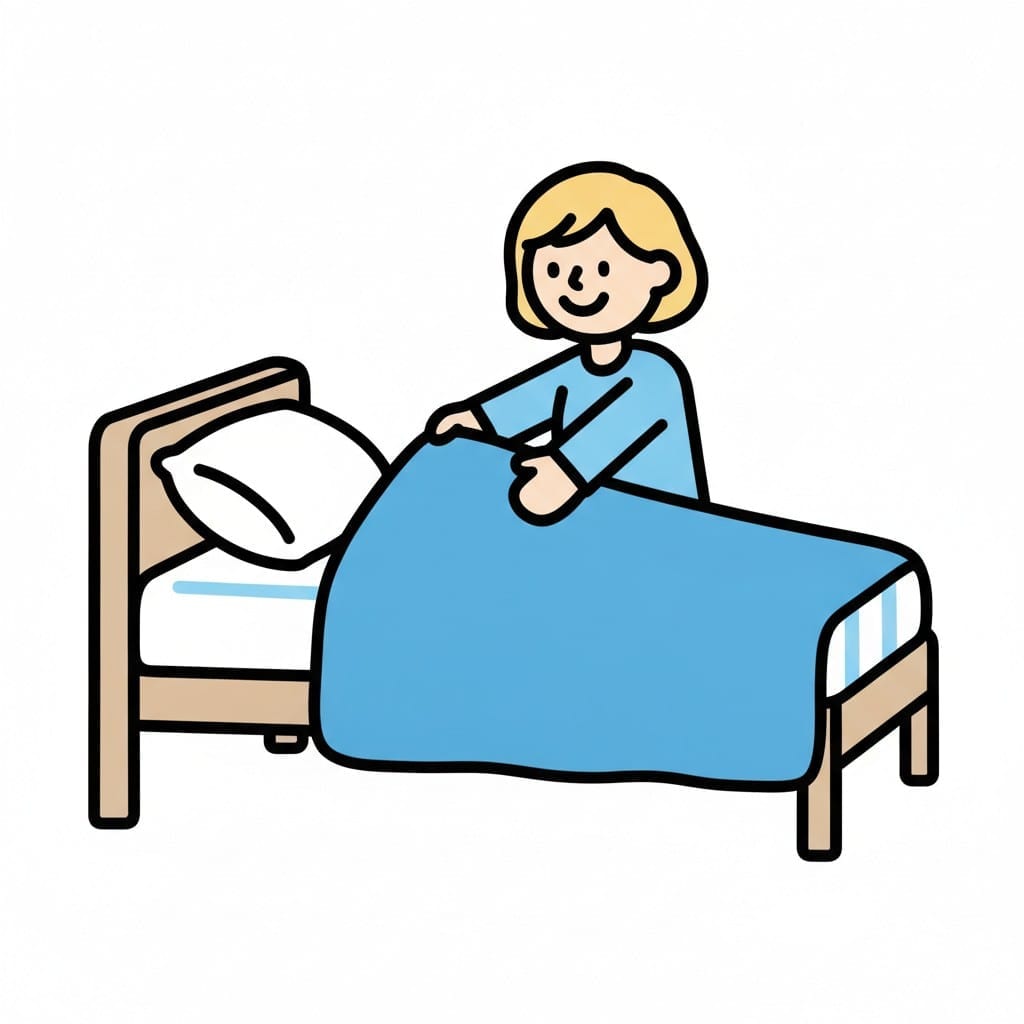 ♀
♀Girl smoothing the blue blanket
A girl with short light hair pulls a blue blanket smooth across a wooden bed with a white pillow.
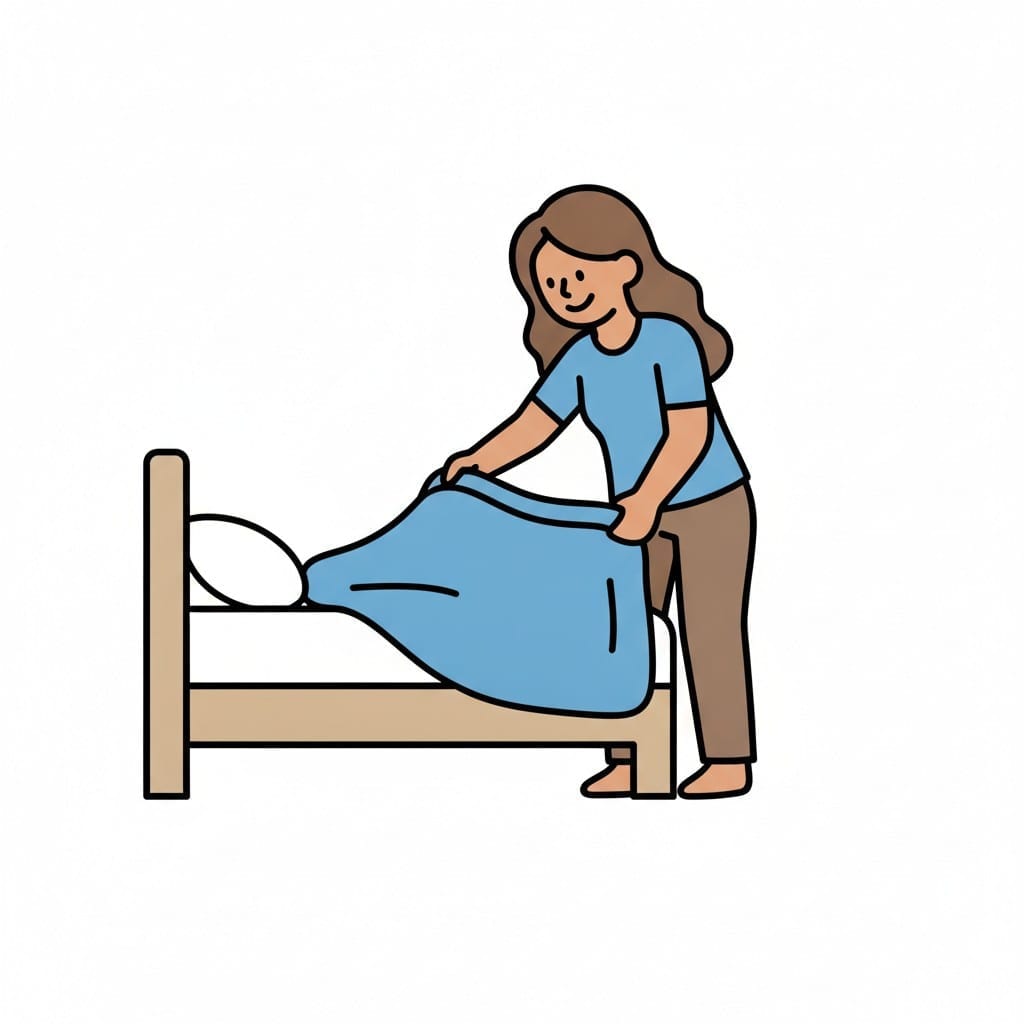 ♀
♀Woman making the bed
A woman smooths the blue duvet over the bed while the pillow sits at the headboard.
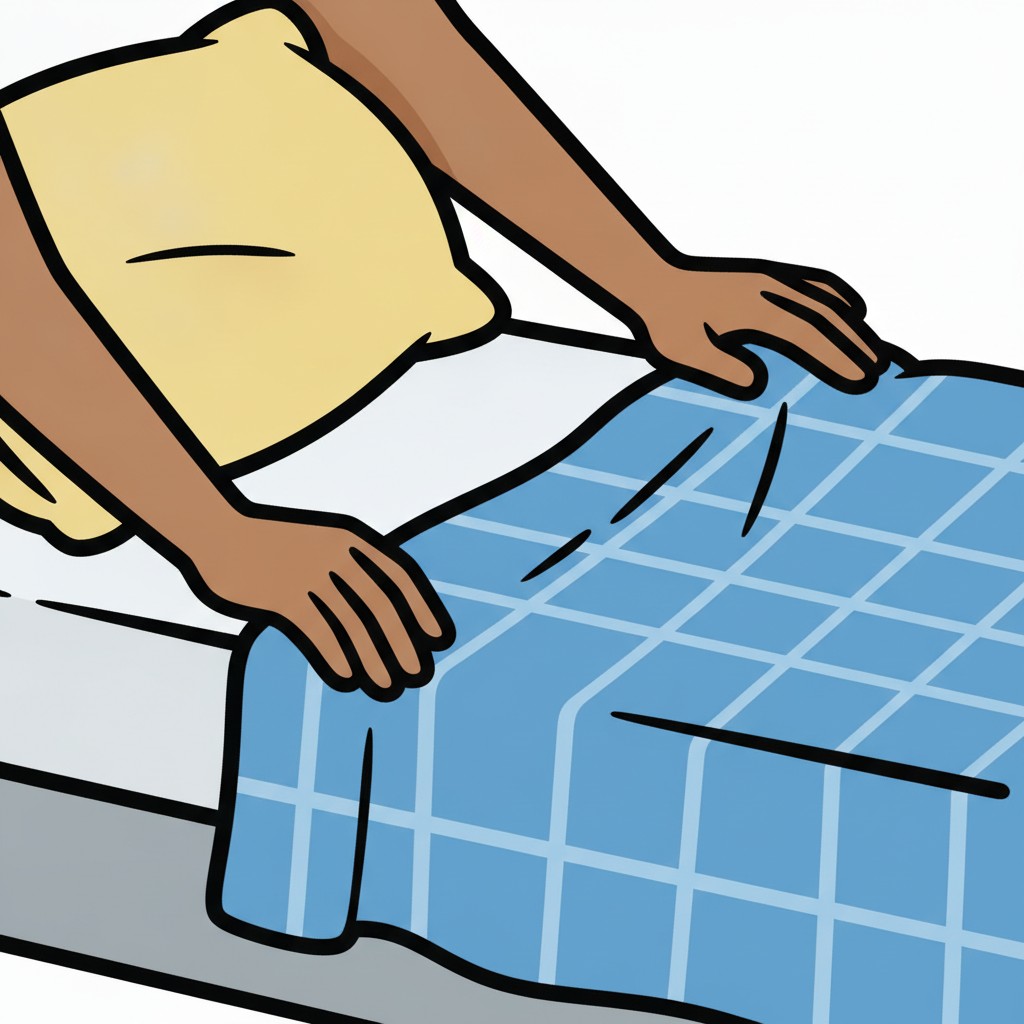
Smooth the duvet
Two hands smooth a blue checked duvet on a bed.
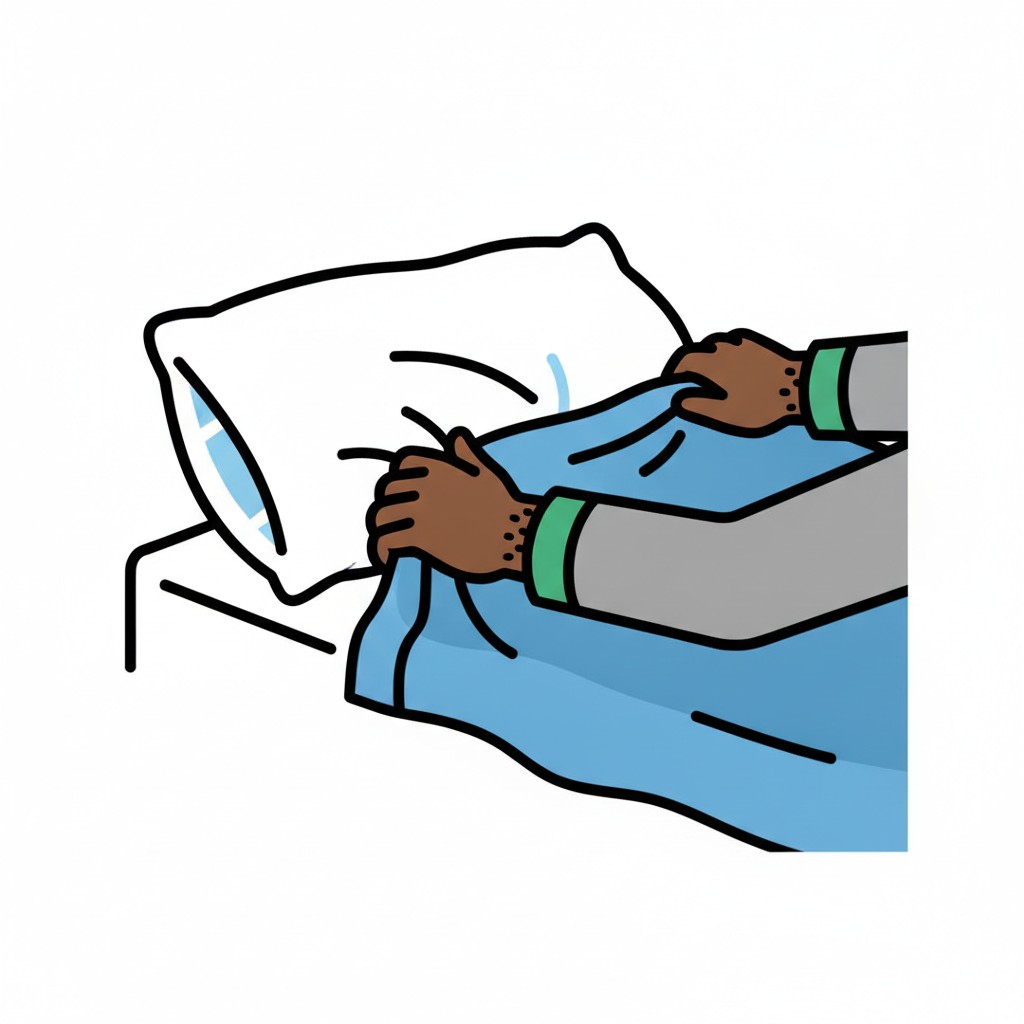
Fold the duvet by the pillow
Two hands fold a blue duvet into place beside a white pillow.
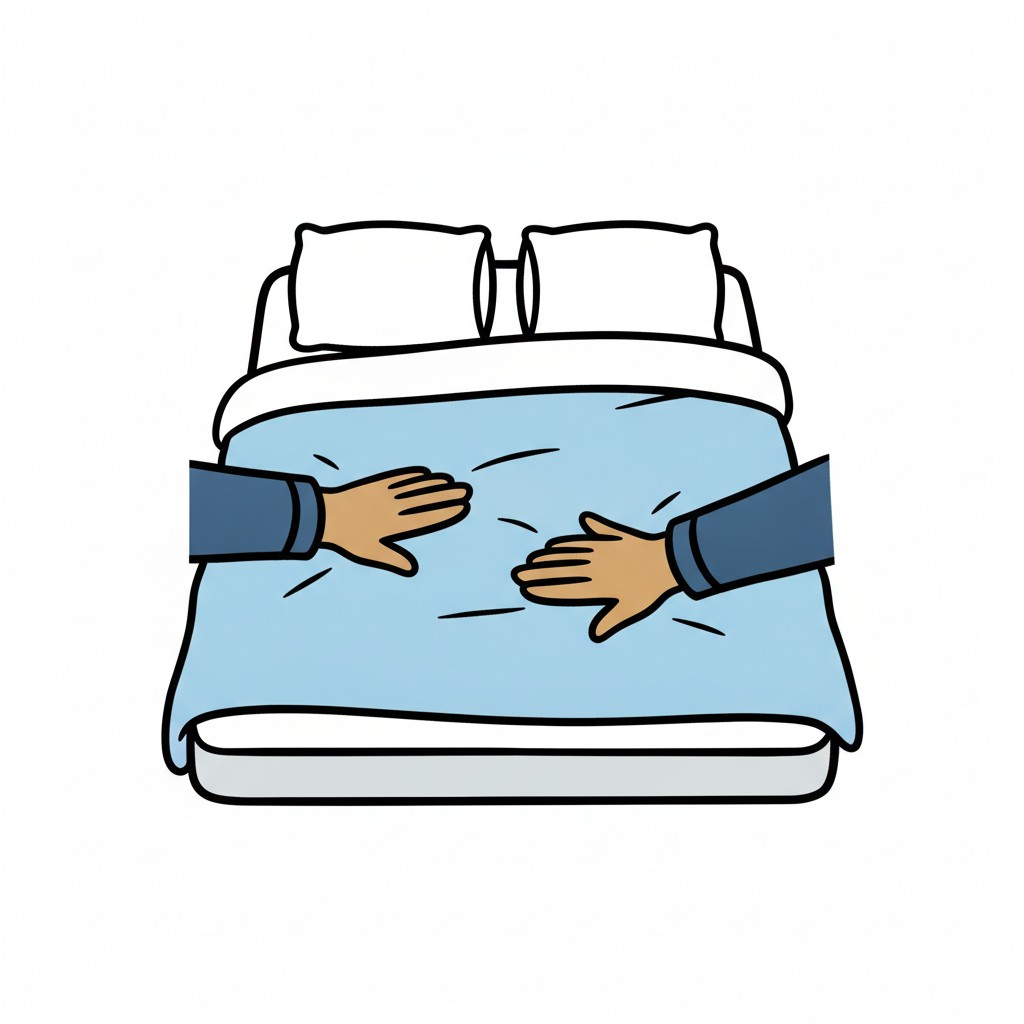
Finish making the bed
Two hands smooth a blue cover on a bed with two white pillows.
About this visual support
Making the bed is physically clumsy in a way grown-ups easily forget. The duvet is often bigger than the body trying to throw it, the corners fold inward, and the pillows tilt sideways every time you think they are set. Add the feeling that it is all pointless, since the sheet will be rumpled again after one night, and motivation drops before a hand even touches the cover.
With a visual schedule, making the bed becomes more of a small build than a tidy-up task. Step one: duvet in place. Step two: pillow up. Step three: cover over. The child then knows exactly when the job is finished, which is half the issue when the result otherwise feels open-ended.
One concrete tip: mark one corner of the duvet with a small ribbon or knot. The child can then tell which corner belongs at the head end, and the duvet lands straight on the first try. In Routined you can place bed-making as a short morning step with its own picture order. The app has a 14-day free trial.
This image is part of these ready-made schedules
Use this image in a schedule
Build your own visual schedule with this image and download it as a print-ready PDF. Completely free.
More similar visual supports
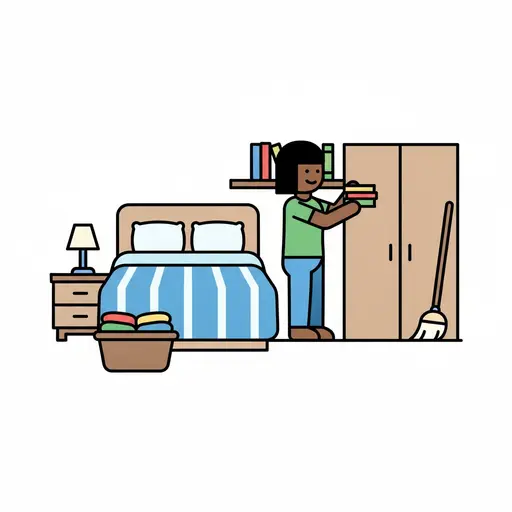
Clean the bedroom
A girl in a green top places books on a shelf in a bedroom with a made bed, a ni...
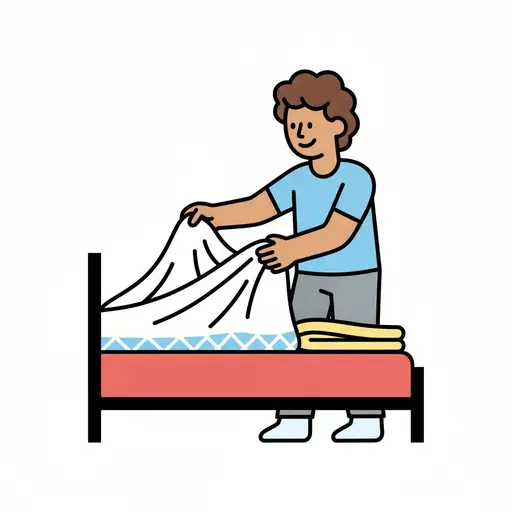
Change sheets
A child pulls the sheet off the bed, with clean linen folded beside it.
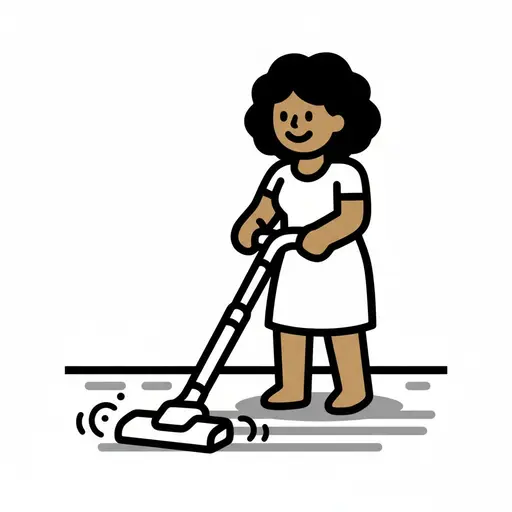
Vacuum the floor
A woman in a white dress runs a vacuum cleaner with a long wand across the floor...
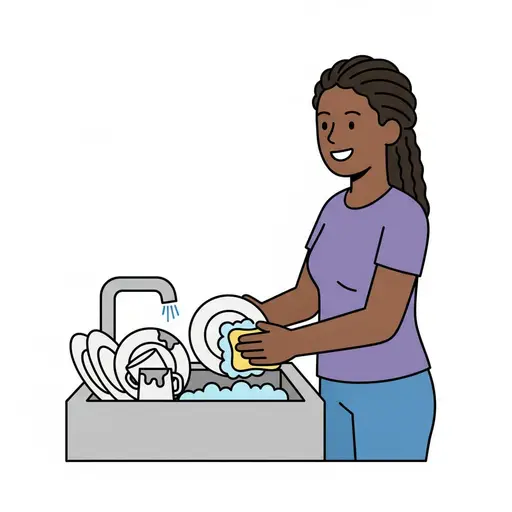
Do dishes
A person washes a plate with a yellow sponge at a sink full of dishes.
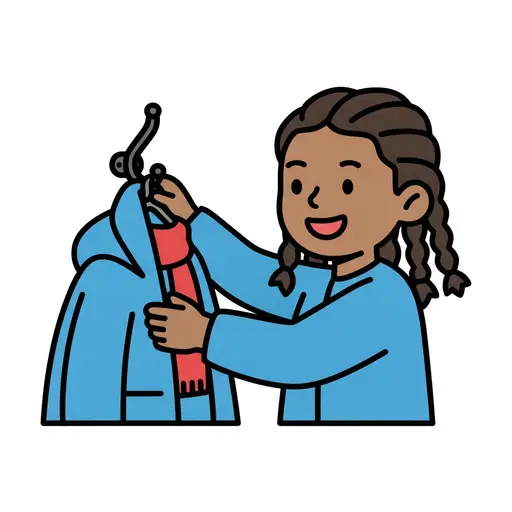
Hang up outerwear
A girl with braids hangs a blue hooded jacket and a red scarf on a hook.
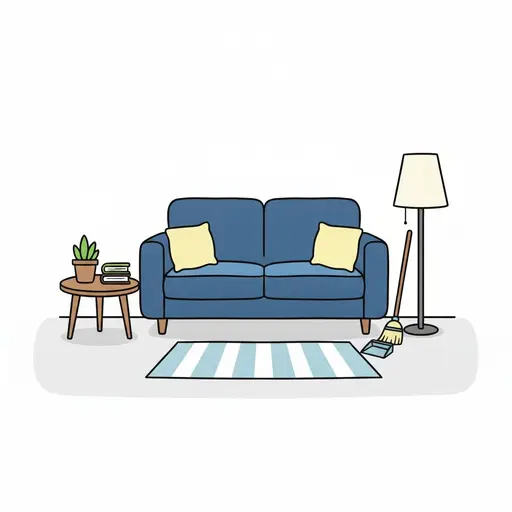
Clean the living room
A living room with a blue sofa, floor lamp and side table, with a broom leaning ...
Close the wardrobe
A closed brown wardrobe.
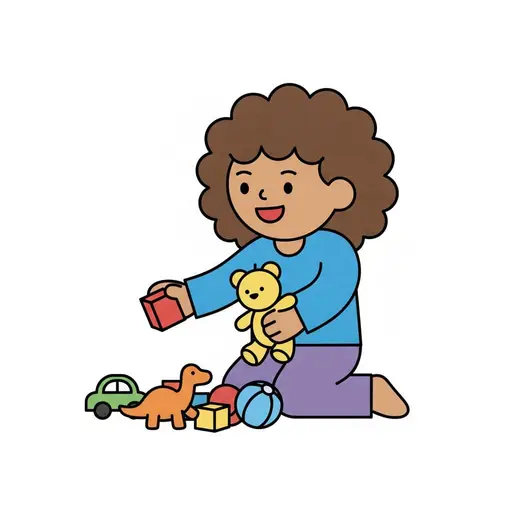
Put away toys
A child kneels holding a yellow teddy and a red block, with toys on the floor.
This visual support in other languages
Take the visual supports with you
In Routined you build schedules from these pictures, add timers and voice instructions, and your child follows the day on their own.


* 14-day free trial, then $2.39 a month or $20.99 a year (US pricing). Cancel anytime.