Pack
Packing asks the brain to juggle several things at once: what, where, and how much. When the list lives in pictures instead of memory, energy is freed up for the actual task. Browse the visual support below.
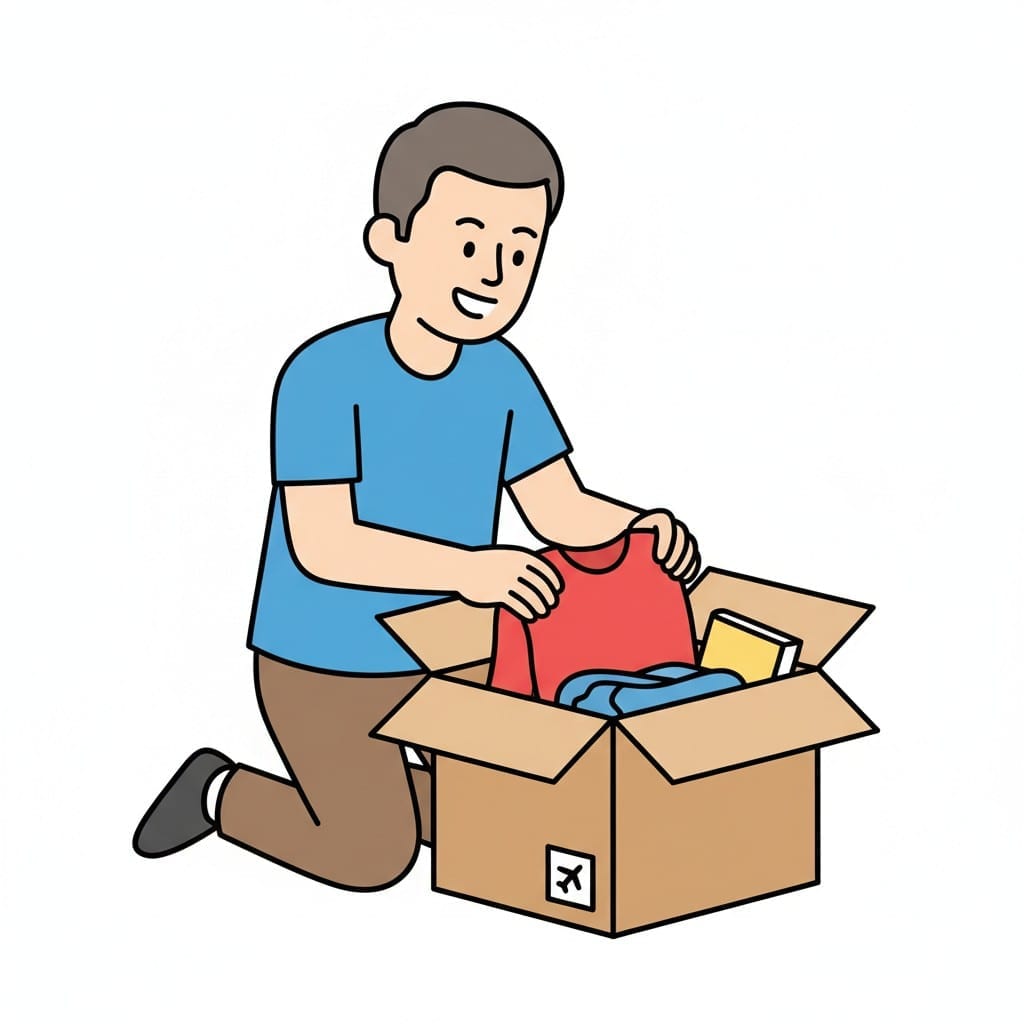 ♂
♂Boy packing box
A boy kneels and puts clothes into a cardboard box.
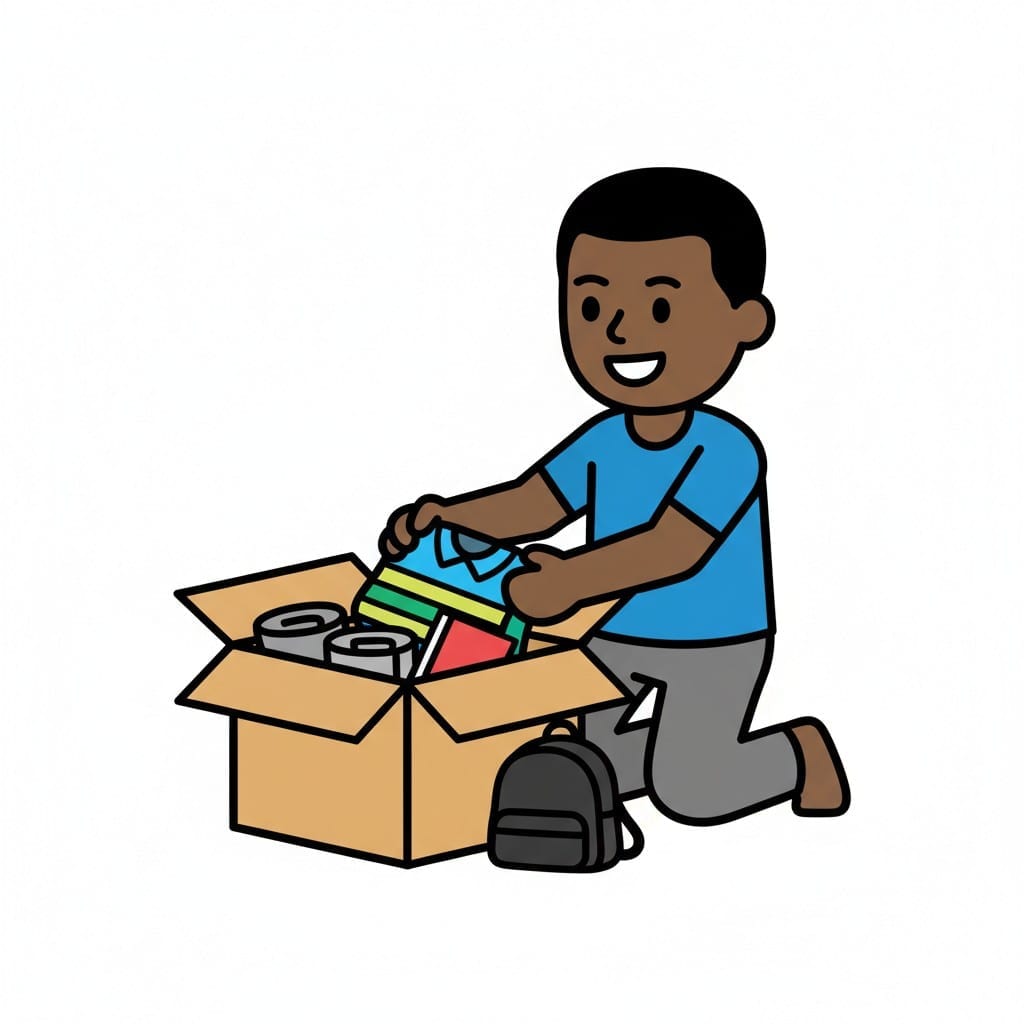 ♂
♂Boy packing box with backpack
A boy kneels and puts clothes into a cardboard box. A backpack is next to the box.
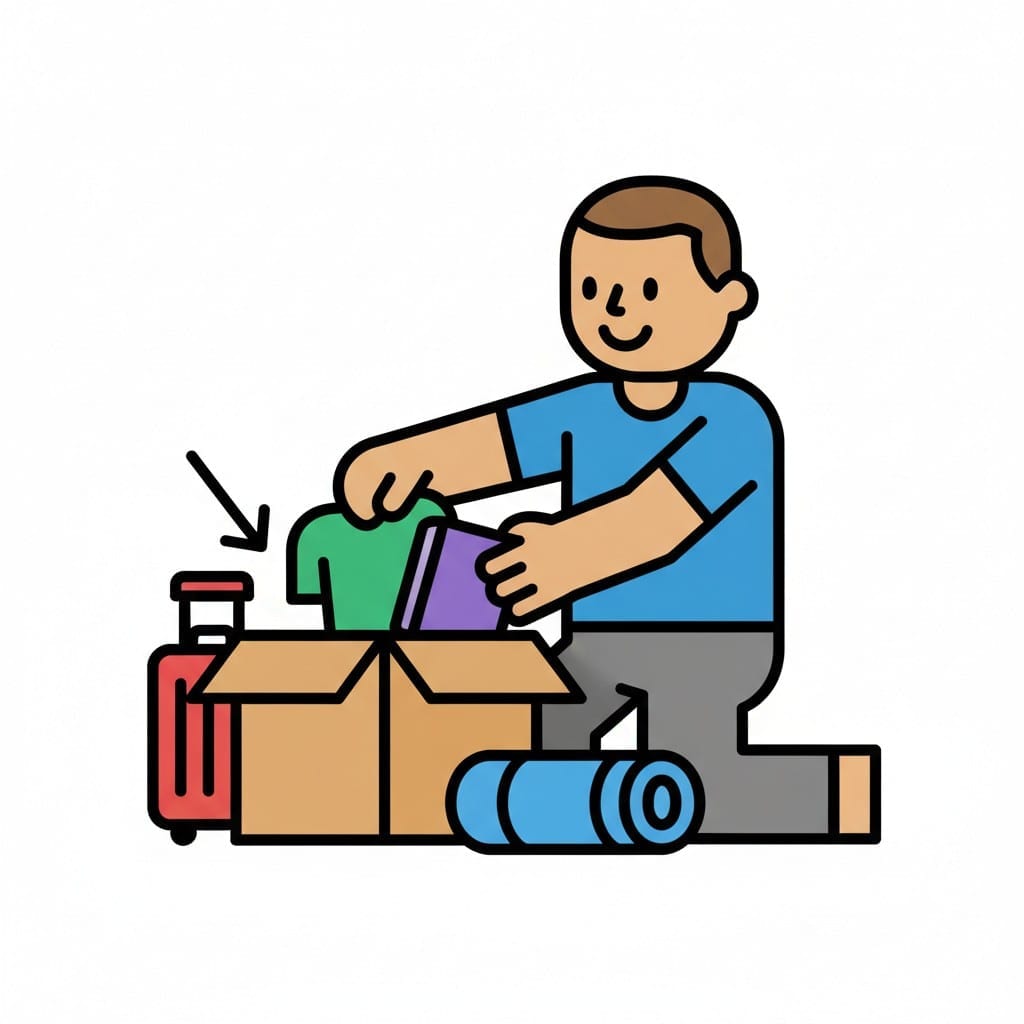 ♂
♂Pack a box
A person kneels, packing clothes and items into a cardboard box. A red suitcase and a rolled mat are nearby.
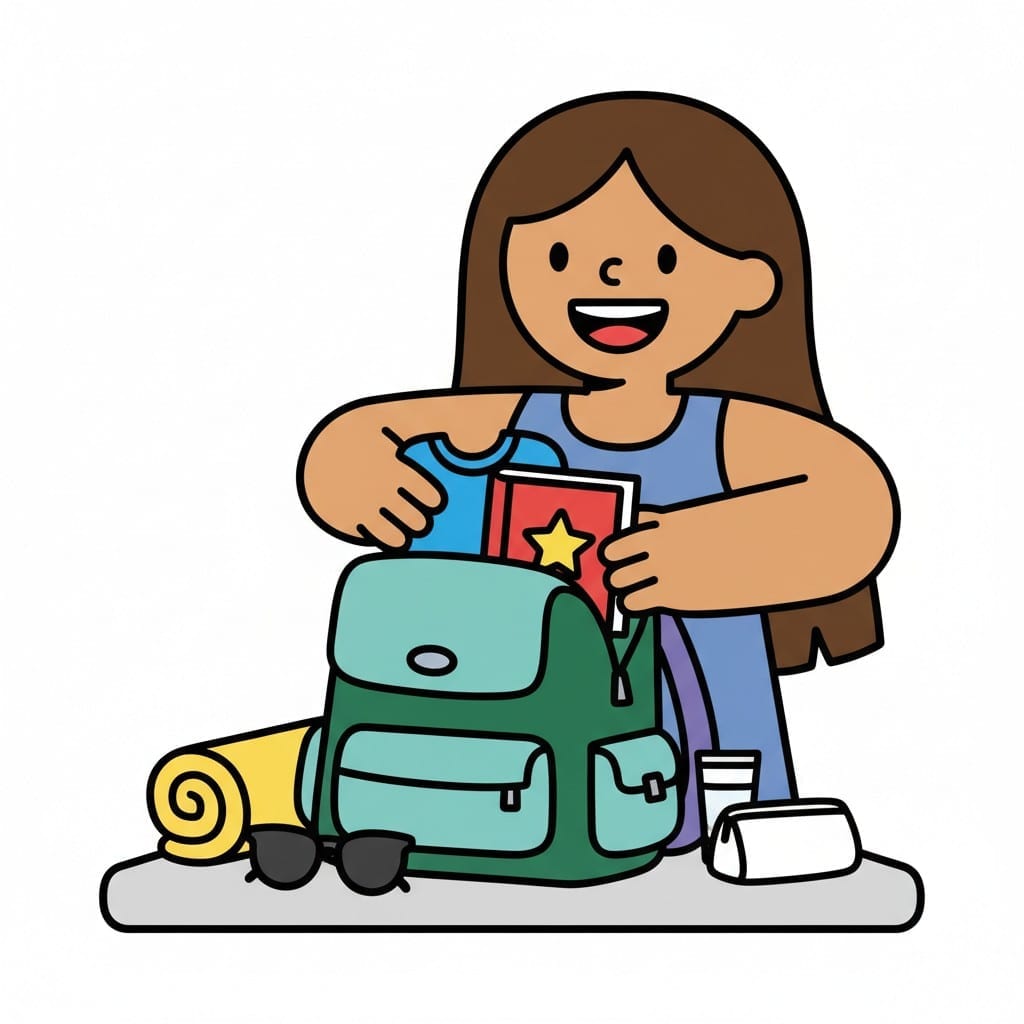 ♀
♀Pack a backpack
A person stands, packing clothes and a book into a green backpack. A rolled yellow mat, sunglasses, and a toiletry bag are on the table.
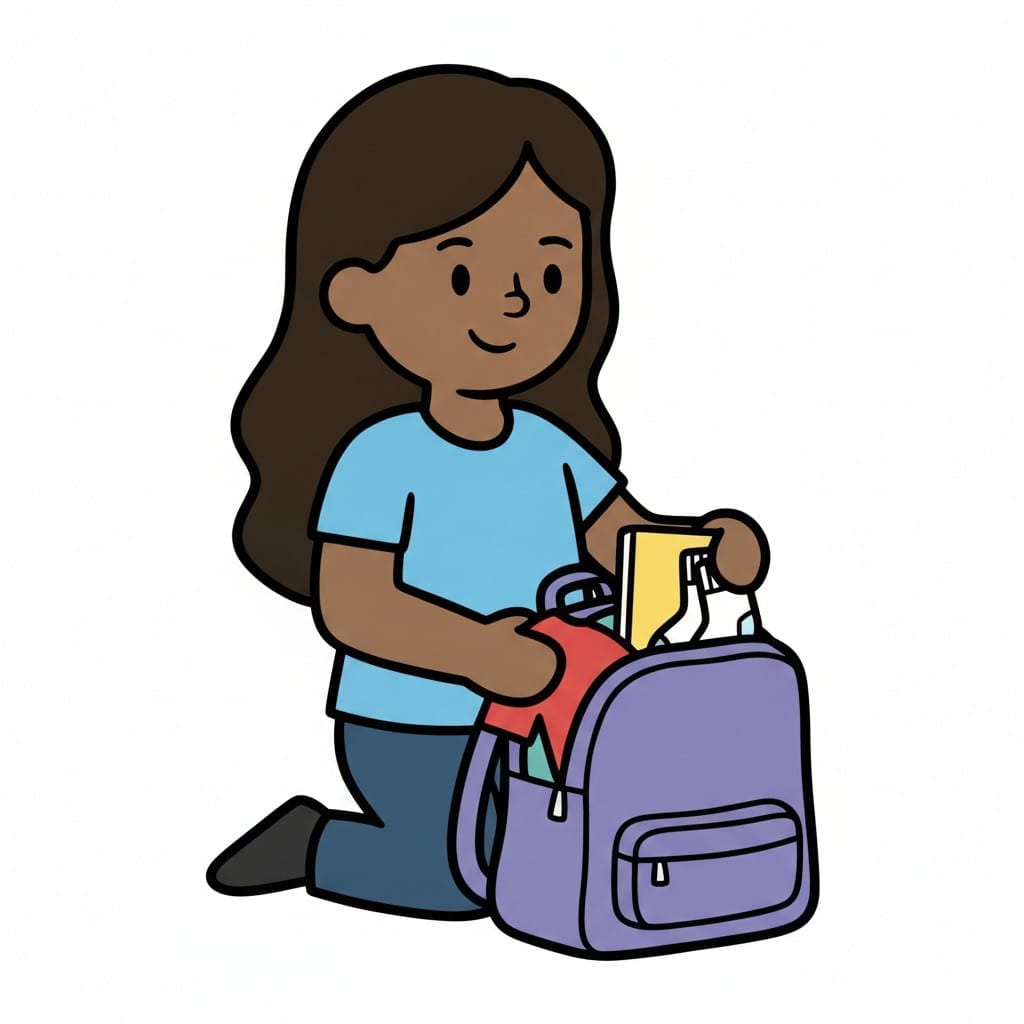 ♀
♀Girl packing a purple backpack
Kneeling on the floor, a girl with long hair tucks a red shirt, a yellow book, and a bottle into a purple backpack.
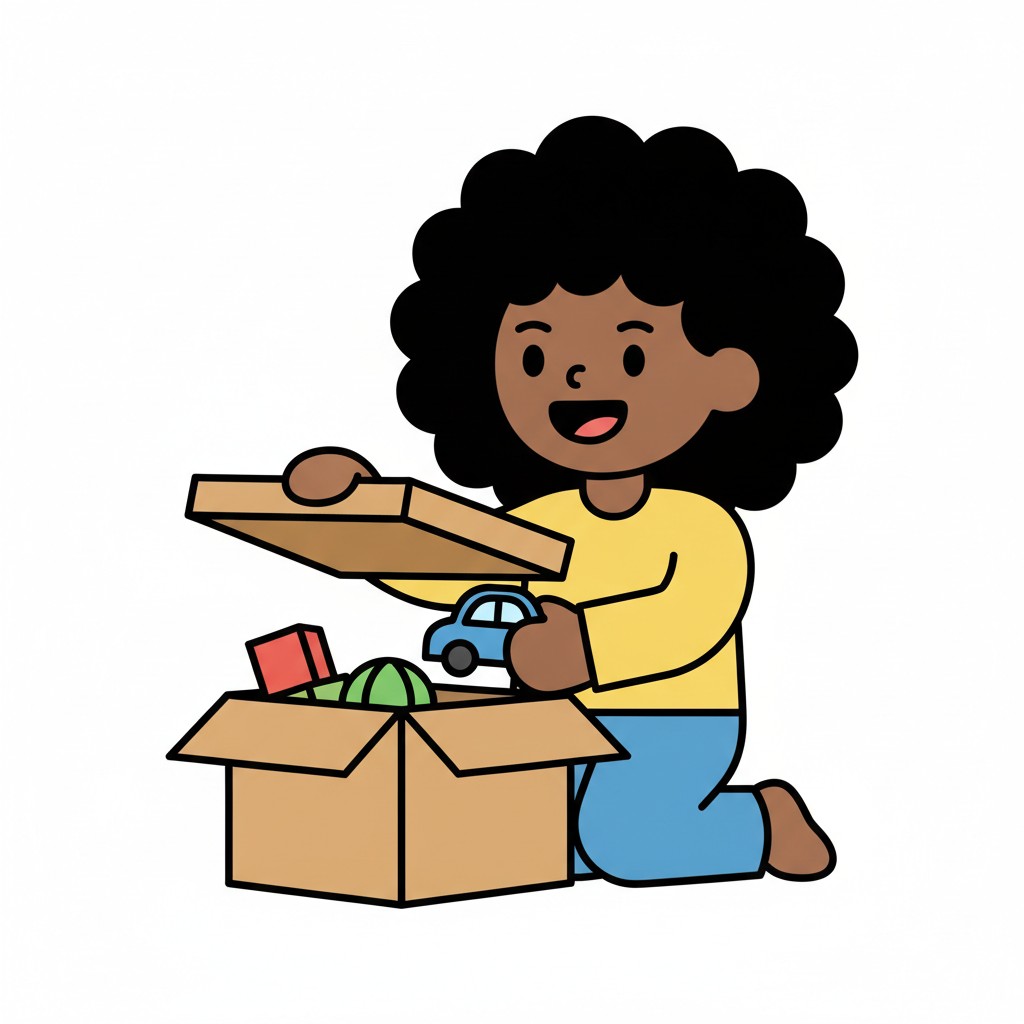 ♀
♀Packing up
A girl packs toys into a cardboard box.
About this visual support
The hard part of packing is rarely putting things in a box. It is holding four parallel tracks at once: remembering what is needed, finding each item in the room, judging whether it all fits, and tracking what is already inside. For a child with a small working-memory window, one of those tracks usually slips, and the whole process stalls.
A visual support moves the list out of the head. With every item shown as a picture, the child can look, fetch, place, and look again, without having to hold the full sequence in mind. Pausing halfway through no longer means losing the thread. A practical tip: arrange the pictures in the same order the items appear in the room, so the child does not have to crisscross the space.
In the Routined app the packing list becomes a checklist of pictures with built-in ticks, so progress and remainder are visible at once. The fourteen-day trial covers the full feature set.
Use this image in a schedule
Build your own visual schedule with this image and download it as a print-ready PDF. Completely free.

More similar visual supports
Pack for work
The woman fills her backpack on a table with a laptop, notebook and water bottle...
Pack clothes
A girl kneels and places colourful shirts into an open suitcase.
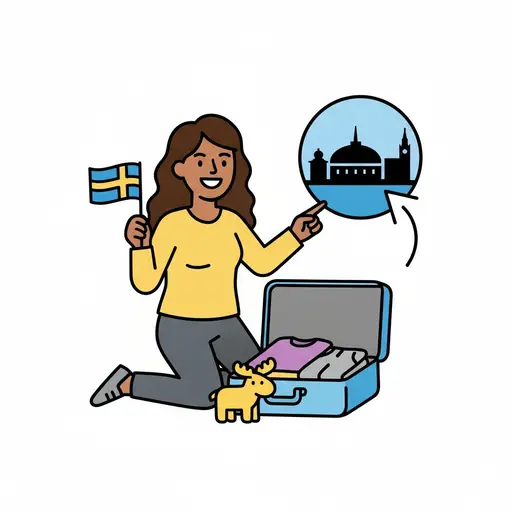
Pack for Stockholm
The girl holds a Swedish flag and points towards the Stockholm skyline beside he...
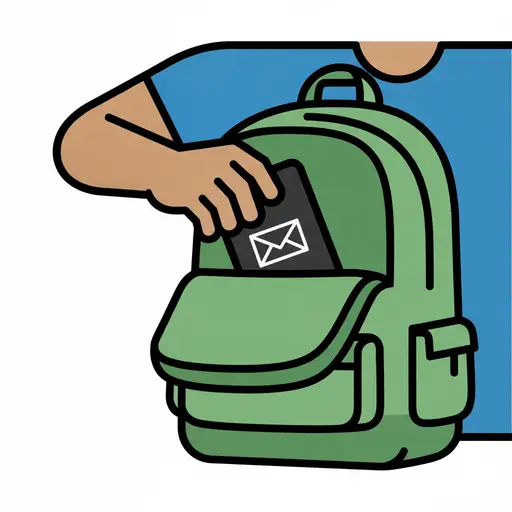
Pack phone
Close-up of a hand sliding a dark phone with an envelope icon on its screen into...
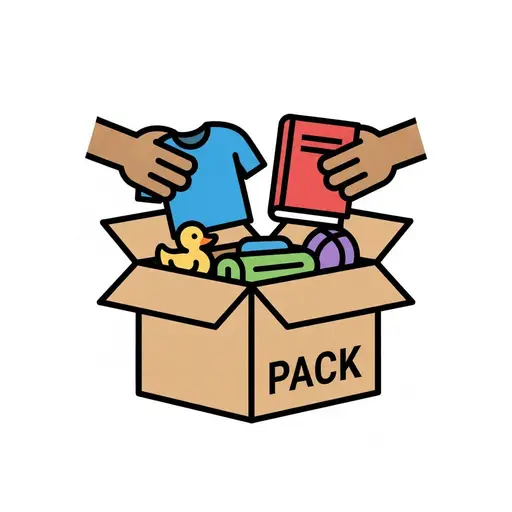
Pack things
Hands put a shirt and a book into a cardboard box that already holds toys.
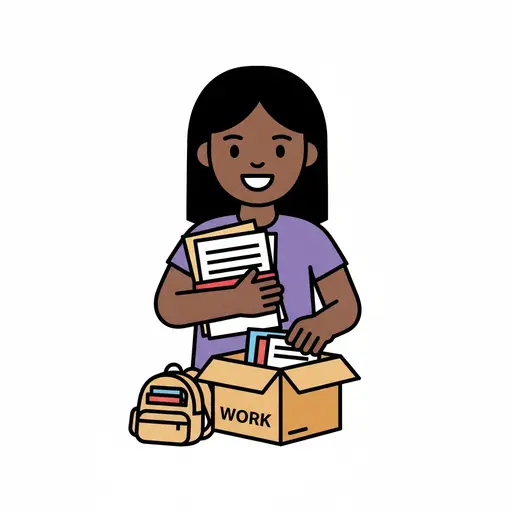
Pack work things
A woman holds a stack of papers and lowers them into a cardboard box for work, w...
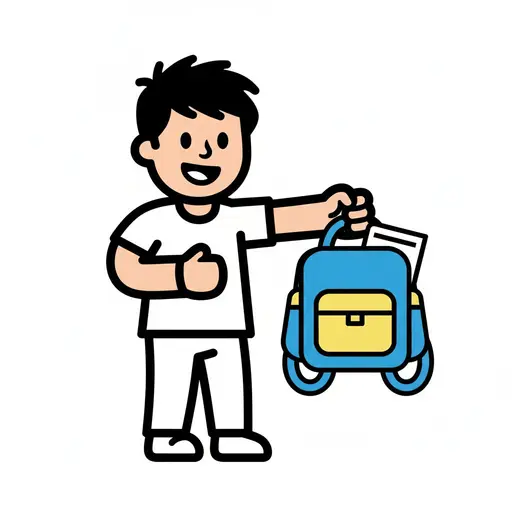
Bring school bag
Illustration of a boy holding a blue and yellow school bag.
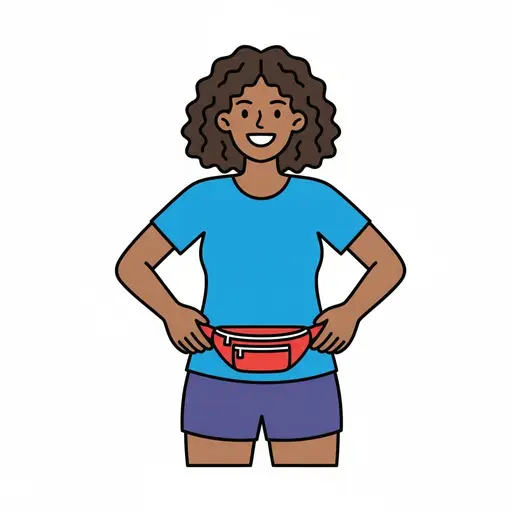
Bum bag
A person wears a red bum bag at the waist with both hands on it.
Take the visual supports with you
In Routined you build schedules from these pictures, add timers and voice instructions, and your child follows the day on their own.


* 14-day free trial, then $2.39 a month or $20.99 a year (US pricing). Cancel anytime.