Pick up things
Tidy up is two words and twenty possible actions. The child hears the words but sees no specific target. The visual support below translates the general prompt into small steps that can actually be started.
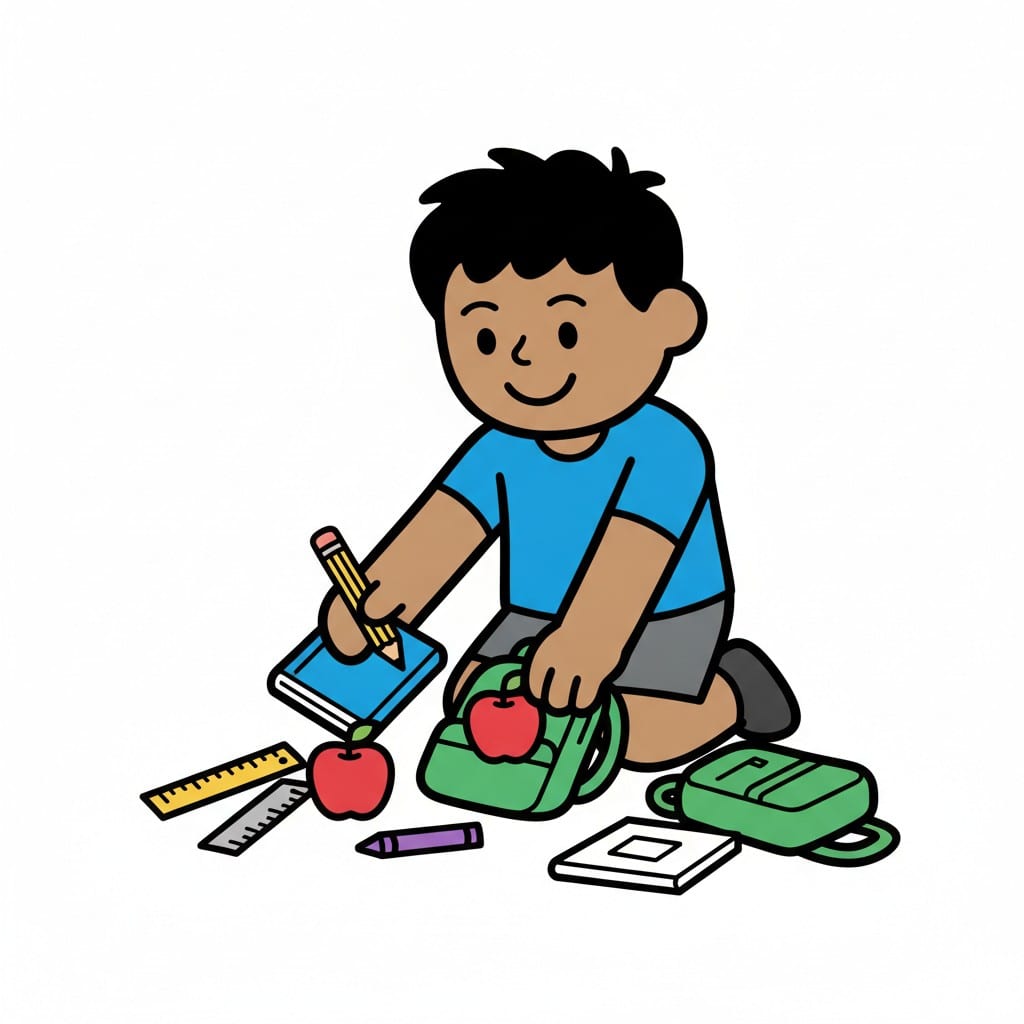 ♂
♂Gathering school things
A boy gathers pencils, a ruler and books for his bag.
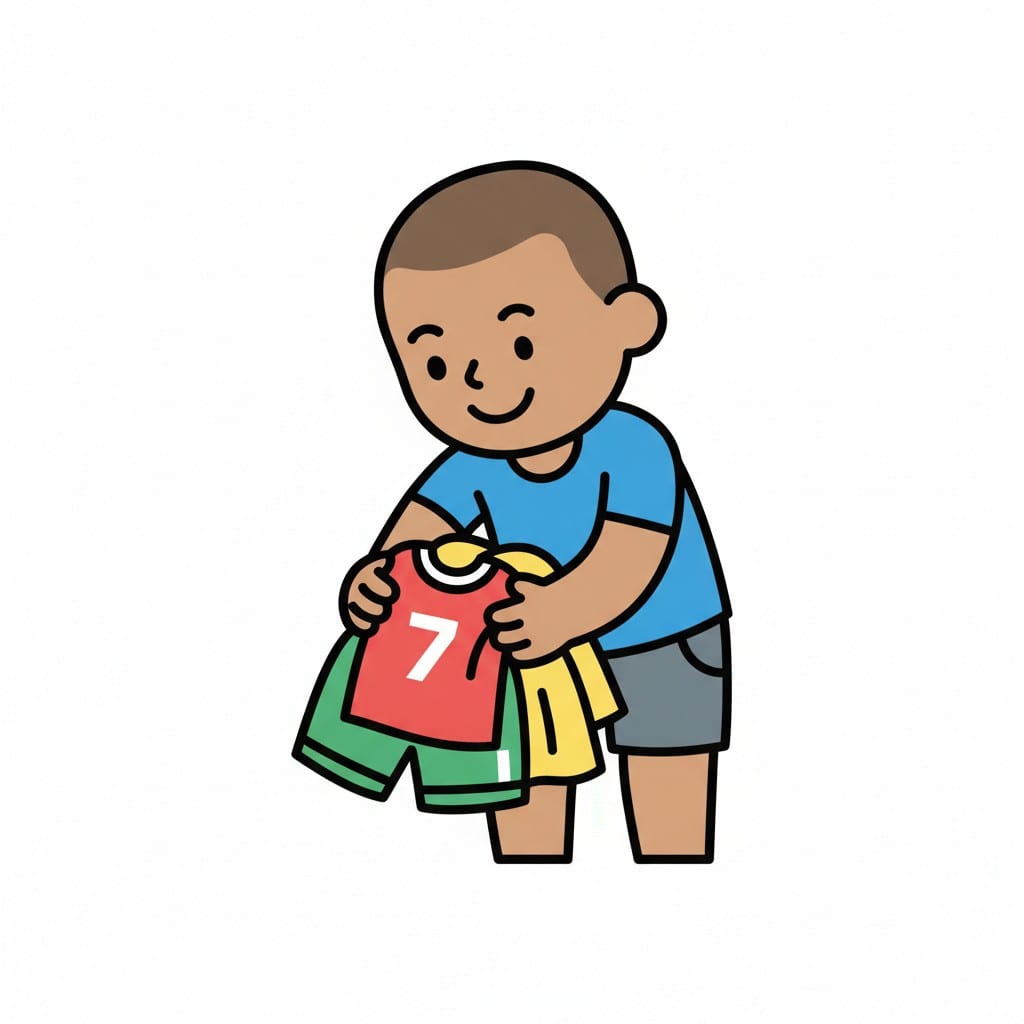 ♂
♂Picking up sports clothes
A boy holds a football shirt and shorts.
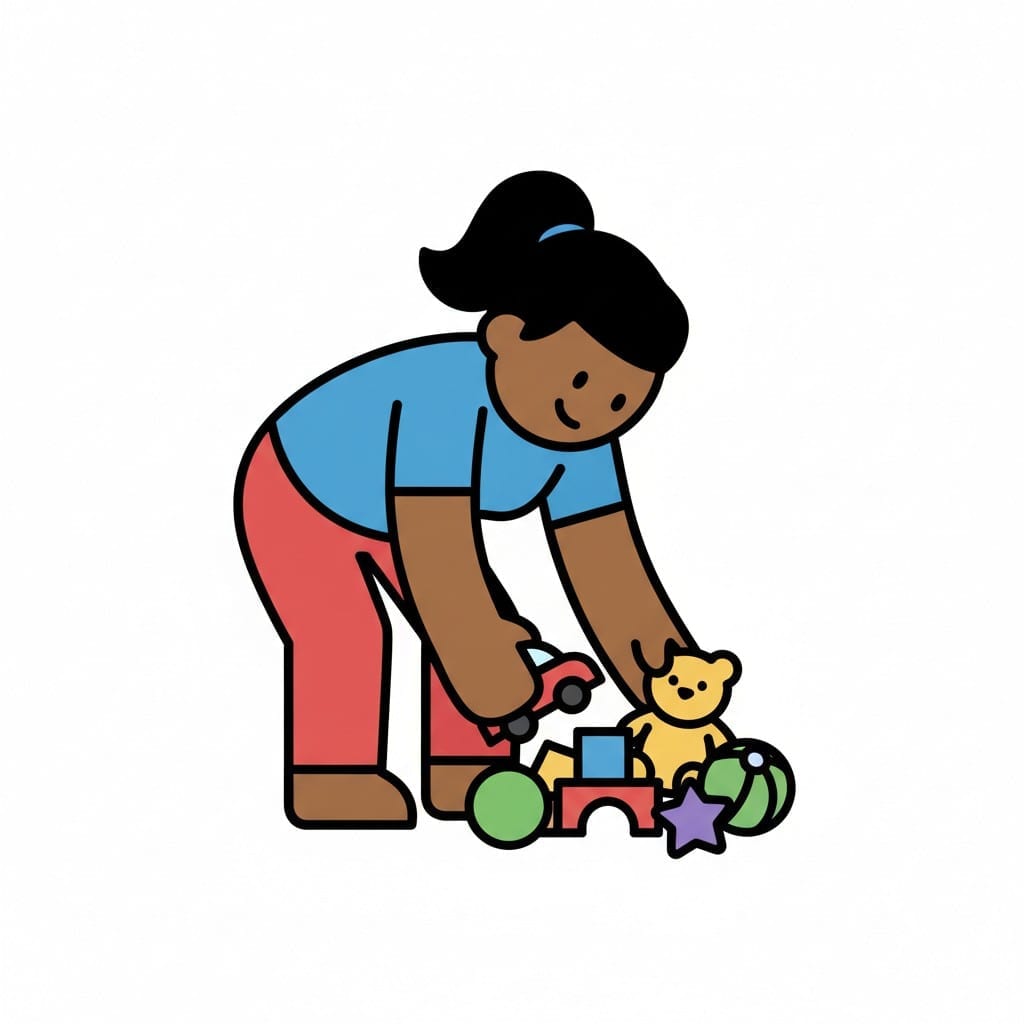 ♀
♀Pick up things
A person is picking up a ball, a book, and a star-shaped toy from the floor.
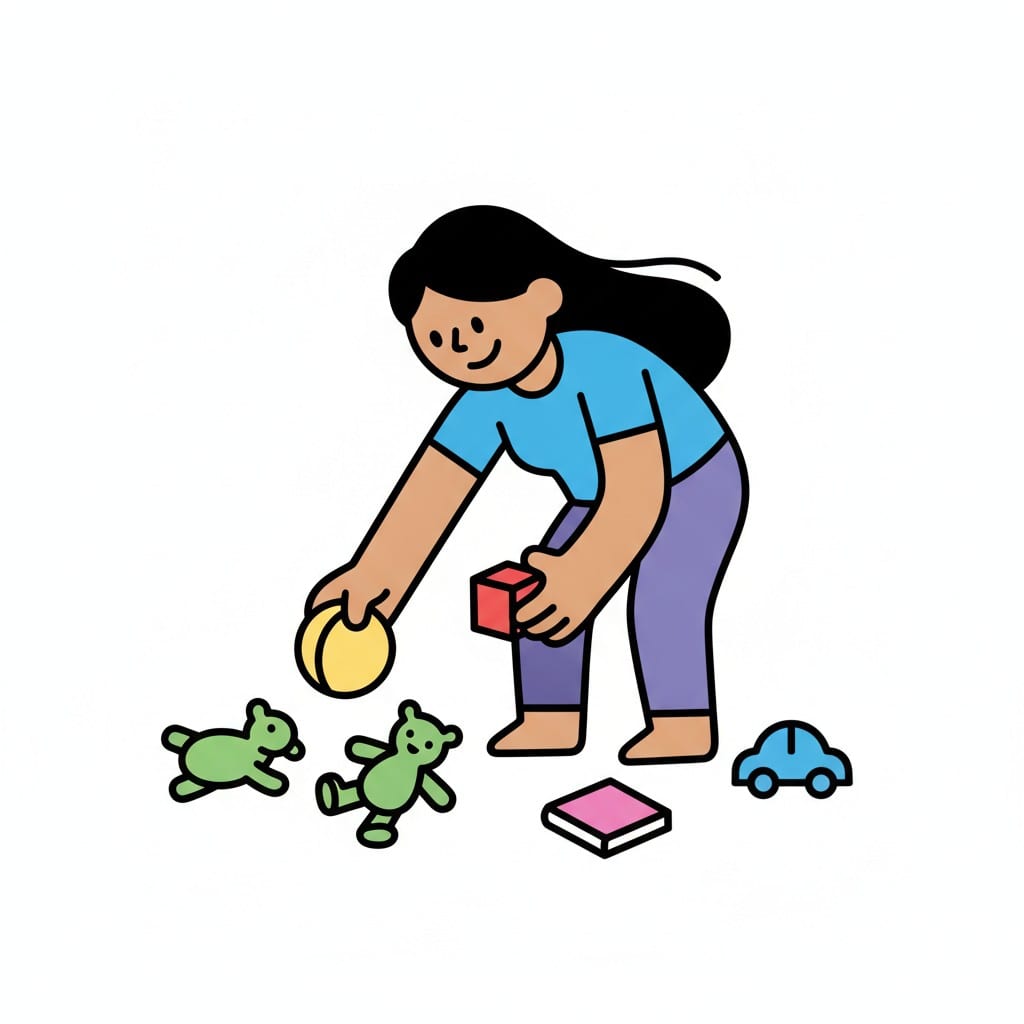 ♀
♀Girl picking up things
A girl bends down to pick up toys scattered on the floor.
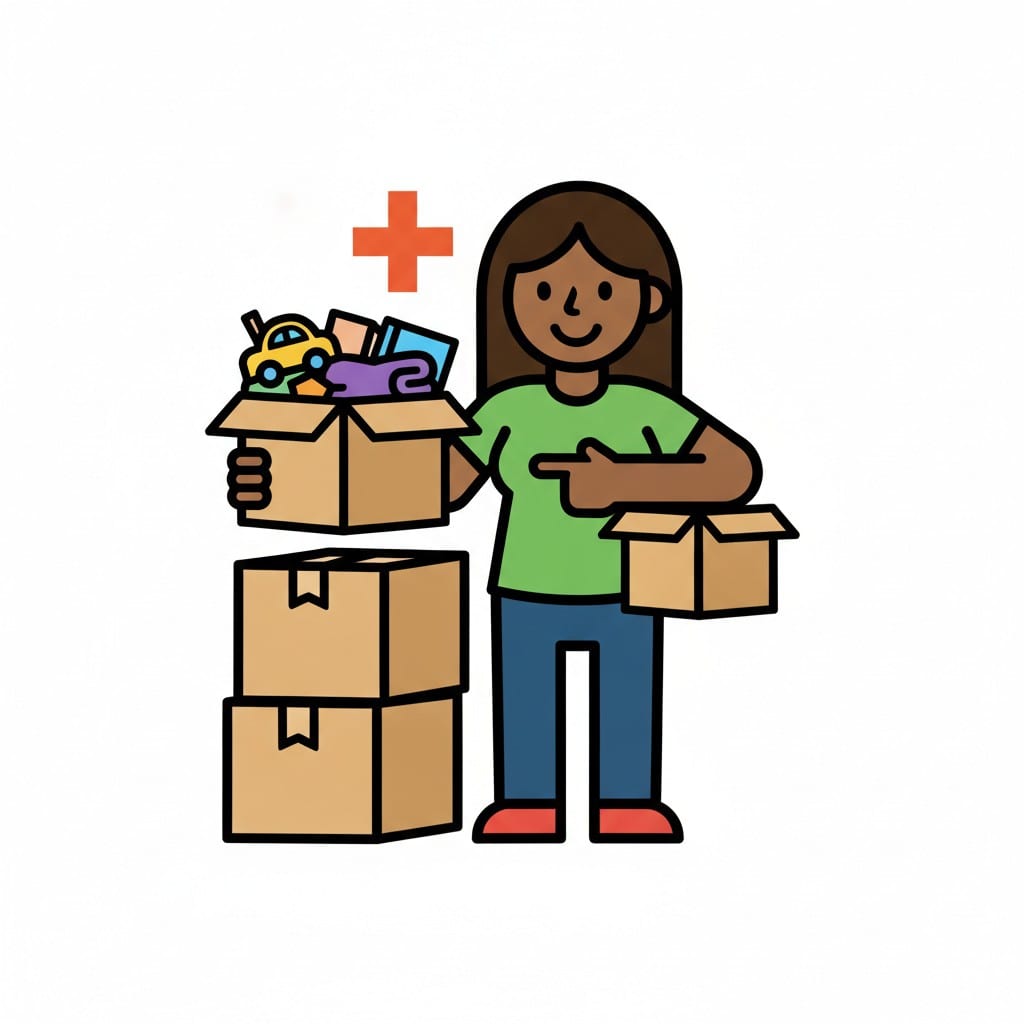 ♀
♀Extra pick-up
A woman stands by a stack of boxes with things inside.
About this visual support
Adults read tidy up as a cue to plan: scan the room, prioritise, start with the biggest. Many children read it as an abstract wish with no direction. They hear that something needs doing but can't see what. The result is standing in the middle of the room, looking around, getting stuck. That isn't defiance, it's the lack of a concrete starting point.
Visual support replaces the general command with visible sub-goals. Toys in the box. Books on the shelf. Cushions on the sofa. Shoes to the hallway. Each picture represents one category, so the child can tackle one category at a time instead of trying to grasp everything at once. The vague order becomes a list that can actually be worked through.
A concrete tip: always start with the most visible category, not necessarily the most important. Quick visible progress gives the child a sense of motion, and motion is what powers the next picture. In Routined you can rebuild the visual support quickly when the room looks different, so you don't have to recopy the same sequence each time. The first fourteen days come at no cost.
Use this image in a schedule
Build your own visual schedule with this image and download it as a print-ready PDF. Completely free.

More similar visual supports
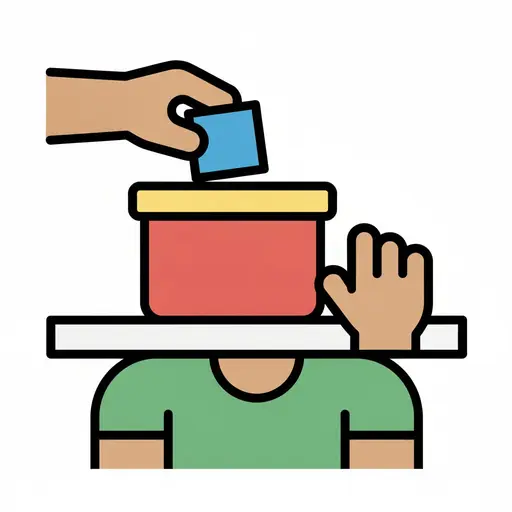
Put away
A hand places a blue block into a red container on a shelf.
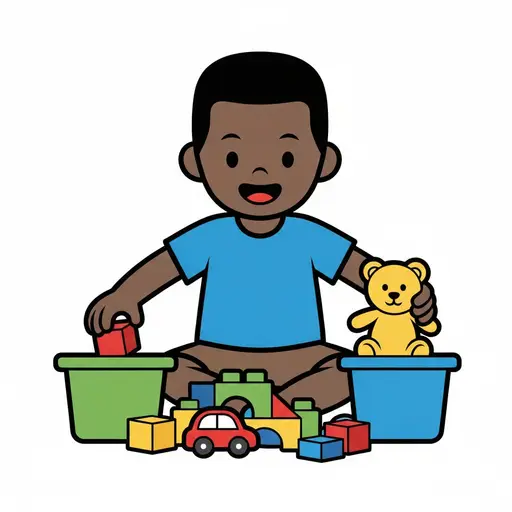
Sort toys
A boy sorts blocks and toys into a green and a blue bin.
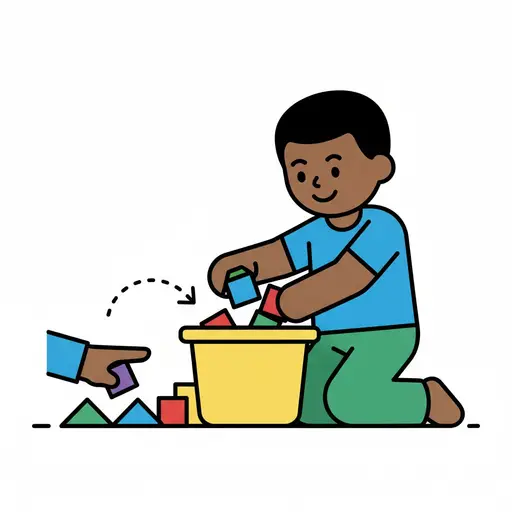
Help clean up
A boy kneels on the floor and puts building blocks into a yellow box.
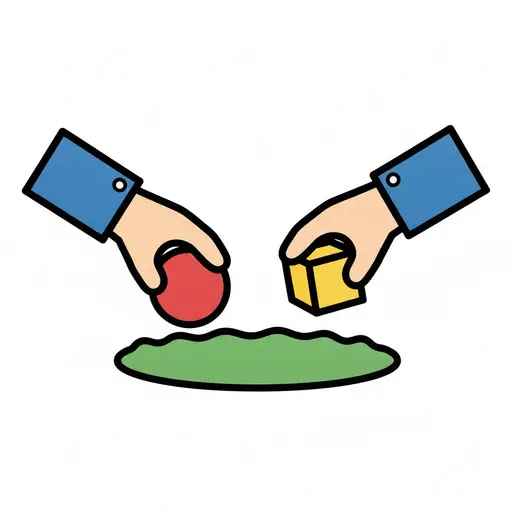
Pick up
Two hands pick up a red ball and a yellow block from a green mat.
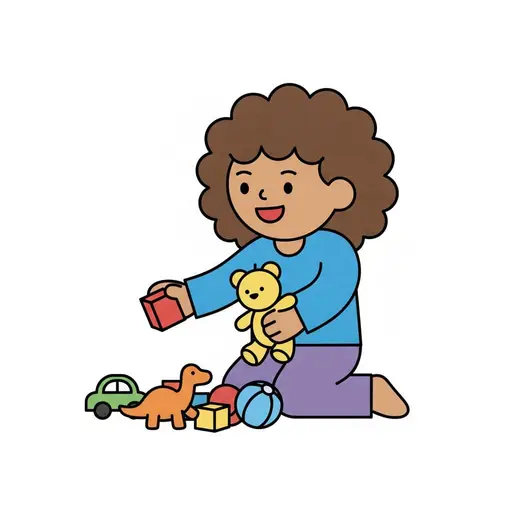
Put away toys
A child kneels holding a yellow teddy and a red block, with toys on the floor.
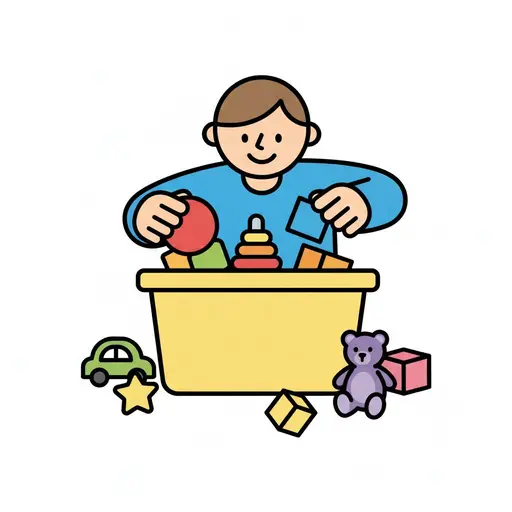
Straighten up
A child puts toys into a yellow tub, with a car, a teddy and a block on the floo...
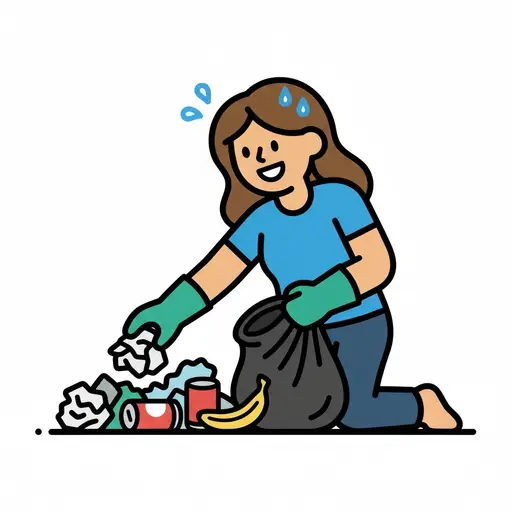
Clean up trash
A person wearing gloves picks up litter and puts it into a trash bag.
Dishwasher
An open dishwasher with cups in the top rack and plates in the bottom.
Take the visual supports with you
In Routined you build schedules from these pictures, add timers and voice instructions, and your child follows the day on their own.


* 14-day free trial, then $2.39 a month or $20.99 a year (US pricing). Cancel anytime.