Put laundry
Laundry isn't one task, it's a string of halves: a load going in, one coming out, one waiting to hang, one forgotten in the drum. Without a visible marker the brain can't tell where the loop ends. The steps below set out the start and the finish.
 ♂
♂Carrying laundry to the machine
A boy in a white top holds up a blue t-shirt and red clothes next to a washing machine.
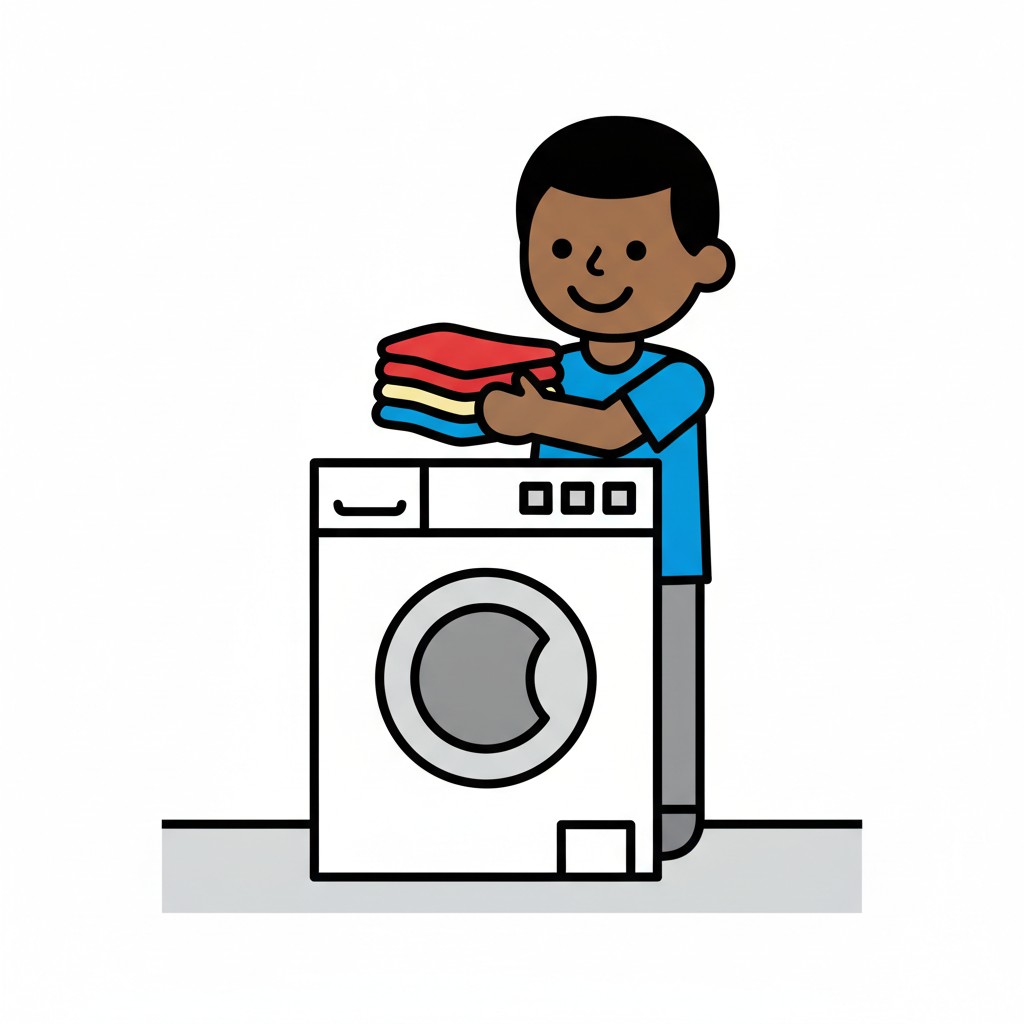 ♂
♂Putting laundry on the washer
A boy carries folded laundry to the washing machine.
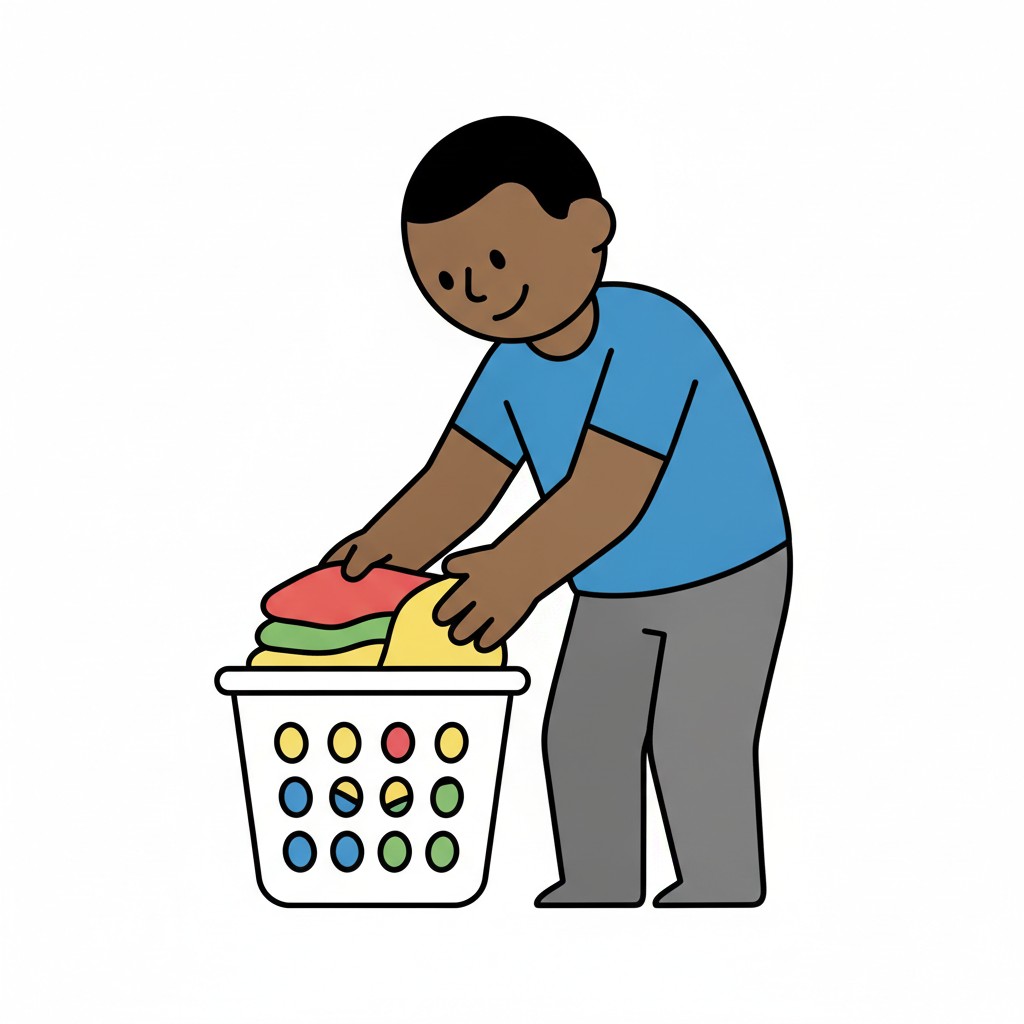 ♂
♂Putting laundry in the basket
A man places folded laundry into a white laundry basket.
 ♀
♀Put laundry
A person putting colored clothes into a gray laundry basket.
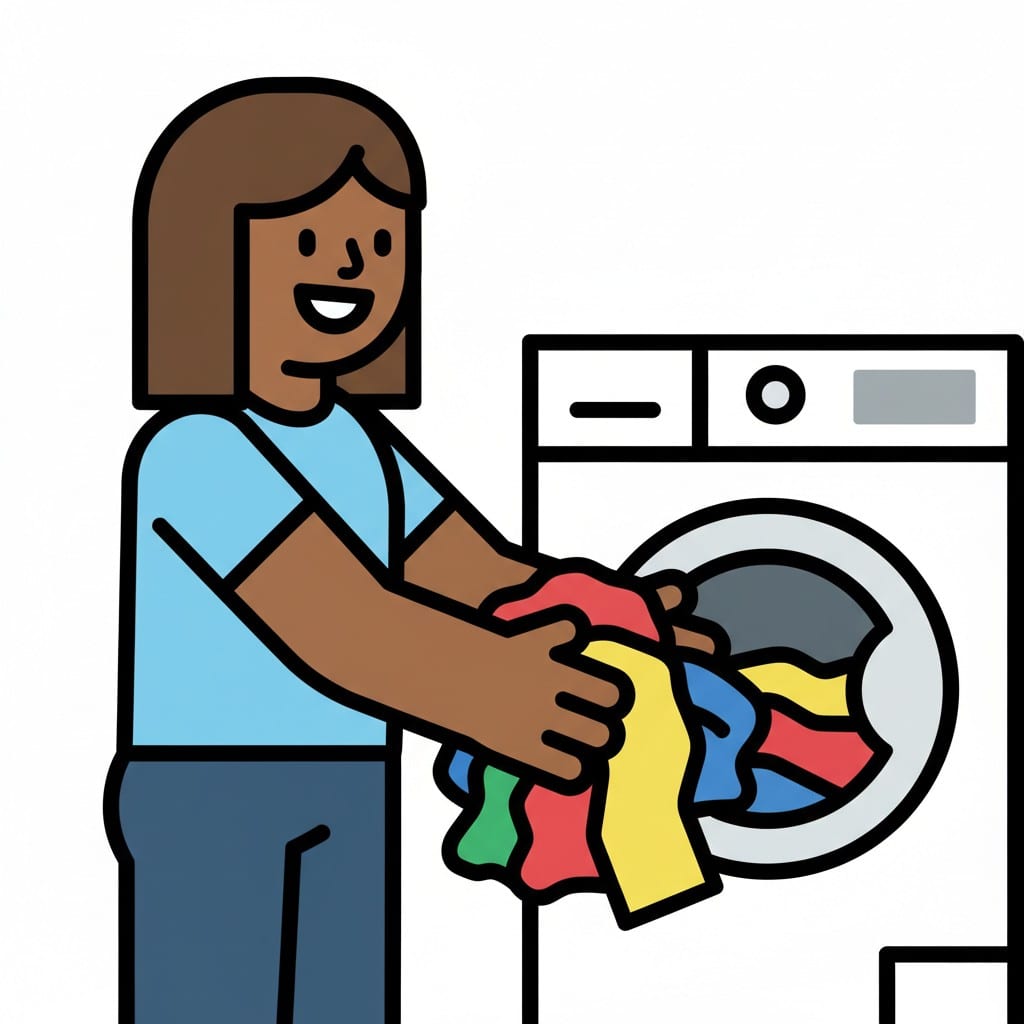 ♀
♀Put laundry
A person putting colorful clothes into a washing machine.
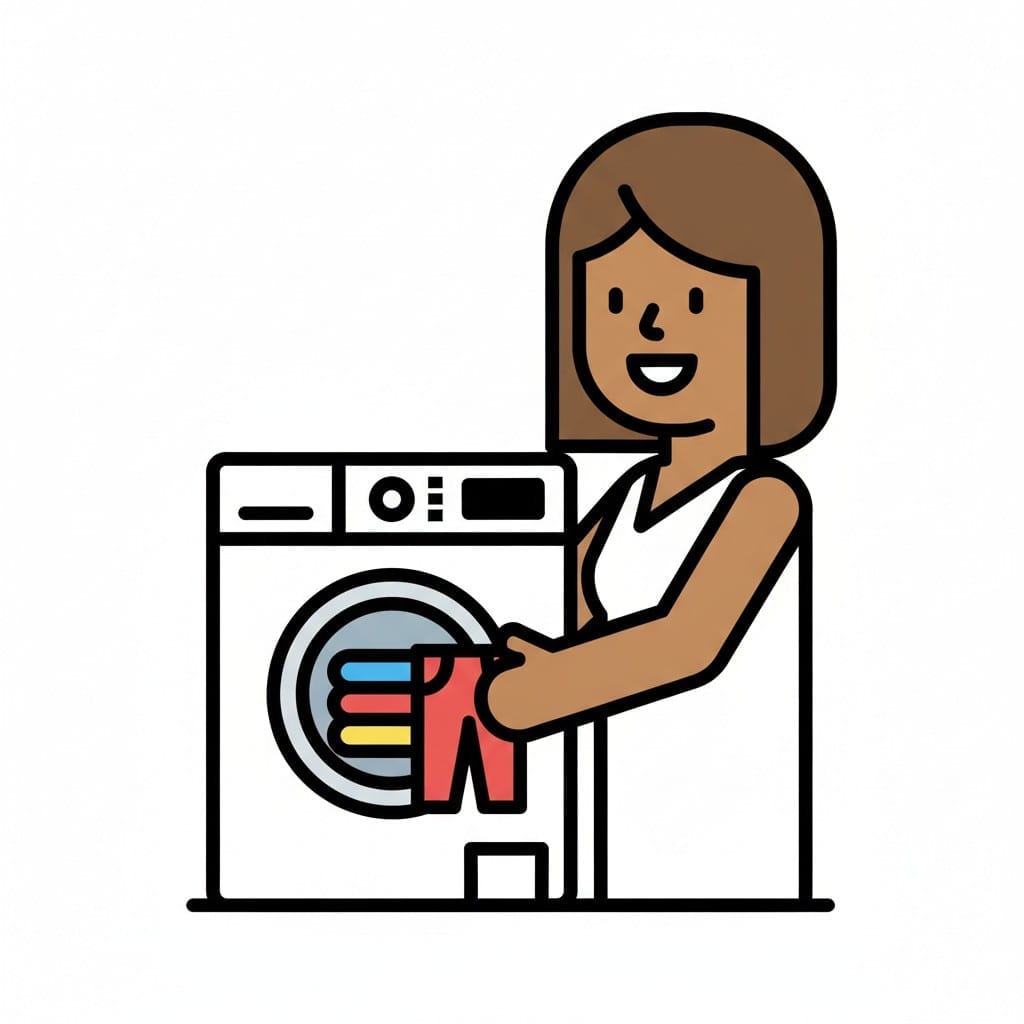 ♀
♀Put laundry
An illustration of a woman putting laundry into a washing machine.
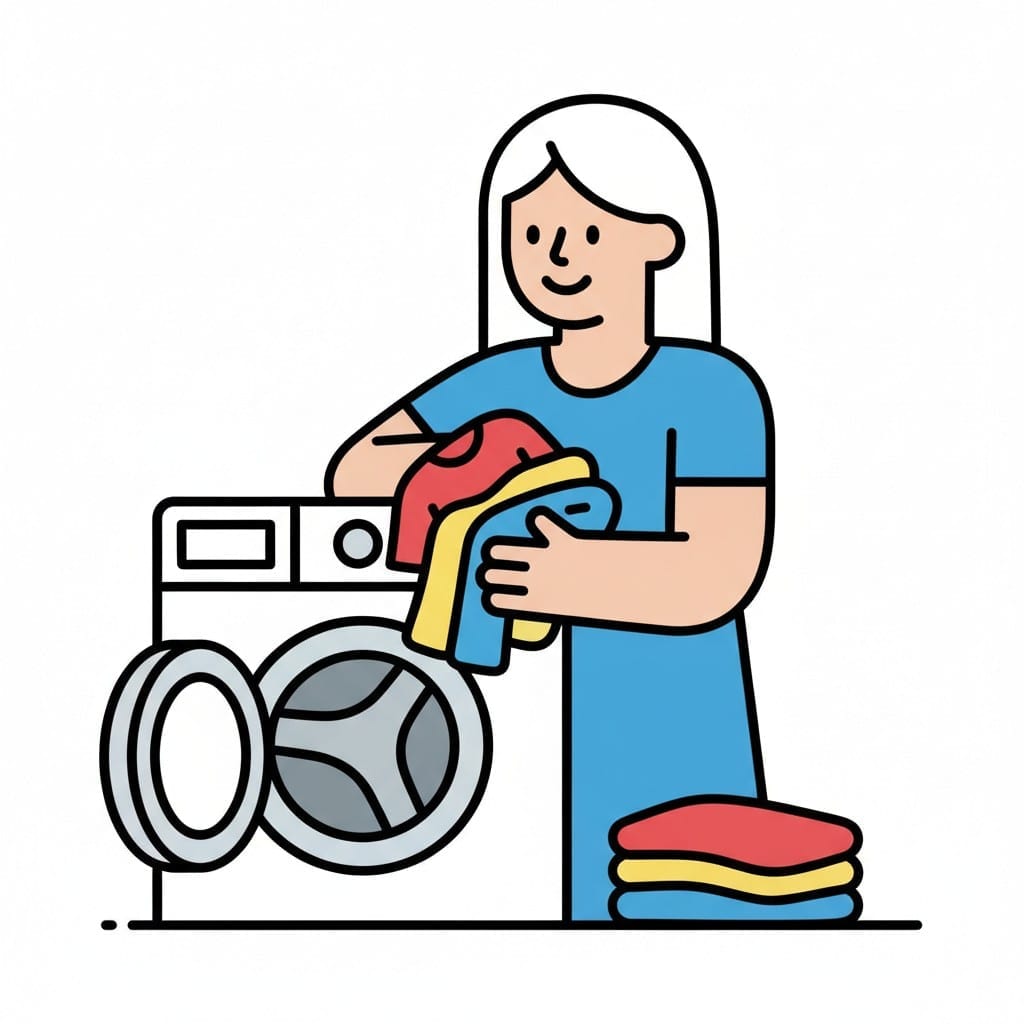 ♀
♀Filling the washing machine
A woman in a blue top holds red and yellow garments in front of an open front-loading washing machine.
About this visual support
Loading a washing machine asks for a sequence that doesn't look like one neat task. Sort darks and lights, load, dose, choose a program, start. Then a forty-minute pause. Then out, onto the line or into the dryer, out again, fold. For the brain the rounds blur into each other, and the usual result is one load left in the drum until the smell reminds someone.
A picture sequence gives each substep its own square and clearly breaks the run between loading and unloading. The child doesn't need more information, just more visible endings. A final card for each phase – a closed machine door, an empty basket – says the bit is counted and complete.
One tip: split the strip into two blocks — load and unload — with a pause card between them. It makes it visually obvious that the rounds are separate. In Routined you can drop that forty-minute gap in as its own item, so the start of part two arrives as a notification rather than something to hold in mind.
Use this image in a schedule
Build your own visual schedule with this image and download it as a print-ready PDF. Completely free.

More similar visual supports

fill the washing machine
A man loads laundry into the washing machine with a basket nearby.
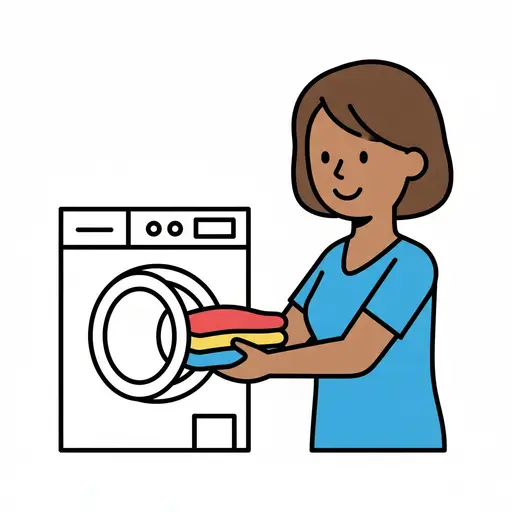
Fill Washing Machine
A girl puts colorful clothes into a washing machine.

Get laundry
A woman is standing next to a laundry basket filled with clothes.
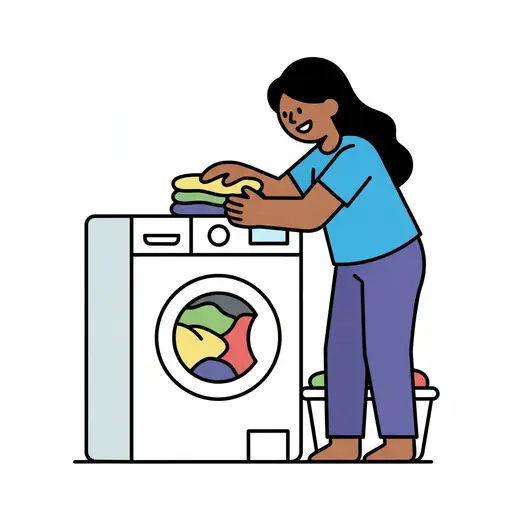
Load washer
A woman puts laundry into the washing machine.
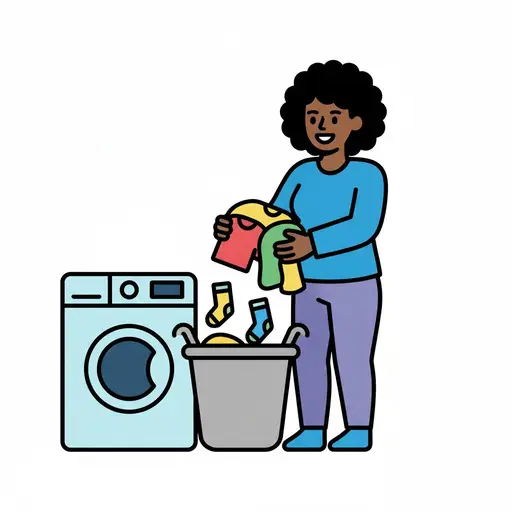
Put clothes in laundry
A smiling person drops colourful clothes and socks into a grey laundry basket be...
Sort clothes
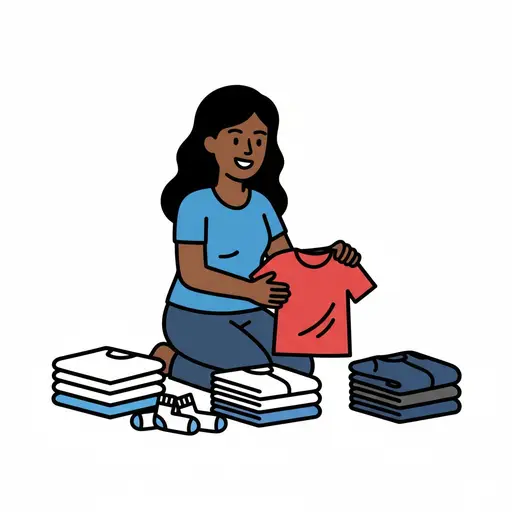
A person sits on the floor sorting clothes into piles.

Sort laundry
A smiling person sorting laundry into piles next to a laundry basket.
Do laundry
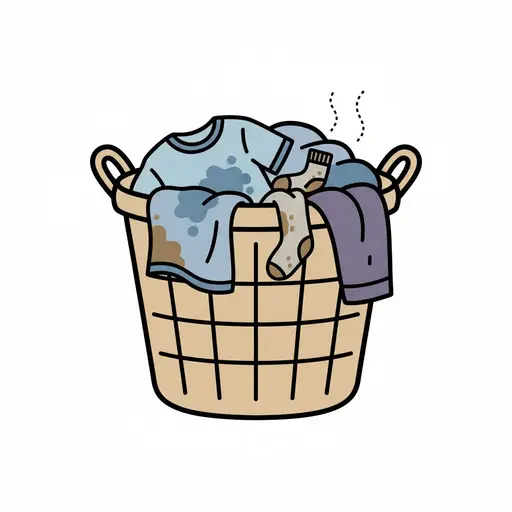
A wicker basket filled with dirty clothes and socks.
Take the visual supports with you
In Routined you build schedules from these pictures, add timers and voice instructions, and your child follows the day on their own.


* 14-day free trial, then $2.39 a month or $20.99 a year (US pricing). Cancel anytime.