Put the toys back
Ending play while it still feels full of possibilities is one of the hardest transitions in a child's day. The visual support below turns that transition into something the child can see coming.
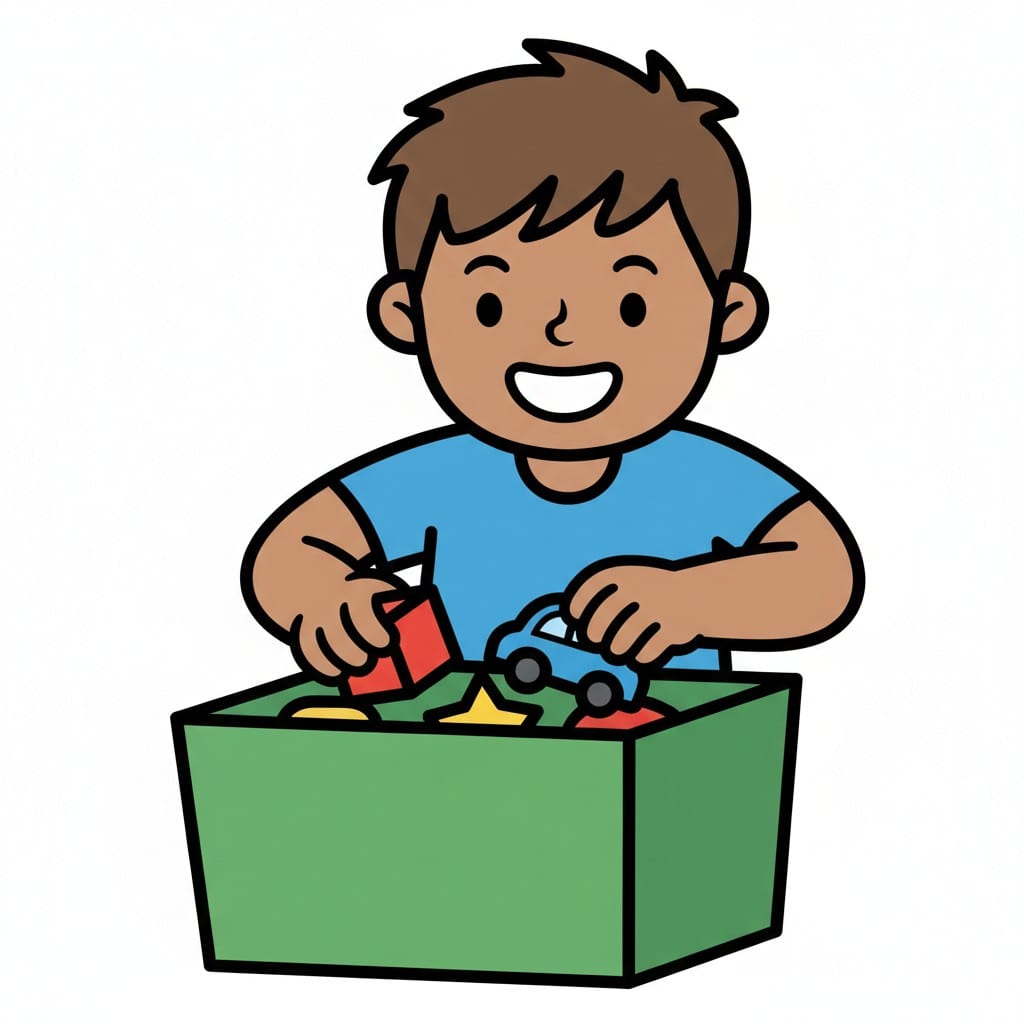 ♂
♂Boy putting toys into the box
A boy in a blue t-shirt drops a toy car and a red block into a green toy box.
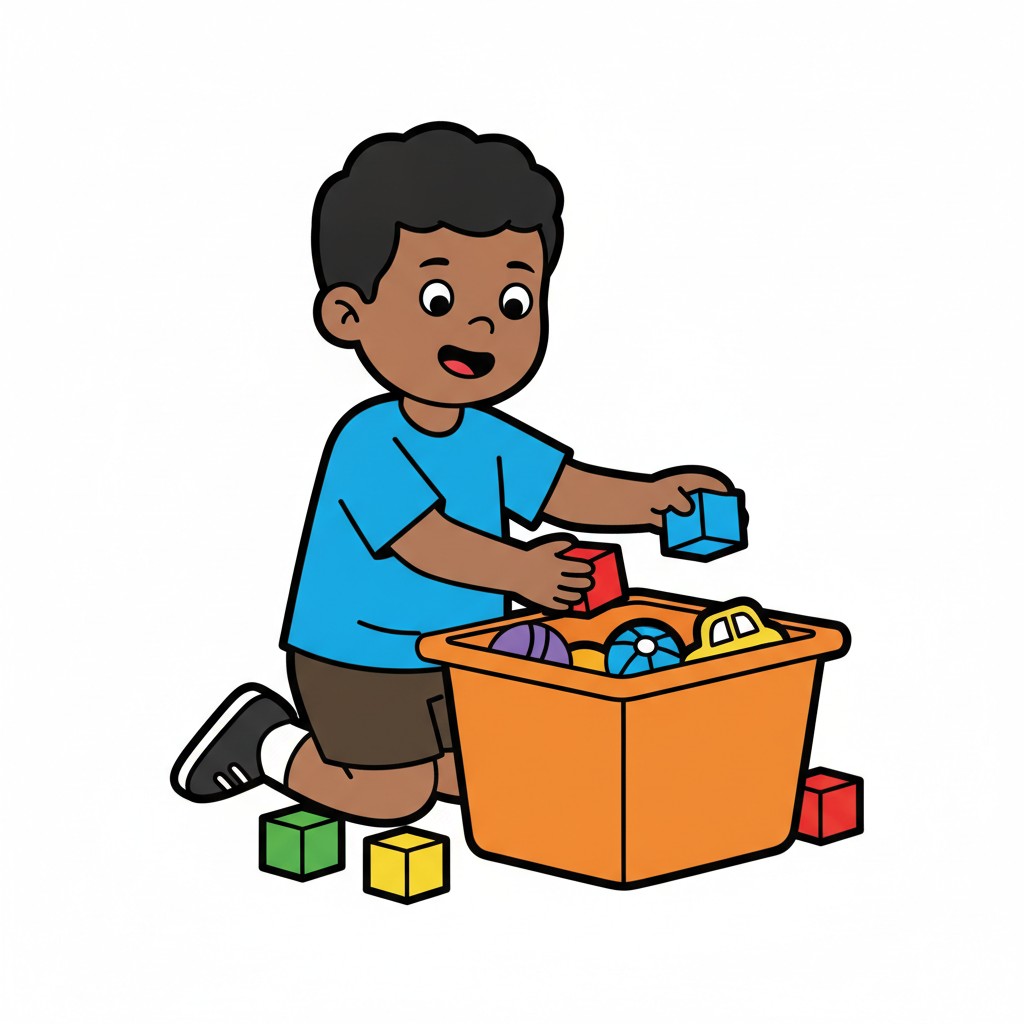 ♂
♂Putting toys away
A boy kneels and puts blocks into an orange toy bin.
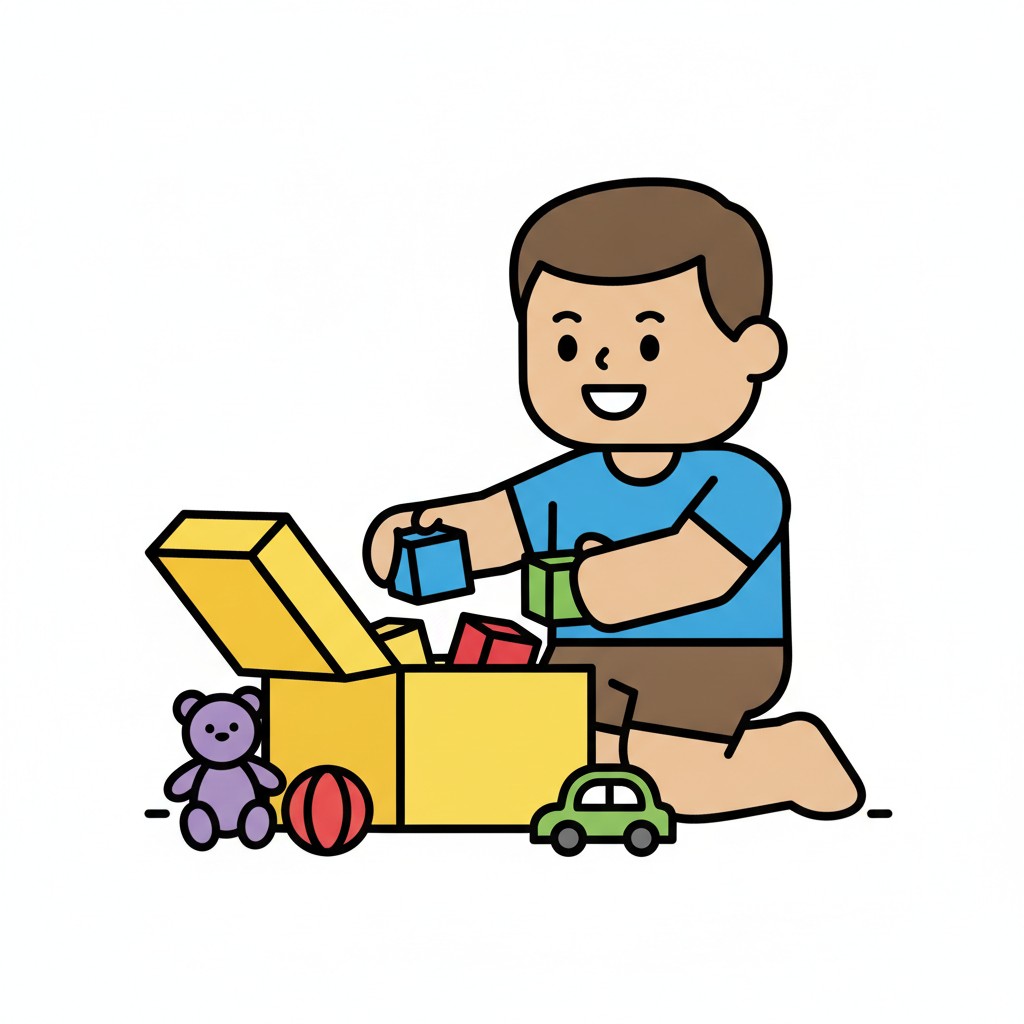 ♂
♂Boy tidying toys
A boy puts blocks into a yellow box with a teddy, ball and car around him.
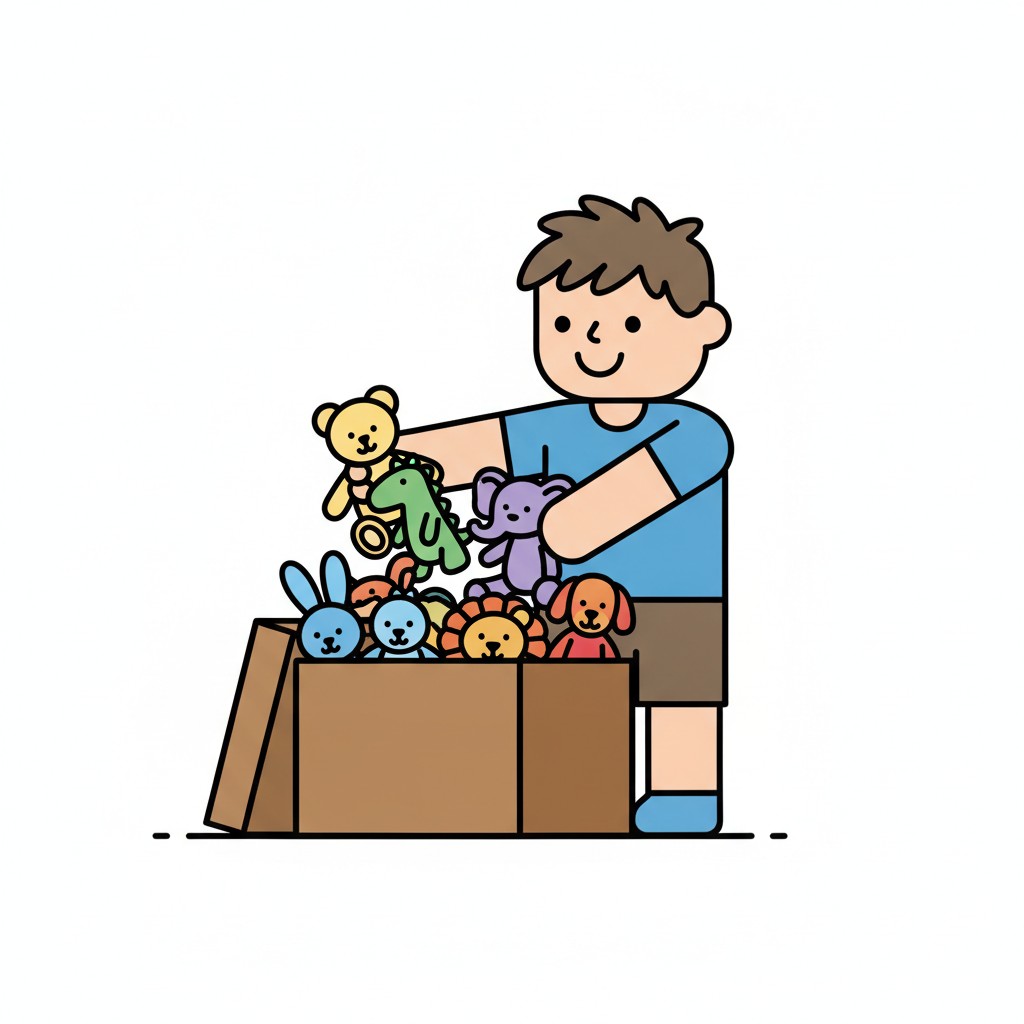 ♂
♂Putting away stuffed animals
A boy puts stuffed animals into a box.
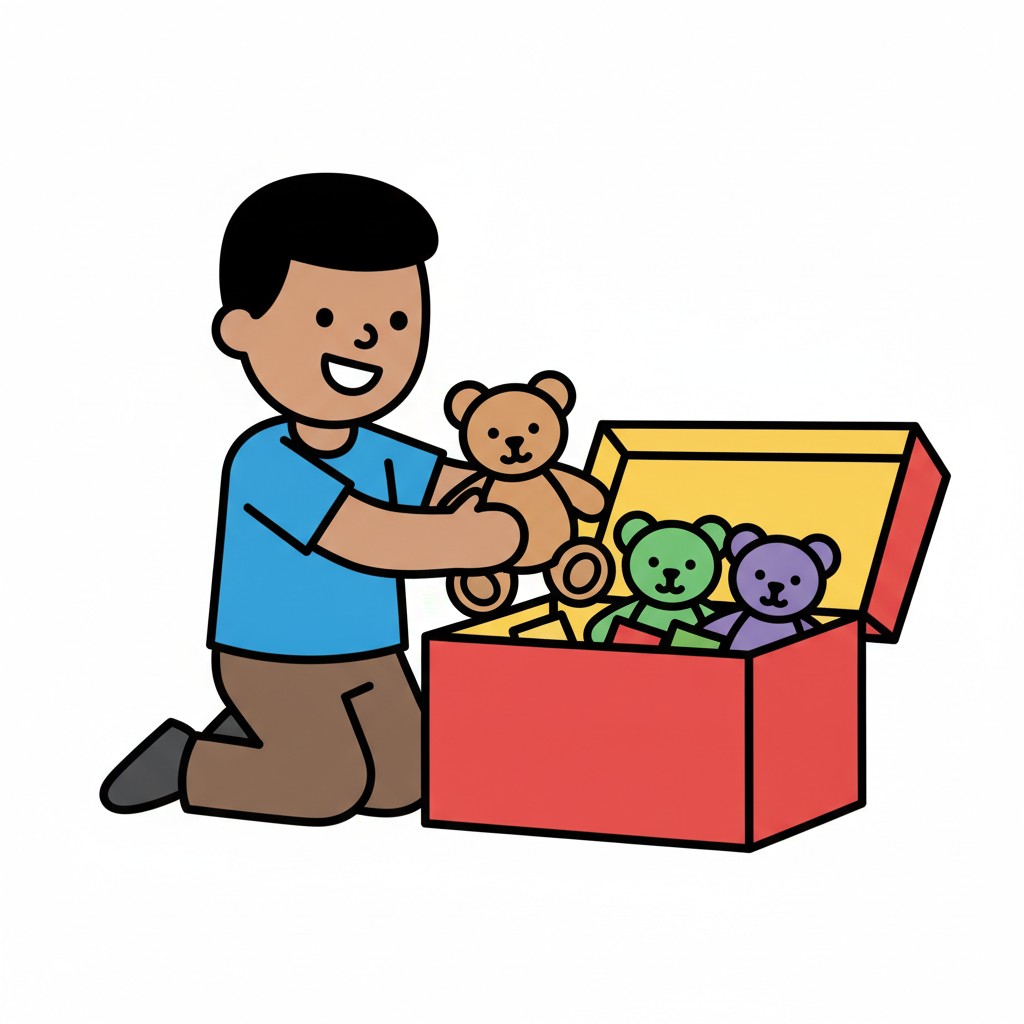 ♂
♂Putting bears in the chest
A boy puts teddy bears into a red toy chest.
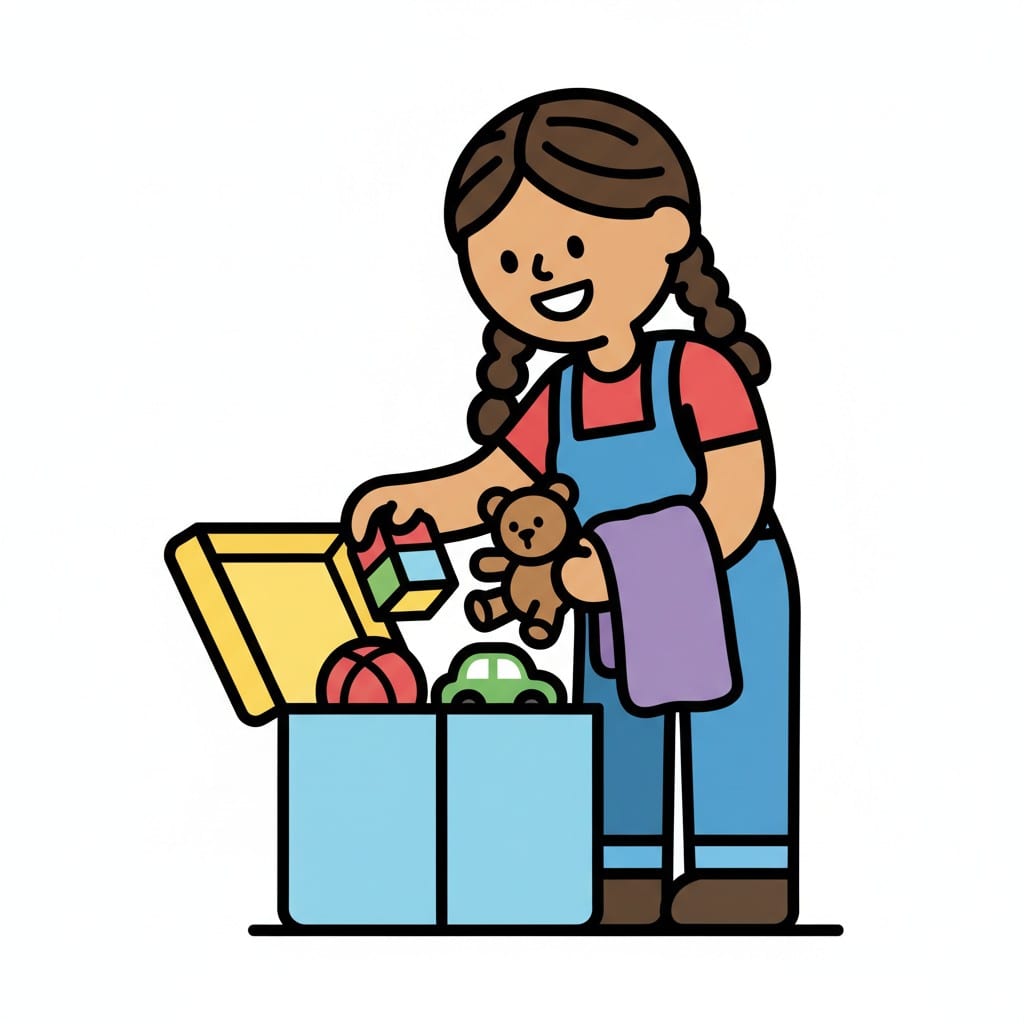 ♀
♀Put away toys
A girl with pigtails puts away toys into a toy box. She is holding a colorful block, a teddy bear, and a purple cloth.
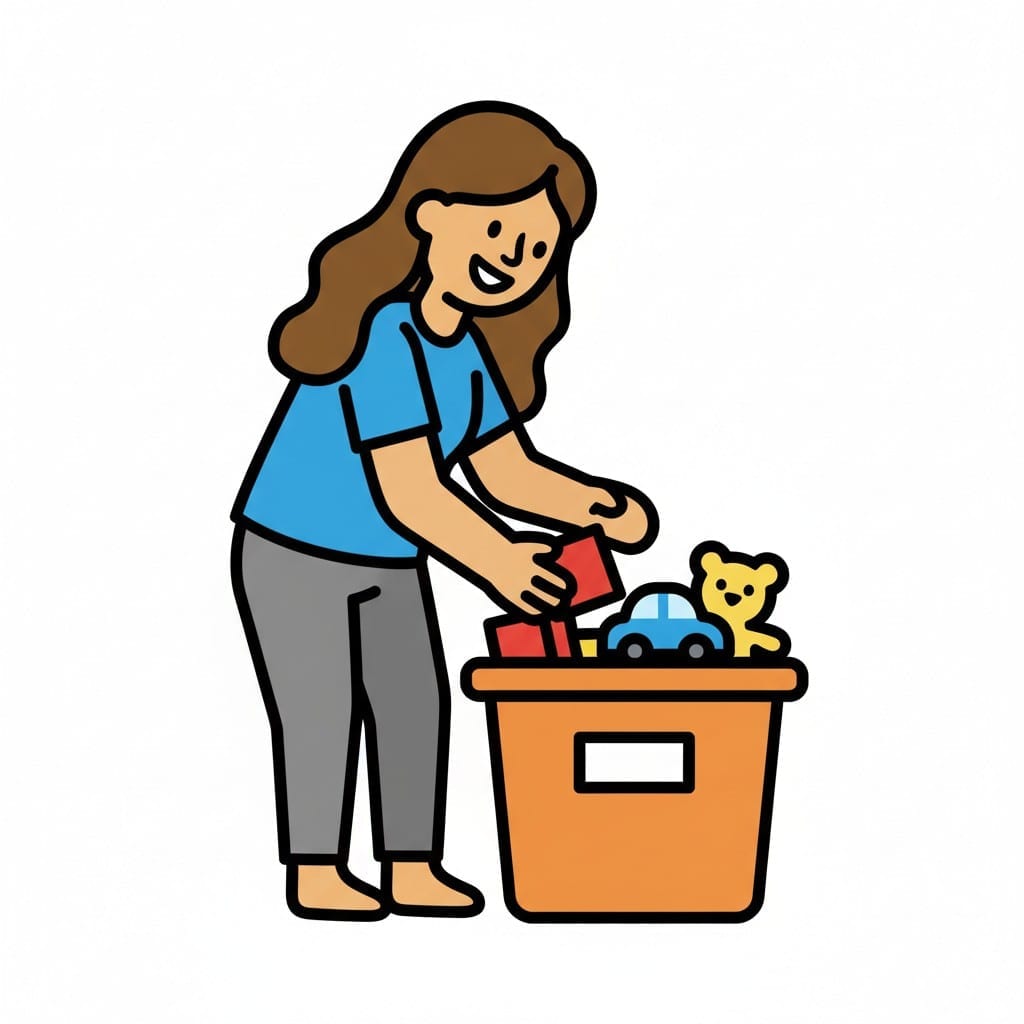 ♀
♀Put away toys
A girl putting away toys into an orange toy box. She is holding a red block. Other toys like a blue car and a yellow teddy bear are already in the box.
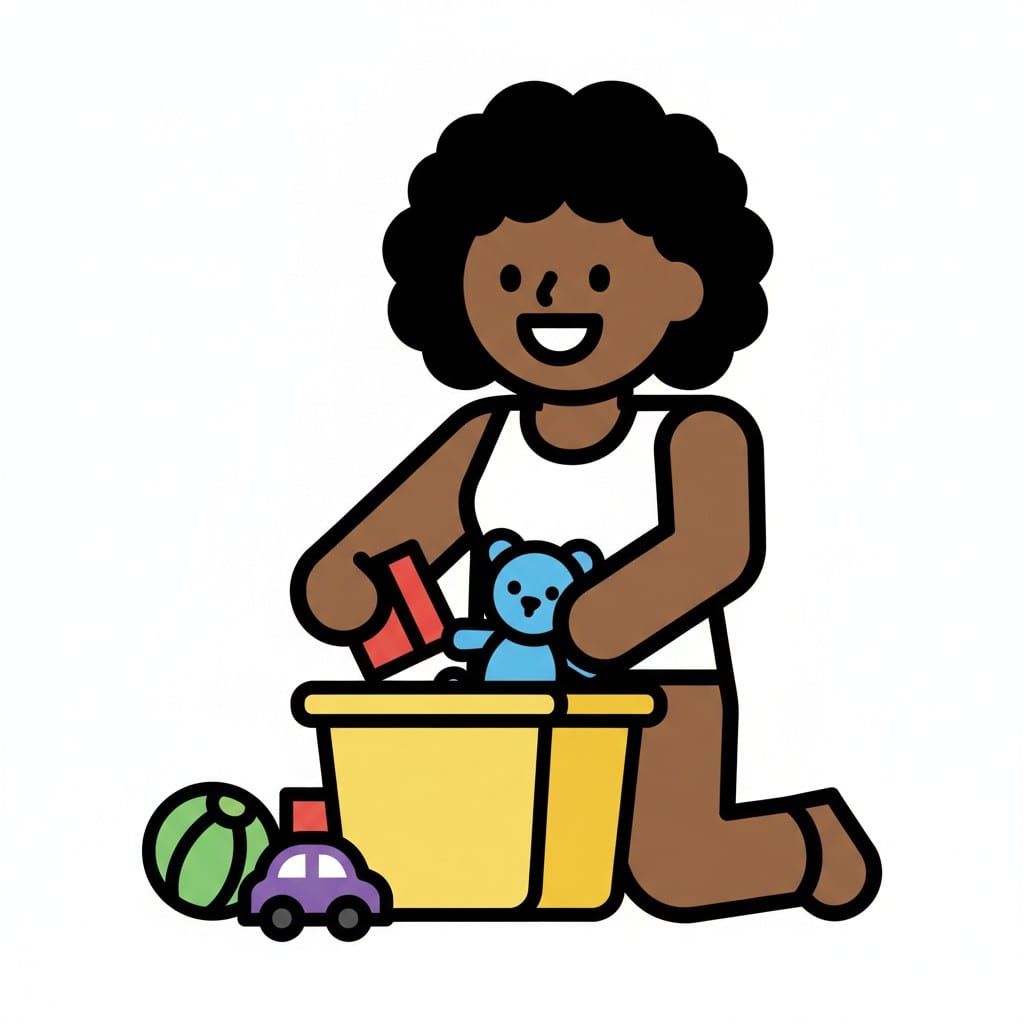 ♀
♀Girl filling the yellow toy bin
Kneeling on the floor, a girl places a red block and a blue teddy bear into a yellow toy bin while a ball and a purple toy car lie beside it.
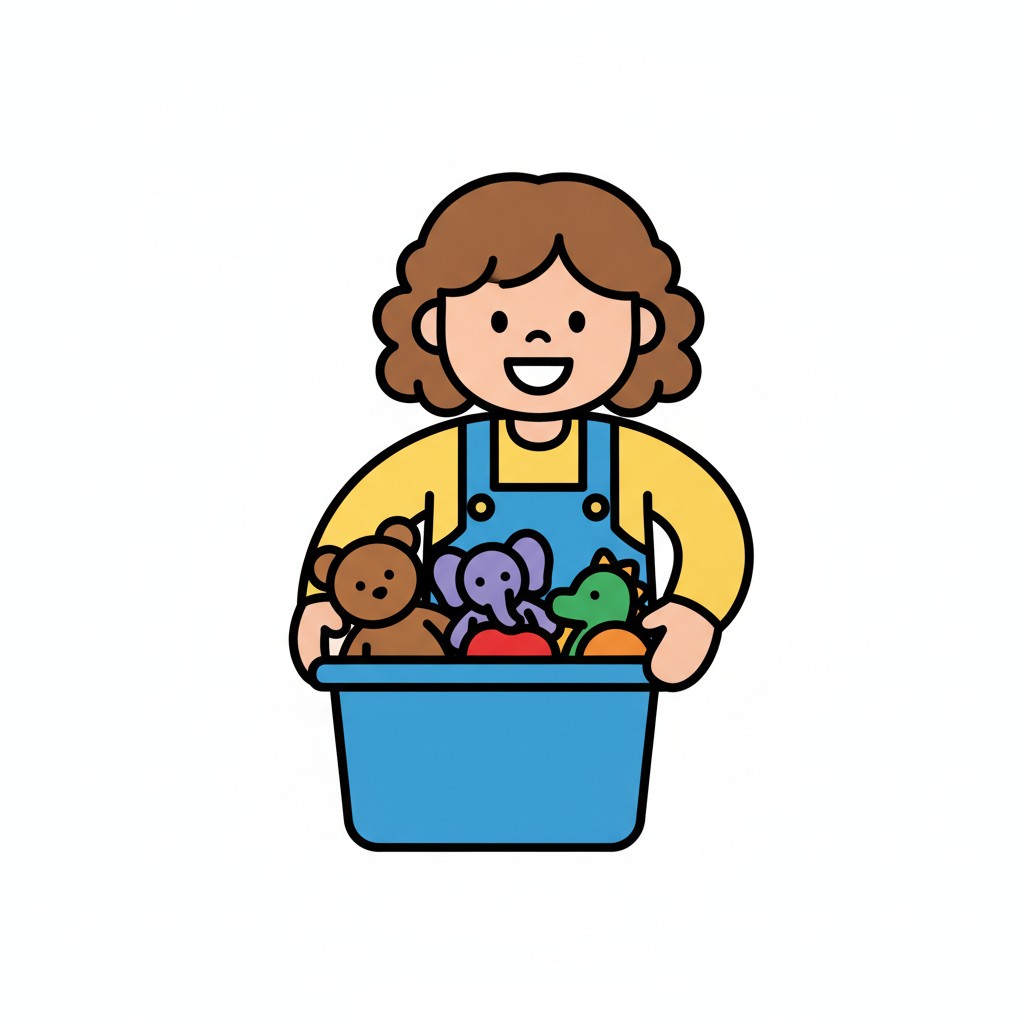 ♀
♀Carrying the stuffed toys
A girl carries a blue tub full of stuffed toys.
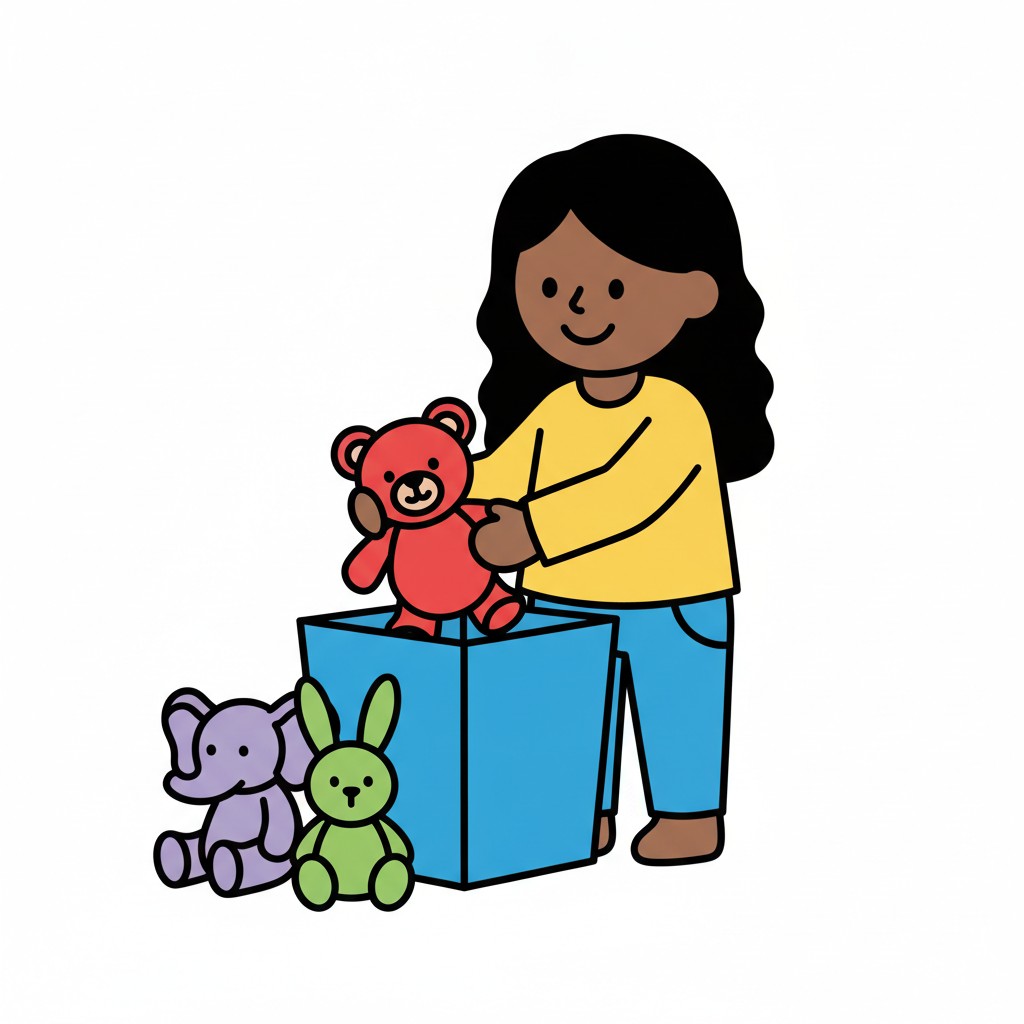 ♀
♀Girl tidying stuffed animals
A girl puts a teddy into a blue box with more stuffed animals nearby.
About this visual support
For a child deep in a build or a role-play, the call to clean up is not a simple logistical request. It is a goodbye to a world where every single Lego piece currently carries meaning. Moving from that world to a corridor with a box is a long jump, and the resistance is not defiance but grief over an unfinished project.
Visual support softens the jump by making the goodbye predictable. When the picture of tidying is already on the wall before play even begins, the child knows it is coming. The transition turns into part of the play itself rather than an interruption. The pictures can also show what comes after the tidy-up, so it does not feel as if everything simply disappears into nothing.
A tip that genuinely helps with toys: save the very last and most beloved item for the end, and put it back together. That turns the close into a small ritual instead of an abrupt full stop. For evenings with several handovers in a row, you can build the entire sequence with a timer in Routined.
Use this image in a schedule
Build your own visual schedule with this image and download it as a print-ready PDF. Completely free.

More similar visual supports
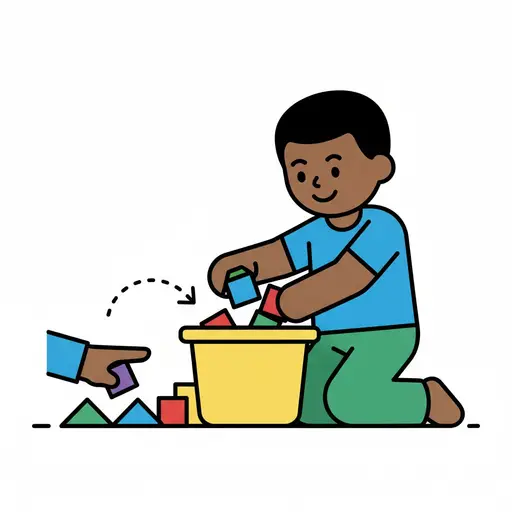
Help clean up
A boy kneels on the floor and puts building blocks into a yellow box.
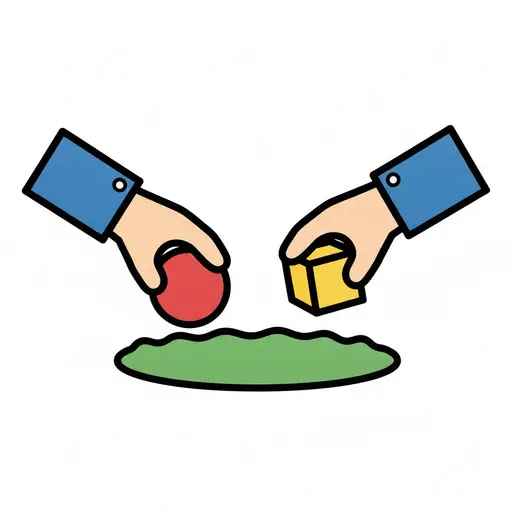
Pick up
Two hands pick up a red ball and a yellow block from a green mat.
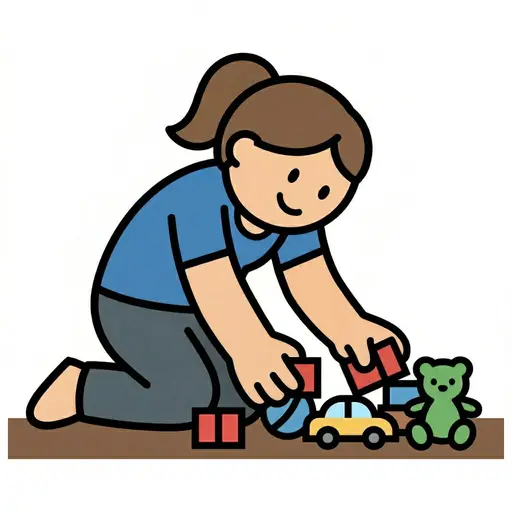
Pick up floor
A person wearing gloves is picking up toys, including blocks, a car, and a teddy...
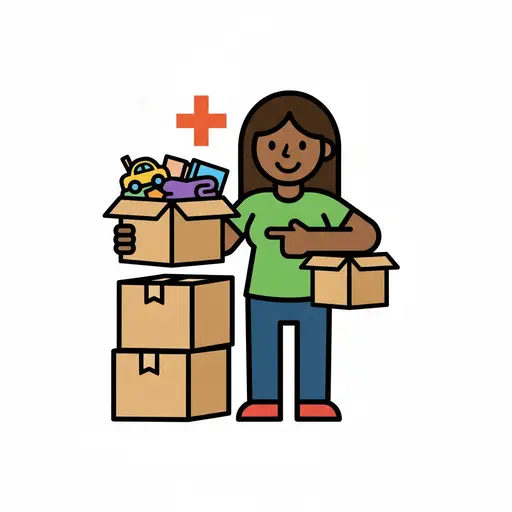
Pick up things
A woman stands by a stack of boxes with things inside.
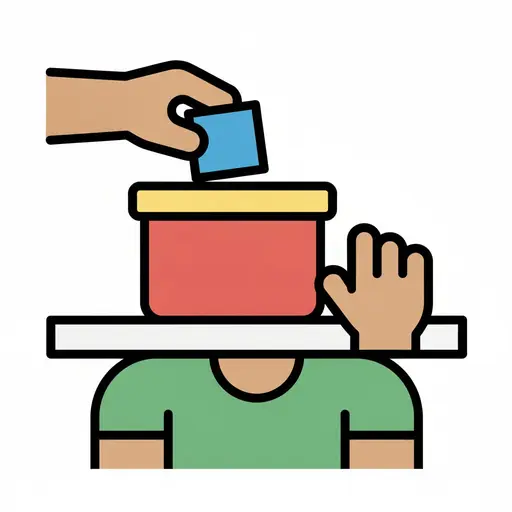
Put away
A hand places a blue block into a red container on a shelf.
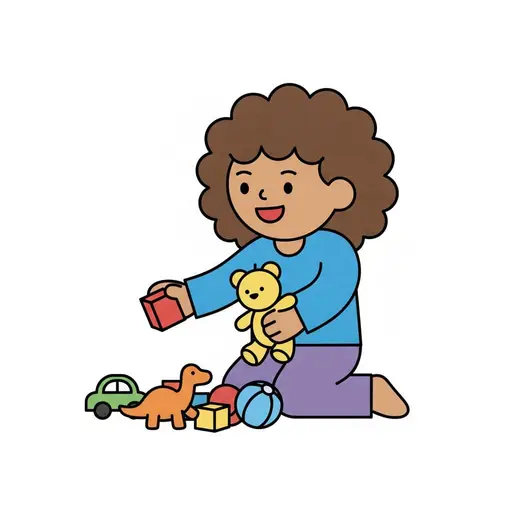
Put away toys
A child kneels holding a yellow teddy and a red block, with toys on the floor.
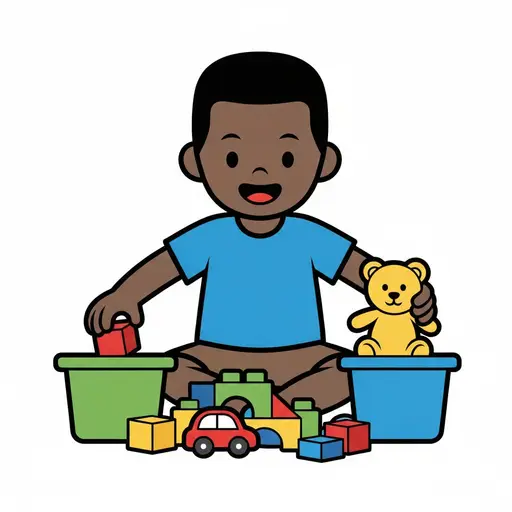
Sort toys
A boy sorts blocks and toys into a green and a blue bin.
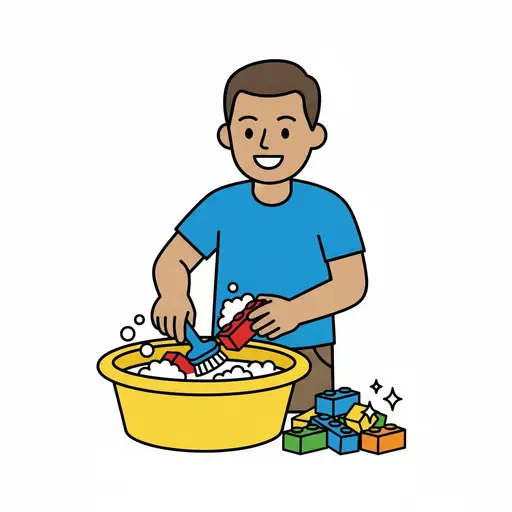
Tidy Lego
A boy washes building bricks in a tub of water.
Take the visual supports with you
In Routined you build schedules from these pictures, add timers and voice instructions, and your child follows the day on their own.


* 14-day free trial, then $2.39 a month or $20.99 a year (US pricing). Cancel anytime.