Rubbish
Reluctance to take out the rubbish usually sits in the nose and the hands rather than in laziness, and a bag that smells makes the trip to the bin heavier than it looks. The visual support below shows the whole route from the kitchen cupboard to the lid, step by step.
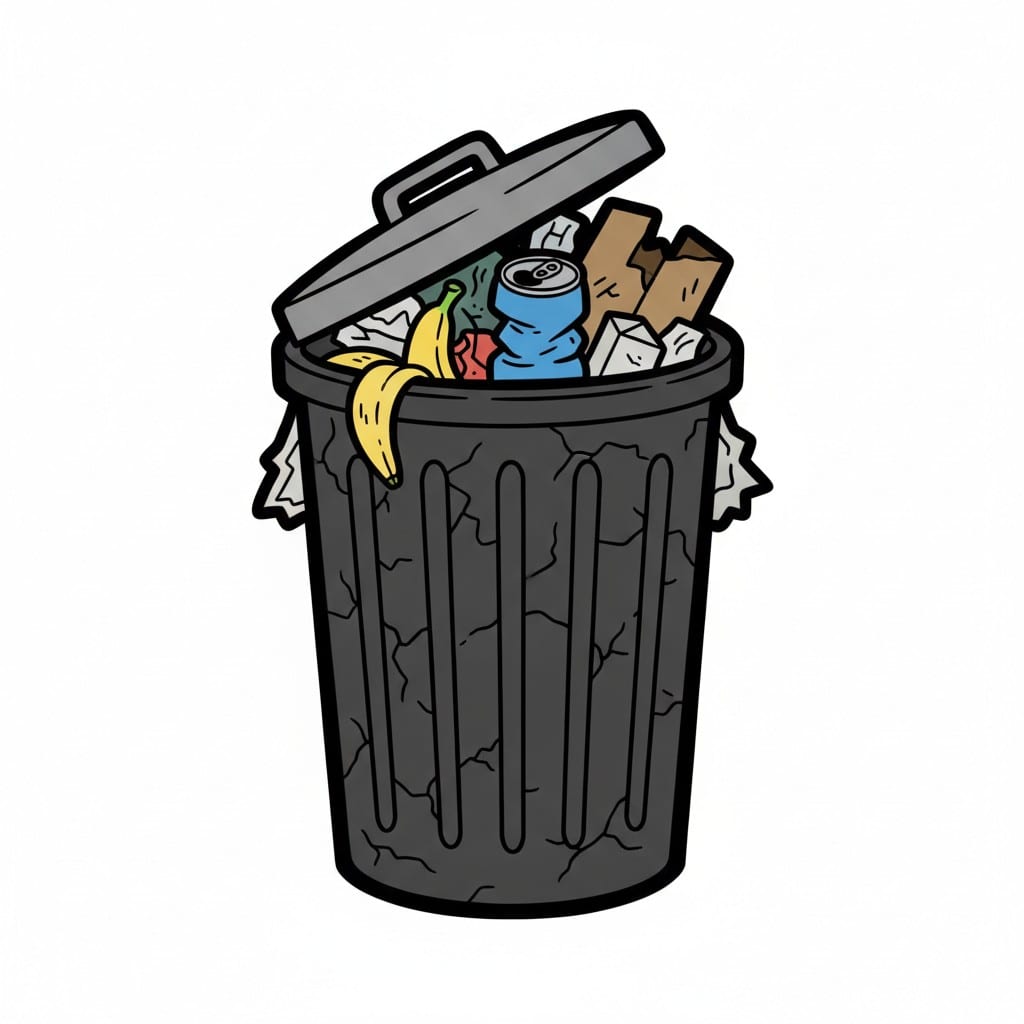
Full rubbish bin
A metal bin filled with waste, its lid tilted to one side.
About this visual support
The smell arrives first, the moment the cupboard door opens, and that alone is enough to make the whole chore feel repulsive. Then comes the bag that is sticky at the bottom, the knot that has to hold, and a walk outside carrying something that might drip. None of those details are visible when an adult says it only takes two minutes.
Pictures make the unpleasant part predictable. The child sees in advance that the bag is tied first, that it is carried by the knot rather than under the base, and that the lid opens with a foot. A vague feeling of disgust turns into a short row of actions with a clear ending. For children who react strongly to smells and stickiness, that predictability is what decides how the chore goes.
One concrete trick: drop a spare empty bag into the bottom of the bin before the new one goes in, so nobody has to touch the wet part next time. If you want to follow the chore across the week, you can build it in Routined, where pictures can be paired with whose turn it is. The app can be tried for 14 days at no cost.
Use this image in a schedule
Build your own visual schedule with this image and download it as a print-ready PDF. Completely free.

More similar visual supports
Empty the bin
A cartoon grey bin with its lid lifting open.
Take out garbage
A girl places a black garbage bag into an outdoor bin.
Throw out trash
A girl drops a bag of trash into an open bin.
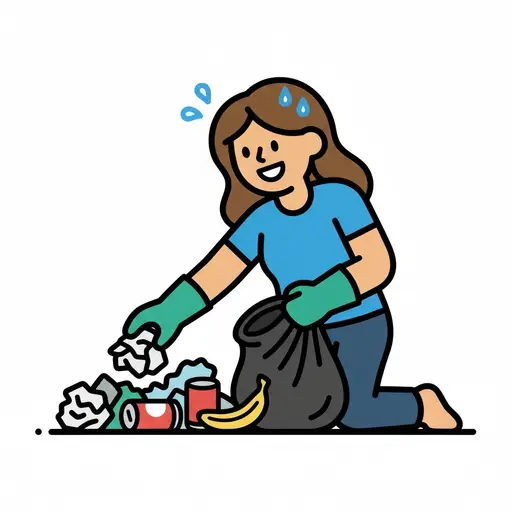
Clean up trash
A person wearing gloves picks up litter and puts it into a trash bag.
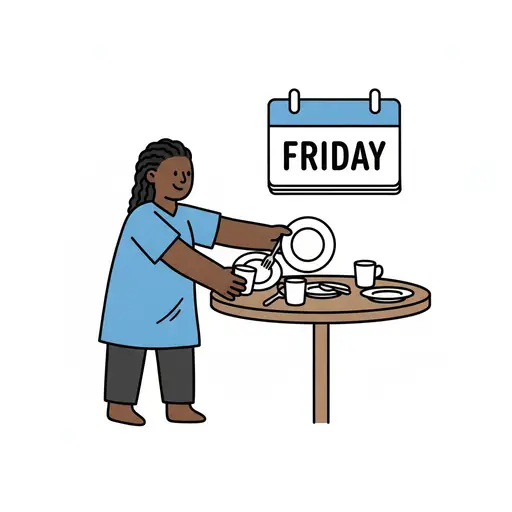
Clear the table on Friday
A woman gathers plates and mugs from a round table next to a calendar showing Fr...
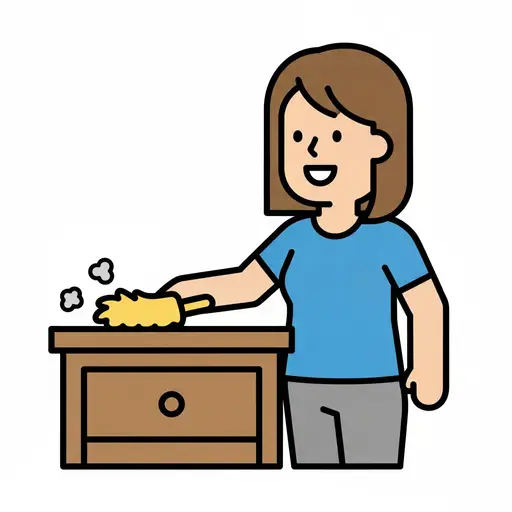
Dust furniture
A girl in a blue shirt dusts a wooden nightstand with a yellow feather duster.
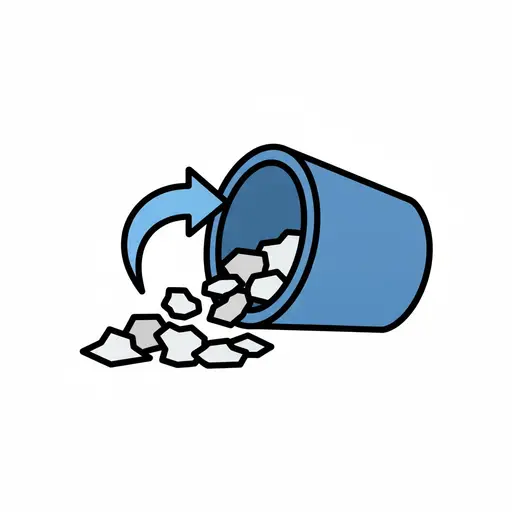
Empty the wastebasket
A blue wastebasket lies tipped over with paper falling out of it.
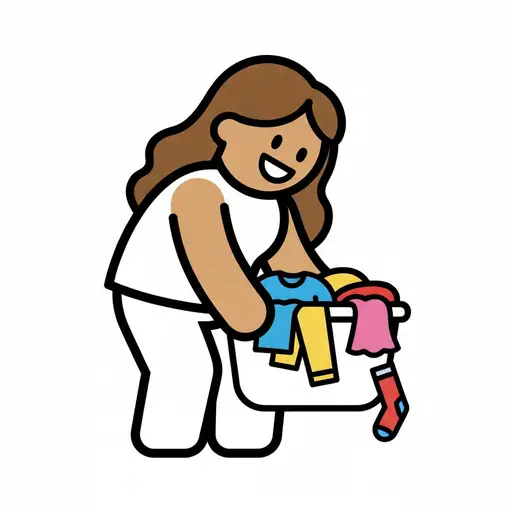
Fetch the laundry
A woman bends down and puts clothes into a laundry basket.
Take the visual supports with you
In Routined you build schedules from these pictures, add timers and voice instructions, and your child follows the day on their own.


* 14-day free trial included for new users.