Sort clothes
A pile of mixed clothes is full of tiny decisions: what counts as dark, what is light, and when is the job actually done? Fixed categories give the child a visible start and a visible finish. Use the visual support below.
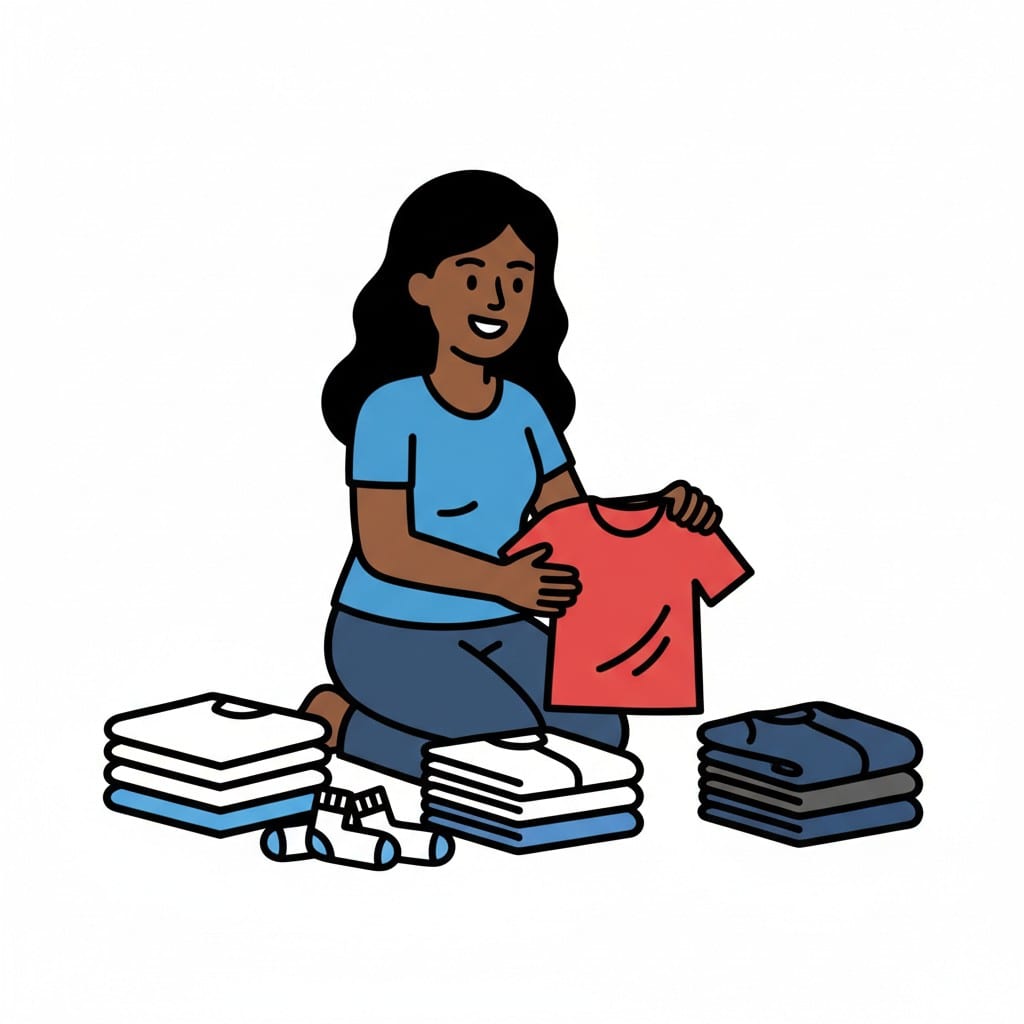 ♀
♀Sort clothes
A person sits on the floor sorting clothes into piles.
About this visual support
Sorting looks simple from an adult angle, but for a child it means juggling several rules at once: jeans go here, a white sock goes there, and that striped shirt could go either way. It is not laziness, it is working memory under load.
Visual support moves the categories out of the child's head and onto the floor. Each card represents one pile: darks, lights, colours, delicates. The child no longer has to remember the system, only match the garment to the picture. With every item assigned a destination, the laundry mountain becomes countable instead of endless.
One concrete tip: place the cards in the order the child meets the clothes, with the busiest pile closest to them. Most decisions then land in the easiest slot, and the few odd items stand out as exceptions rather than constant interruptions. Once the routine clicks, you can build it into Routined together with other laundry steps, so the full chain from hamper to drying rack gets its own sequence.
Use this image in a schedule
Build your own visual schedule with this image and download it as a print-ready PDF. Completely free.

More similar visual supports
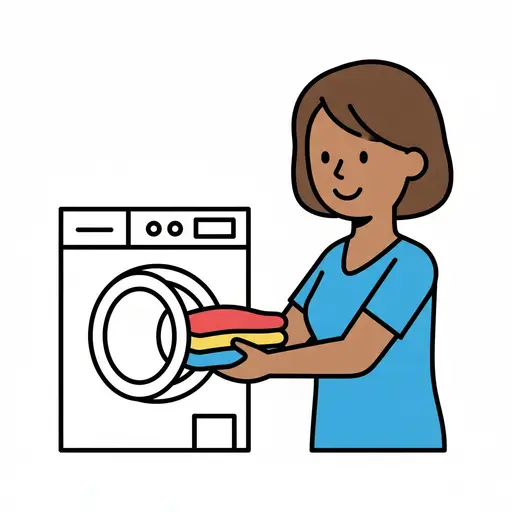
Fill Washing Machine
A girl puts colorful clothes into a washing machine.
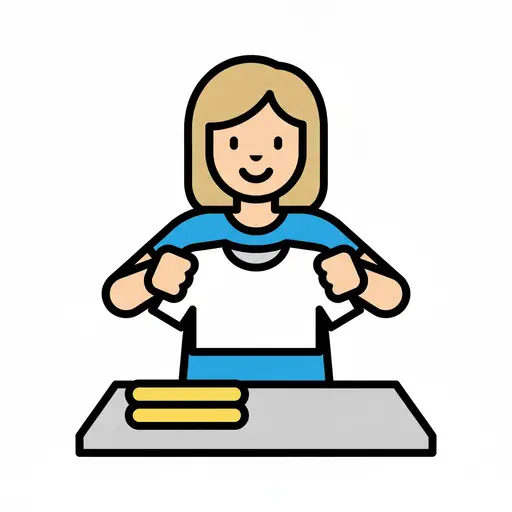
Fold laundry
At a grey table, a girl folds a white shirt while two yellow garments lie neatly...
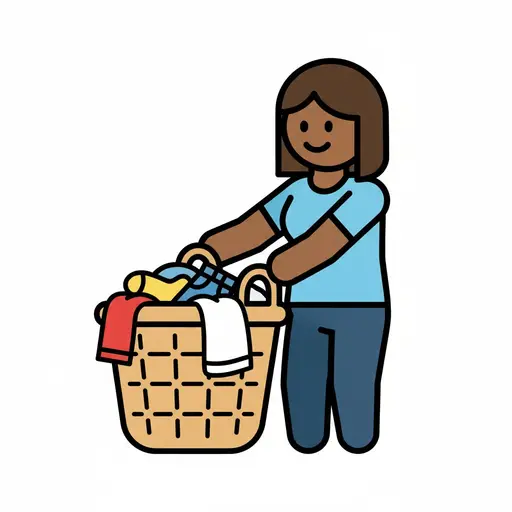
Get laundry
A woman is standing next to a laundry basket filled with clothes.
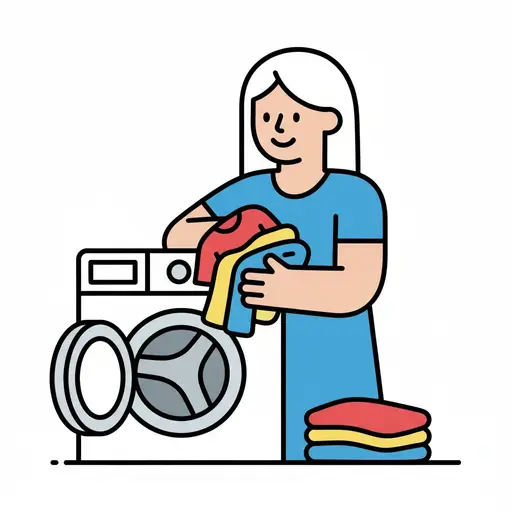
Put laundry
A woman in a blue top holds red and yellow garments in front of an open front-lo...
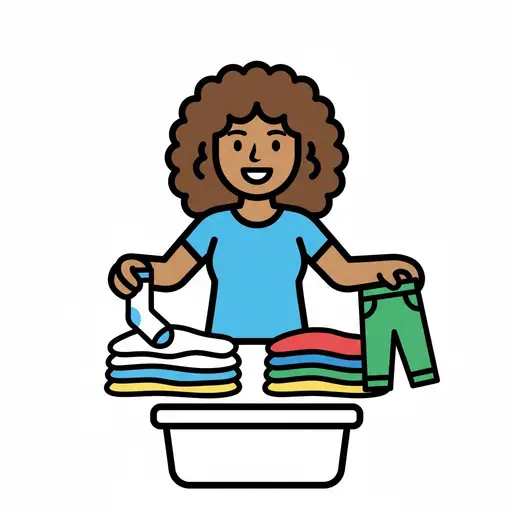
Sort laundry
A smiling person sorting laundry into piles next to a laundry basket.
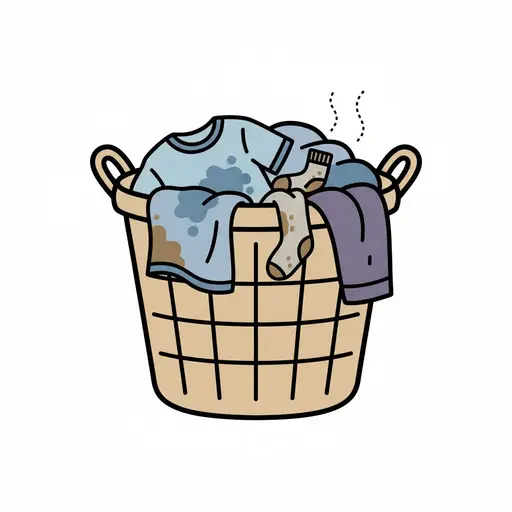
Do laundry
A wicker basket filled with dirty clothes and socks.
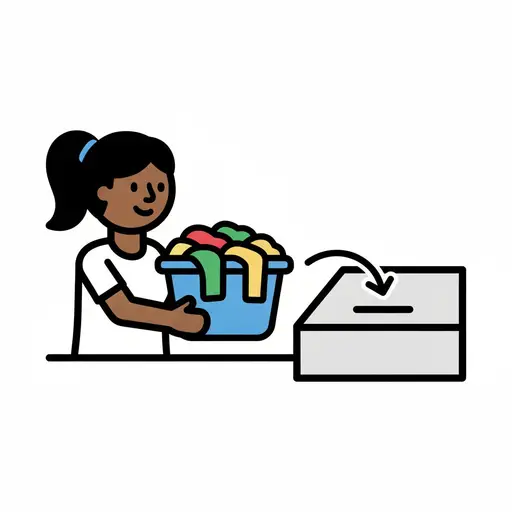
Drop off laundry
A girl with a ponytail holds a blue basket of colourful clothes while an arrow p...

Fetch the laundry
A woman bends down and puts clothes into a laundry basket.
Take the visual supports with you
In Routined you build schedules from these pictures, add timers and voice instructions, and your child follows the day on their own.


* 14-day free trial, then $2.39 a month or $20.99 a year (US pricing). Cancel anytime.