Straighten up
The resistance to tidying up rarely lives in the picking-up itself. It lives in the moment when play has to end. The visual support below targets exactly that shift.
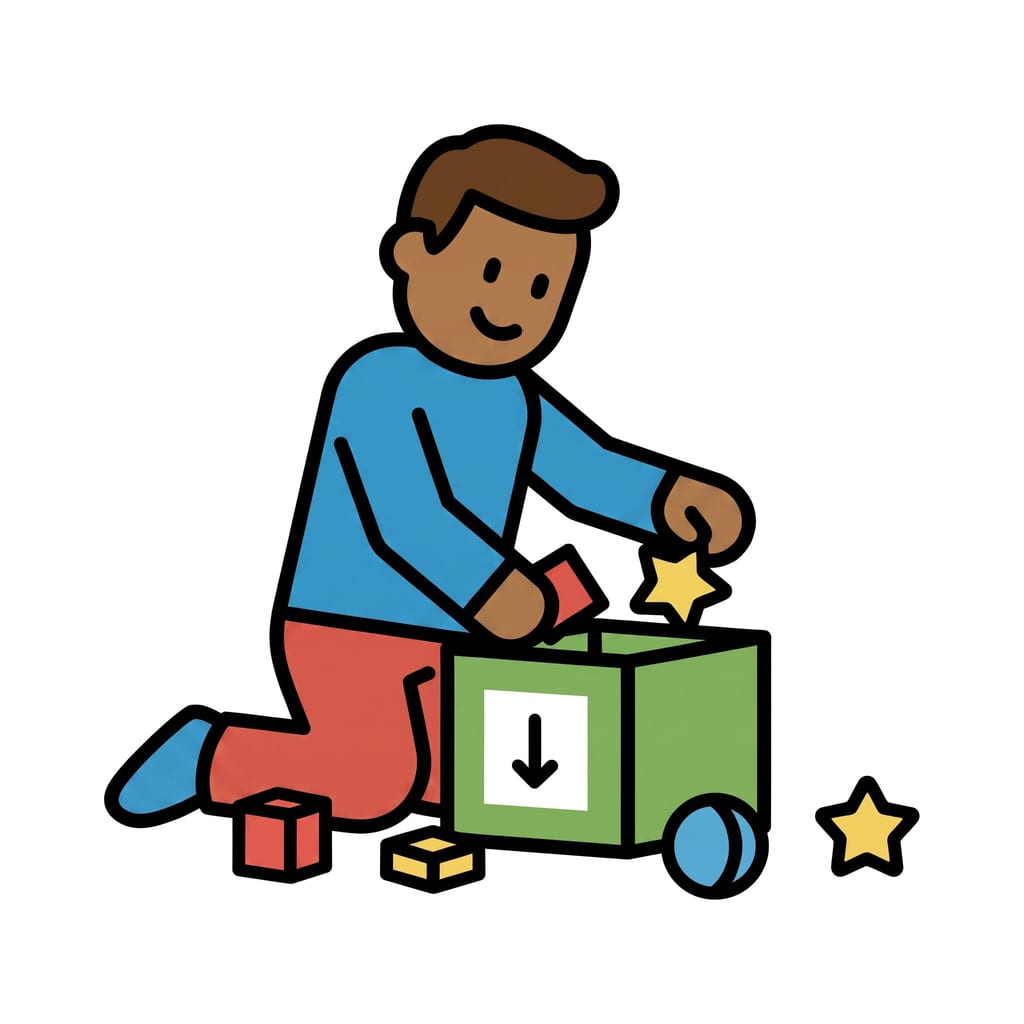 ♂
♂Boy putting toys in the box
A boy kneels on the floor and places a yellow star and a red block into a green toy box marked with a downward arrow.
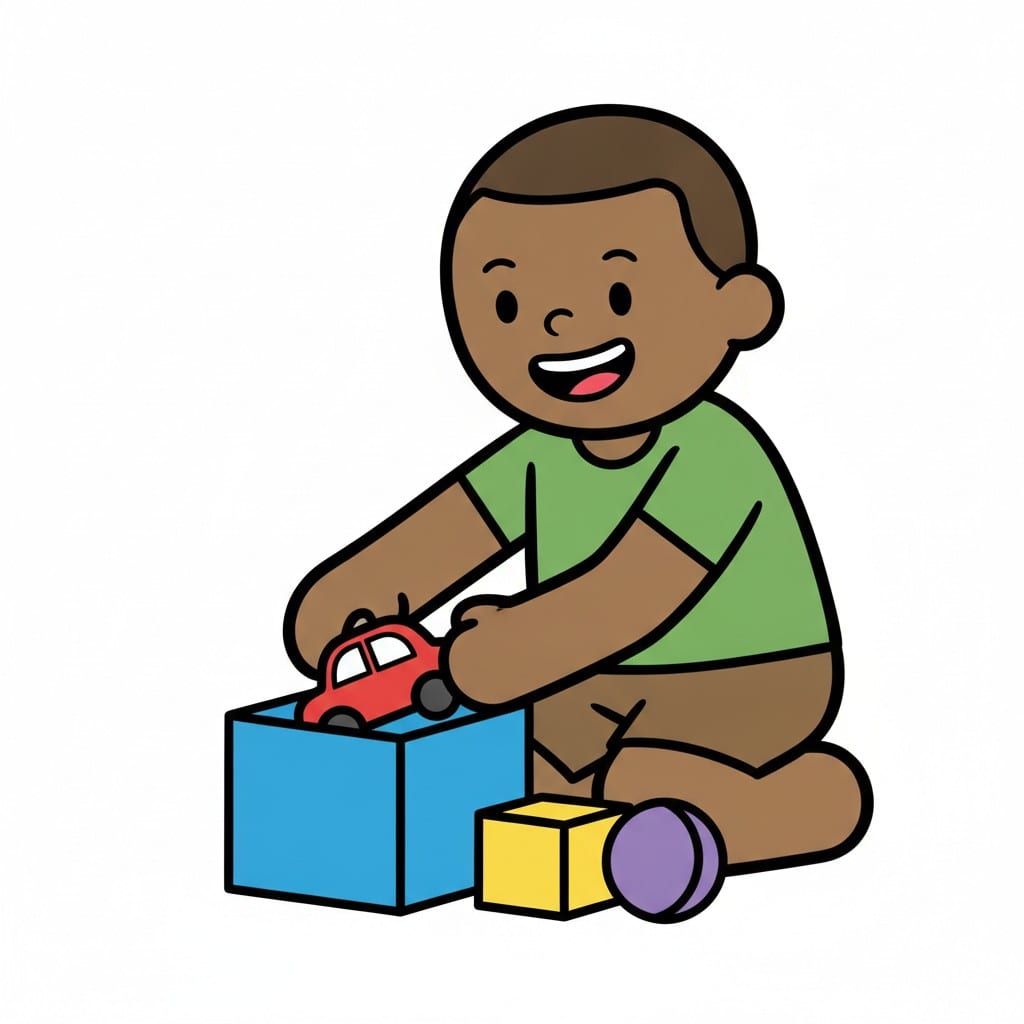 ♂
♂Boy putting the toy car away
A smiling boy in a green shirt sets a red toy car down into a blue box while a yellow block and a purple ball lie on the floor.
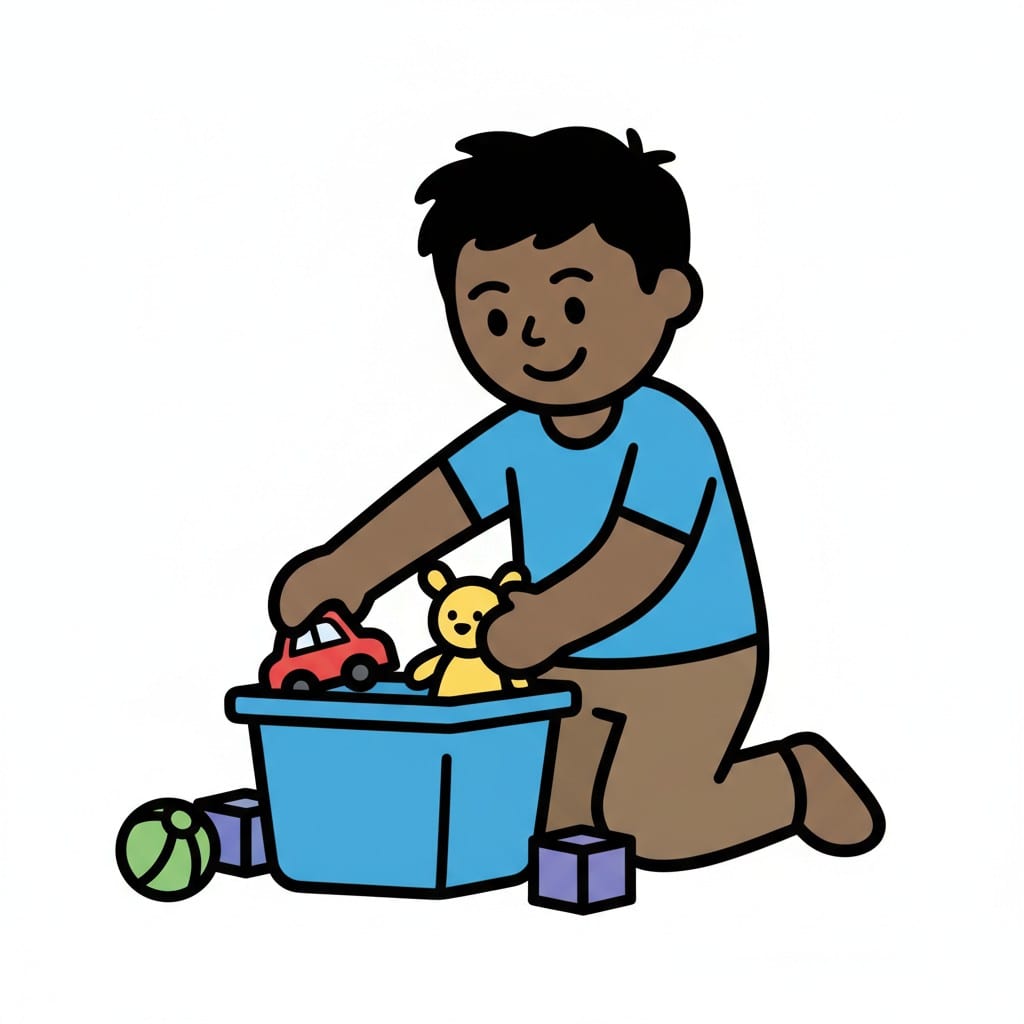 ♂
♂Boy filling the toy bin
A boy in a blue t-shirt places a red car and a yellow teddy bear into a blue plastic bin, with a ball and two blocks beside it.
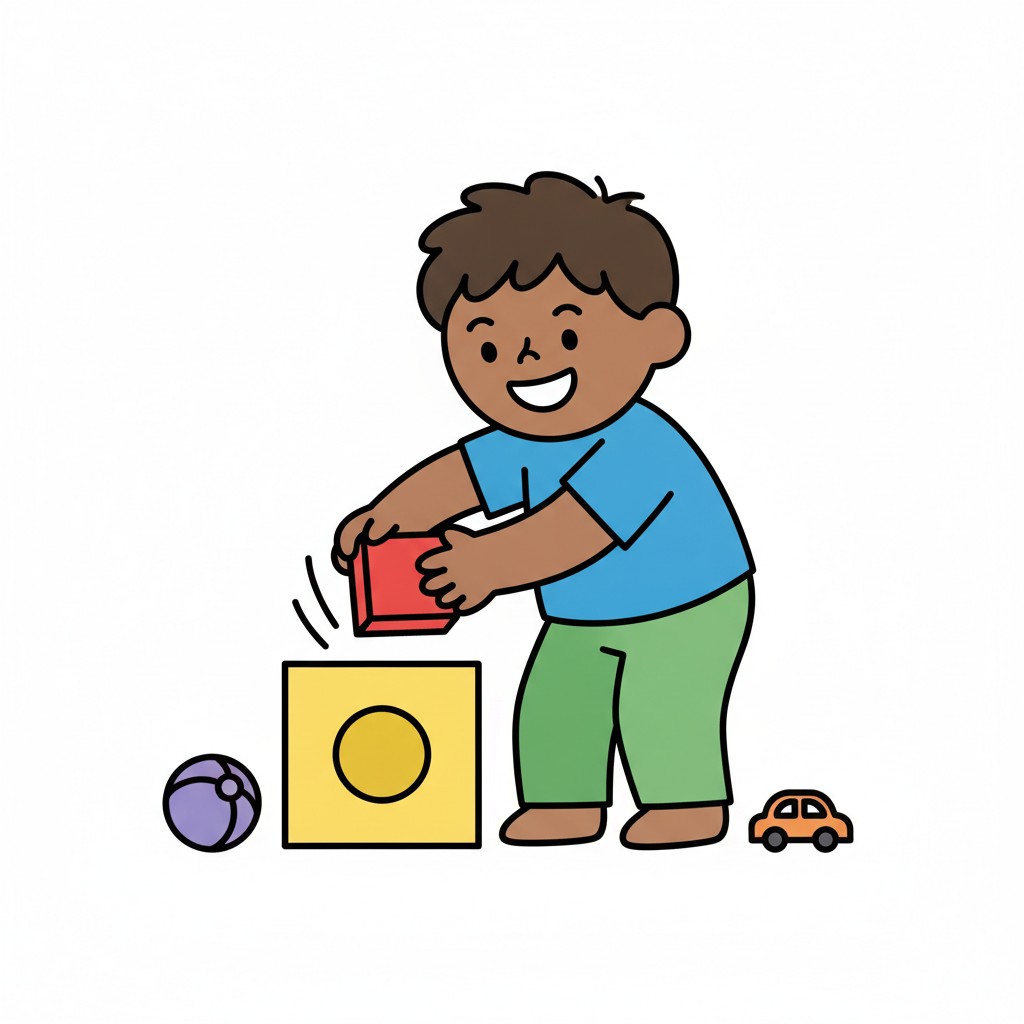 ♂
♂Tidying up
A boy puts a block into a yellow toy box.
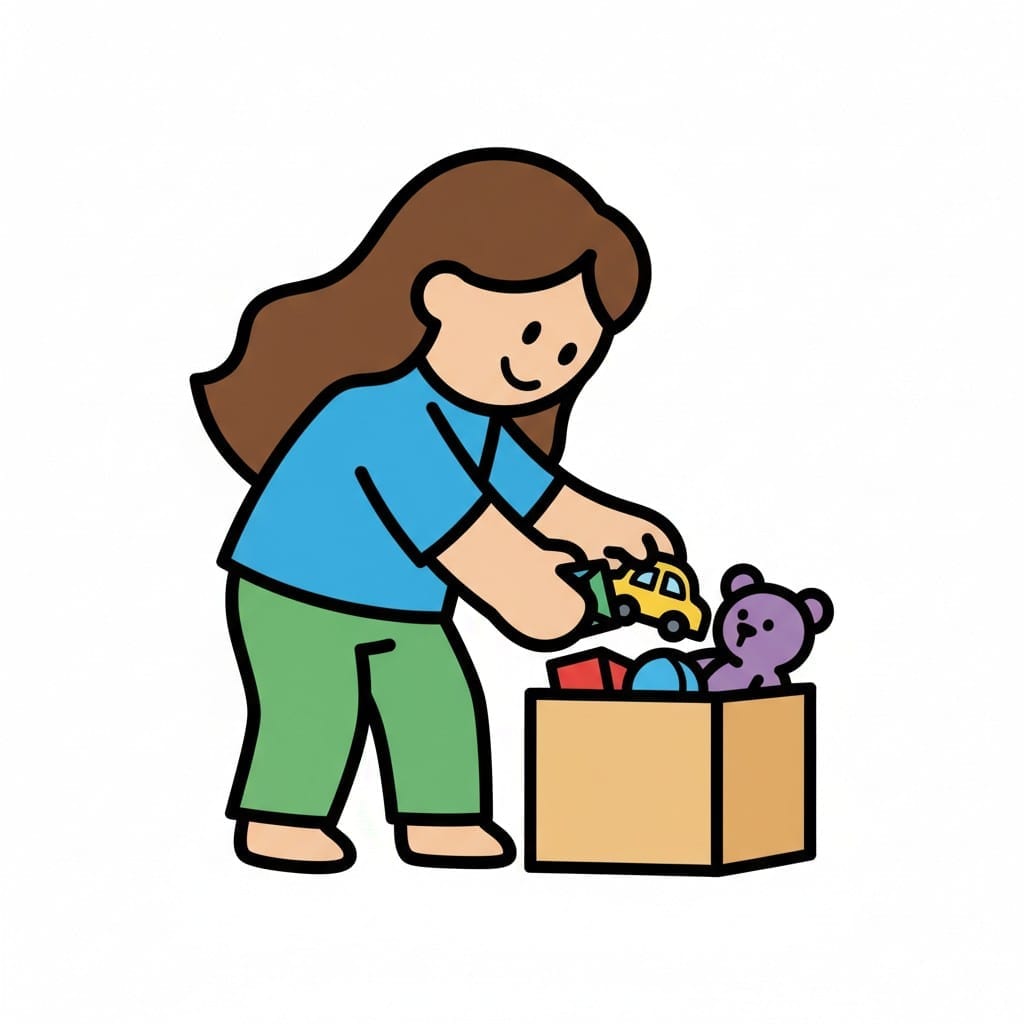 ♀
♀Tidy up
A girl tidies up toys into a box.
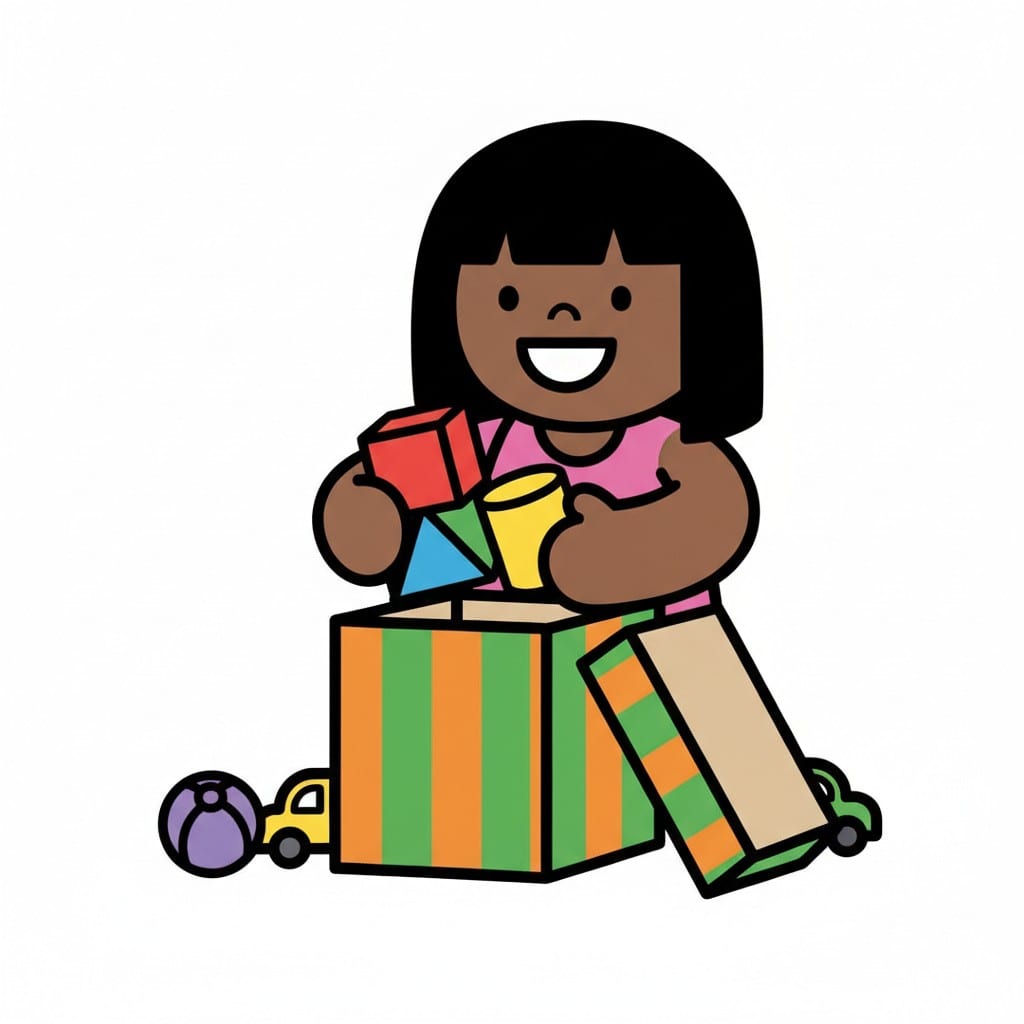 ♀
♀Tidy up
A girl tidying up toys in a box.
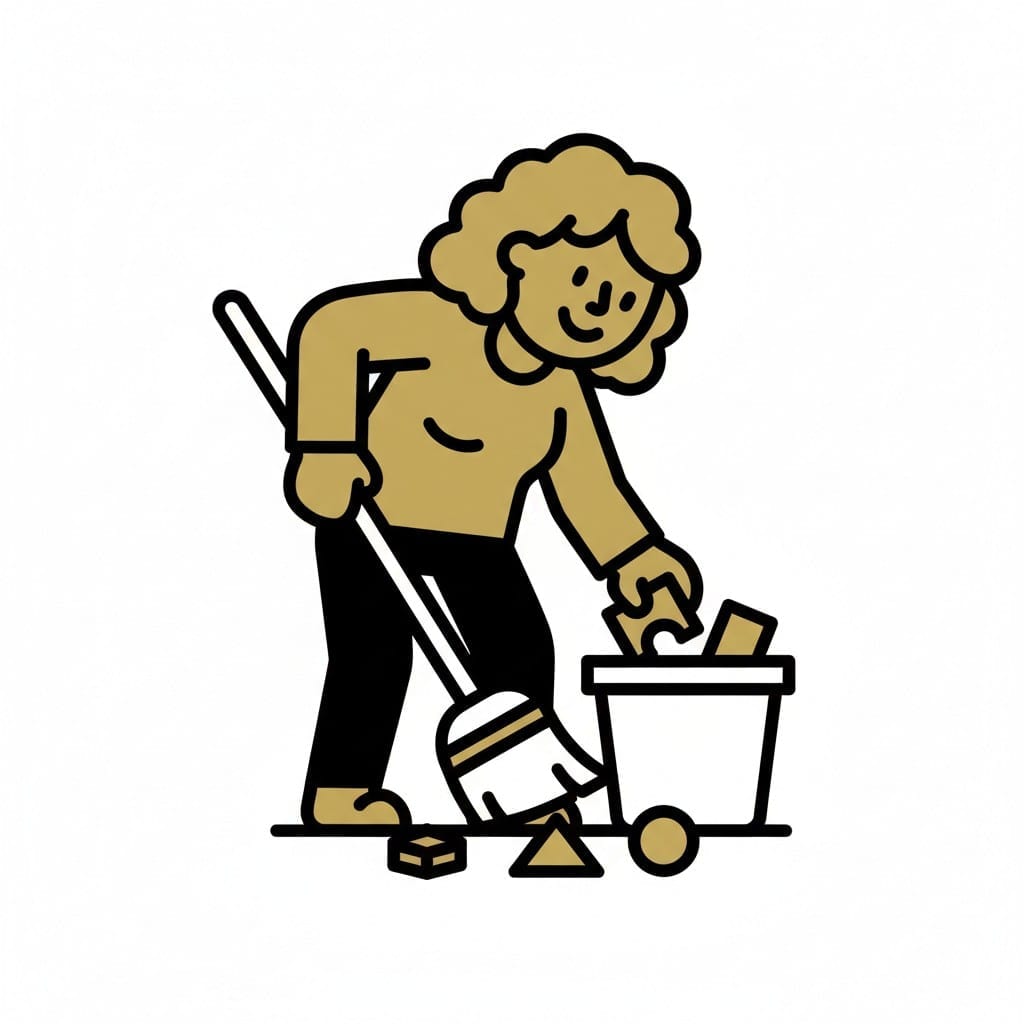 ♀
♀Sweeping and picking up
A woman with curly hair holds a broom and drops a piece into a bin on wheels while blocks and a ball still lie on the floor.
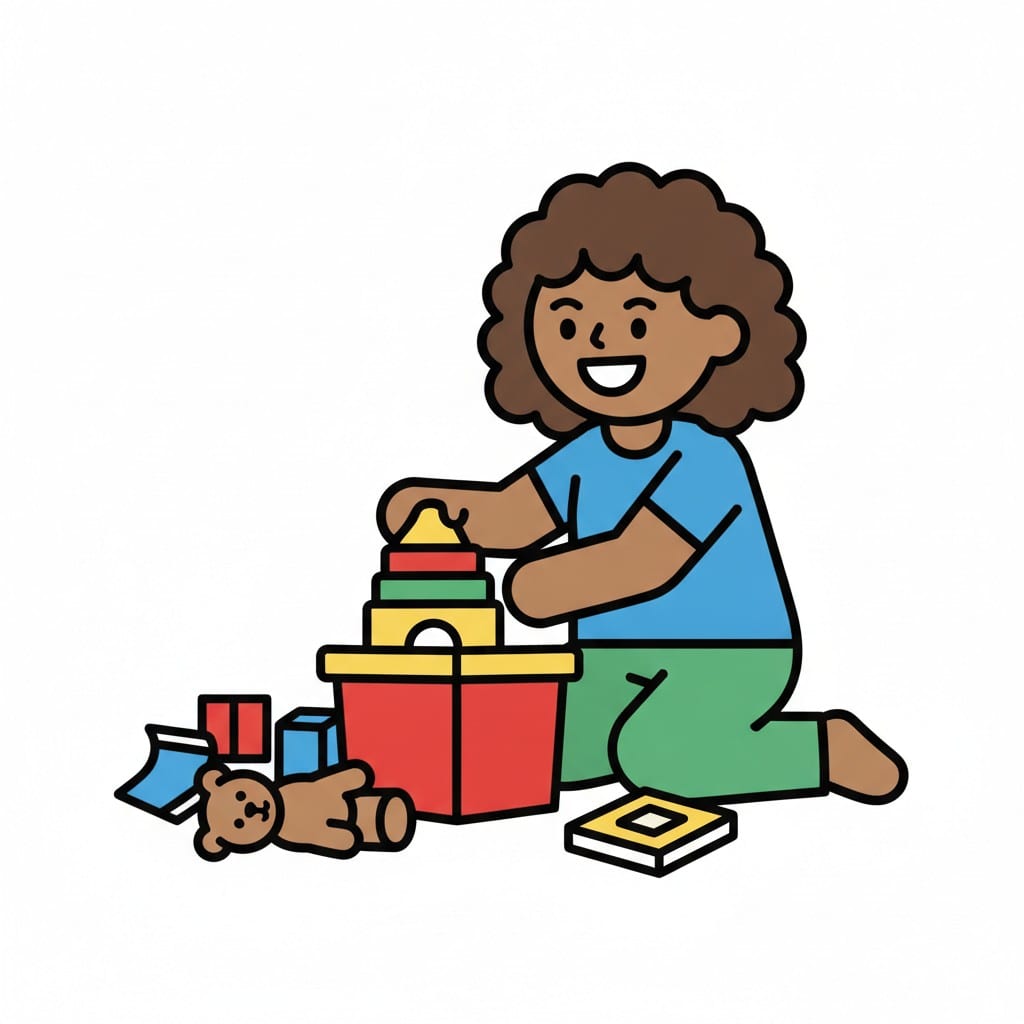 ♀
♀Girl packing up toys
A girl with curly hair puts a stacking ring toy into a red box, with a teddy bear and some blocks beside her on the floor.
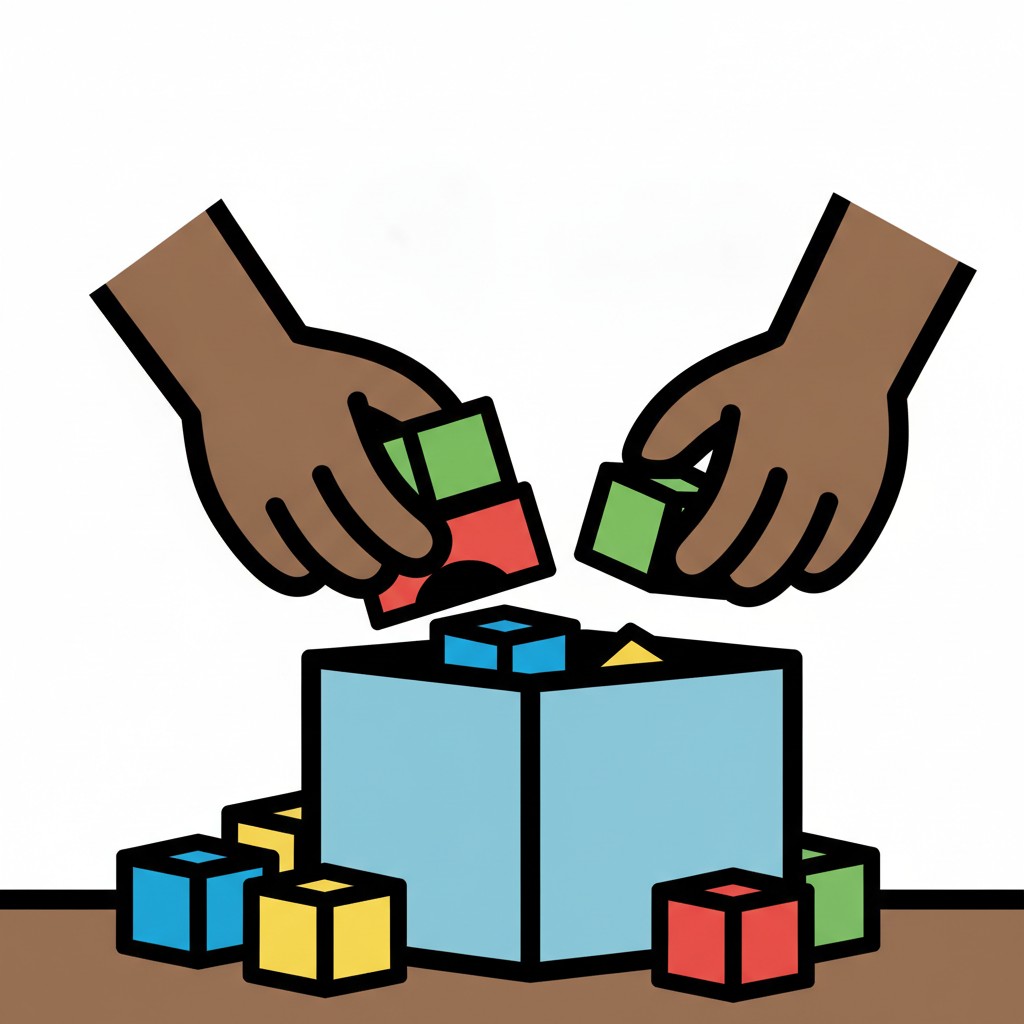
Gather up the blocks
Two hands put coloured blocks into a light blue box with more blocks around it.
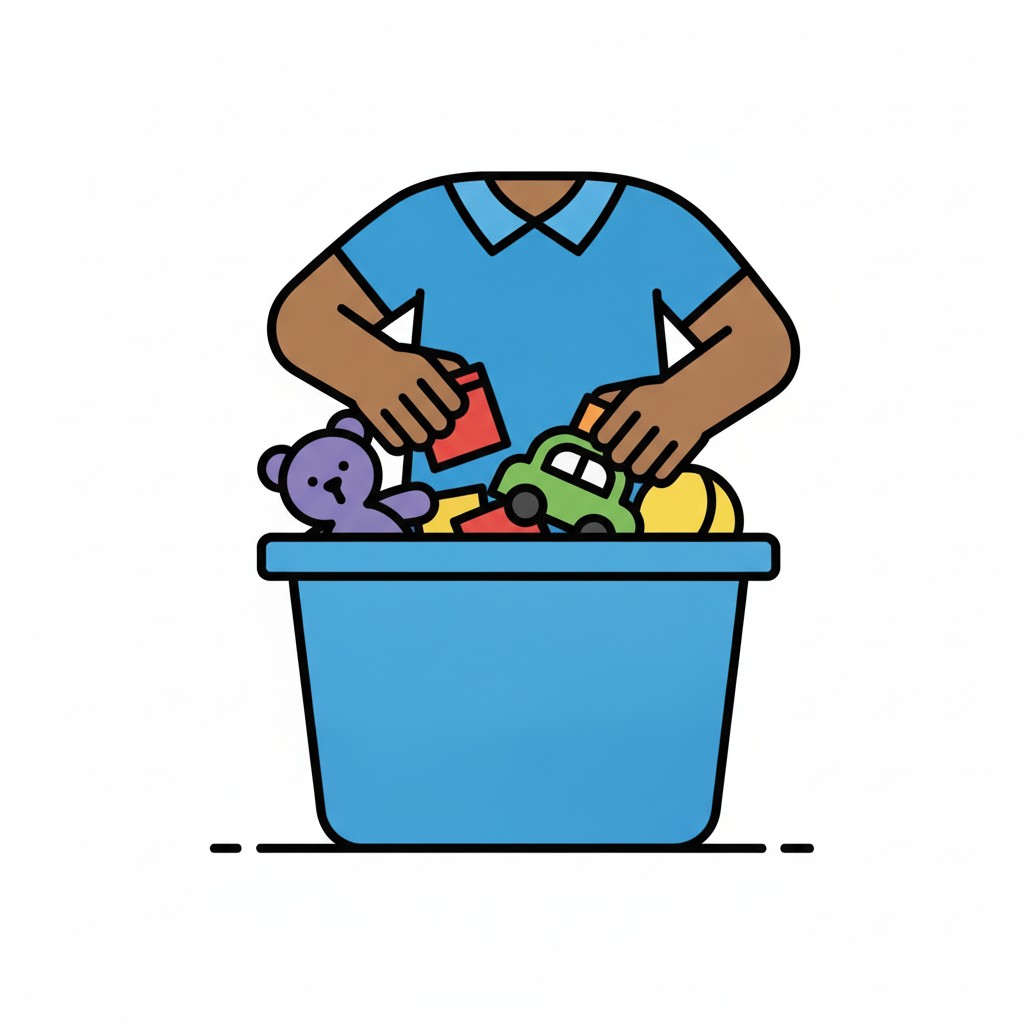
Put the toys in the tub
Two hands put a teddy, a car and a ball into a blue plastic tub.
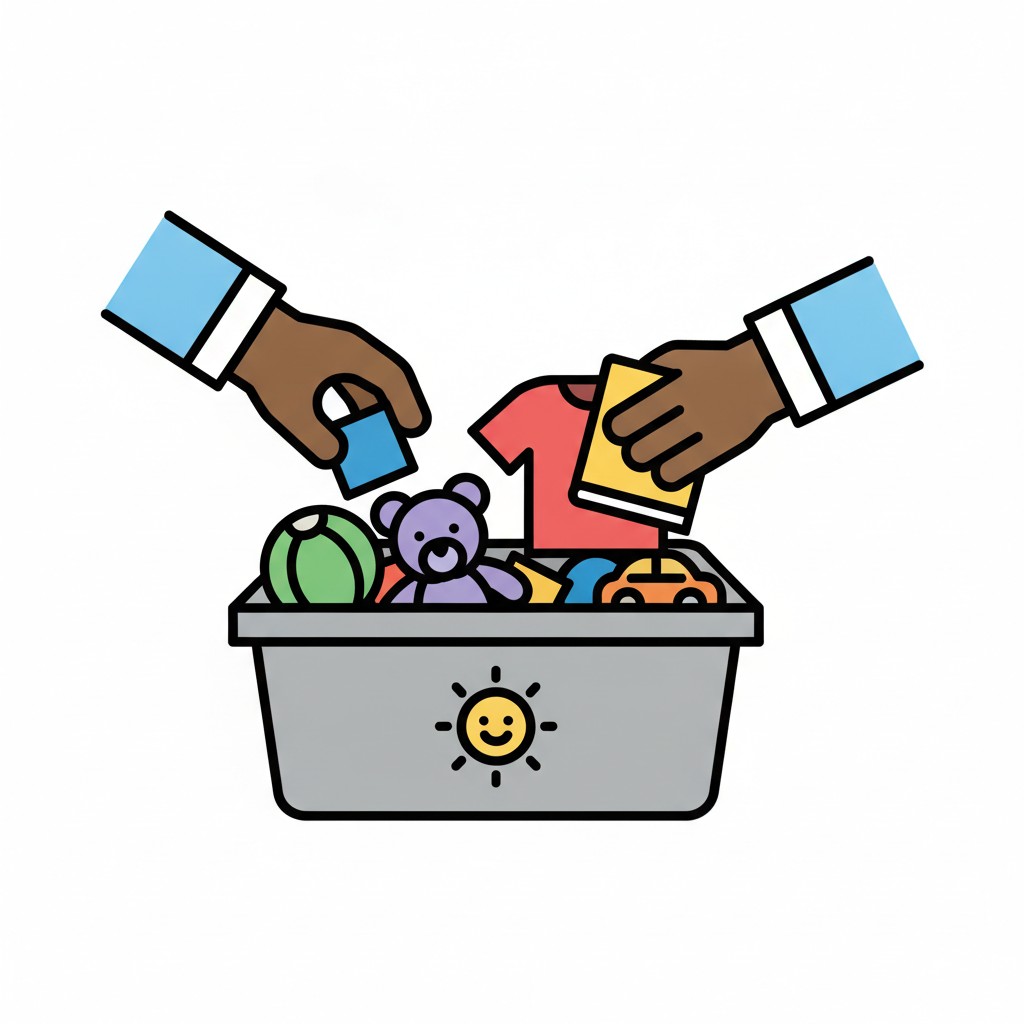
Clear things away
Two hands put a red top and toys into a grey plastic tub.
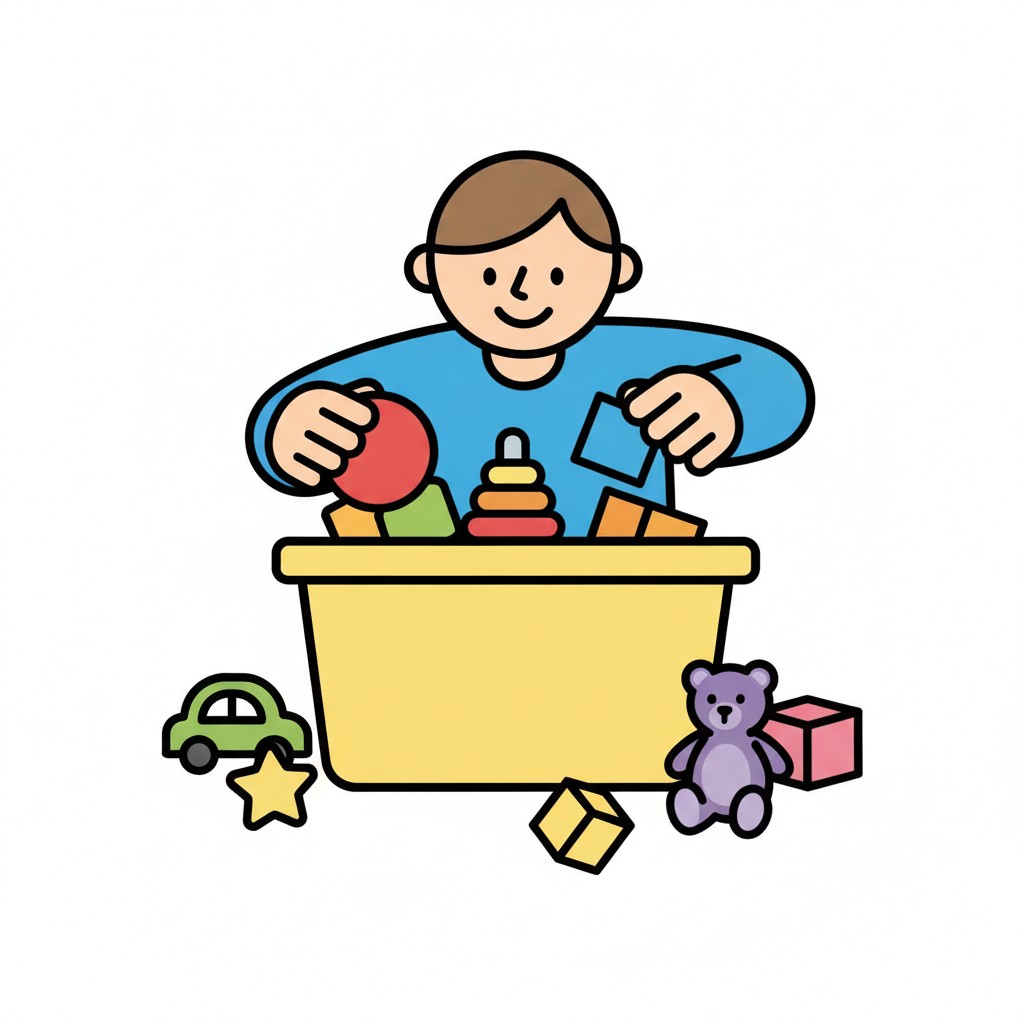 ⚲
⚲Tidy the toys away
A child puts toys into a yellow tub, with a car, a teddy and a block on the floor.
About this visual support
Tidying after play is really two things colliding: a fun moment that isn't finished, and a task that needs focus. That is why a short outburst tends to land right when you announce it. The child doesn't hear the tidying as the problem. It hears that play has to stop.
A visual schedule gives the child something to look at instead of something to listen to. When the picture of scattered toys is already on the table, the next step has a shape, and that small delay softens the interruption. Many children manage the move from playing to putting away once the transition has a visible edge. One practical idea: place the tidy-up card in view when play begins, so it never arrives as a surprise.
If you want to take the routine further, Routined lets you string steps together with a calm timer that shows exactly how long the tidy-up window lasts.
Use this image in a schedule
Build your own visual schedule with this image and download it as a print-ready PDF. Completely free.

More similar visual supports
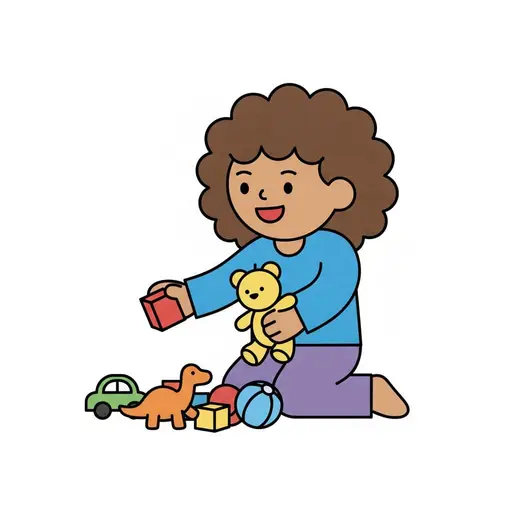
Put away toys
A child kneels holding a yellow teddy and a red block, with toys on the floor.
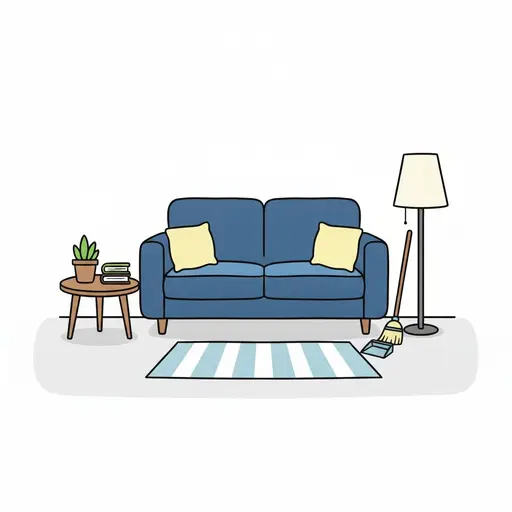
Clean the living room
A living room with a blue sofa, floor lamp and side table, with a broom leaning ...
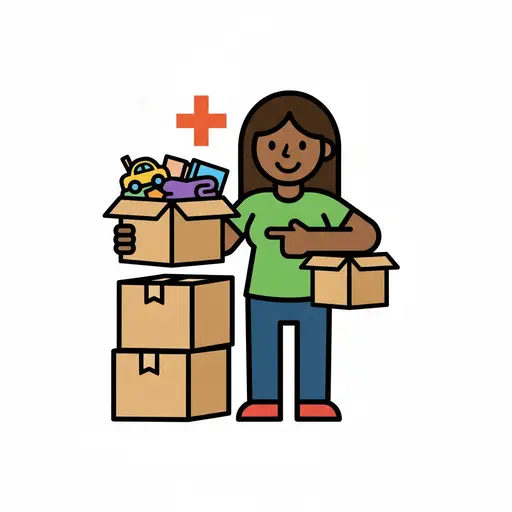
Pick up things
A woman stands by a stack of boxes with things inside.
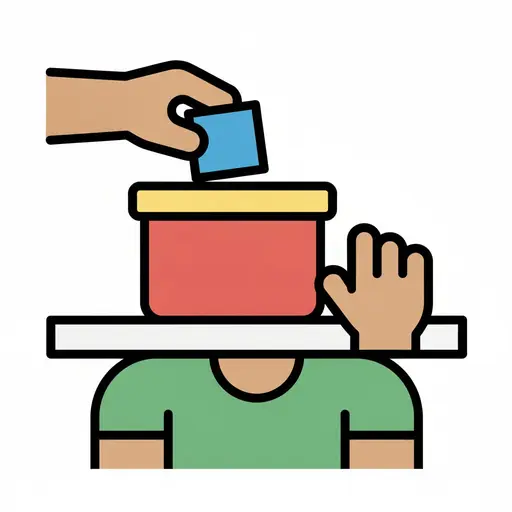
Put away
A hand places a blue block into a red container on a shelf.
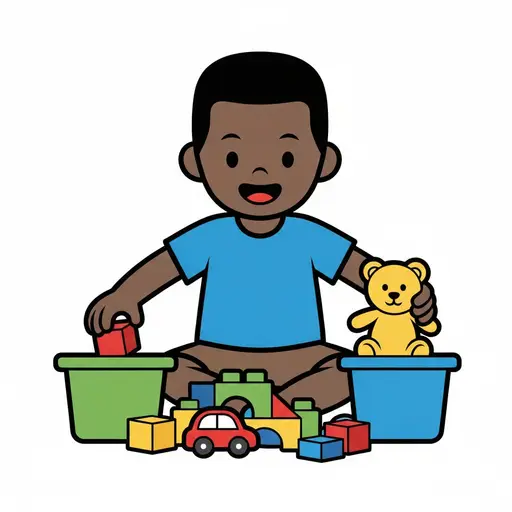
Sort toys
A boy sorts blocks and toys into a green and a blue bin.
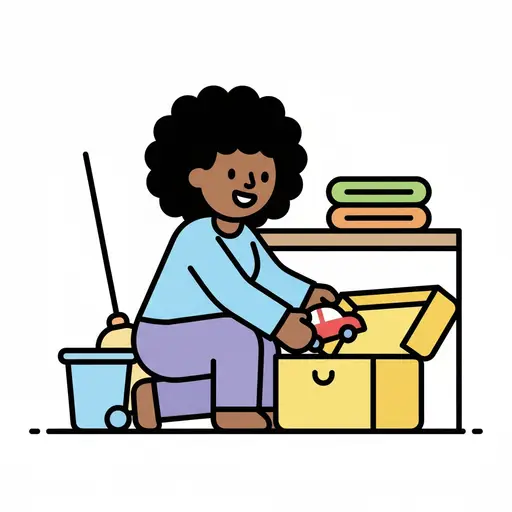
Straighten up the room
A woman puts toys into a yellow box with cleaning things nearby.
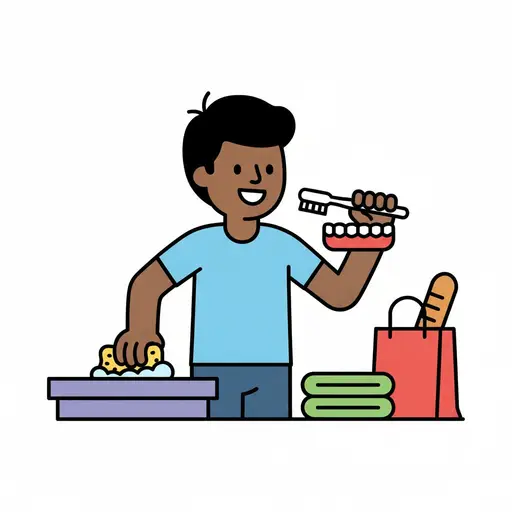
Chores
A boy holds a toothbrush and wipes with a sponge, with towels and a grocery bag.
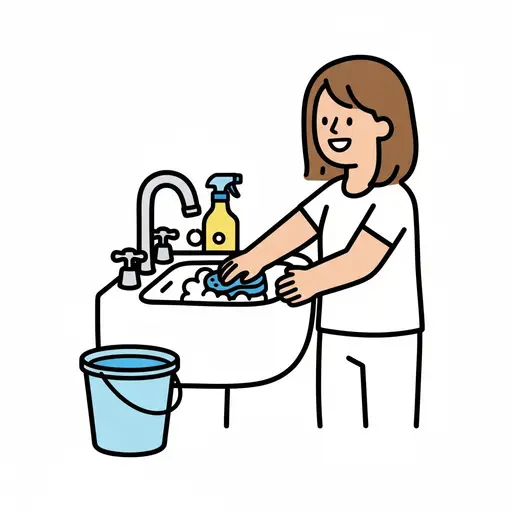
Clean the sink
A girl scrubs a sink with a sponge next to a bucket and a spray bottle.
Take the visual supports with you
In Routined you build schedules from these pictures, add timers and voice instructions, and your child follows the day on their own.


* 14-day free trial, then $2.39 a month or $20.99 a year (US pricing). Cancel anytime.