Tidy up
Tidying up is less about hands and more about memory: where do the pens live, where do the socks live, where does that lego piece live. The visual support below works as an external map when the internal one is offline.
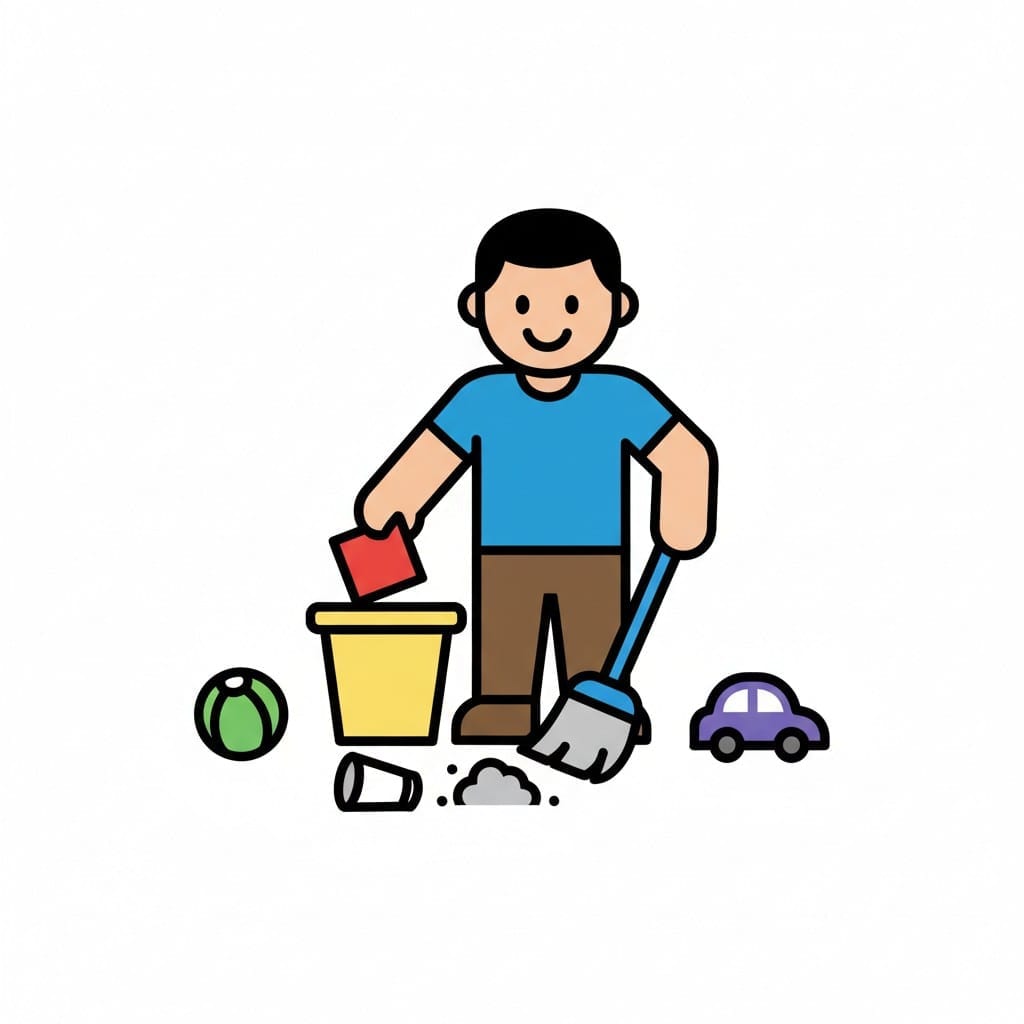 ♂
♂Boy cleaning up
An icon of a boy cleaning up. He is holding a red item over a yellow bin with one hand and sweeping dirt with a broom with the other hand. There is a green ball and a purple toy car on the floor.
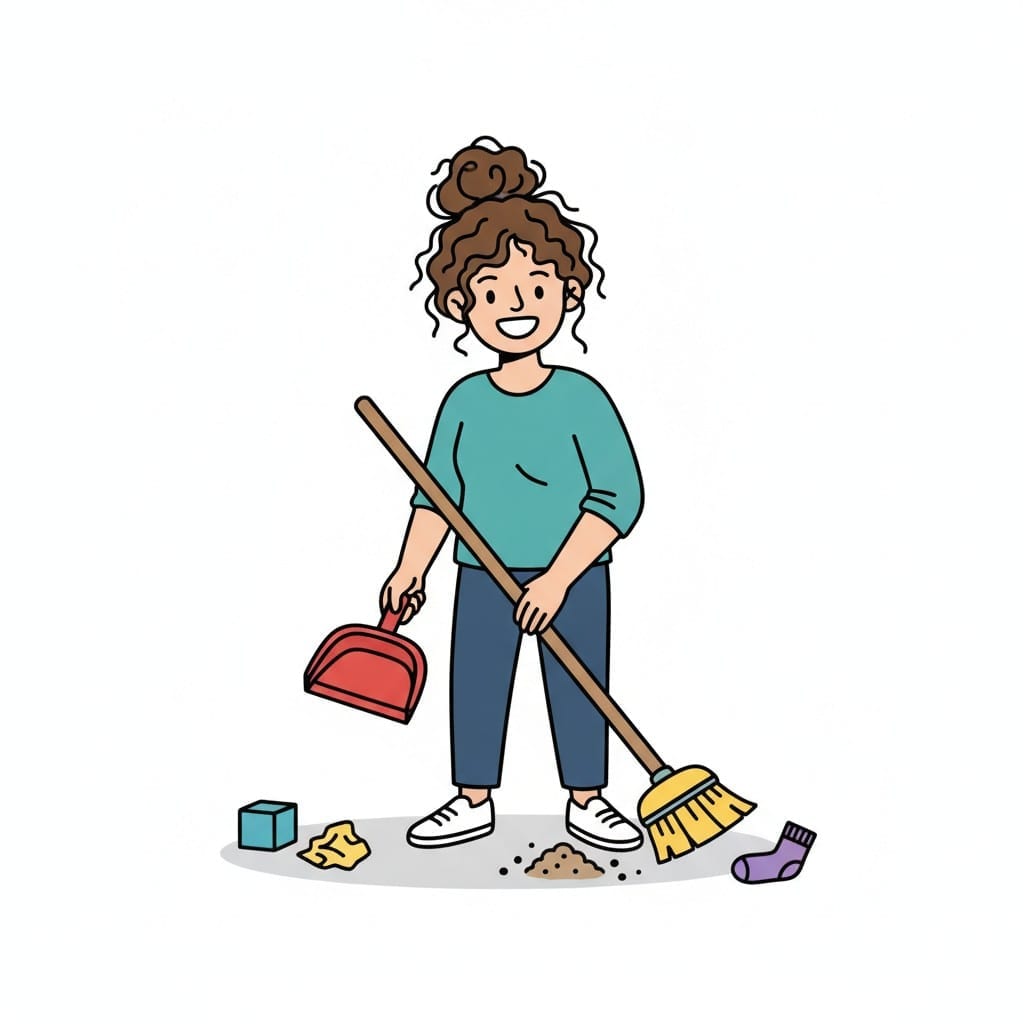 ♀
♀Person sweeping the floor
A smiling person with hair in a bun sweeps dirt on the floor with a broom while holding a red dustpan, next to a toy block and a sock.
About this visual support
Tidying up looks like a motor task but is really a memory task. For every object the brain has to answer where does this live? Pens in the cup, socks in the drawer, lego piece in the box, mug in the sink. When the mental map of the home is fully loaded it runs by itself. When it is not, which is often for kids under ten and plenty over ten, the tidying stalls in the middle of the room.
Visual support replaces the internal memory with an external one. Each card shows a category and a destination: toys here, clothes here, books here. The child no longer has to rebuild the map from scratch each time and can focus on moving things instead of figuring out where they belong. Four or five categories is usually enough.
One concrete tip: walk around the room first and point out the zones out loud before the tidying begins. Here is where the books live. Here is where the toys live. Saying it before hands start working cuts down on pauses later. In Routined you can save those zone images for the room so the map stays around between cleanups.
Use this image in a schedule
Build your own visual schedule with this image and download it as a print-ready PDF. Completely free.

More similar visual supports
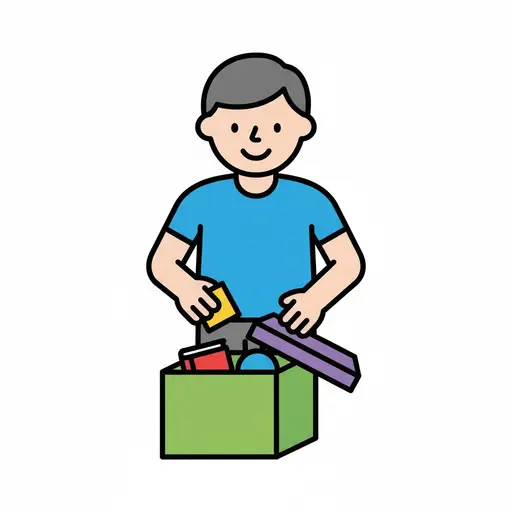
Put things away
A person puts things down into a green box with a lid beside it.
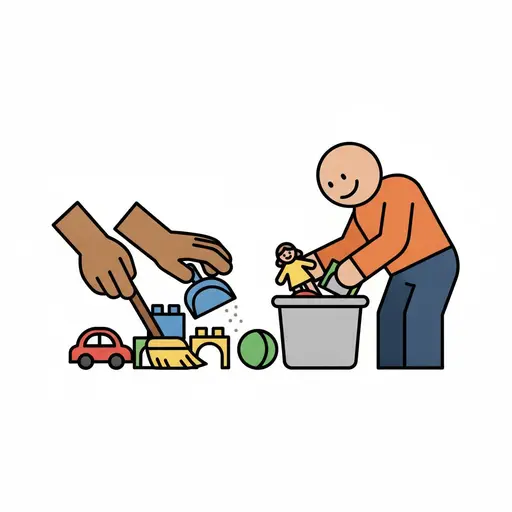
Clean up
An adult puts toys in a tub while two hands sweep up blocks and a toy car.
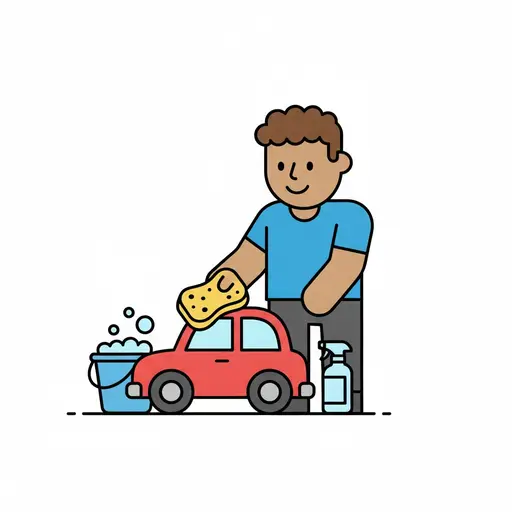
Clean up cars
A boy washes a red toy car with a sponge and a bucket of suds.
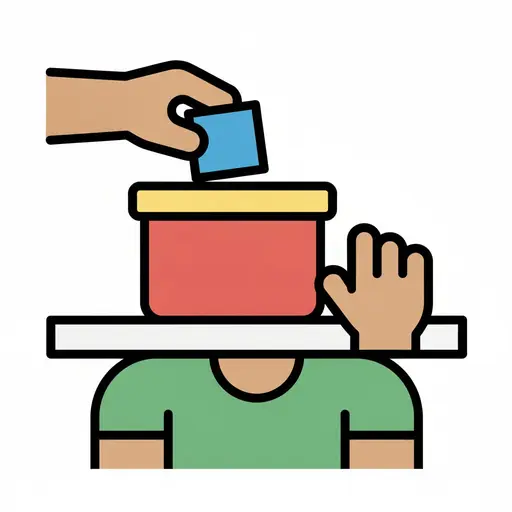
Put away
A hand places a blue block into a red container on a shelf.
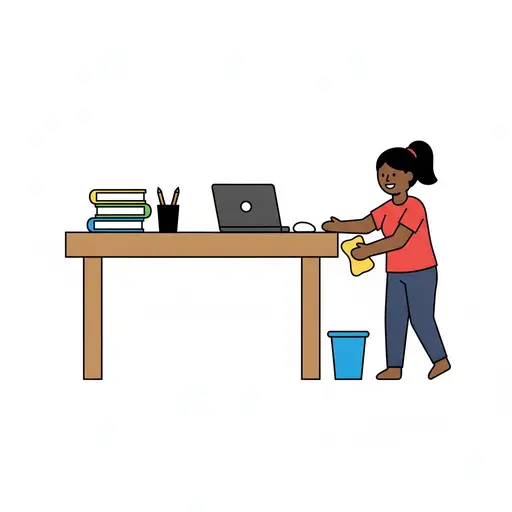
Clean desk
A girl wipes a desk holding books, pens and a laptop.
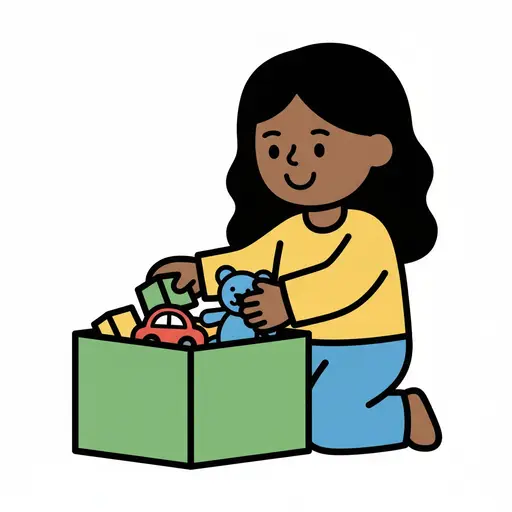
Clean up toys
A girl kneels and puts toys into a green box.
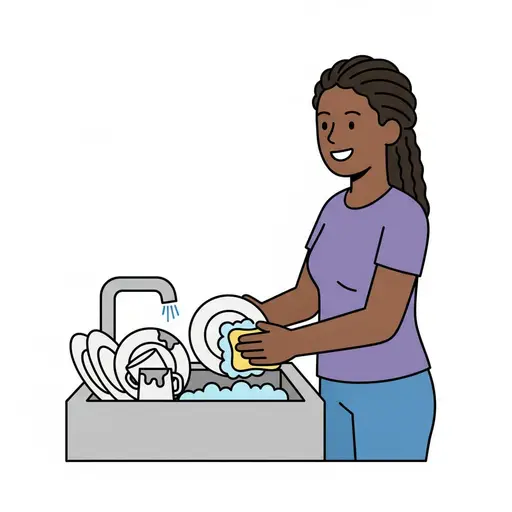
Do dishes
A person washes a plate with a yellow sponge at a sink full of dishes.
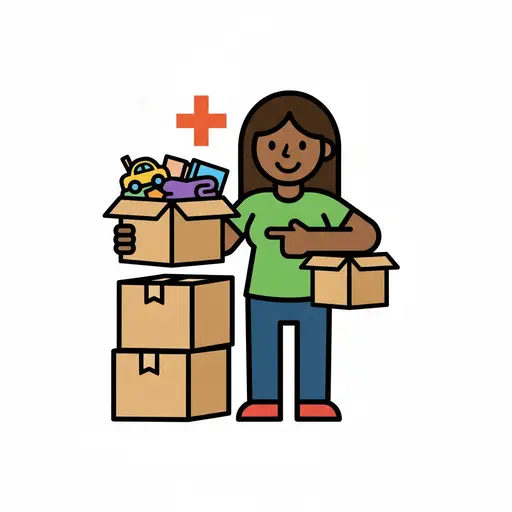
Pick up things
A woman stands by a stack of boxes with things inside.
Take the visual supports with you
In Routined you build schedules from these pictures, add timers and voice instructions, and your child follows the day on their own.


* 14-day free trial, then $2.39 a month or $20.99 a year (US pricing). Cancel anytime.