Tidy up the room
Standing in the doorway looking at a whole room of stuff is overwhelming. It is not laziness — it is not being able to see where to start. The steps below break the pile into smaller pieces the child can take on.
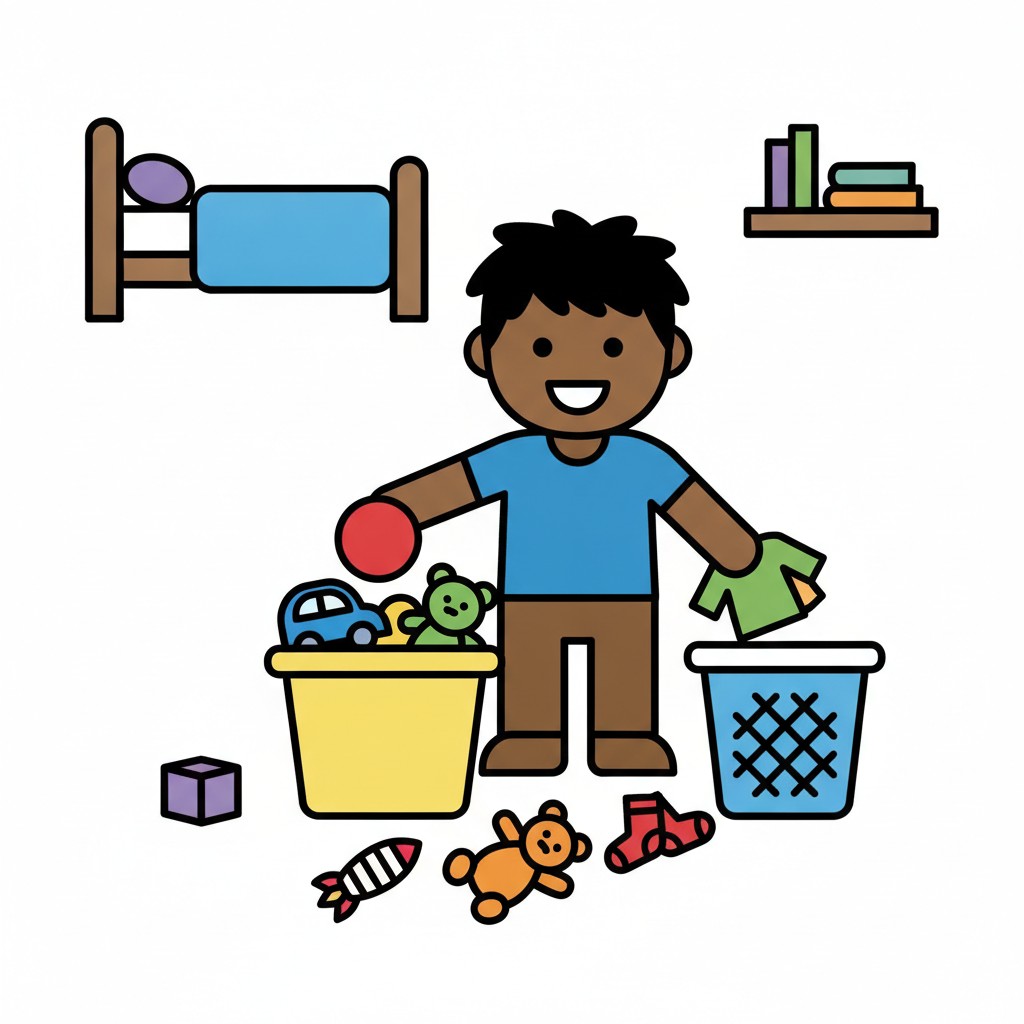 ♂
♂Boy tidying his room
A boy puts toys in a box and clothes in a laundry basket in his room.
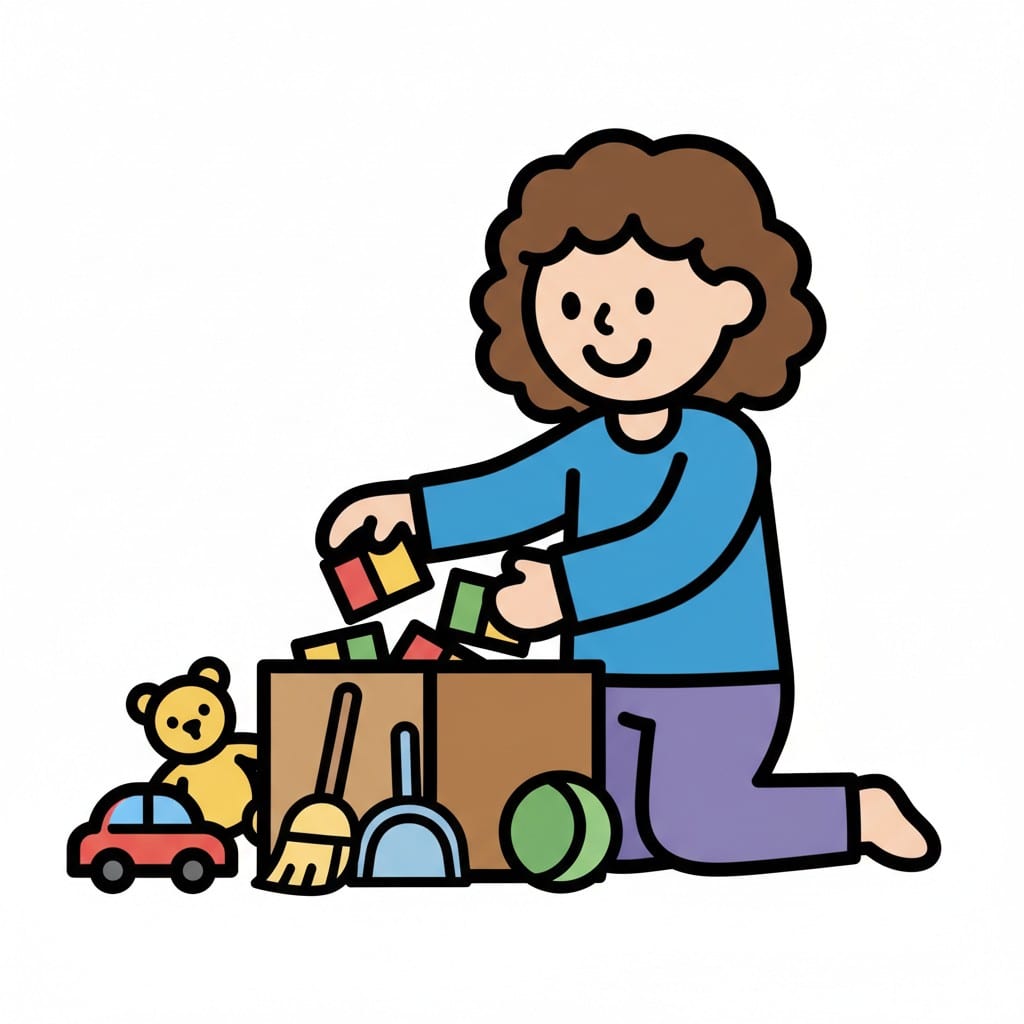 ♀
♀Putting toys away
A girl with curly brown hair kneeling on the floor, placing colourful building blocks into a cardboard box, surrounded by a teddy bear, a ball, and a toy car.
About this visual support
The brain needs a starting point. A room where toys, clothes and books are mixed together does not offer an obvious one, and that is where tidying tends to stall — not in unwillingness, but in the executive task of deciding what comes first. For many children that step becomes an invisible wall.
A visual schedule swaps the one big question for a series of small ones. First a picture of toys — just the toys go in the box. Then clothes — just the clothes go in the laundry. Then books — just the books on the shelf. Suddenly the room is not chaos anymore, it is a queue of three short jobs the child can actually take on one at a time.
A tip specific to tidying: keep a basket or stool in the room as a temporary holding place for things that belong elsewhere. That way the child does not have to break the flow and run to other rooms mid-task. When a category is done, you check off its card. Routined lets you put the sequence, a timer and the checkmarks in one place.
Use this image in a schedule
Build your own visual schedule with this image and download it as a print-ready PDF. Completely free.

More similar visual supports
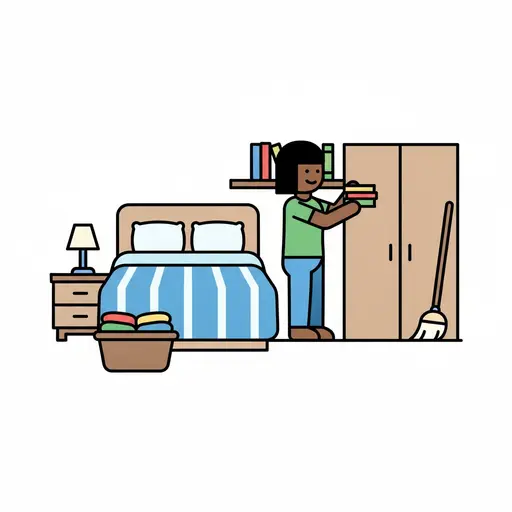
Clean the bedroom
A girl in a green top places books on a shelf in a bedroom with a made bed, a ni...
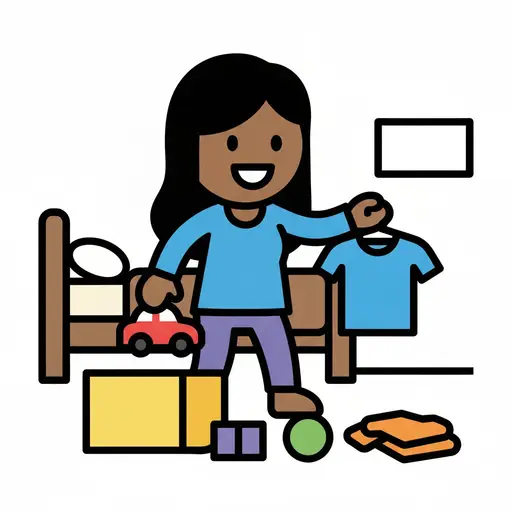
Clean your room
A child tidies their room, holding up a shirt among toys and boxes.
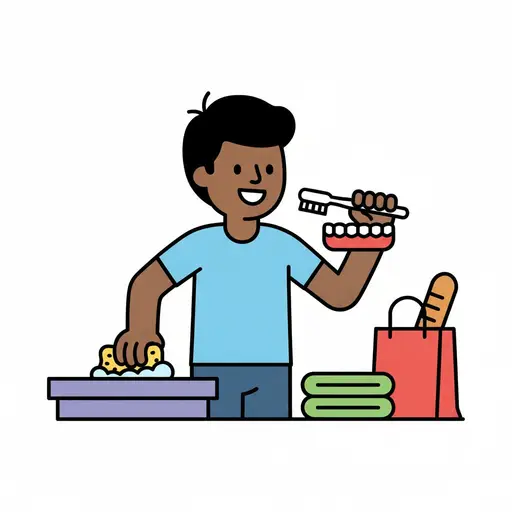
Chores
A boy holds a toothbrush and wipes with a sponge, with towels and a grocery bag.
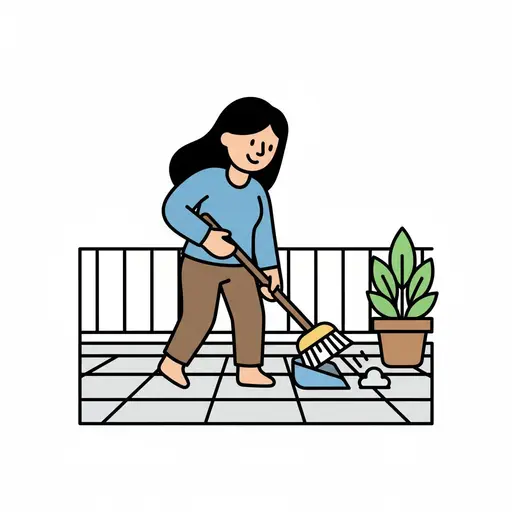
Clean the balcony
A child sweeping the balcony floor with a broom and dustpan, with a potted plant...

Clean the bathroom
A white toilet sparkles with yellow stars next to a mop standing in a blue bucke...
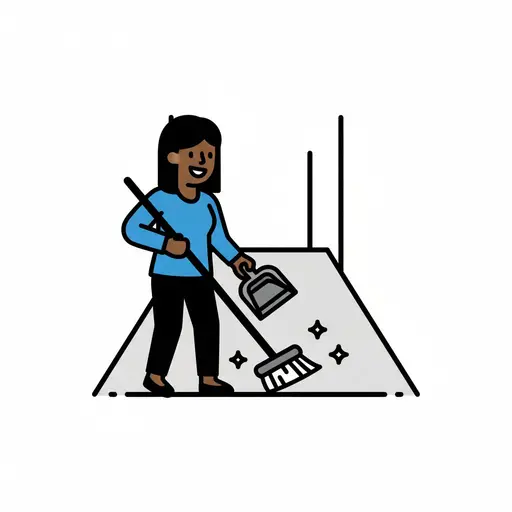
Clean the hallway
A child sweeping the hallway floor with a broom while holding a dustpan, with sp...
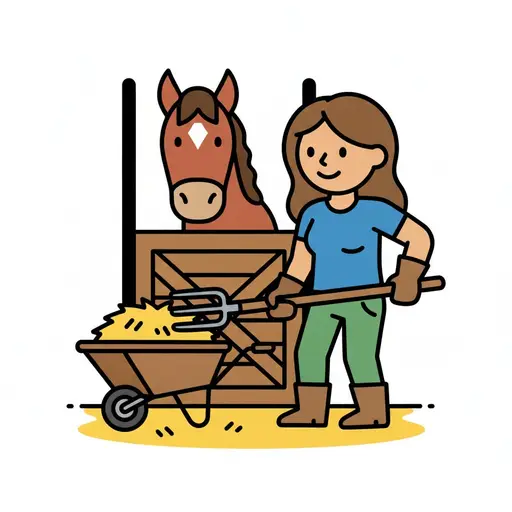
Do the chores
A person pushes a wheelbarrow of hay in a stable where a horse looks out of the ...
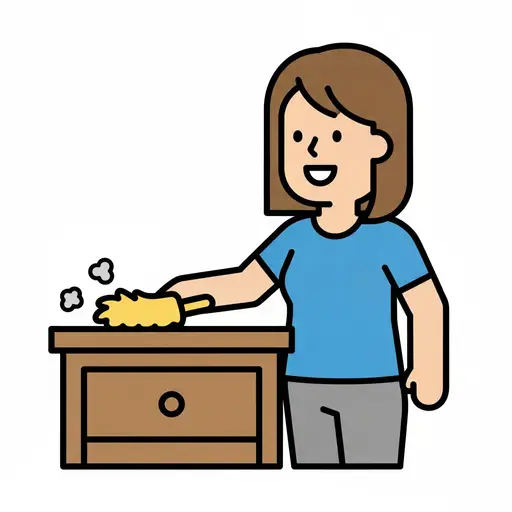
Dust furniture
A girl in a blue shirt dusts a wooden nightstand with a yellow feather duster.
Take the visual supports with you
In Routined you build schedules from these pictures, add timers and voice instructions, and your child follows the day on their own.


* 14-day free trial, then $2.39 a month or $20.99 a year (US pricing). Cancel anytime.