Unpack bags
Several bags multiply the decisions and remove the sense of being done — there is always one more. The visual support below turns each bag into its own small task with its own finish line.
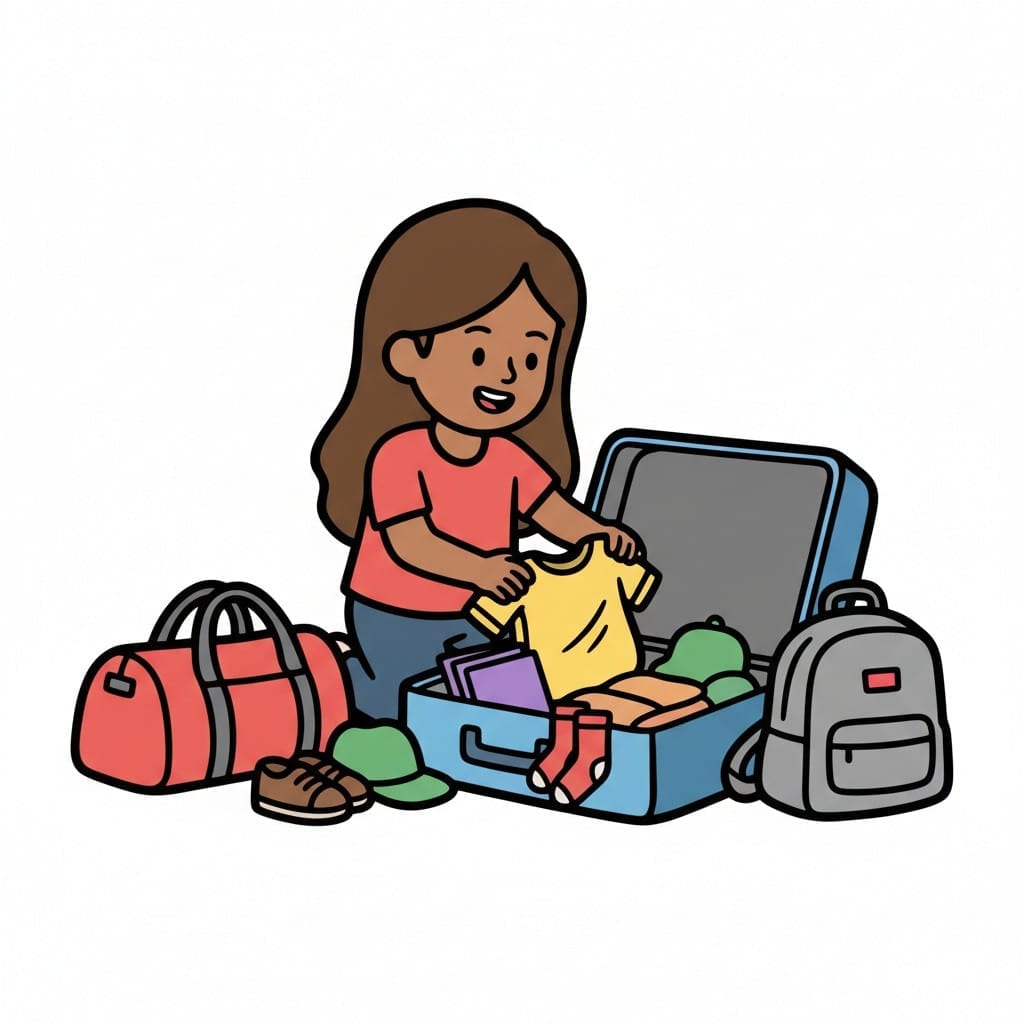 ♀
♀Girl unpacking
A girl kneels and unpacks clothes from an open suitcase. A red duffel bag and a grey backpack are next to her.
About this visual support
The hidden problem with several bags is not the volume of cloth. It is that the brain cannot see the end. When one bag is empty, two more sit on the floor, and the reward for finishing the first never arrives. That exact feeling — never reaching the finish — drains the willingness to keep going before half the pile is handled.
Visual support solves this by breaking each bag out as its own sequence. Three bags become three short series rather than one long commitment. Between each series sits a marked pause or check-off that says: this one is finished. The brain gets a concrete win to rest on before the next begins, and that often decides whether the last bag gets emptied or stays in the hallway for three days.
A task-specific tip: physically label the bags with a sticker or post-it before you start, so the card for bag 1 matches the exact bag to be tackled first. The child does not have to choose the order. In the Routined app each bag can get its own short series and a timer, so the pace stays up between bags.
Use this image in a schedule
Build your own visual schedule with this image and download it as a print-ready PDF. Completely free.
More similar visual supports
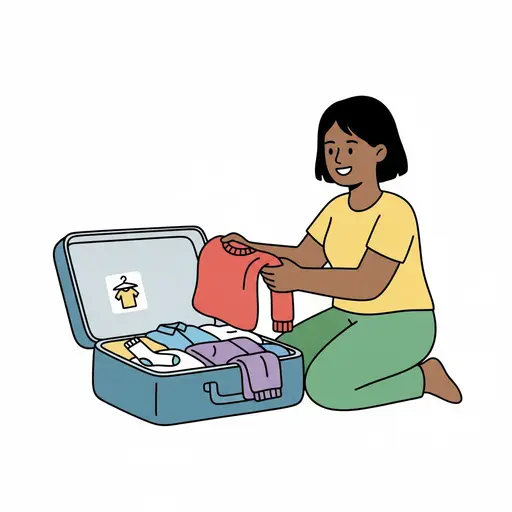
Unpack bag
A smiling person kneels and takes a red top out of a blue suitcase full of folde...
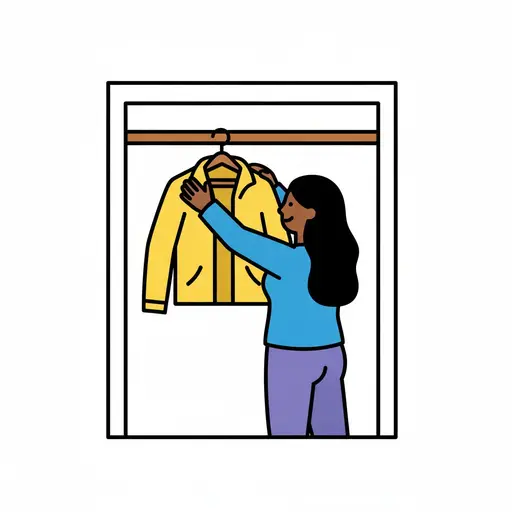
Hang jacket
A woman hangs a yellow jacket in the closet.
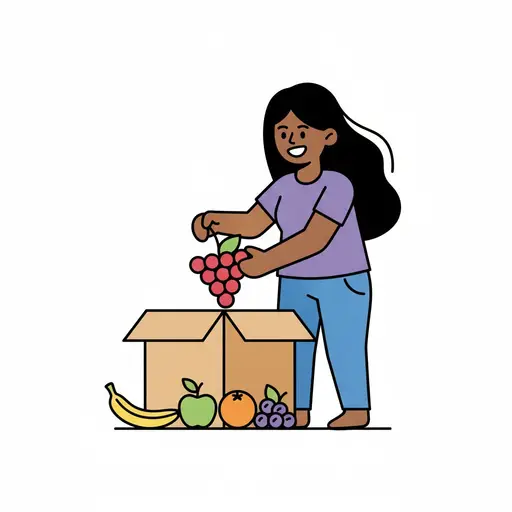
Unpack
A woman takes grapes out of a box of fruit.
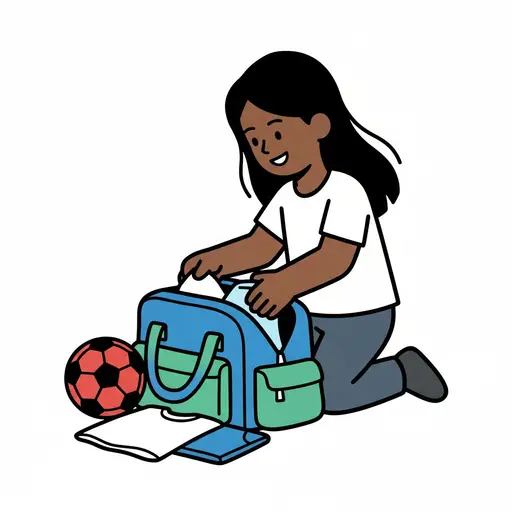
Unpack school sports bag
A girl kneels and unpacks a blue and green sports bag. A soccer ball and papers ...
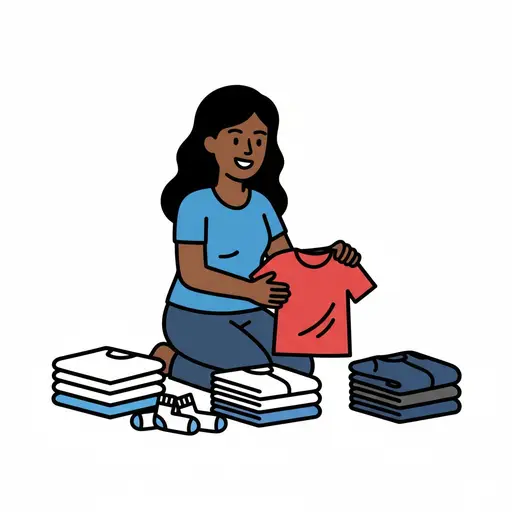
Sort clothes
A person sits on the floor sorting clothes into piles.
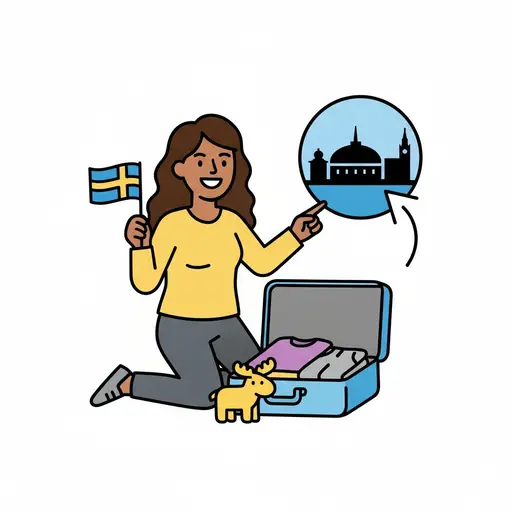
Pack for Stockholm
The girl holds a Swedish flag and points towards the Stockholm skyline beside he...
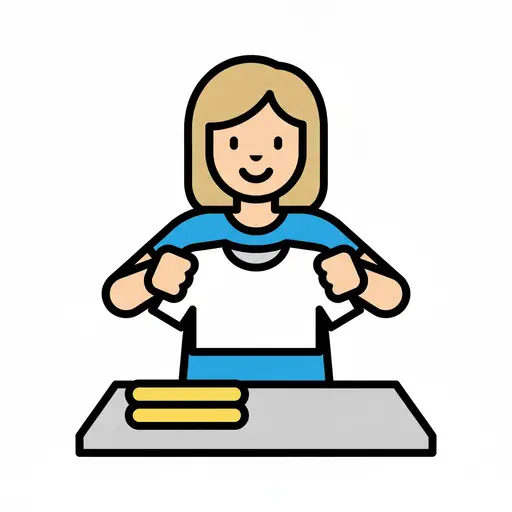
Fold laundry
At a grey table, a girl folds a white shirt while two yellow garments lie neatly...
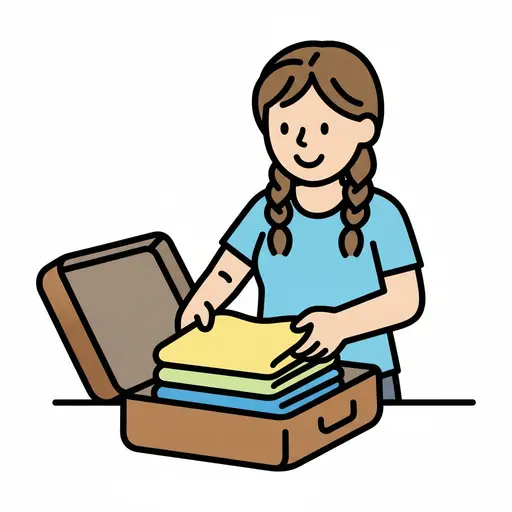
Unpack clean clothes
A child unpacks folded clothes from a suitcase.
This visual support in other languages
Take the visual supports with you
In Routined you build schedules from these pictures, add timers and voice instructions, and your child follows the day on their own.


* 14-day free trial, then $2.39 a month or $20.99 a year (US pricing). Cancel anytime.