Wipe cupboard
The cupboard does not look dirty, so the question arrives: why bother? The visual support below shifts focus from visible stains to the invisible fingerprints around the handle, where the work actually shows.
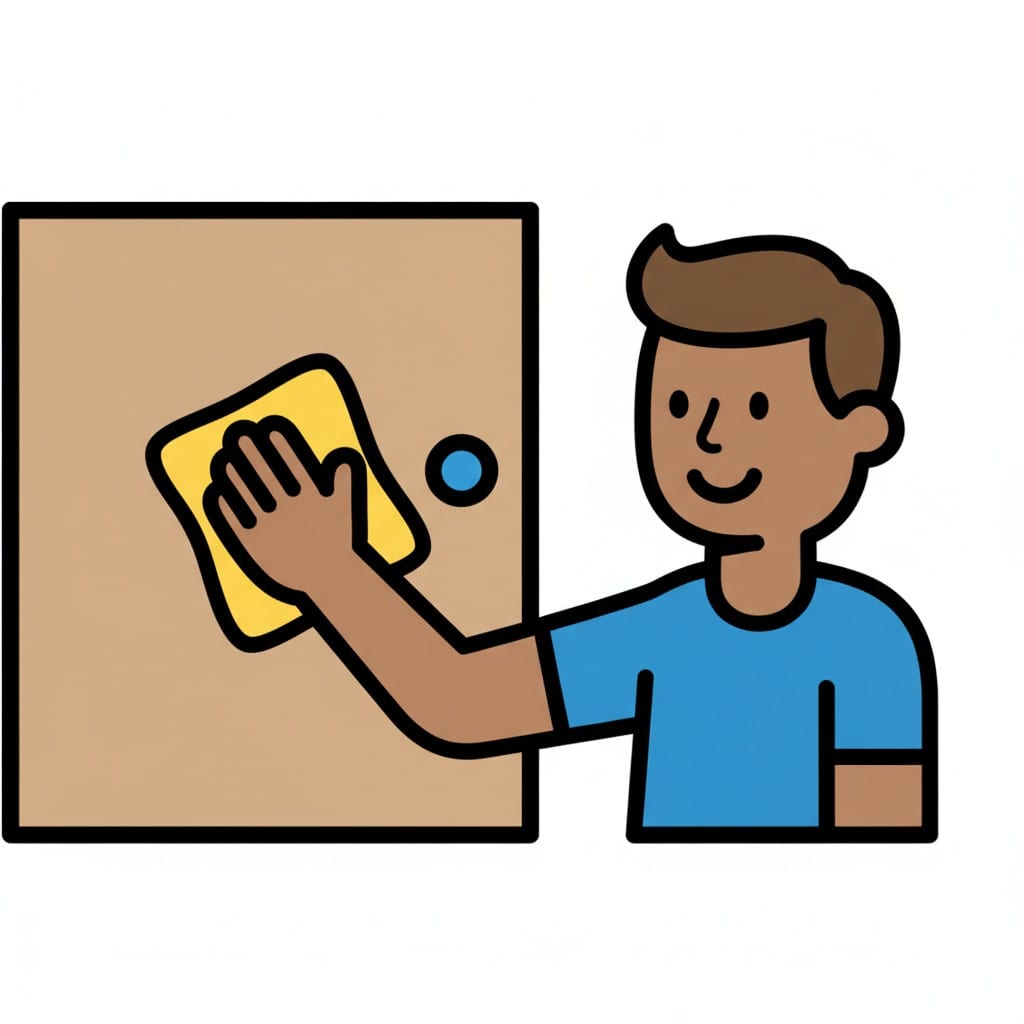 ♂
♂Wipe cupboard
A person wipes a cupboard with a cloth.
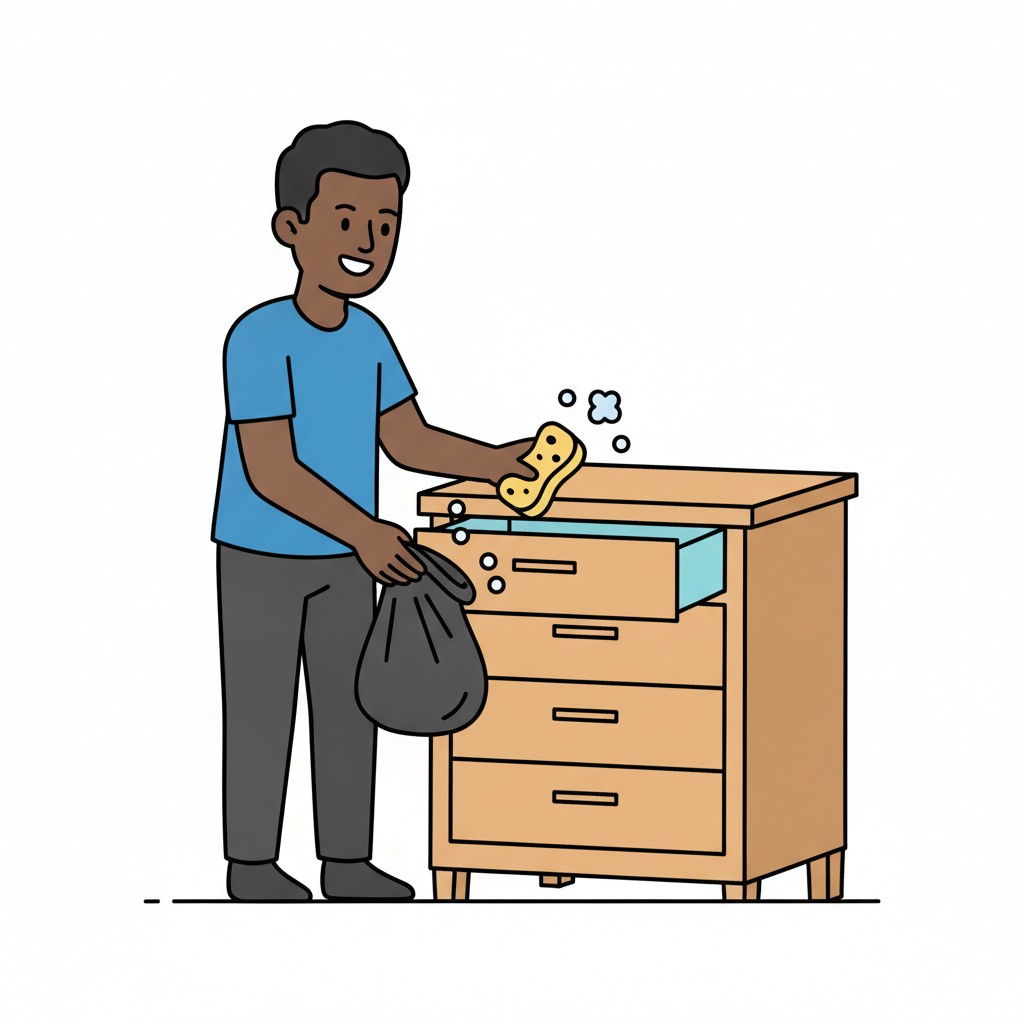 ♂
♂Cleaning the drawer
A man wipes out a dresser drawer holding a rubbish bag.
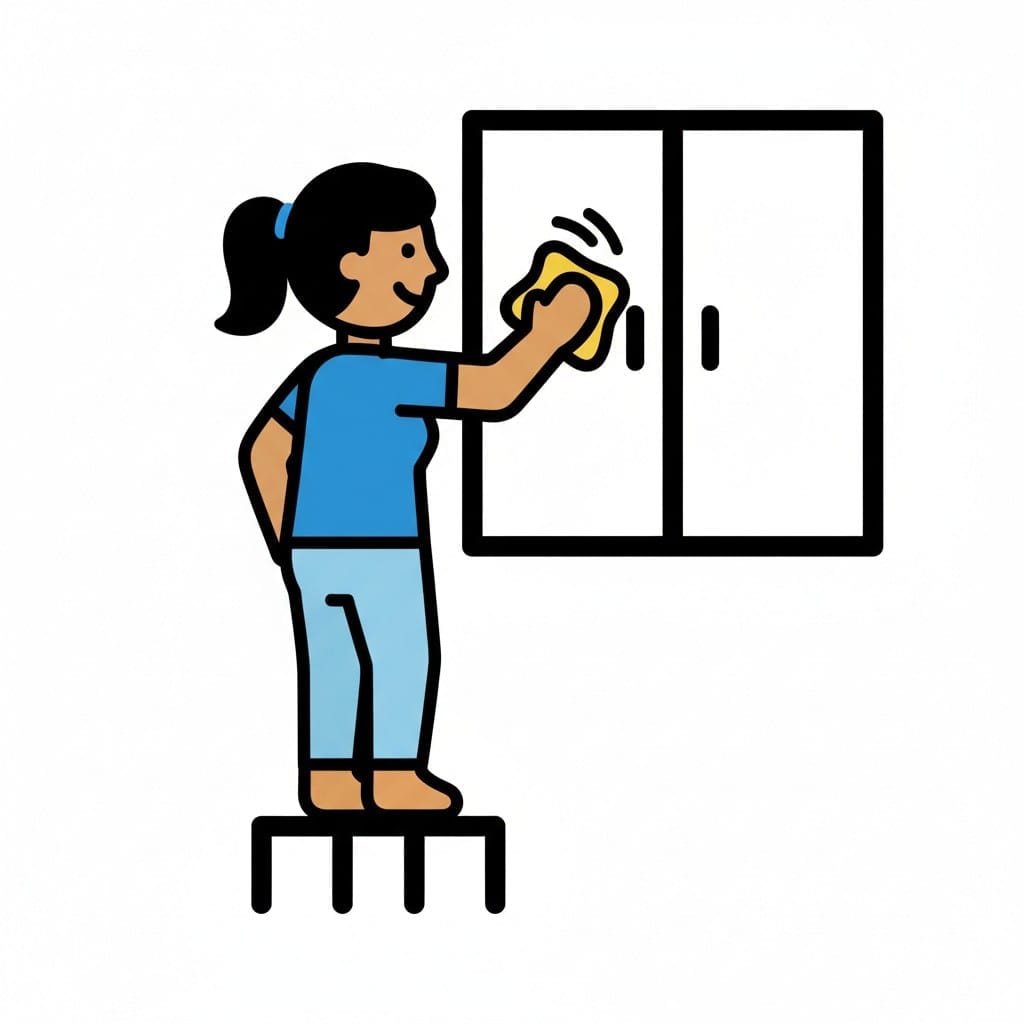 ♀
♀Wipe cupboard
A person stands on a stool and wipes a cupboard with a cloth.
About this visual support
Few chores are harder to sell to a child than a cupboard that already looks clean. The eye reports nothing to do, the touch knows nothing about finger oils, and the reward never arrives as a visible result. Motivation runs thin and the job gets postponed or rushed through.
The visual support flips the perspective. Instead of chasing stains, the pictures point at the handle area, the edge where the door swings open, and the corner where a small hand tends to land. Once the child learns to look at those zones, the task becomes concrete: spray, rub in small circles around the handle, drag a dry side across, check from the side. Spotting a slight change in shine where the hand usually rests becomes the reward.
A tip: switch off the ceiling light and turn on a lamp from the side when the cupboard is done. Grease and prints become visible, and the child sees their own work. To connect several household steps in sequence, Routined can be tried for fourteen days.
Use this image in a schedule
Build your own visual schedule with this image and download it as a print-ready PDF. Completely free.

More similar visual supports
Wipe down
A girl with a ponytail leans forward and wipes a light grey counter with a blue ...
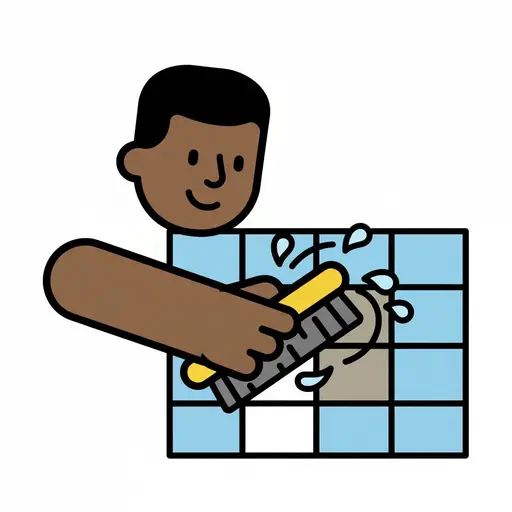
Clean tile grout
A person is cleaning tile grout with a brush and water.

Clean toilet
A hand in a rubber glove scrubs the toilet bowl with a brush.
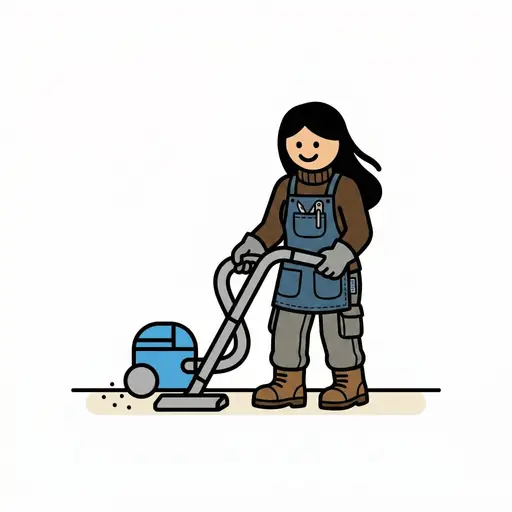
Vacuum room
A woman vacuuming the floor with a canister vacuum.
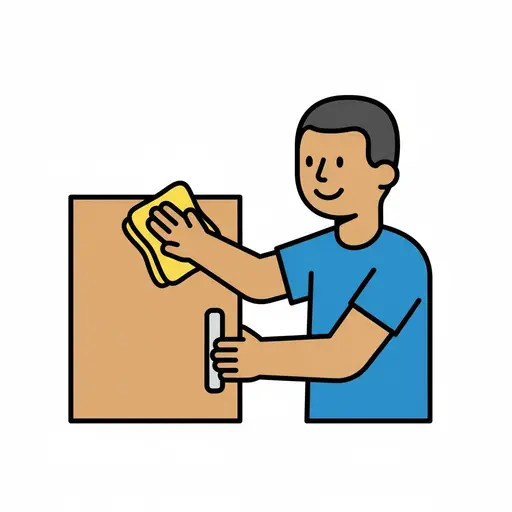
Wipe cabinets
A person wiping a cabinet with a yellow cloth.
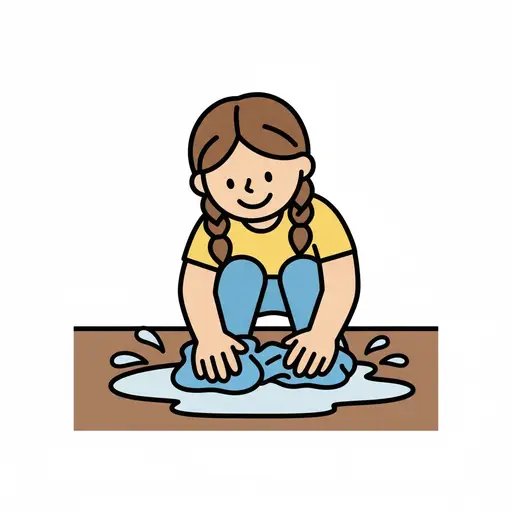
Wipe floor
A girl with braids crouches on a brown floor and soaks up a puddle of water with...
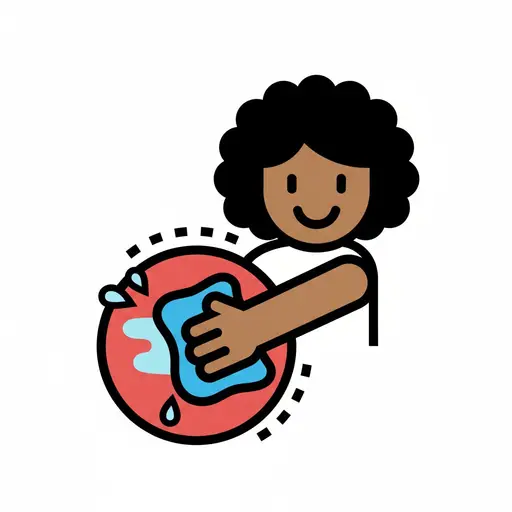
Wipe off
A smiling person wipes a round surface with a blue cloth.
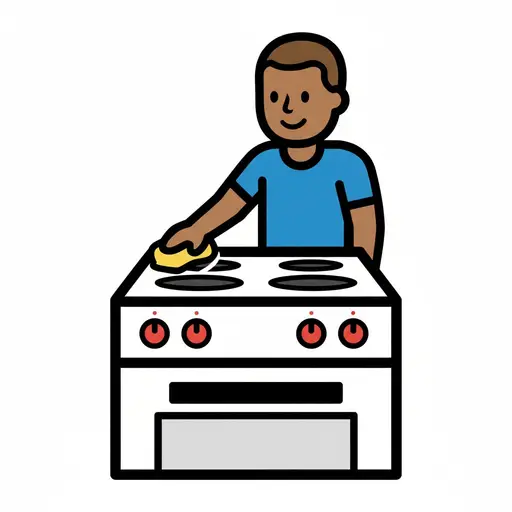
Wipe stove
A boy wiping a stove with a yellow sponge.
Take the visual supports with you
In Routined you build schedules from these pictures, add timers and voice instructions, and your child follows the day on their own.


* 14-day free trial, then $2.39 a month or $20.99 a year (US pricing). Cancel anytime.