Audiobook time
Listening with no screen or pictures to rest the eyes on asks the body to be still while the ears do the work. For a child who wants to move, that is an odd combination. The images below show what a listening session can look like.
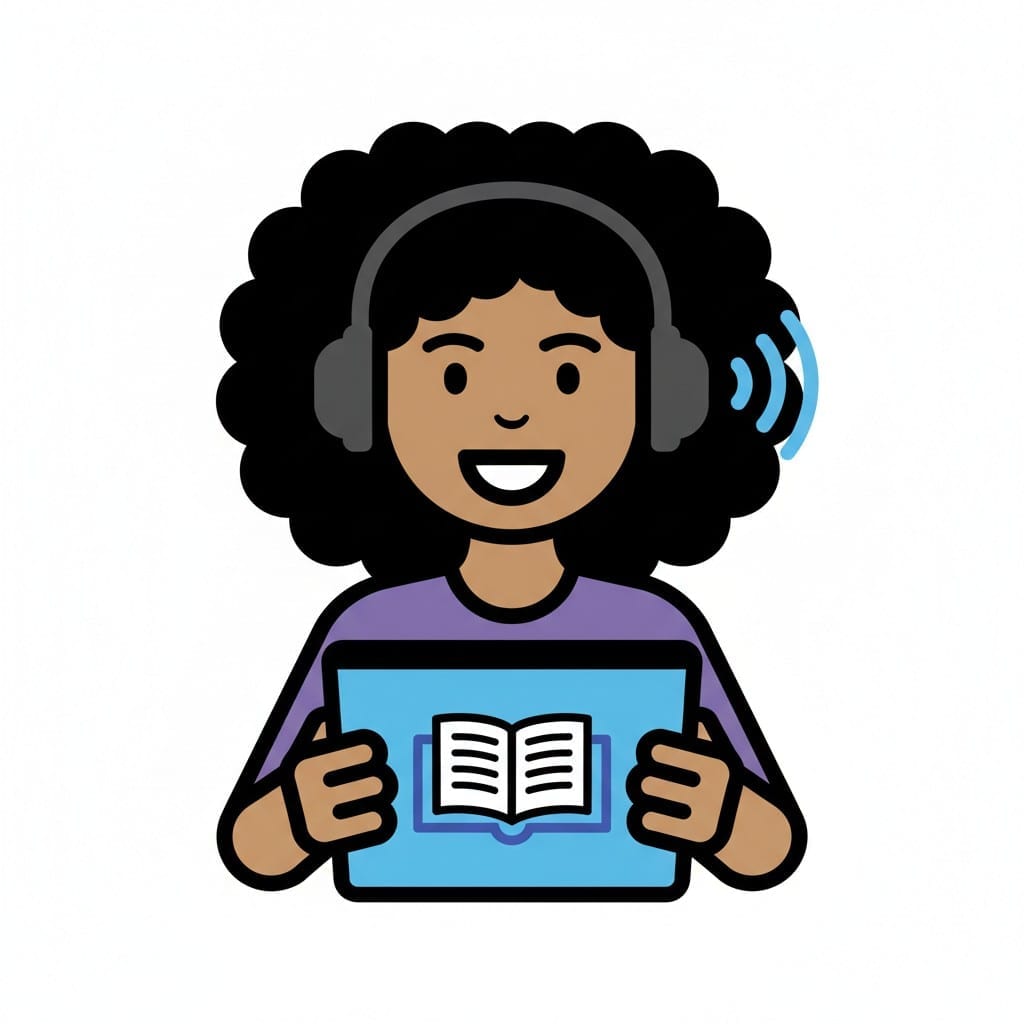 ♀
♀Listening to an audiobook
A girl with headphones holds a tablet showing an open book while sound waves play.
 ♀
♀Listening to an audiobook
A girl with headphones holds a tablet with a play symbol and a book, surrounded by sound waves.
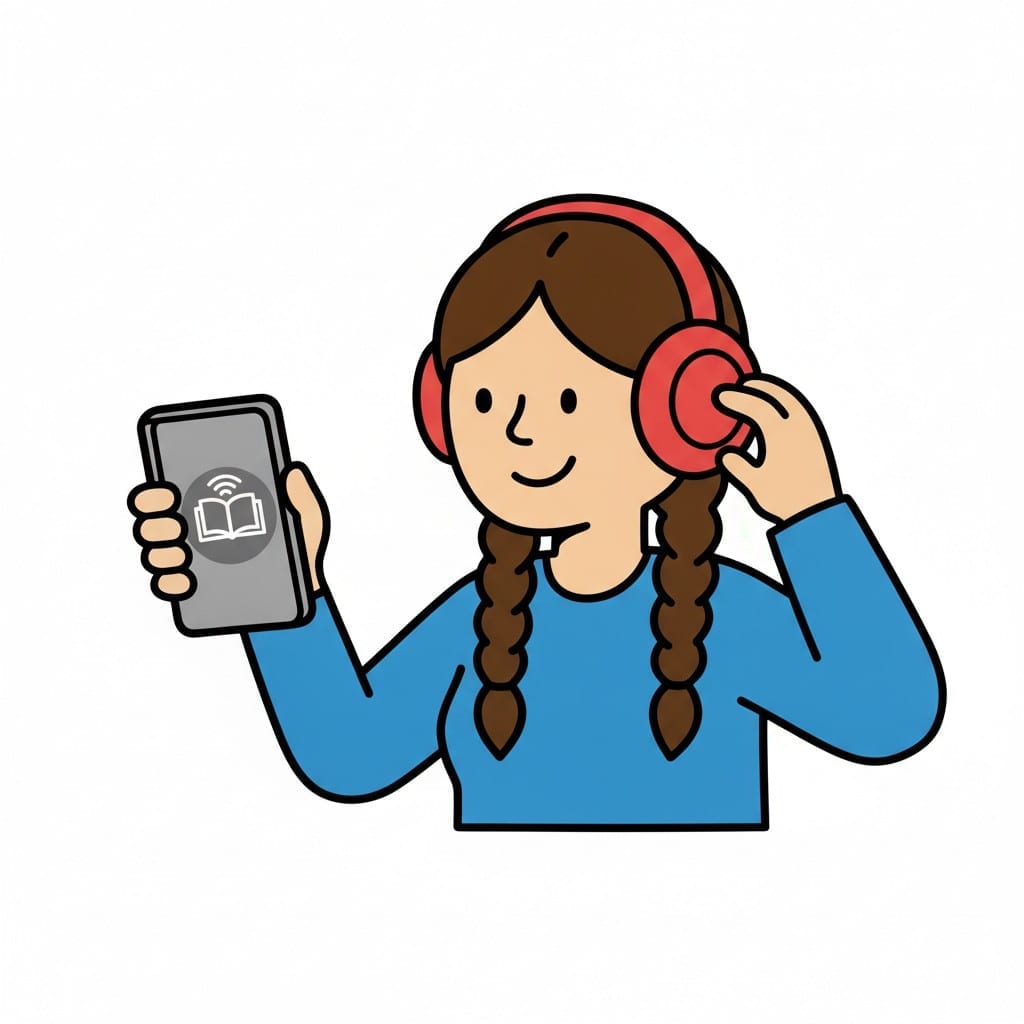 ♀
♀Girl listening to an audiobook with headphones
A smiling girl with braids wears red headphones and holds up a phone showing a book symbol on the screen.
About this visual support
An audiobook asks for a particular kind of attention. There is nothing to watch, nothing to tap, only a voice and a story rolling on at its own pace. At the same time the body needs to keep a low, even energy, and it is precisely that balance, awake but still, that gets tricky when a child would rather run around.
This is where a visual schedule helps, by giving the eyes and hands a frame to rest in. A picture of the headphones, one of a blanket or a soft spot, and one of what comes afterward give the moment a beginning, middle, and end. The child does not have to wonder how long or how much, because the shape is visible before the listening even starts.
A tip suited to listening: set out something quiet to do with the hands meanwhile, such as drawing or holding a soft toy, and show it as its own picture beside the audiobook. The need to move then gets an outlet without breaking the story. To tie the listening time to a calm part of the day, you can gather the pictures in the Routined app.
Use this image in a schedule
Build your own visual schedule with this image and download it as a print-ready PDF. Completely free.
More similar visual supports
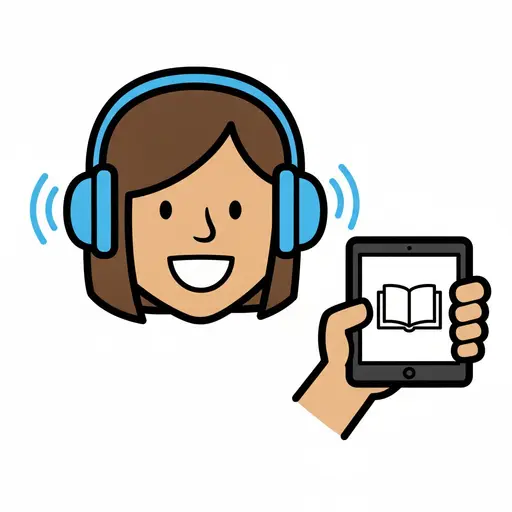
Listen to an audiobook
A girl wearing headphones smiles and holds a tablet showing a book.
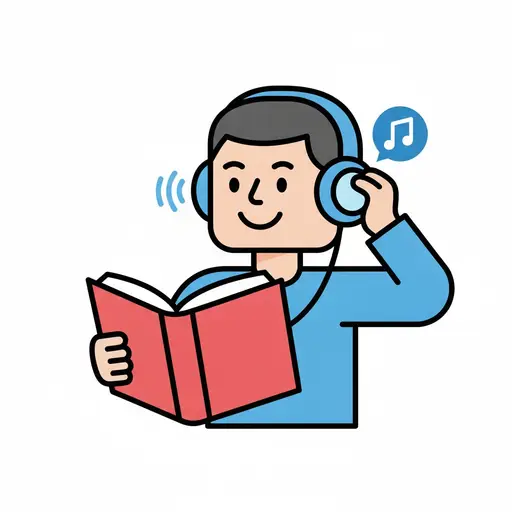
Read a book and listen to a story
A boy wearing blue headphones holds an open book and listens to a story at the s...
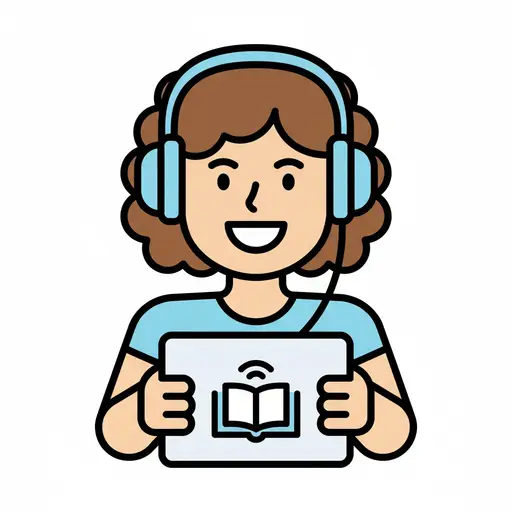
Listen to a book
A smiling child wearing headphones holds a tablet showing a book and a sound sym...
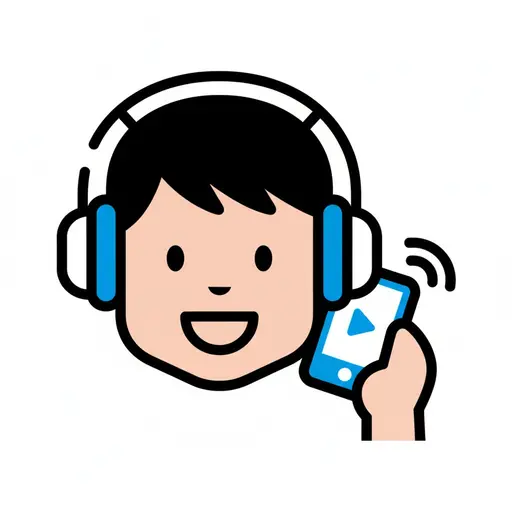
Listen to podcast
A boy listening to a podcast with headphones and a smartphone.

Movie time
An illustration showing a movie projector, a film clapboard with a clock, a scre...

Listen to audiobook
An open book with white pages and a blue cover, framed by grey headphones and wi...
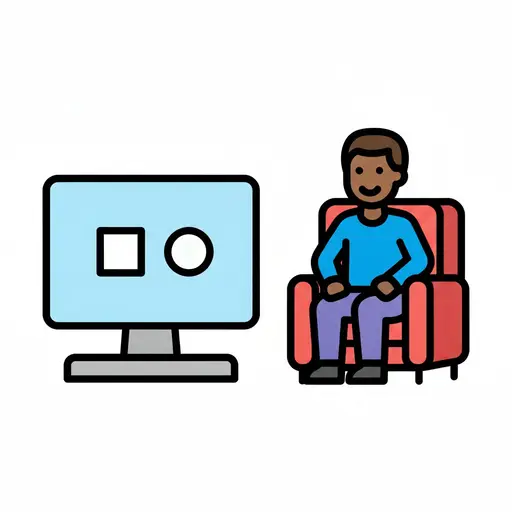
Watch television
A child sits in an armchair watching TV.
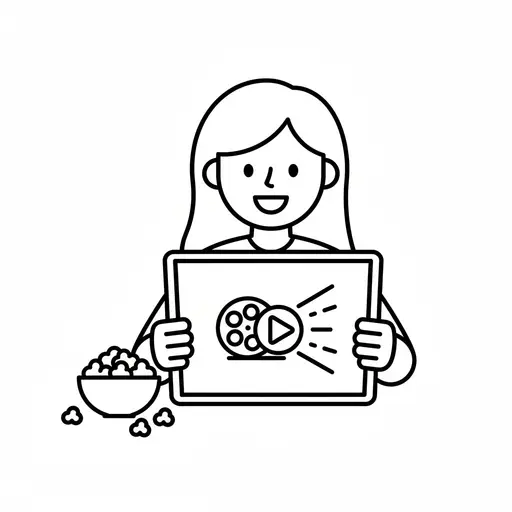
Watch movie
A simple outline drawing of a girl holding a tablet with a film reel and play bu...
This visual support in other languages
Take the visual supports with you
In Routined you build schedules from these pictures, add timers and voice instructions, and your child follows the day on their own.


* 14-day free trial, then $2.39 a month or $20.99 a year (US pricing). Cancel anytime.