Bike to practice
Getting to practice on time is its own little capsule – five minutes either way decide whether the arrival feels calm or rushed. And the traffic still has to be read. The visual support below helps the child keep the two things apart: the clock and the attention.
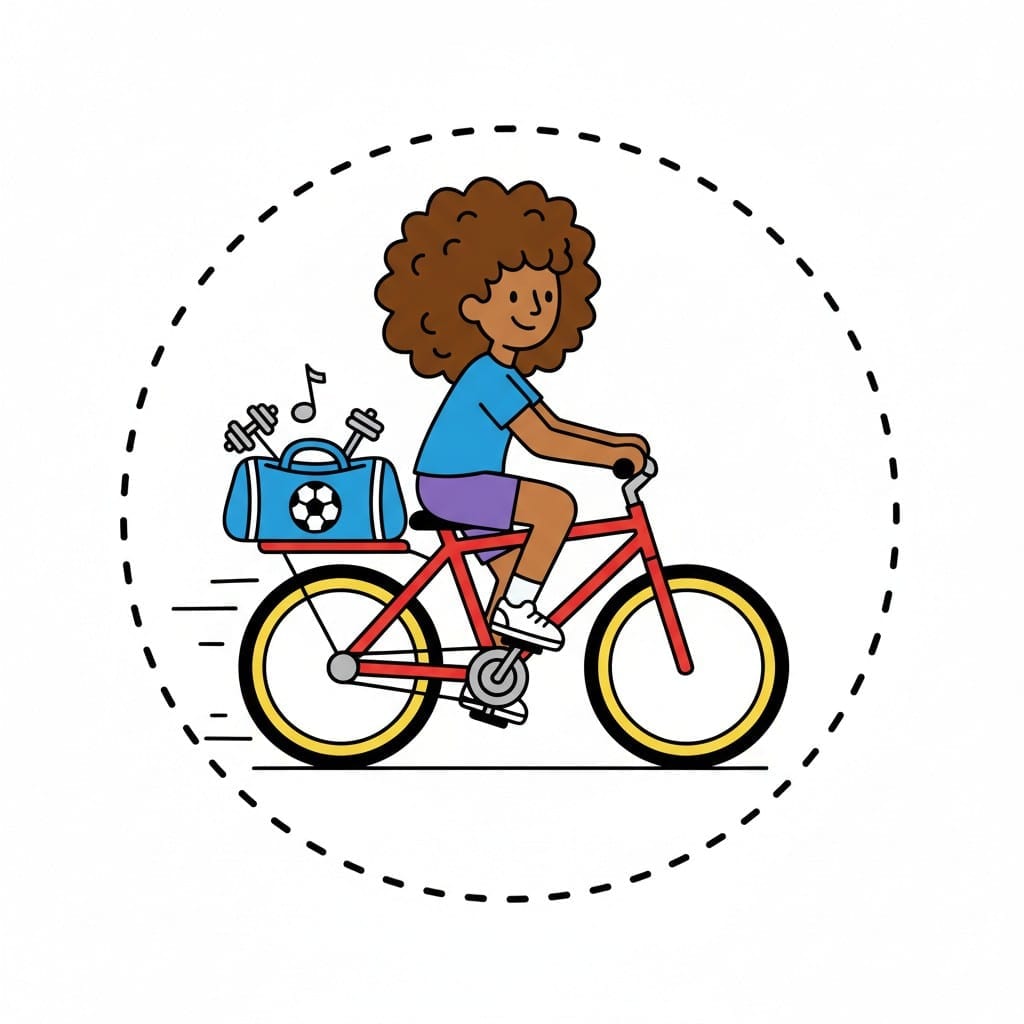 ♀
♀Bike to practice
A girl riding a bike with a sports bag on the back.
About this visual support
The stretch between the front door and the training pitch isn't just physical – it's double-loaded. The clock has a sharp deadline, while the traffic demands that the head stay in the present. When both layers speak at the same time, it's easy either to lose the time in a distraction or to miss a car while chasing the minutes. It's a cognitive exercise adults often underestimate.
Laid out as a row, the visual support turns the time plan into a separate layer next to the cycling itself. The pictogram for unlocking the bike, helmet on, out on the road, arriving at the pitch, parking the bike – each image becomes a checkpoint where the child can check the clock without doing it in the middle of a junction.
One concrete tip: include a buffer image – a pause spot near the pitch where the child can stop for a moment, drink water and gather themselves before meeting the team. That turns the last minutes from a chase into a soft arrival, and the session starts in a different key.
To link the ride to the training time itself, you can try Routined, where the picture row can be paired with a light countdown. The app is free to test for 14 days.
Use this image in a schedule
Build your own visual schedule with this image and download it as a print-ready PDF. Completely free.
More similar visual supports
Go to practice
A child with a football and a bag walks across a pitch towards a goal.
Bike shorts
A pair of black cycling shorts with grey details.
Floorball practice
A boy in red shorts dribbles a floorball with his stick inside a round frame.
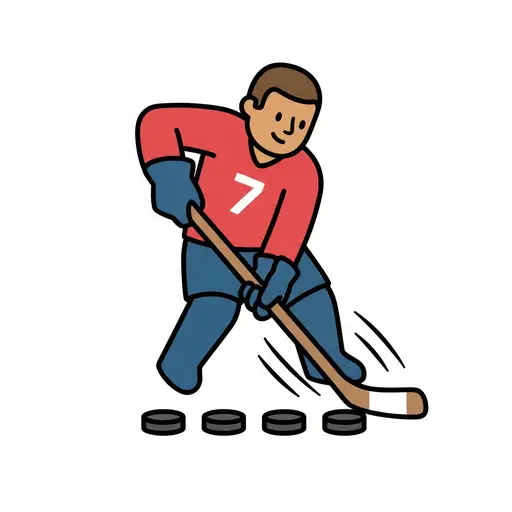
Shoot pucks
An illustration of a person playing ice hockey, holding a stick and shooting puc...
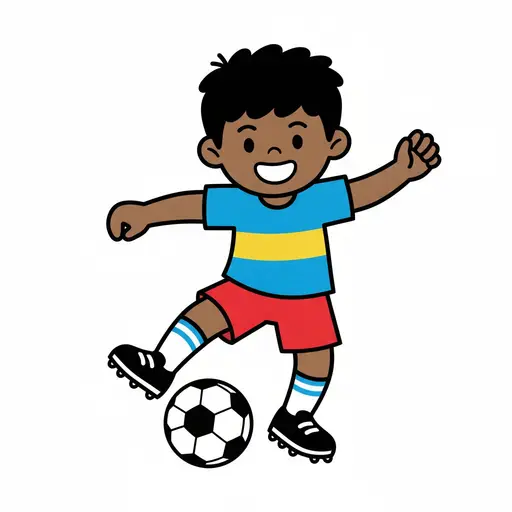
Soccer practice
A happy boy in football kit kicks the ball.
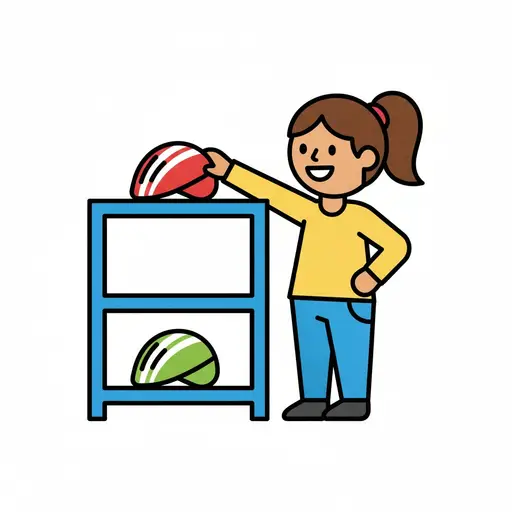
Put on helmet
A girl puts a bike helmet on a shelf.
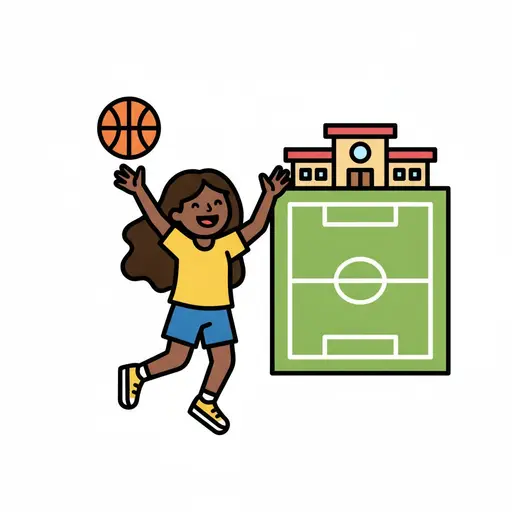
School sport
A girl jumps with a ball next to a sports field and the school.
Floorball
A hand holds a blue floorball stick against a yellow ball with holes.
This visual support in other languages
Take the visual supports with you
In Routined you build schedules from these pictures, add timers and voice instructions, and your child follows the day on their own.


* 14-day free trial, then $2.39 a month or $20.99 a year (US pricing). Cancel anytime.