Books
Twenty spines on a shelf look like freedom and feel like resistance. Each spine pulls at the eye, none wins, and the child walks away without opening anything. The visual support below shows how to shrink the choice down to something workable.
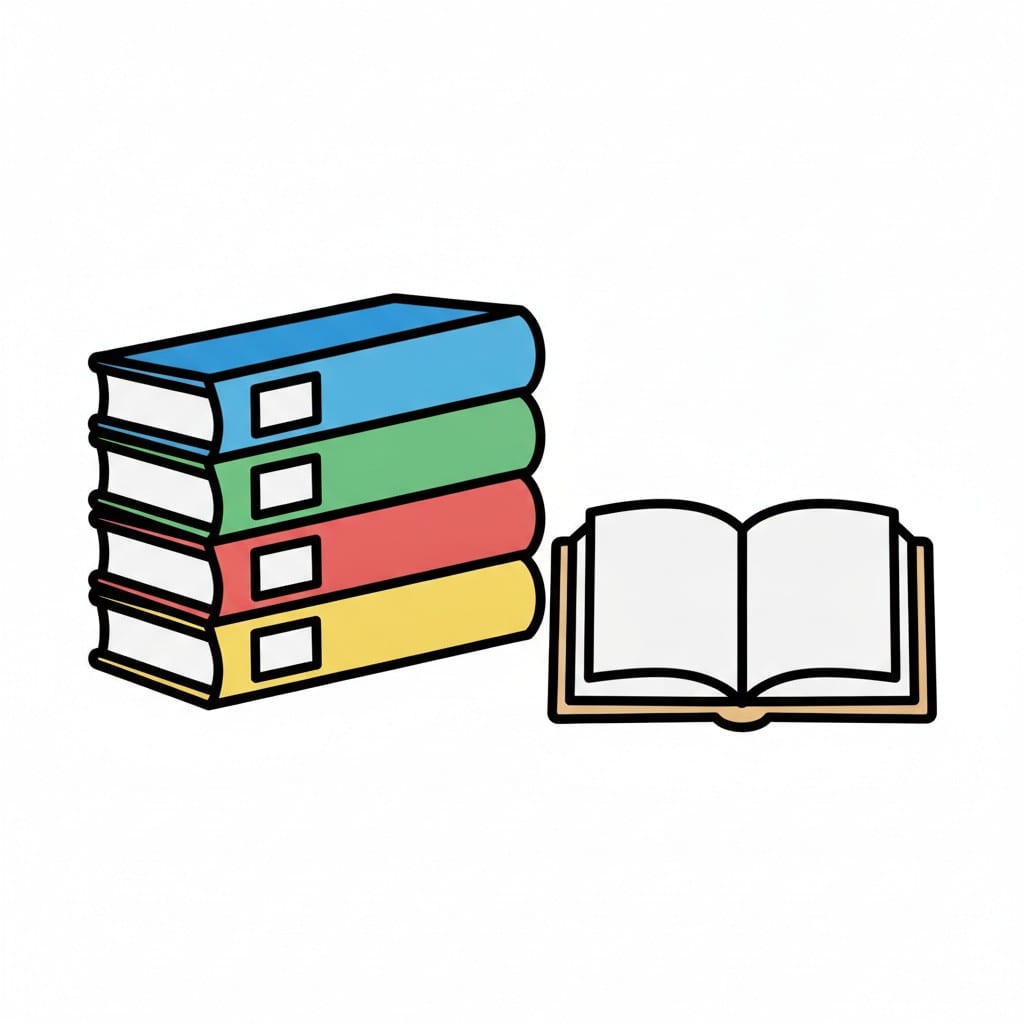
Stack of books and open book
A pile of four colourful books next to an open book.
Three books
A small stack of three books in green, blue and red.

Hardcover books
Three hardcover books in a pile with an open book in front.
Books
A stack of three books in red, blue, and yellow.
About this visual support
Standing in front of a bookshelf to choose sounds simple, but for many children it is the exact point where reading fizzles out. The brain cannot rank twenty options for free, so it takes the cheapest path: not choosing at all. Freedom turns into friction.
Visual support helps by moving the choice further up the chain. First a category — picture book, fact book, comic — then two covers to choose between, then the actual reading. Two good options always win over twenty equally good ones. The sequence shows the child that choosing is part of the routine, not a separate project to solve in front of the shelf.
One concrete tip: rotate two books at a time into a visible spot such as a small bookend on the bedside table, and leave the rest on the shelf. When one of the two is finished, swap it out. The choice is then always between two real candidates rather than the whole collection. In Routined you can place the book pick as the first step in an evening routine, so it is done before tiredness makes it even harder.
Use this image in a schedule
Build your own visual schedule with this image and download it as a print-ready PDF. Completely free.

More similar visual supports

Book
An open book with a blue cover and white pages filled with lines of text.
Story Reading
An adult in blue sits on the floor reading a picture book with a castle to a boy...
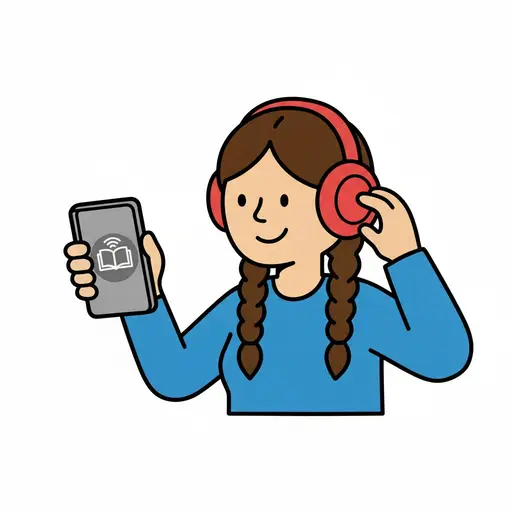
Audiobook time
A smiling girl with braids wears red headphones and holds up a phone showing a b...
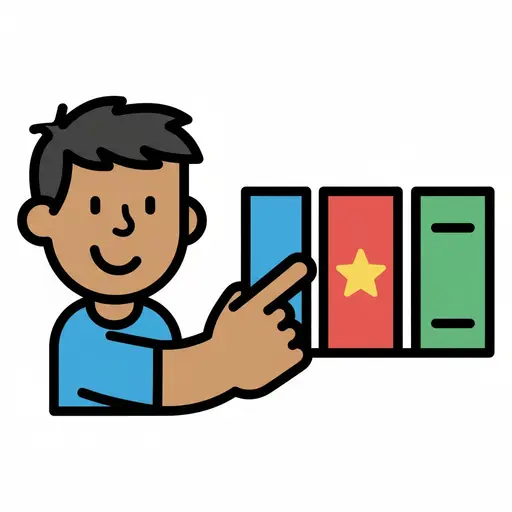
Choose book
A happy boy points to a book in a row of books.
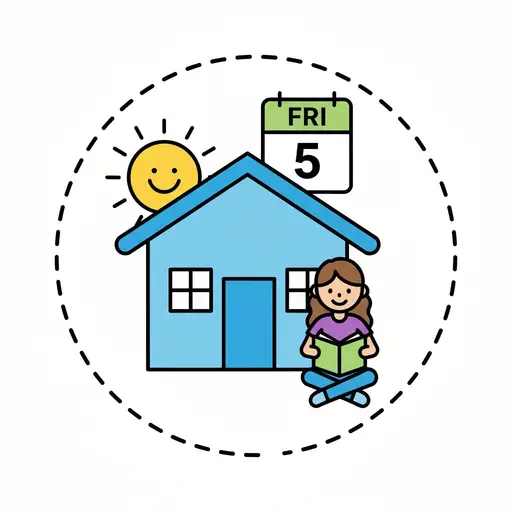
Home Day Friday
A girl sits reading a book outside a house, with a sun and a calendar showing Fr...
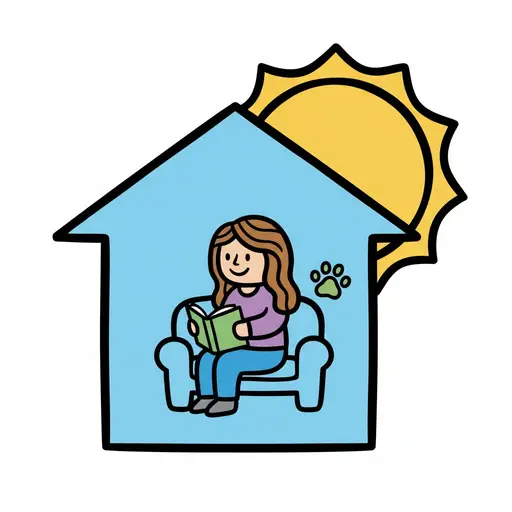
Home today
A girl sits in an armchair reading a book at home while the sun shines
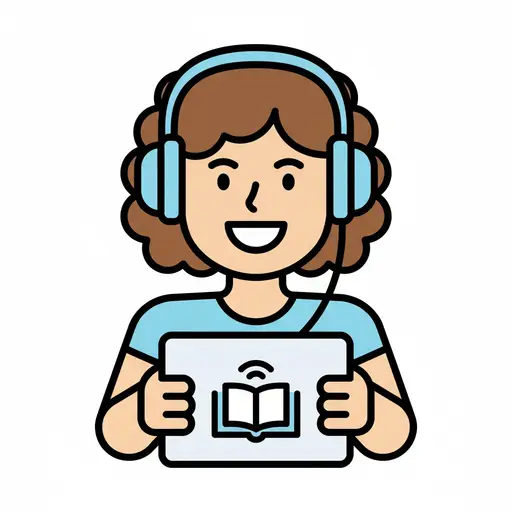
Listen to a book
A smiling child wearing headphones holds a tablet showing a book and a sound sym...
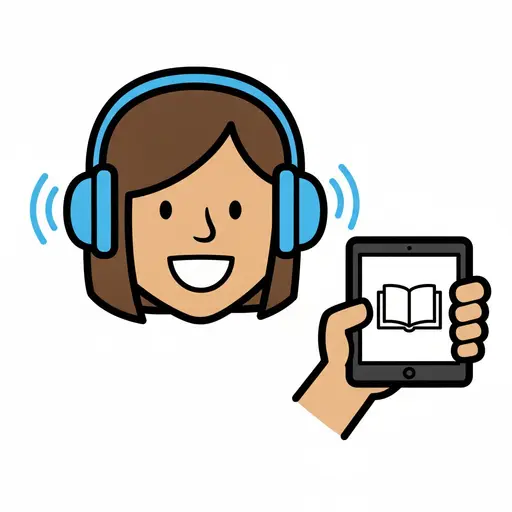
Listen to an audiobook
A girl wearing headphones smiles and holds a tablet showing a book.
Take the visual supports with you
In Routined you build schedules from these pictures, add timers and voice instructions, and your child follows the day on their own.


* 14-day free trial, then $2.39 a month or $20.99 a year (US pricing). Cancel anytime.