Build a fort
Children rarely build from a plan. The fort already exists in their head with a passage, an entrance and a roof, and when reality refuses to hold together, both the build and the patience collapse at once. The steps below split the build into small wins.
 ♀
♀Build a fort
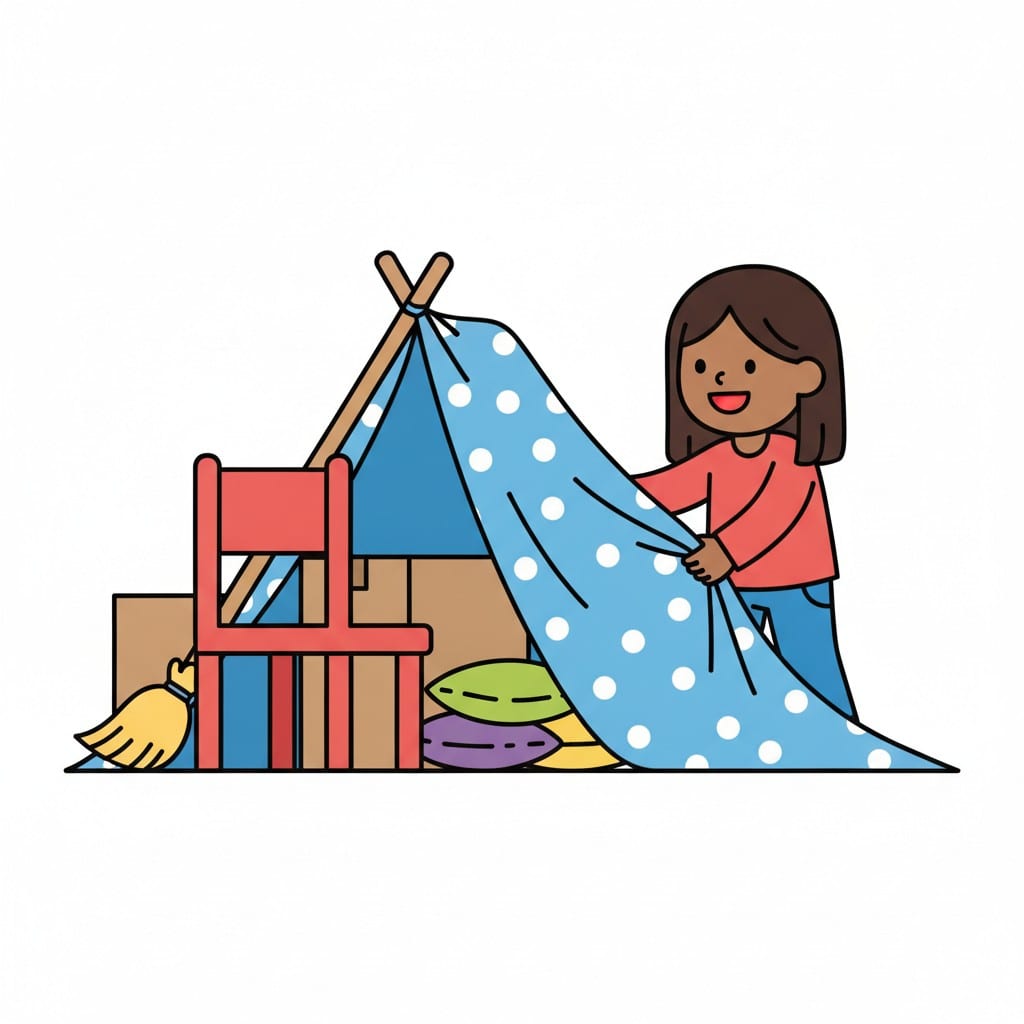
A girl drapes a spotted blanket over a chair and boxes to build a fort.
 ♀
♀Build a fort
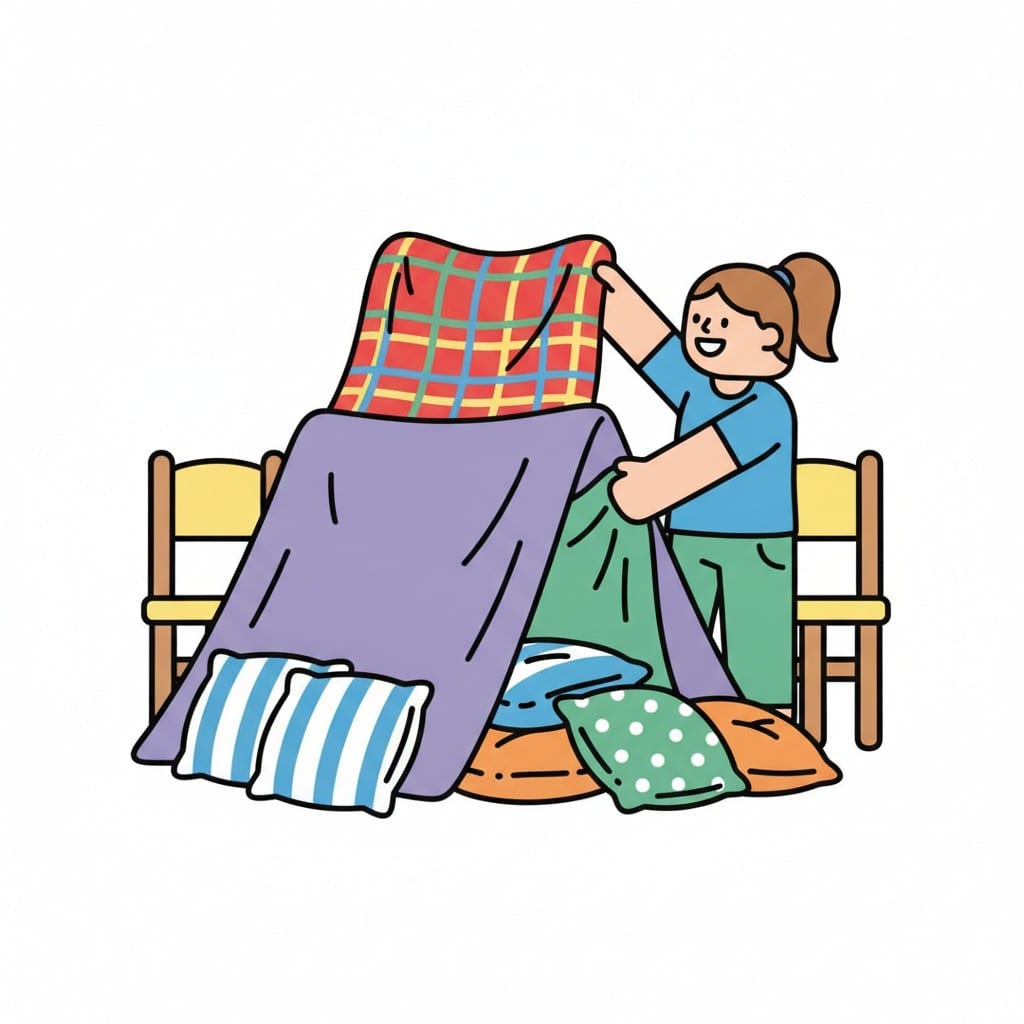
A girl builds a fort from a blanket over two chairs with cushions inside.
 ♀
♀Build a treehouse
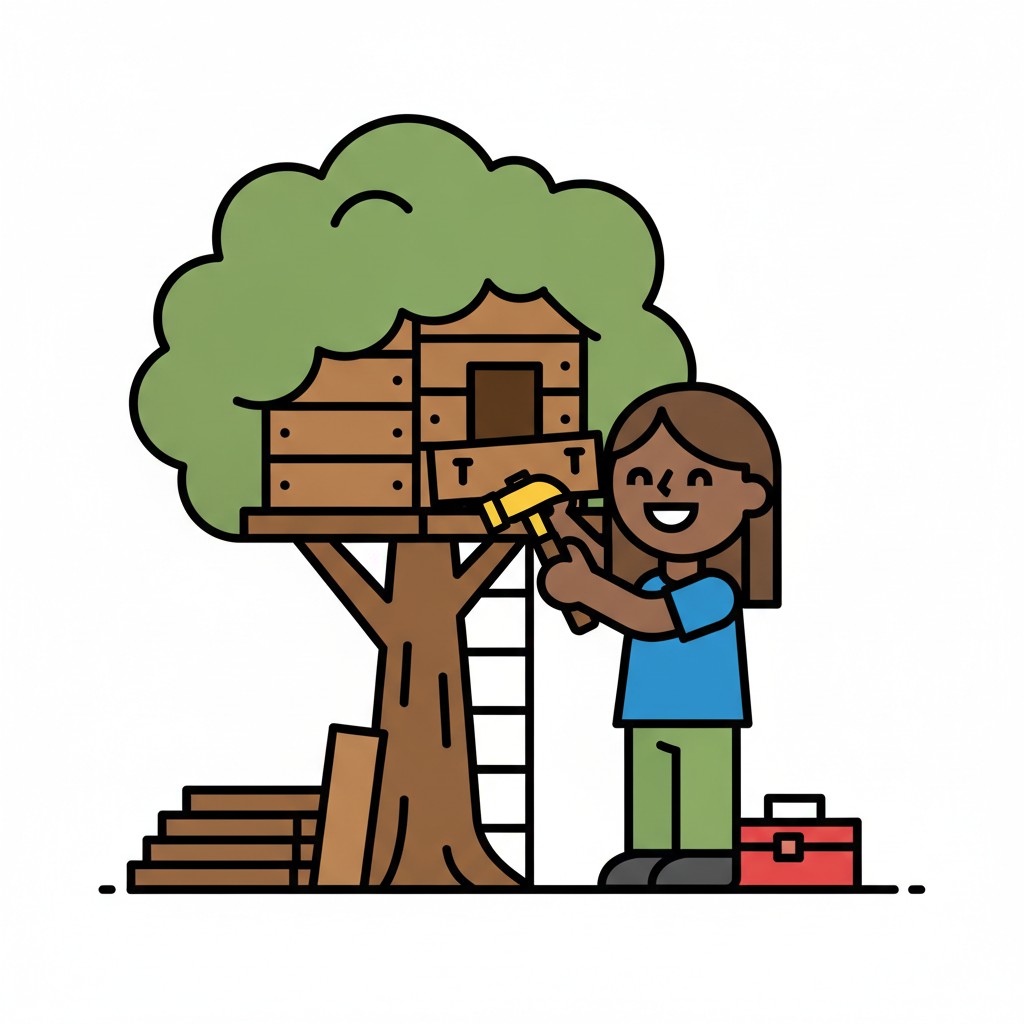
A child builds a treehouse in a tree with a toolbox on the ground.
About this visual support
The distance between idea and material is wide when you are six. In the head there is a whole fort with rooms, while the hands hold two blankets, three kitchen chairs and a sofa that will not move. The frustration rarely comes from the building being hard; it comes from the result not matching the picture, and that feeling is difficult to sit with.
Visual support shifts the focus from result to order. Four pictures can show find a spot, set up the chairs, lay the blanket over, crawl inside. Each step has a visible end, and once a part is finished it is possible to stop there without the whole project counting as a failure. It also lets an adult help at one specific point instead of taking over the entire build.
A concrete tip is to make a clothes peg a step of its own. Pegs hold blankets in place far better than hope does, and they turn the build from a balancing problem into construction. In Routined play and tidying up can sit as two steps in a row, and the app can be tried for fourteen days at no cost.
Use this image in a schedule
Build your own visual schedule with this image and download it as a print-ready PDF. Completely free.
More similar visual supports

Play stories
A person reads a book and plays with a yellow dinosaur and a red robot.
Creative Play
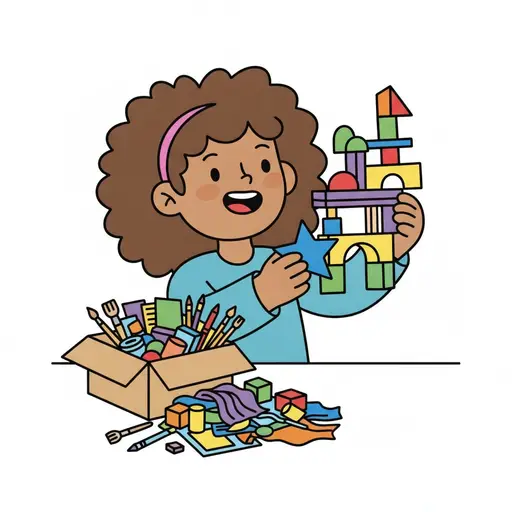
A girl builds a tower with colorful blocks next to a box of craft supplies.

Fly
A boy with wings flies happily among the clouds.
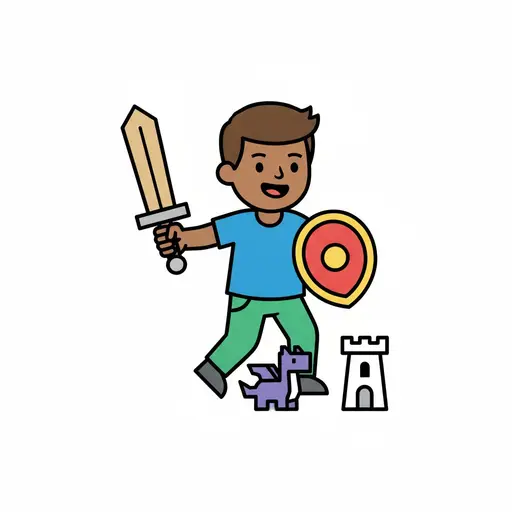
Role play
A child runs with a wooden sword and a shield, with a toy dragon and a tower bes...

Pirate Park
A playground shaped like a pirate ship with a slide, swings and sandbox surround...
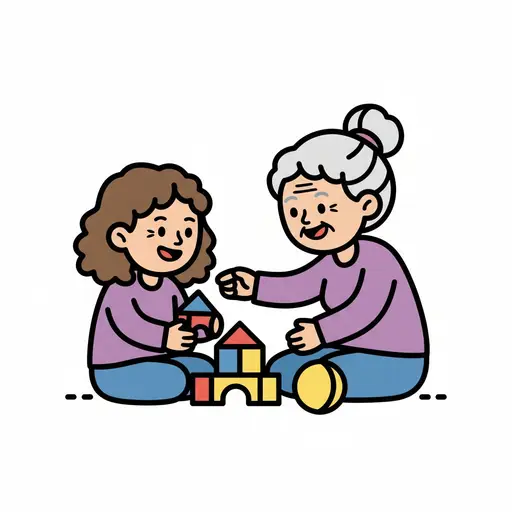
Play with grandma
A young person and an older person sitting and playing with colorful building bl...
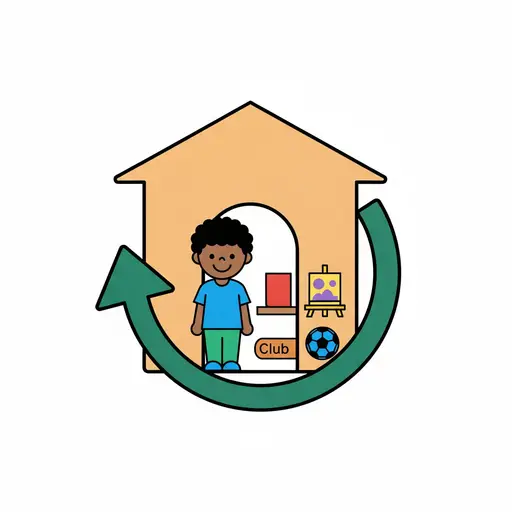
After school club
A boy stands in a club house with a circular arrow around it.
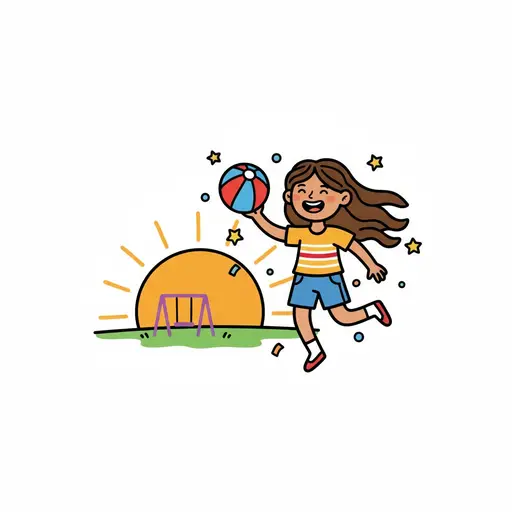
Afternoon playtime
A happy girl runs and plays with a ball outdoors in front of a playground.
This visual support in other languages
Take the visual supports with you
In Routined you build schedules from these pictures, add timers and voice instructions, and your child follows the day on their own.


* 14-day free trial, then $2.39 a month or $20.99 a year (US pricing). Cancel anytime.