Call a parent
Three seconds of silence on the line feel like forever when you cannot see the listener's face and have no idea if it is your turn to speak. The visual support below structures the call to a parent so the receiver can be picked up without knowing exactly what to say.
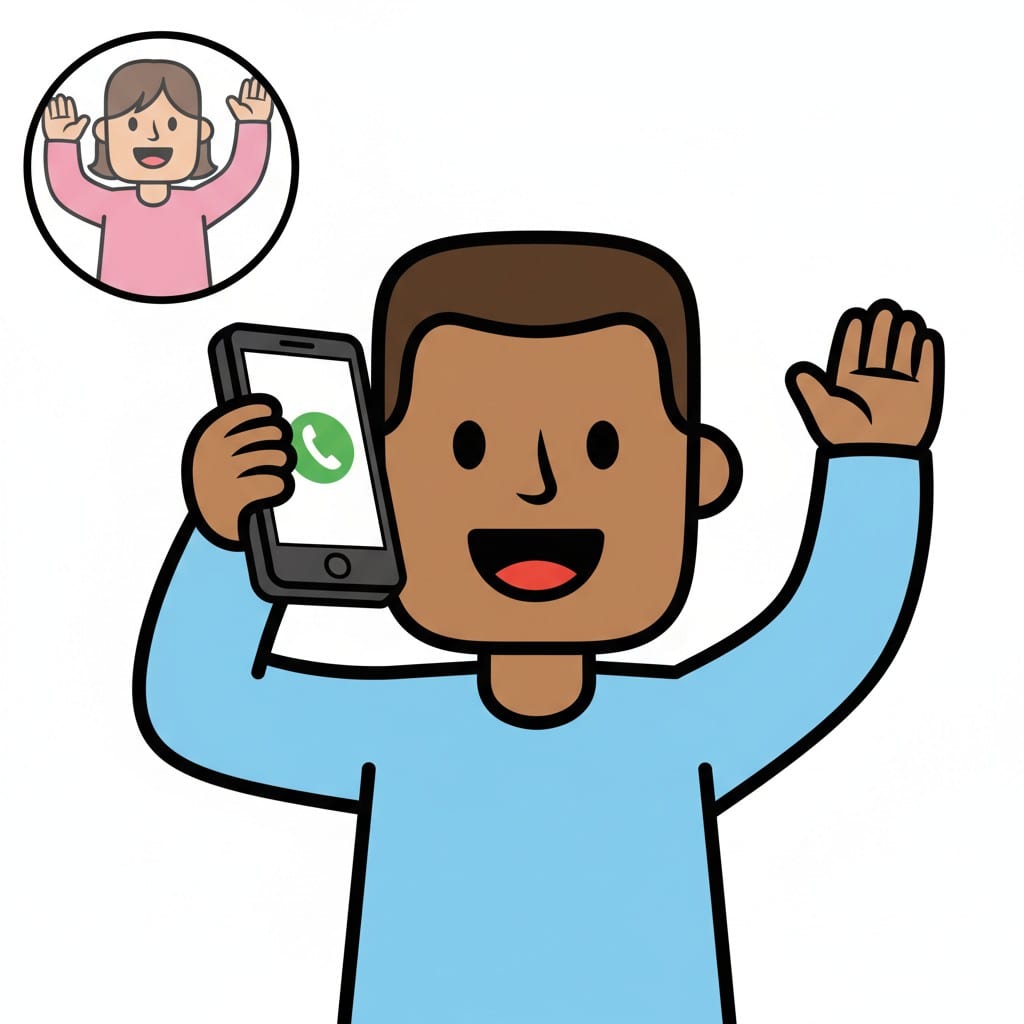 ♂
♂Man calls parent
A man in a light blue shirt holds a phone to his ear and waves, with an image of a waving parent in a circle in the upper left corner.
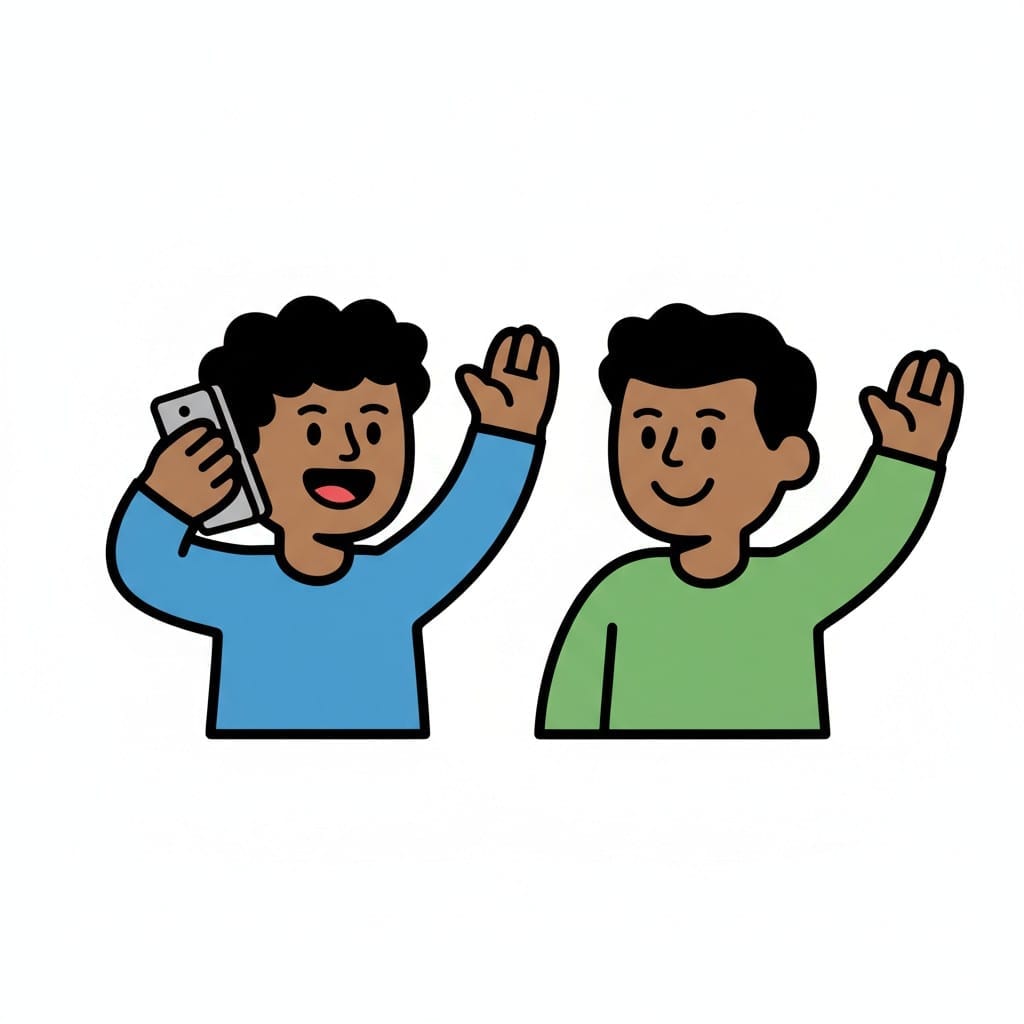 ♂
♂Man talks on phone
A man in a light blue shirt talks on a phone while another man in a green shirt waves beside him.
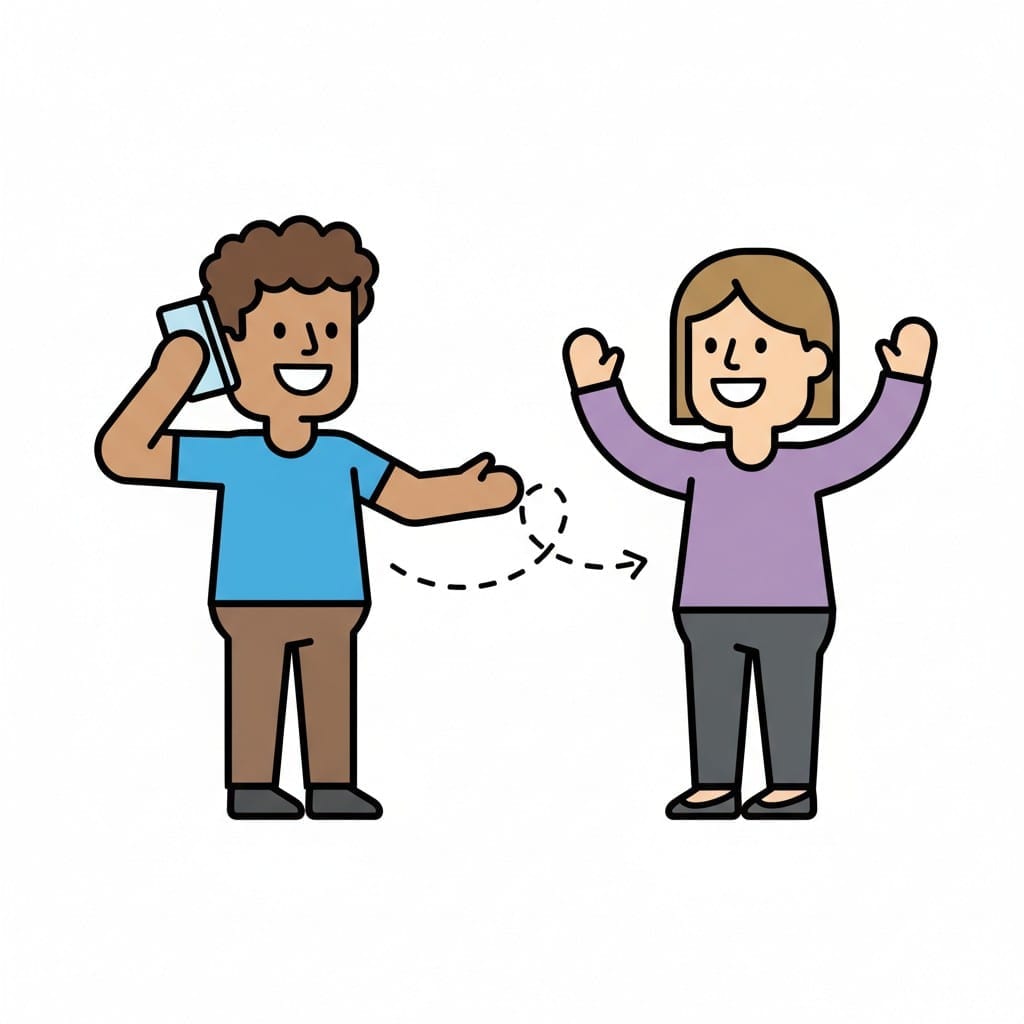 ♂
♂Man calls woman
A man in a light blue shirt talks on a phone and gestures towards a waving woman in a purple shirt beside him, with a dashed line indicating communication.
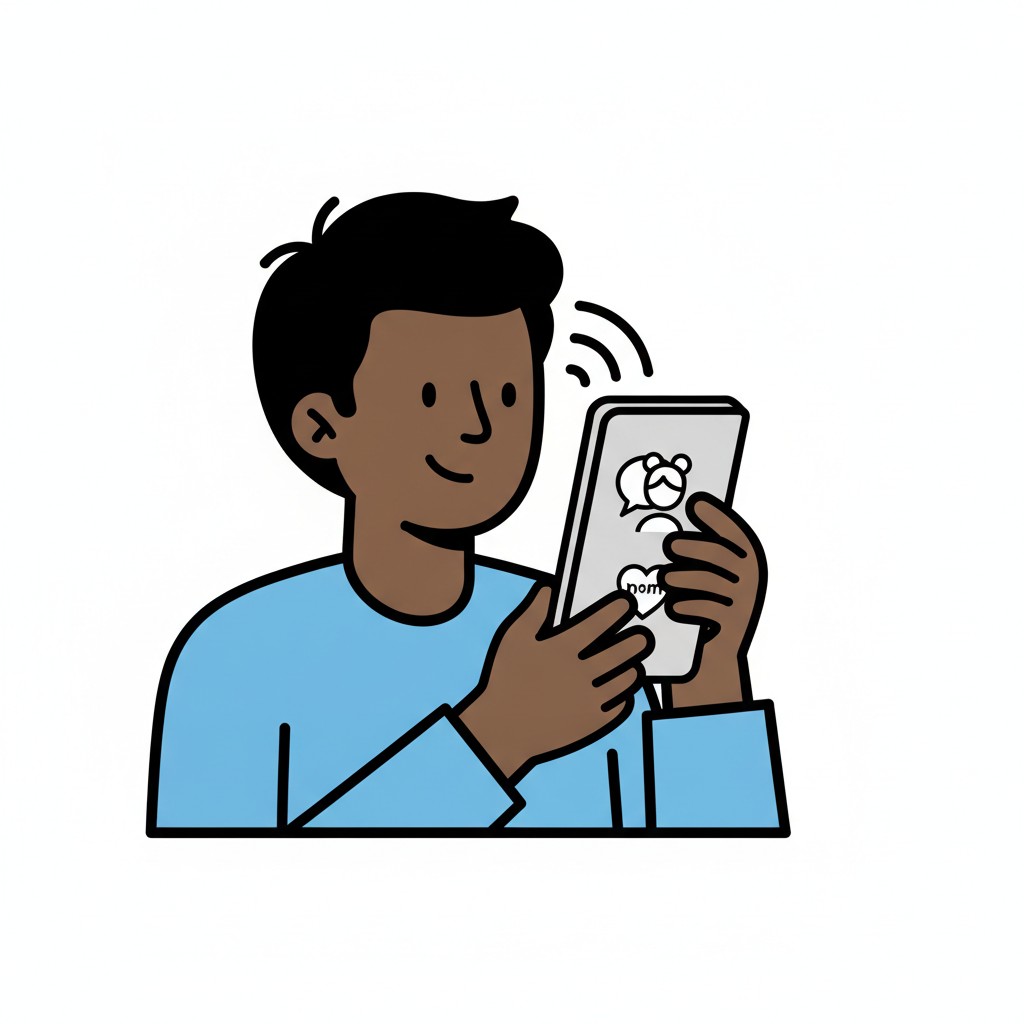 ⚲
⚲Calling mom
A person makes a call on their phone.
About this visual support
Phone calls strip away nearly all the information that usually guides a conversation. No facial expressions, no body posture, no sense of whether the other person is nodding along or about to hang up. For a child who already finds social interaction a lot to solve in real time, a regular call to mum or dad can feel oversized, especially when it is the parent who lives at another address and the call is the only contact that week.
A card layout of the call gives the child a skeleton: a greeting, one concrete thing to share, one question to ask, a signal that the call is nearly over, and an ending. The card wall by the phone works like the rails on a bowling lane, something to lean against when the words run out. It is not a script, it is a track.
One concrete tip: include a card that pictures one thing from the day, a drawing, a school lunch, a stone from the playground. The first topic becomes a real object instead of the overwhelming how was your day that opens an empty field. For a child on the autism spectrum, that specific starting point can decide whether the call happens at all. In the Routined app the call skeleton can live as a recurring routine on the phone screen, ready exactly when the receiver is about to be lifted.
Use this image in a schedule
Build your own visual schedule with this image and download it as a print-ready PDF. Completely free.

More similar visual supports
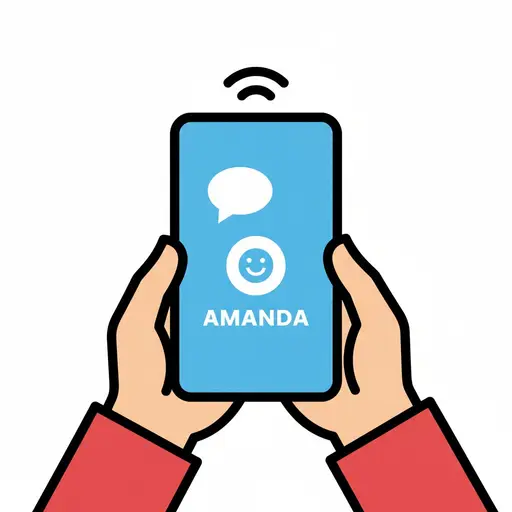
Call parent
Two hands hold a phone showing a name in the contacts with a speech bubble.
Dad
An illustration of a dad and son standing together. The dad has his arm around t...
Pick up kid
A man in a blue shirt bends down and lifts a small child in a yellow shirt. Both...
A parent picks up the child
An adult happily lifts a child up in their arms.
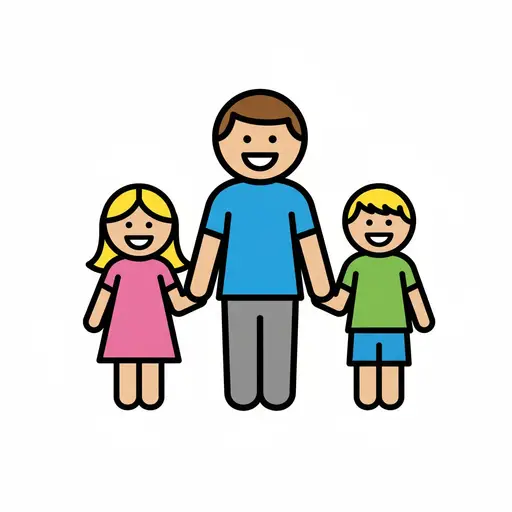
Dad and kids
A dad holds hands with his two children while everyone smiles.
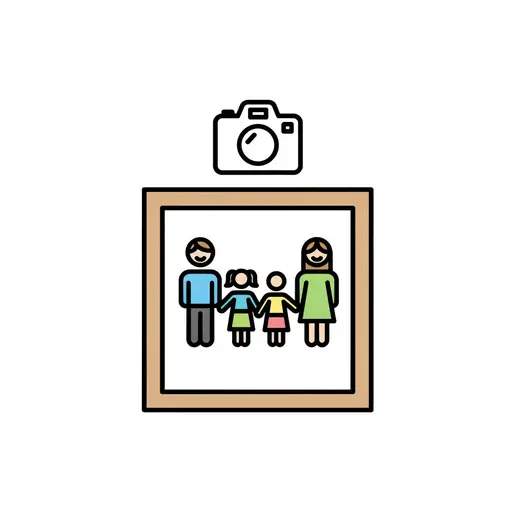
Family Photo
A camera above a framed picture of a family with two adults and two children.
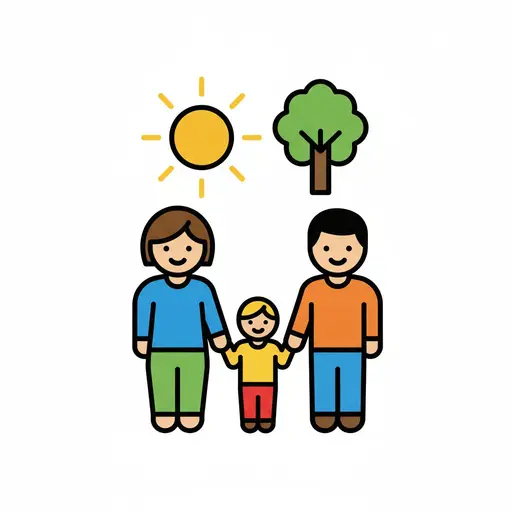
Family time
Two adults and a child hold hands under a sun and a tree.
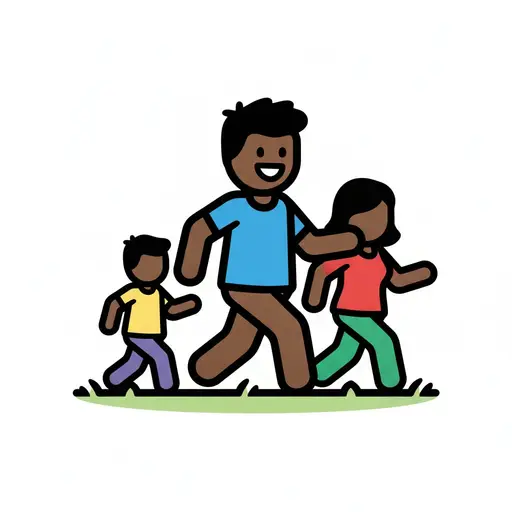
Family walk
An adult and two children walk together on the grass.
Take the visual supports with you
In Routined you build schedules from these pictures, add timers and voice instructions, and your child follows the day on their own.


* 14-day free trial, then $2.39 a month or $20.99 a year (US pricing). Cancel anytime.