Car ride
The question always lands at about the same point: how much longer? For the child a car ride is a closed cabin with no visible stations, and motion sickness shows up before it can be named. The pictures below break the route into parts you can see.
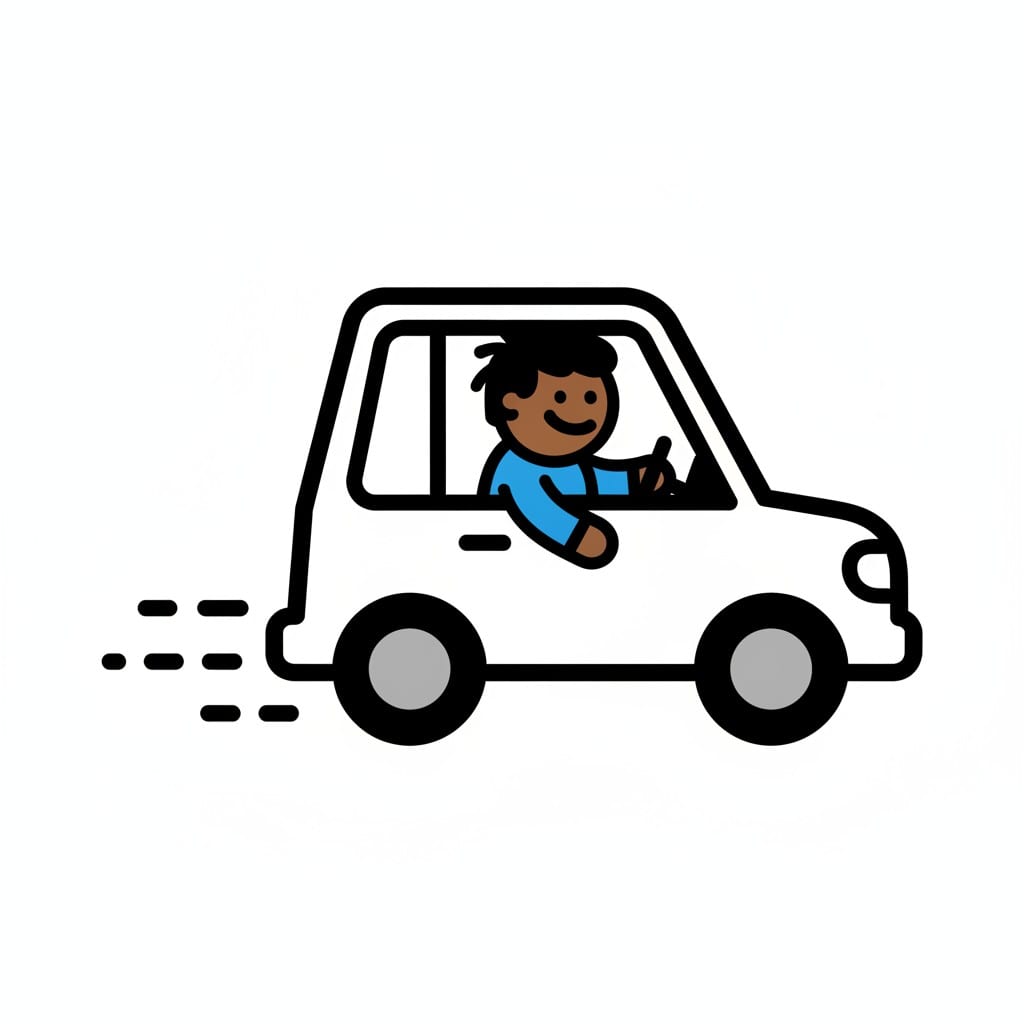 ♂
♂Boy riding in a white car
A smiling boy in a blue shirt sits inside a white car with his arm resting on the open window as the car moves along.
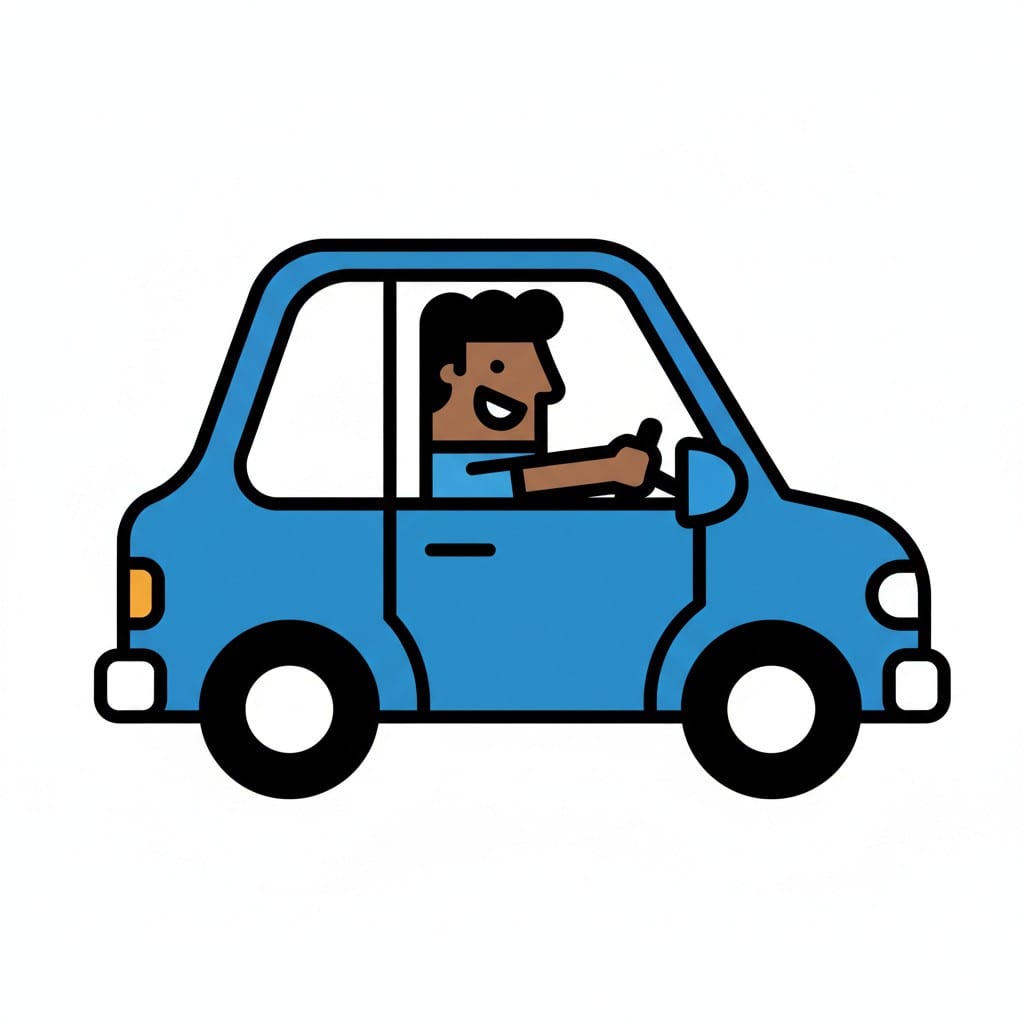 ♂
♂Boy at the wheel of a blue car
Seen from the side, a boy sits inside a blue car and holds on to the steering wheel.
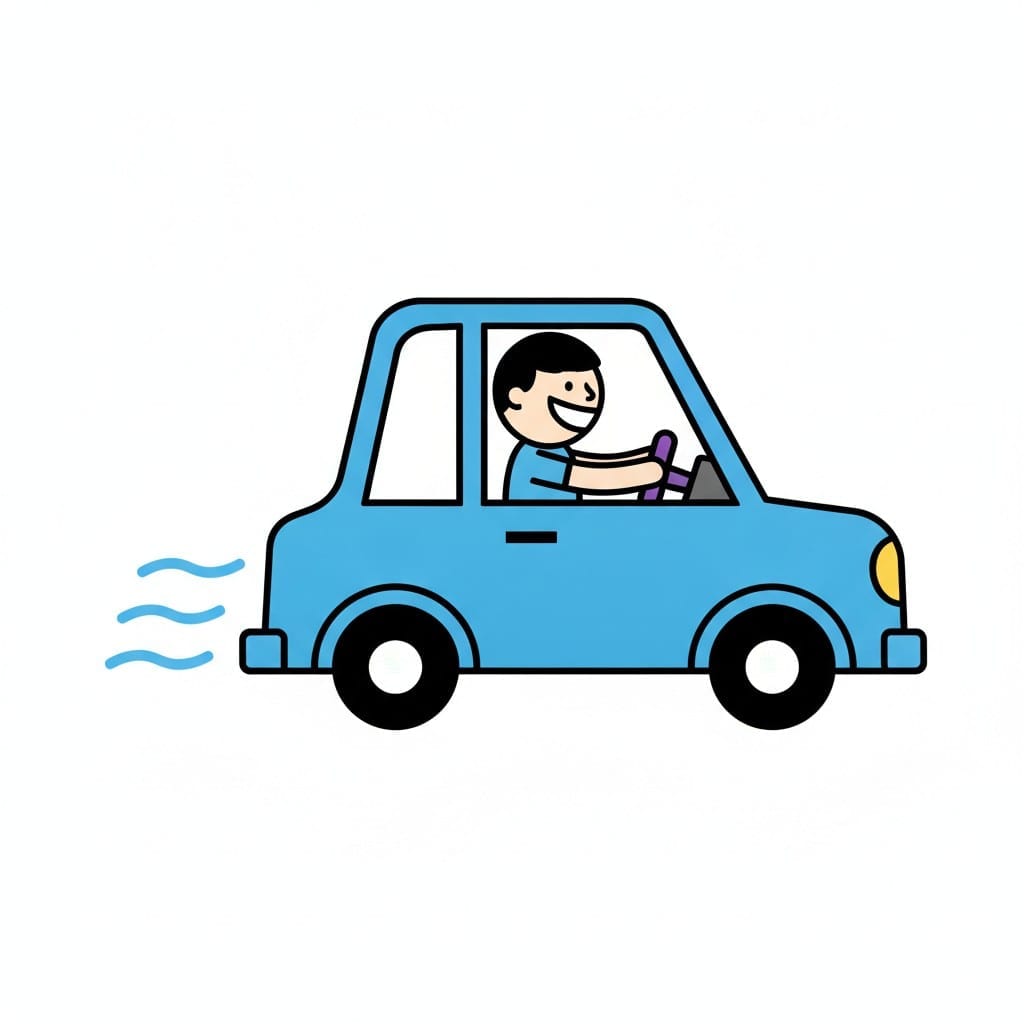 ♂
♂Boy driving a blue car
Small motion lines trail behind a blue car where a grinning boy grips the steering wheel.
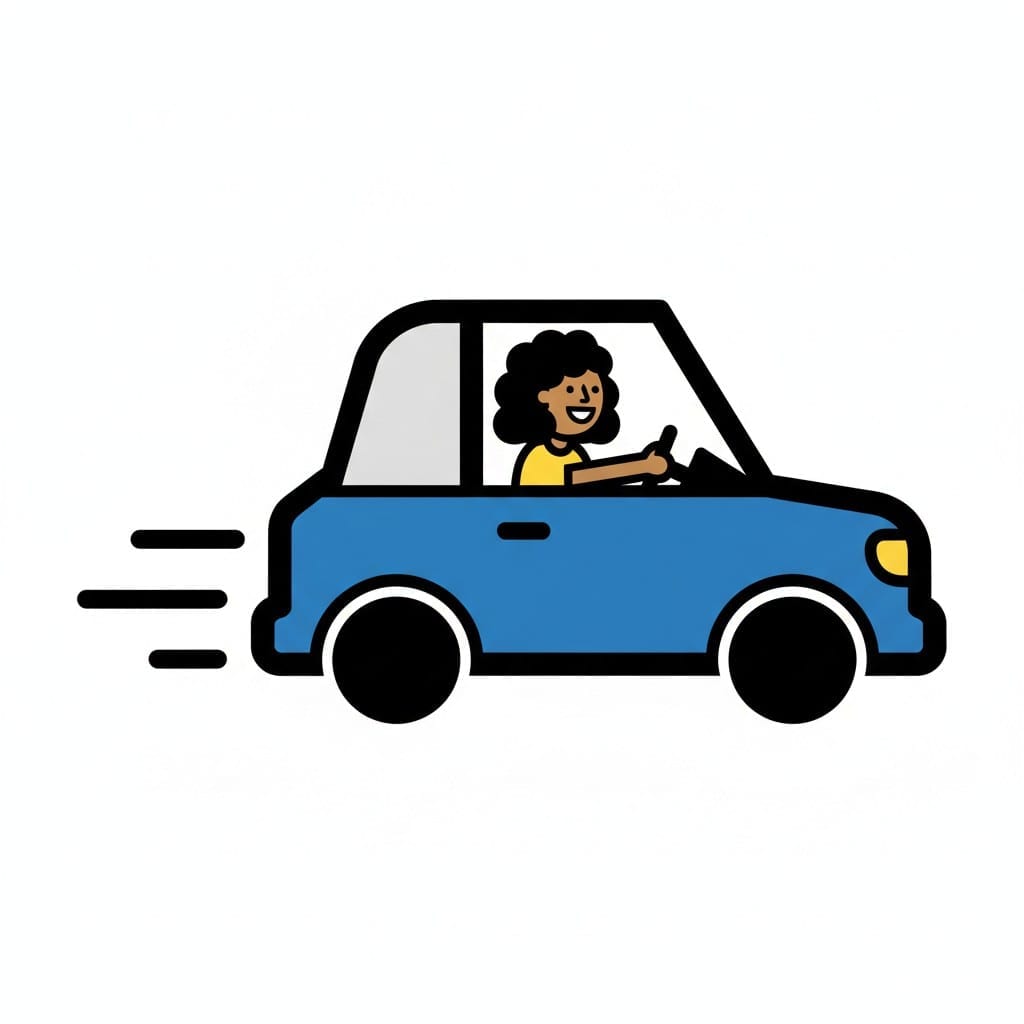 ♀
♀Girl driving car
A girl is sitting behind the wheel of a blue car, driving.
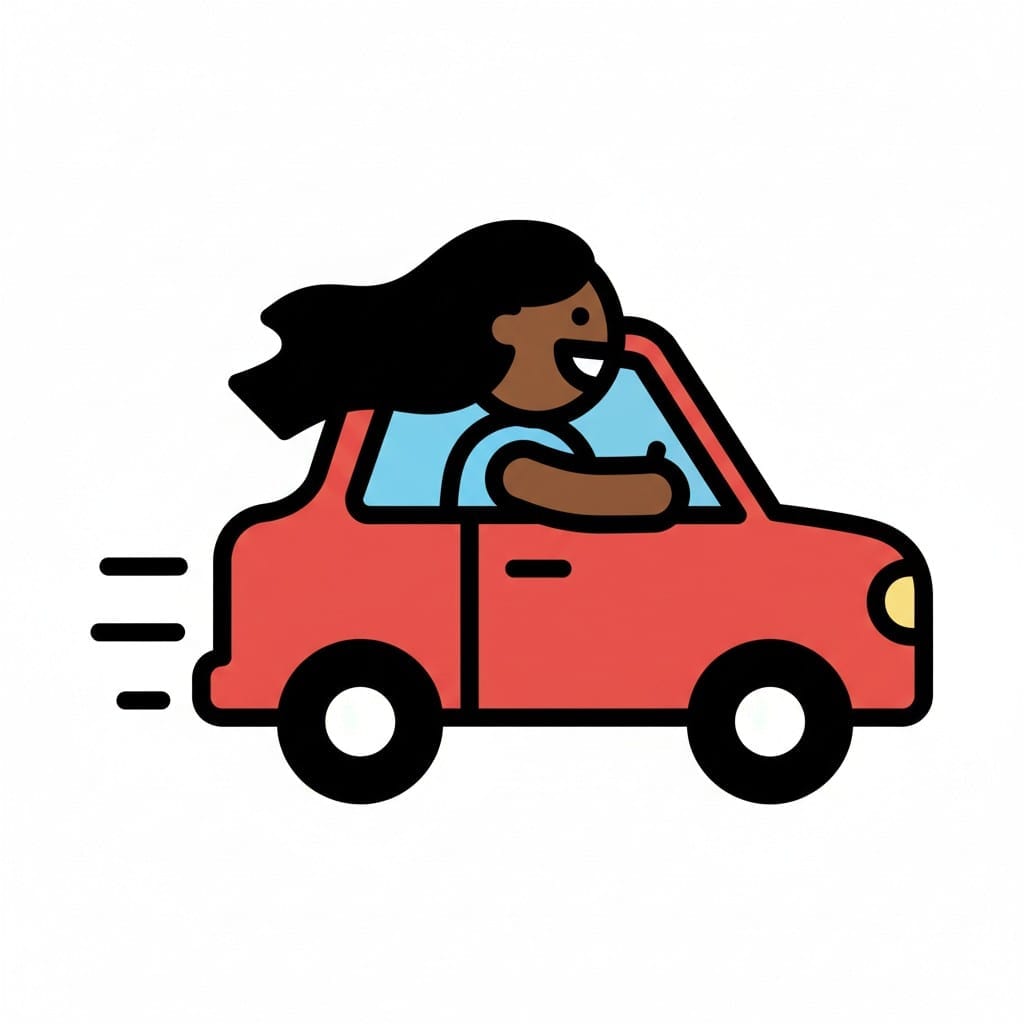 ♀
♀Girl driving car
A girl is sitting behind the wheel of a red car, driving.
About this visual support
The hard part of a car ride isn't the length – it is the invisibility. No station goes by, no train switches tracks, no clear marker tells you how much is left. The child is strapped in, looking at the same stretch of asphalt, and starts asking at about the fifteen-minute mark. Meanwhile motion sickness can build up quietly, often noticed only when it is already too late.
Visual support for the car ride gives the child something that actually moves forward. Lay the trip out as three or four pieces: home, halfway, last stretch, arrived. Tie the halfway image to something concrete – a petrol station you always pass, a bridge, a sign. Then the question about time gets answered before it is asked. For motion sickness, an image of water and one of the eyes looking at the horizon can be brought in early, before nausea has settled.
A concrete tip: keep a small bag of dry crackers or apple slices in the car, linked to its own picture the child can point to. In the Routined app you can build the trip as a short visual timeline with markers along the route.
This image is part of these ready-made schedules
Use this image in a schedule
Build your own visual schedule with this image and download it as a print-ready PDF. Completely free.

More similar visual supports
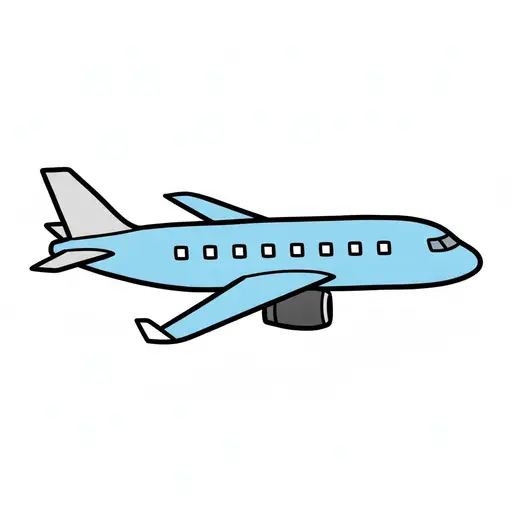
Airplane
A blue cartoon airplane flying to the right.
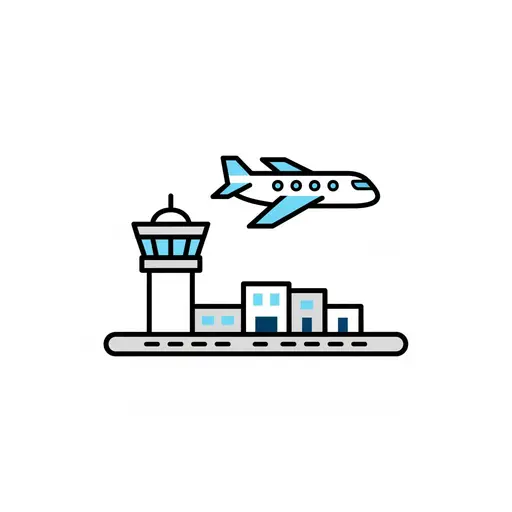
Airport
An airport with a control tower and terminal buildings with an airplane above.
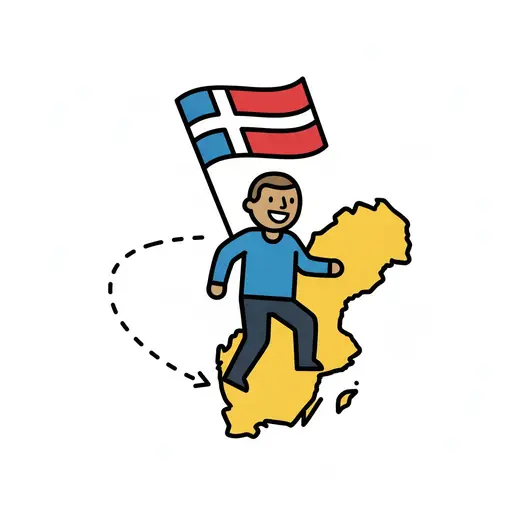
Arrive In Sweden
A smiling boy holds a flag and stands on a map of Sweden with a dashed travel li...
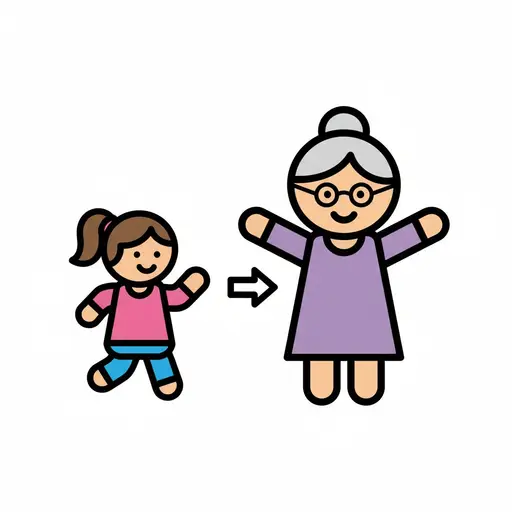
Go to grandmother
A cartoon girl walks towards an older woman with glasses. An arrow points from t...

Holiday
An open suitcase filled with sunglasses, a beach ball, a towel and a book under ...
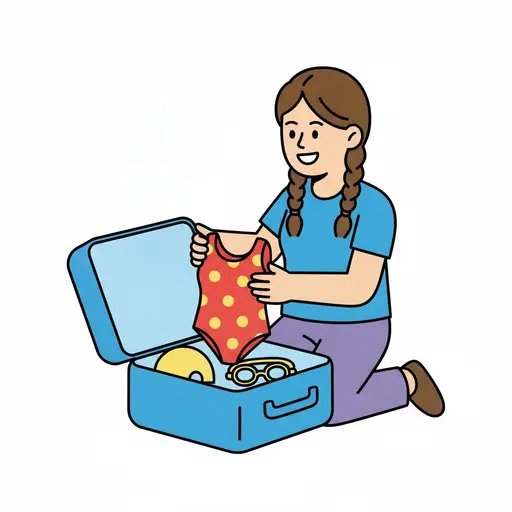
Pack swimwear
A girl packs a spotted swimsuit and goggles into a case.
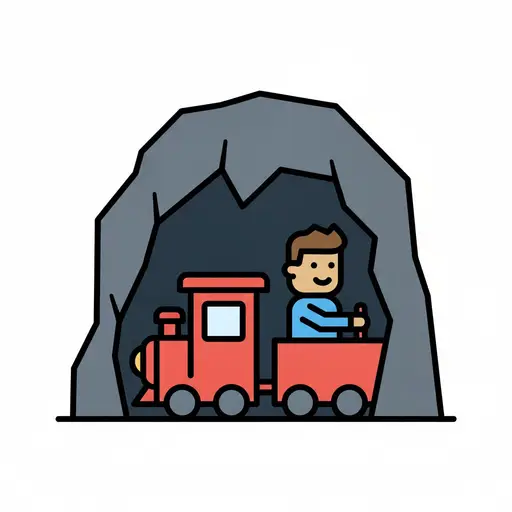
Red Train to the Cave
A boy rides a small red train into a cave.
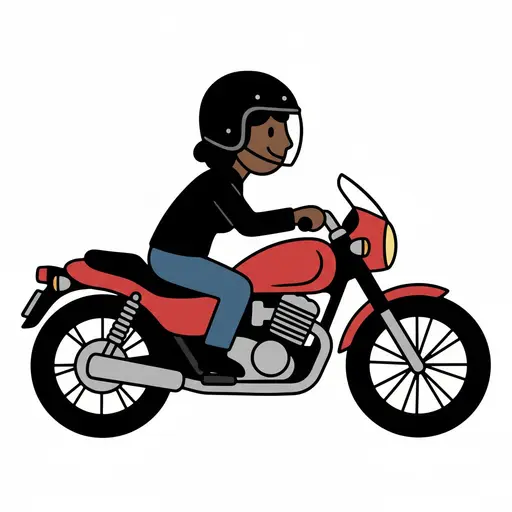
Ride motorcycle
A woman wearing a helmet rides a red motorcycle.
Take the visual supports with you
In Routined you build schedules from these pictures, add timers and voice instructions, and your child follows the day on their own.


* 14-day free trial, then $2.39 a month or $20.99 a year (US pricing). Cancel anytime.