Extra screen time
Extra screen time feels great in the moment, yet the final minute can be the hardest of the day. The visual support below frames the bonus so the ending lands gently instead of as a shock.
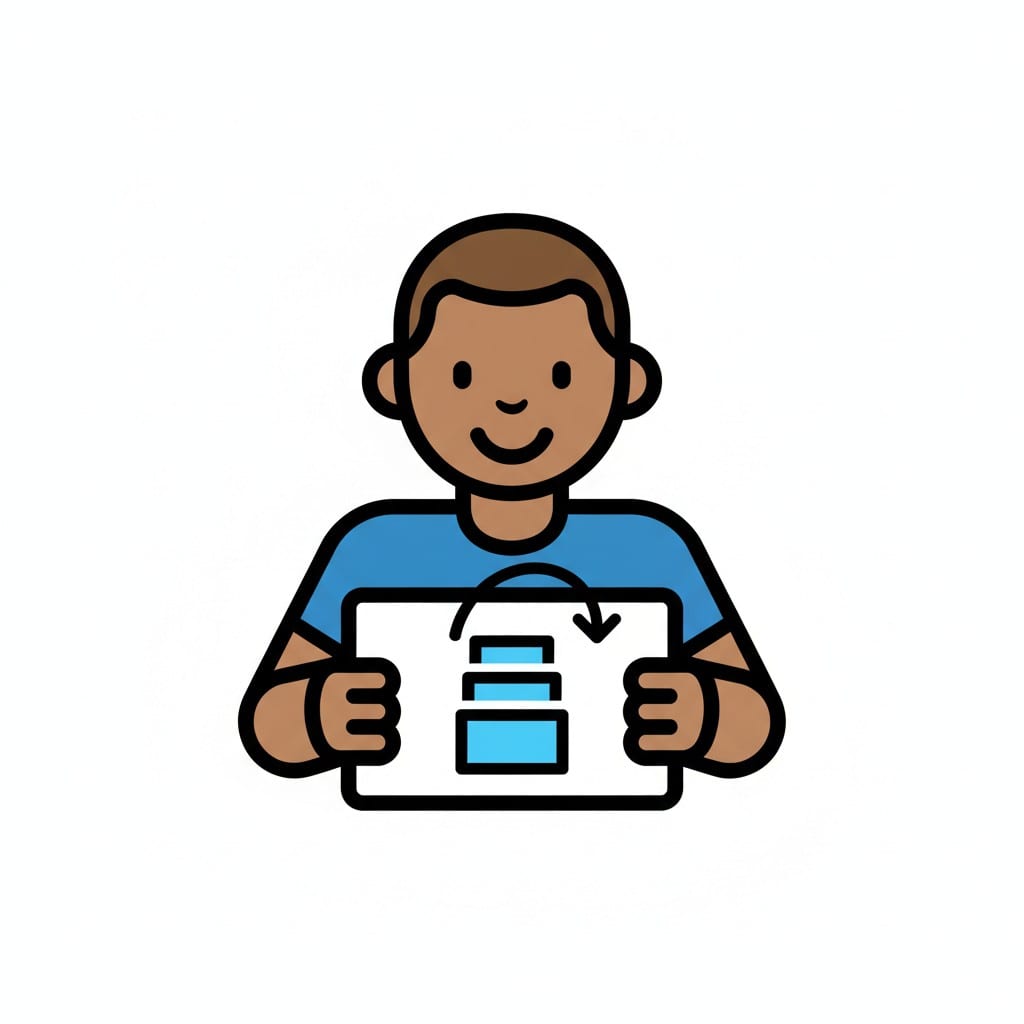 ♂
♂Boy with tablet
A boy holds a tablet with a stacked object icon and a refresh arrow, indicating more or repetition.
 ♂
♂Boy with bonus tablet
A boy holds a tablet with a star, surrounded by red arrows and a plus sign, symbolizing extra or bonus.
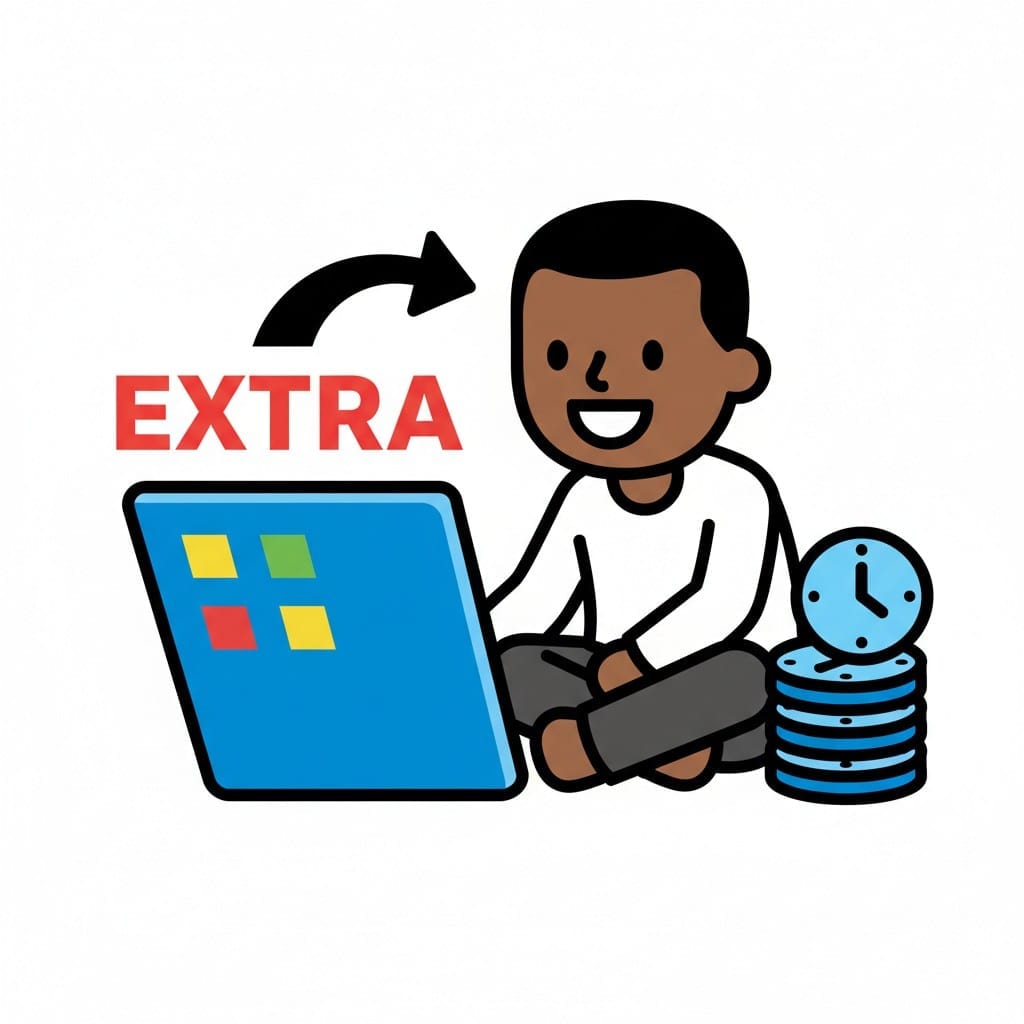 ♂
♂Boy with extra screen time
A boy sitting with a laptop and a stack of tokens with a clock, with the word 'EXTRA' and an arrow.
About this visual support
The reward in extra screen time is not only the content but the dopamine curve: it rises fast and drops sharply. When the bonus ends, the brain has settled into a high intensity, and ordinary life suddenly feels flat. That is where the friction happens, not in the middle of watching.
Visual support makes the bonus visible as something with a beginning, a middle and an end. When the child can see how many episodes or minutes are included, and which activity follows immediately after, a mental landing strip is built while the screen is still on. The transition becomes a step that was counted in from the start rather than an interruption.
A practical tip: place the picture of the next activity right next to the screen, not across the room. Something low intensity but not boring works best, like a snack bowl, a craft box or a short walk to the mailbox. If you want to combine the bonus, the countdown and the next step in one flow, Routined offers a 14-day trial.
Use this image in a schedule
Build your own visual schedule with this image and download it as a print-ready PDF. Completely free.

More similar visual supports

Screen time reward
A girl points at a tablet above a trophy filled with tokens as a reward.
Watch phone
A woman holds a phone horizontally and watches the screen.
Circus animals app
A cartoon figure on a trapeze holds a tablet displaying an elephant, while a lio...
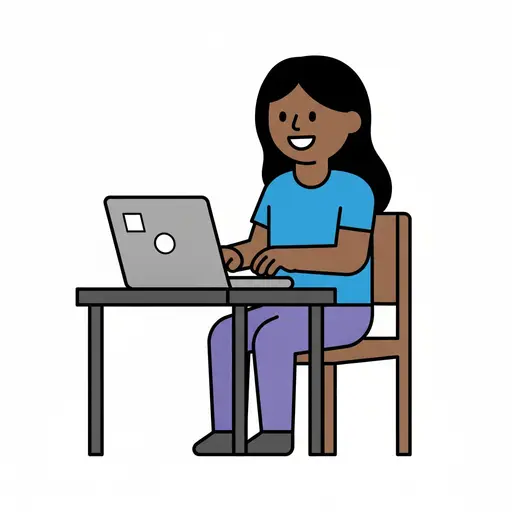
Computer
A smiling person sits on a wooden chair at a desk and types on a grey laptop.
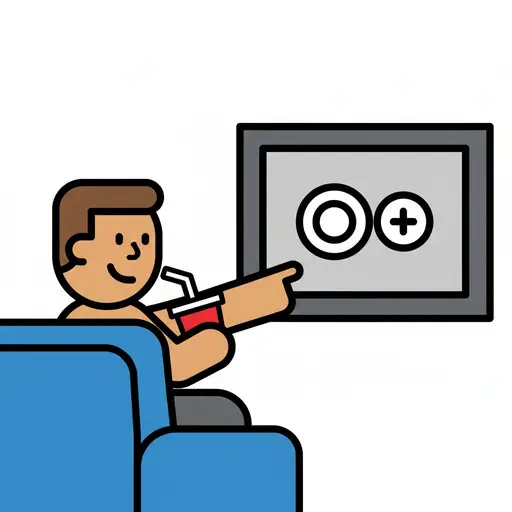
Drink and TV
A person sits on a blue couch, drinking from a red cup with a straw and pointing...
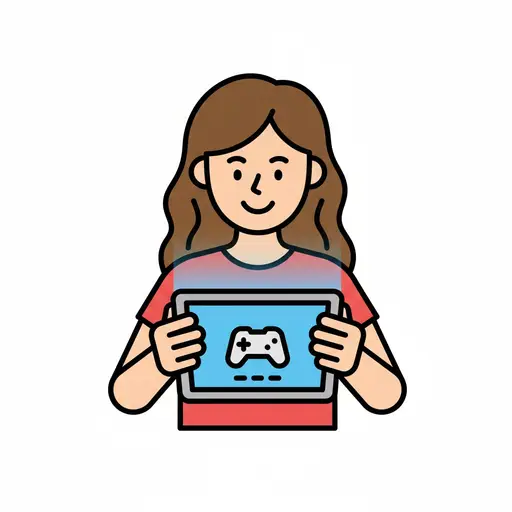
Games (screen time)
A smiling girl playing games on a tablet.
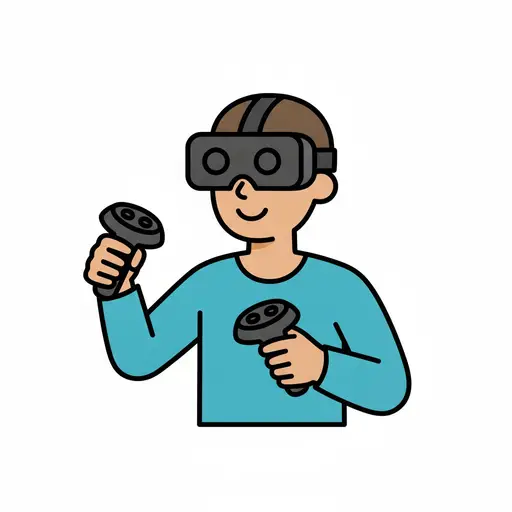
Gaming
A person wearing a VR headset holds two controllers.

iPad time
A person smiles while holding and pointing at a grey iPad with media icons.
Take the visual supports with you
In Routined you build schedules from these pictures, add timers and voice instructions, and your child follows the day on their own.


* 14-day free trial, then $2.39 a month or $20.99 a year (US pricing). Cancel anytime.