Feed dog
Something easy turns heavy when dog food smells strong and the dog is bouncing around your legs at the same time. Sensory input takes over the task. The visual support below helps the child stay in the order even when a lot is going on around them.
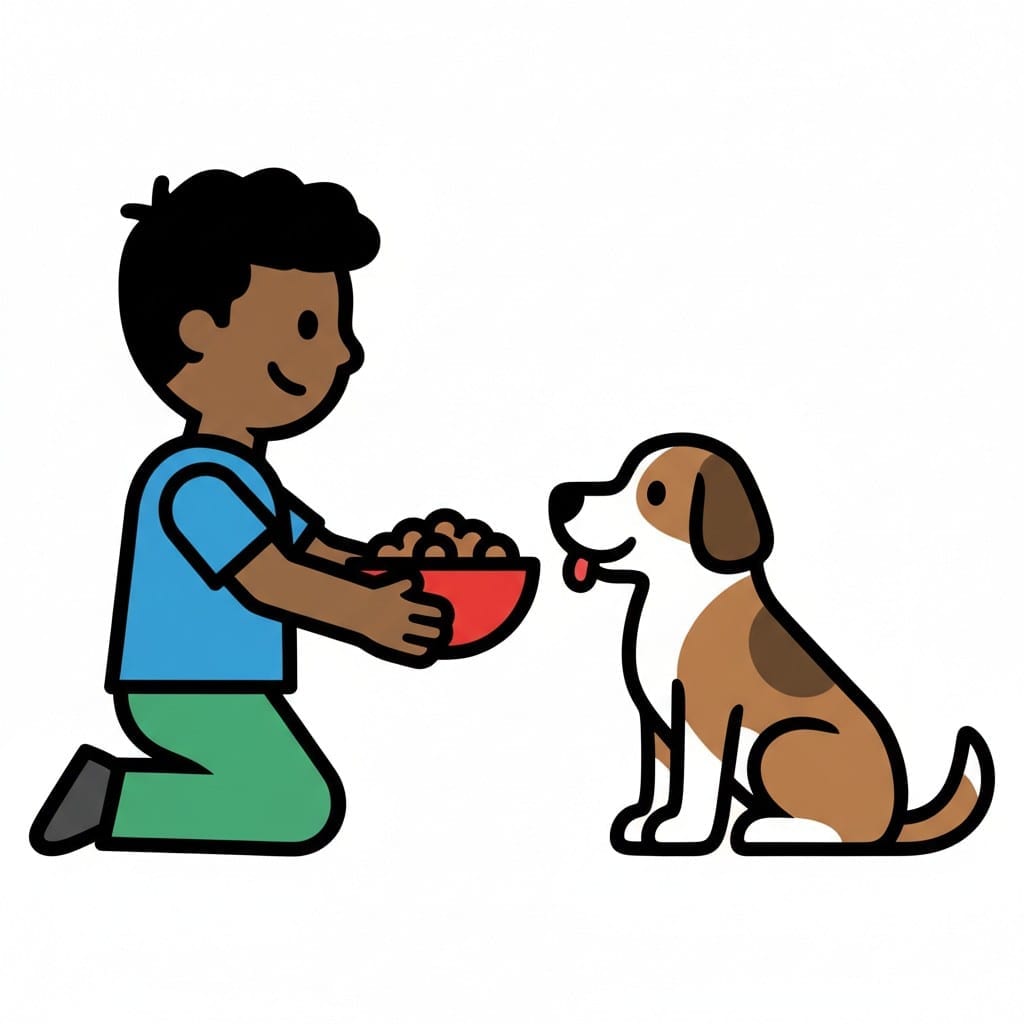 ♂
♂Feed dog
A boy kneels, holding a red bowl of dog food towards a sitting dog.
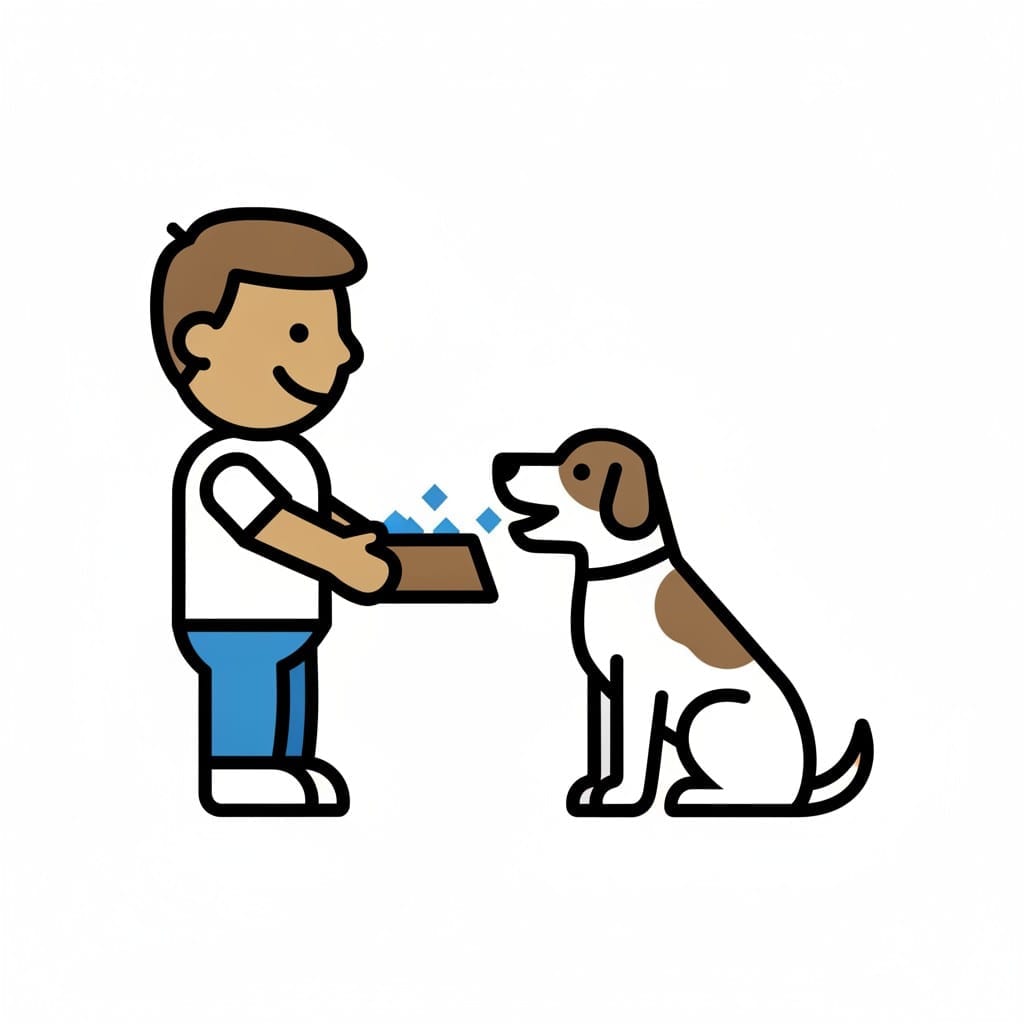 ♂
♂Boy holding out a food bowl to the dog
A boy in a white t-shirt holds out a bowl of dog food to a dog sitting patiently in front of him.
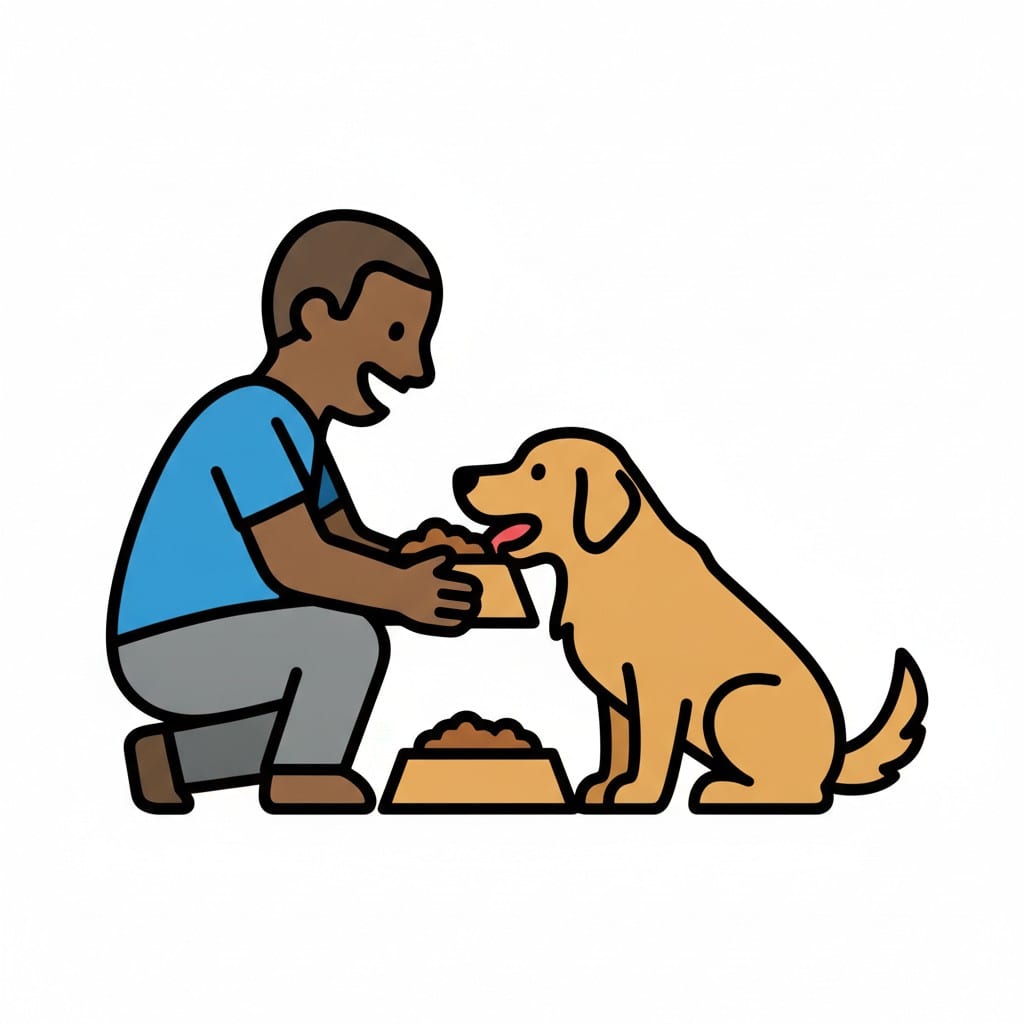 ♂
♂Man filling the dog bowl
Crouching down, a man in a blue t-shirt puts food into a bowl while a light brown dog waits beside him.
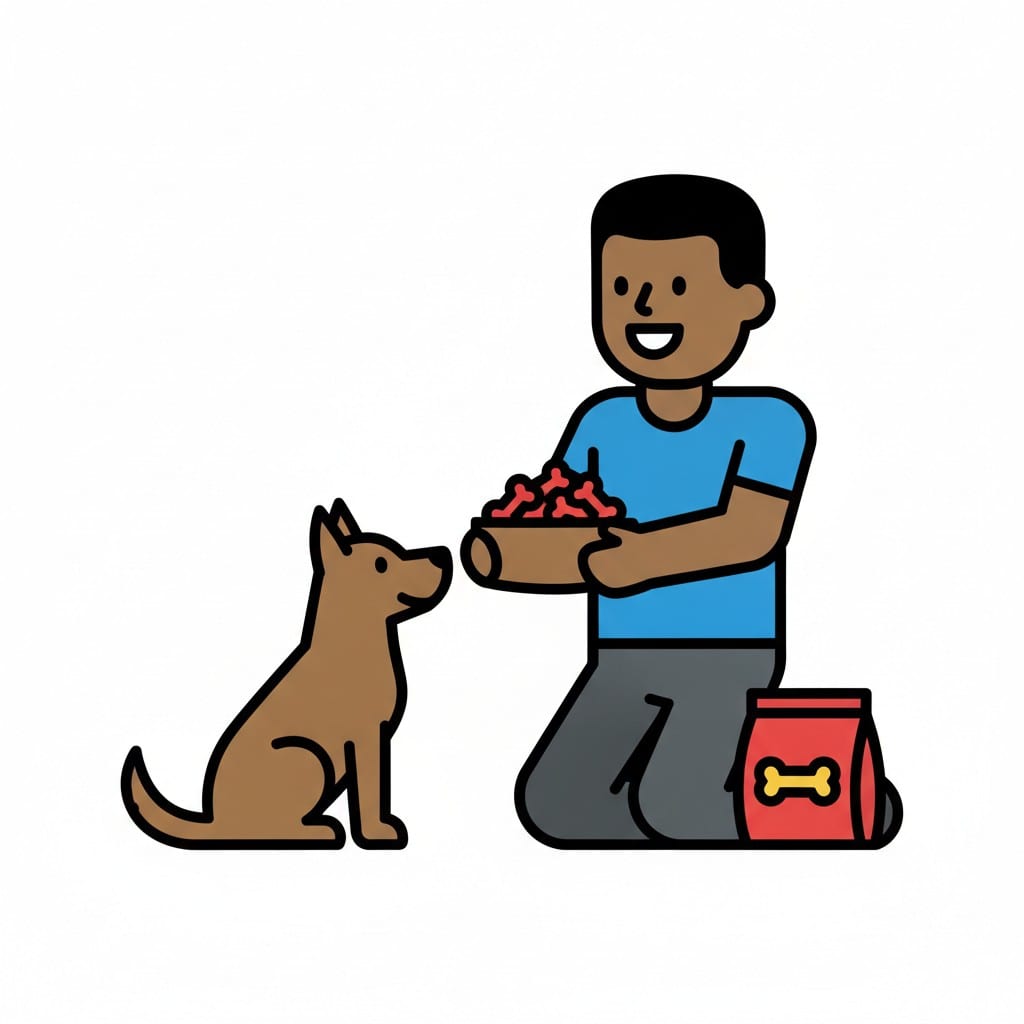 ♂
♂Feed dog
A person kneels holding out a bowl of food to a sitting dog, with a bag of dog food beside.
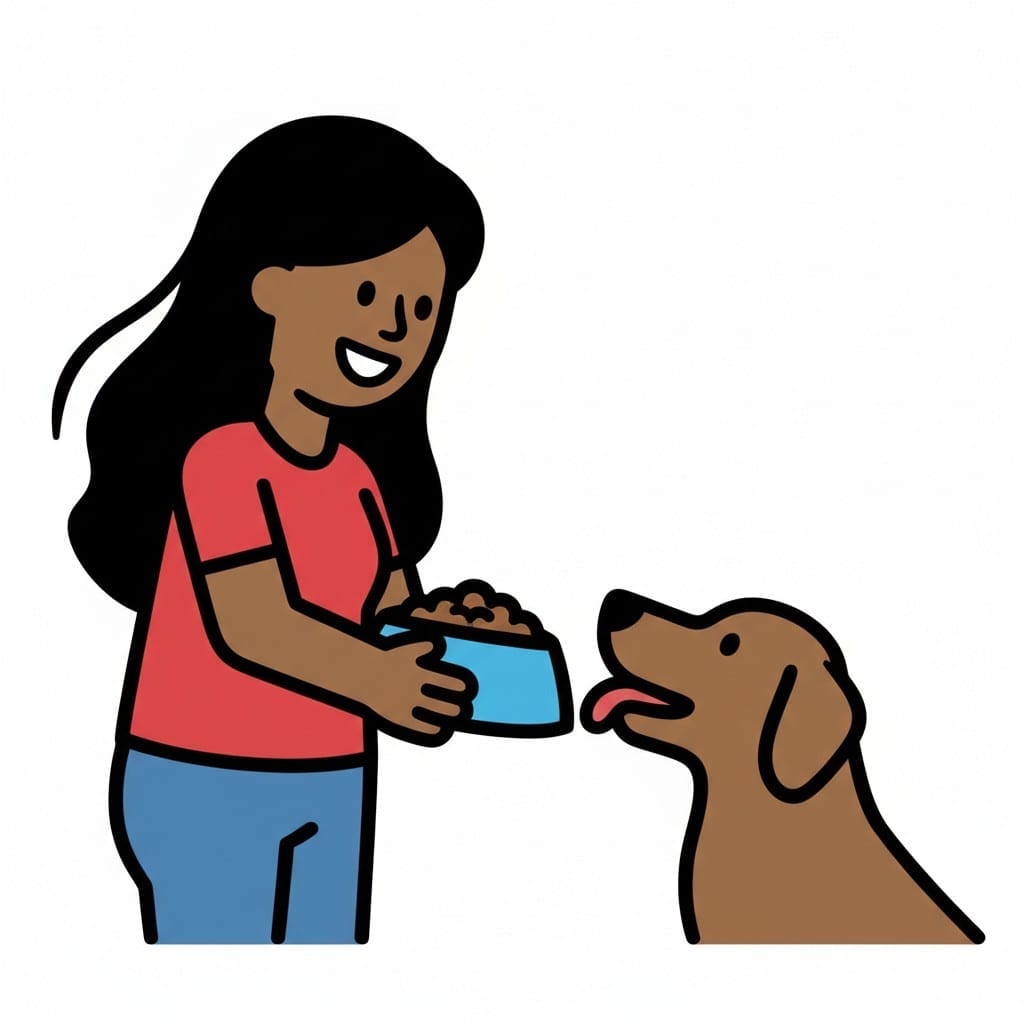 ♀
♀Feed dog
A woman stands and holds a bowl of food towards a dog.
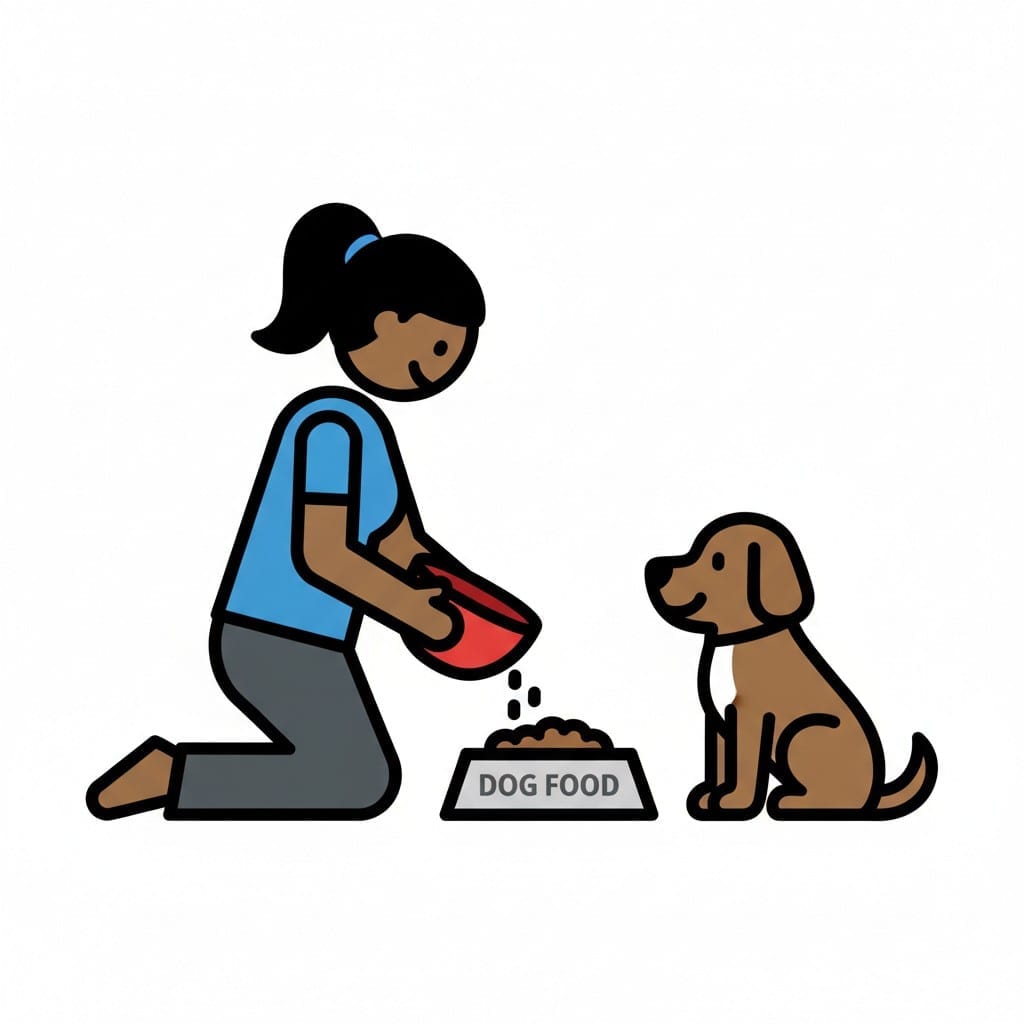 ♀
♀Feed dog
A woman kneels and pours food into a dog bowl for a dog.
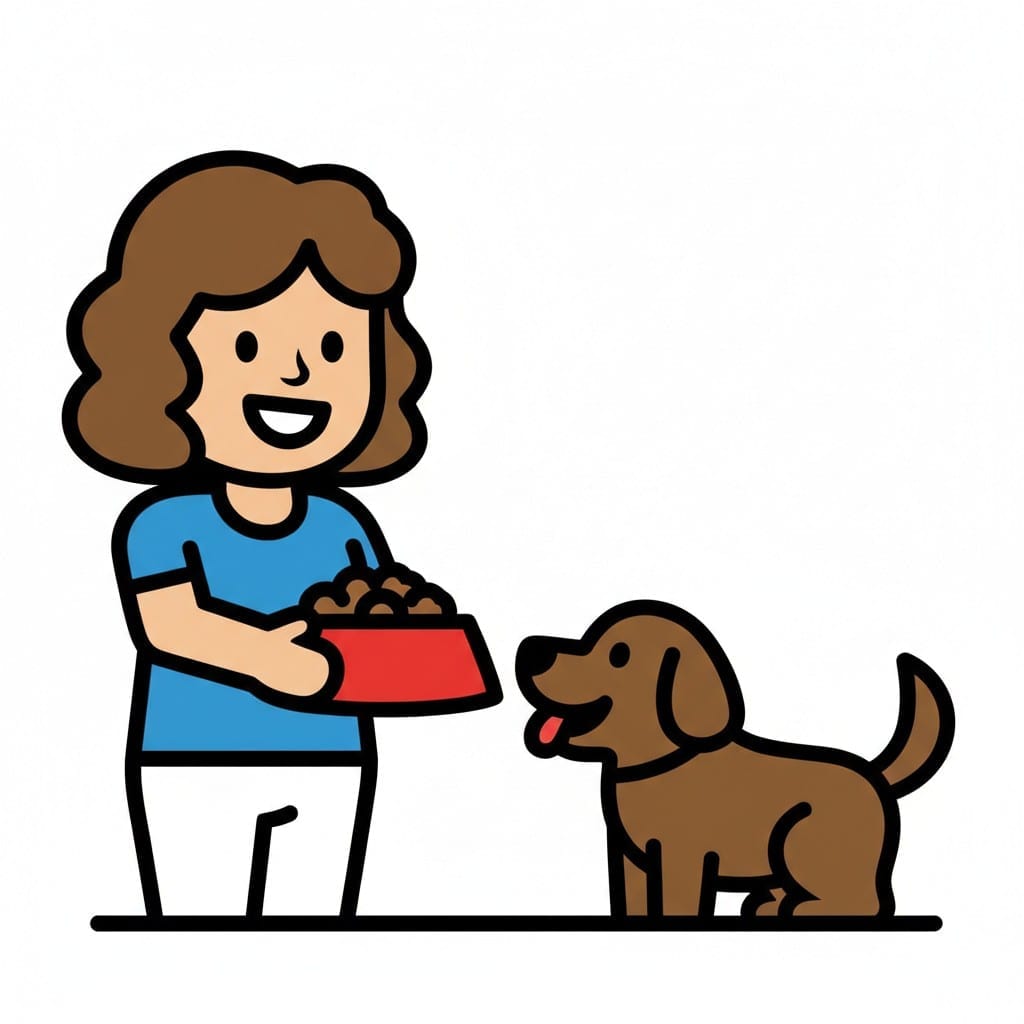 ♀
♀Feed dog
A person feeding a dog from a red bowl.
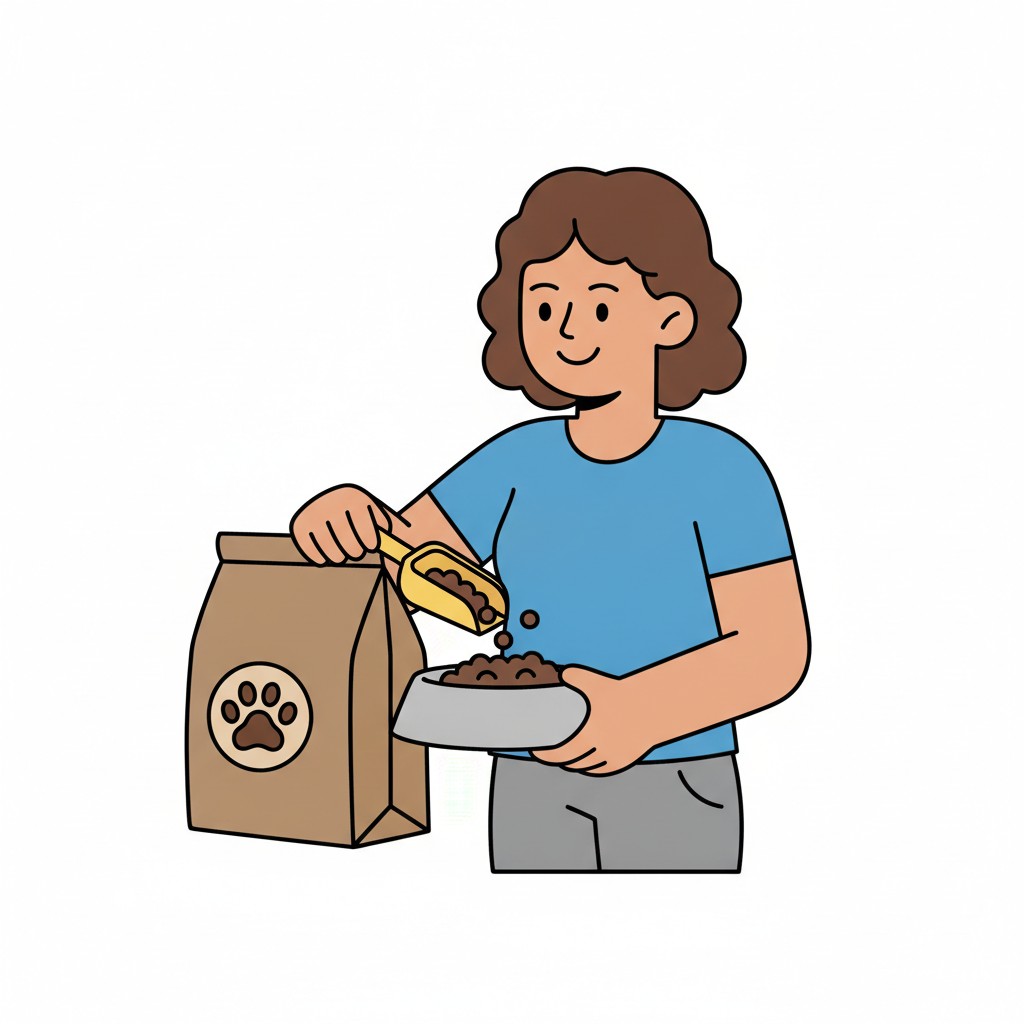 ♀
♀Preparing dog food
A woman scoops dog food from a bag into a bowl.
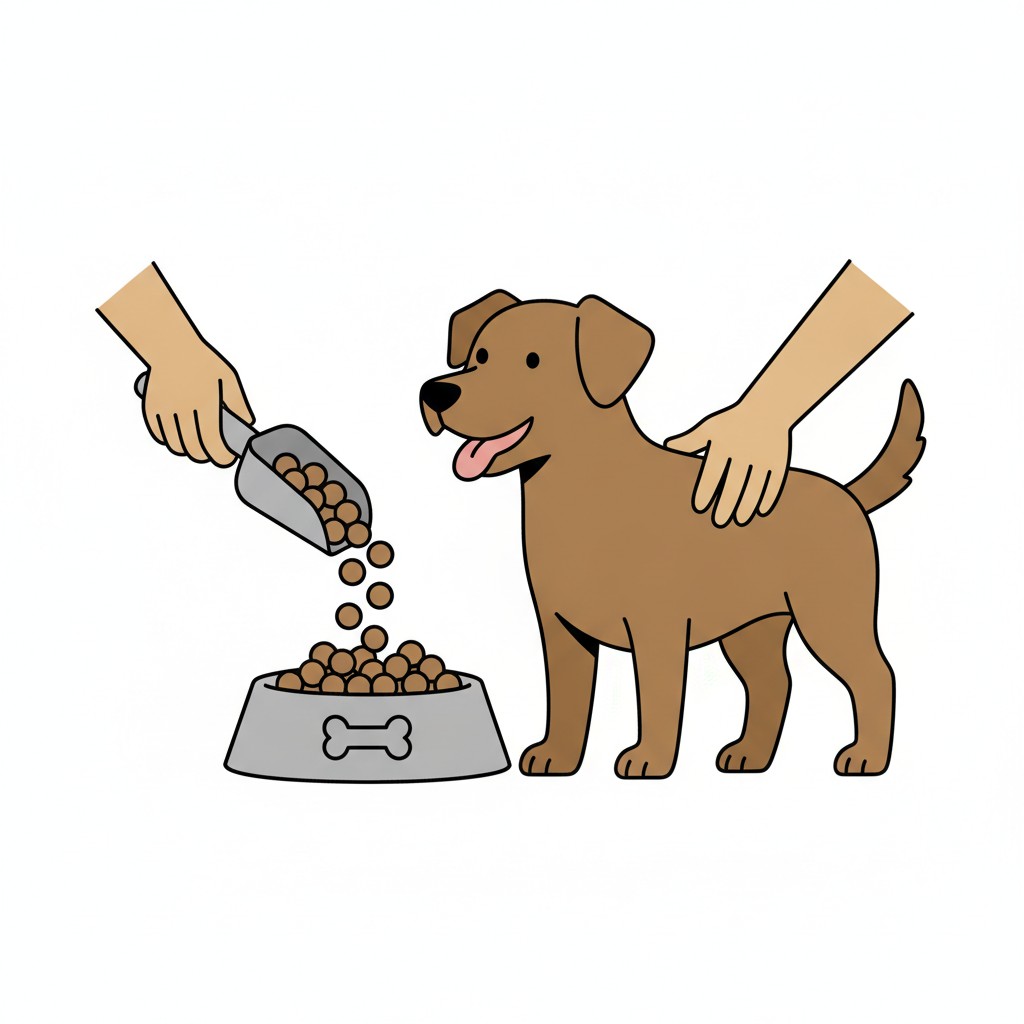 ⚲
⚲Feeding the dog
One hand pours dog food into a bowl while another pats the dog.
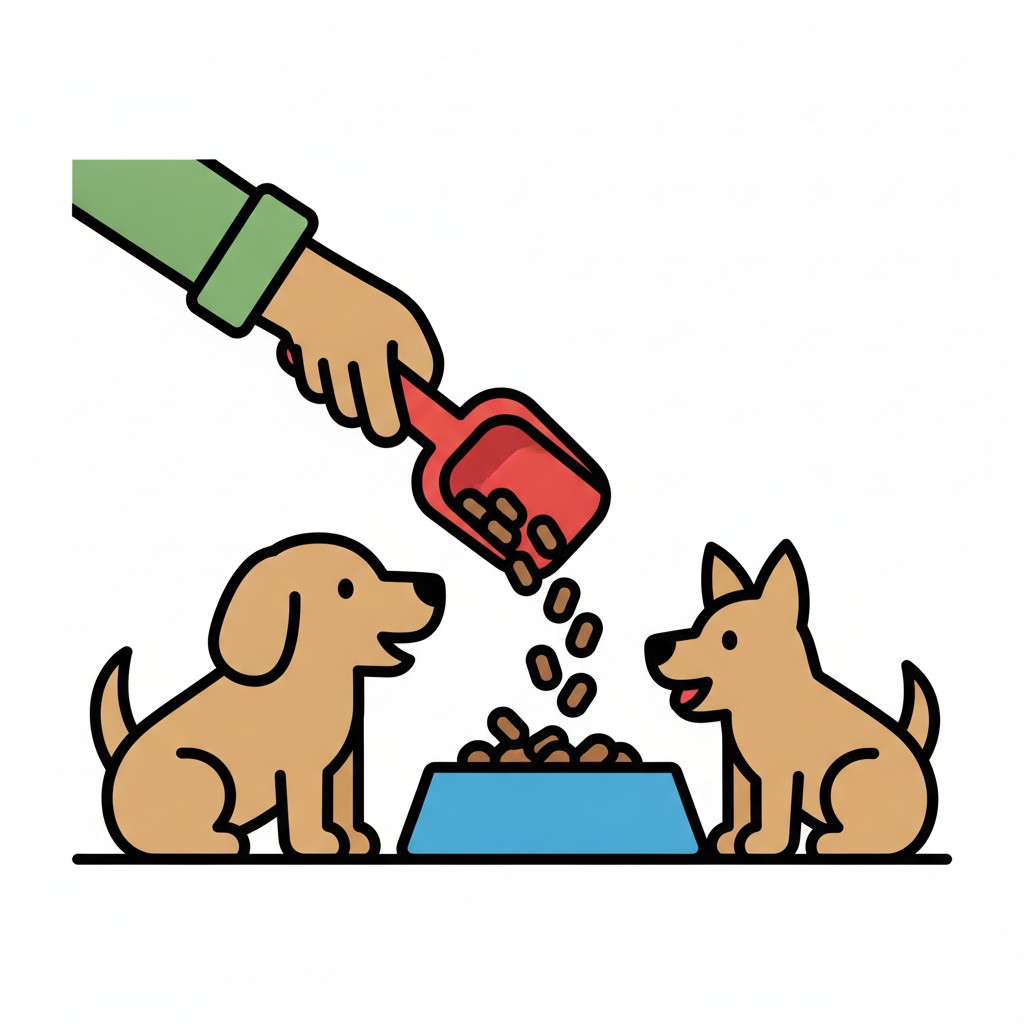 ⚲
⚲Feeding the dogs
A hand pours dry food into a bowl for two dogs.
About this visual support
It is not the amount of food or the shape of the bowl that is the problem. It is the smell that hits the nose when the bag opens, and the dog's enthusiasm becoming almost physical the moment the bowl is lifted. For a child sensitive to odors, or simply caught off guard by eagerness, this is not a small chore. It is a full one.
Visual support does not soften the smell, but it gives the child an anchor outside the body. With each step laid out as a picture, the child can move their gaze there instead of focusing on the odor or the dog. Looking at a picture is a cognitive act that takes up the room sensory input would otherwise fill. The job becomes finishable despite the noise around it.
A tip tied to this activity: have the dog sit on its spot before the bowl comes out, and make that its own step in the picture row. The child knows the dog will not bounce around during the feeding itself, and also knows when it is okay to release the dog. Routined works as a digital companion to the routine, with a 14-day trial included.
Use this image in a schedule
Build your own visual schedule with this image and download it as a print-ready PDF. Completely free.

More similar visual supports
Take out the dog
A woman in a blue jumper walks across the grass with a brown dog on a leash.
Change cage water
A person is emptying old water from a pet bottle and refilling a pet cage with f...
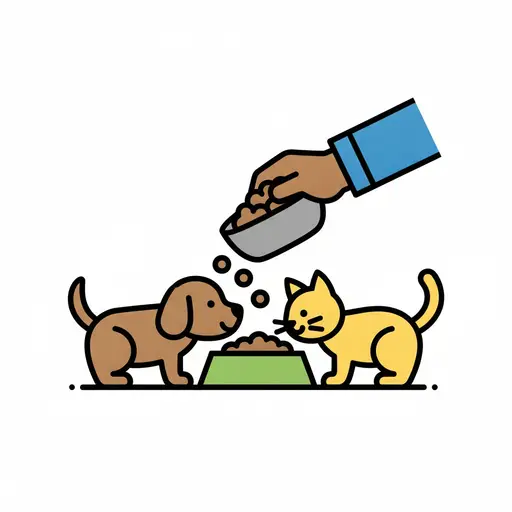
Feed animals
A hand pours food into a bowl while a dog and a cat wait.
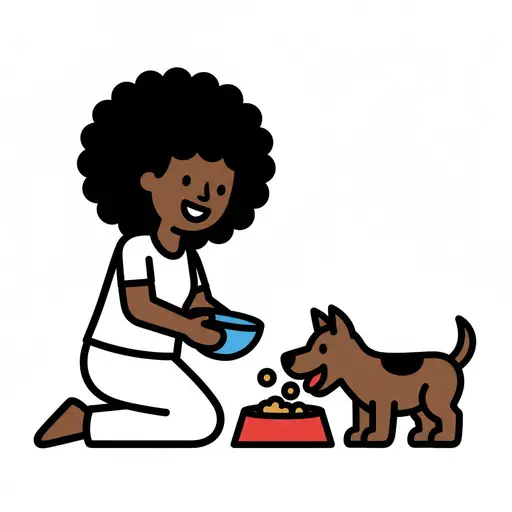
Feed dog breakfast
A person kneels, pouring breakfast from a blue bowl into a red food bowl for a d...
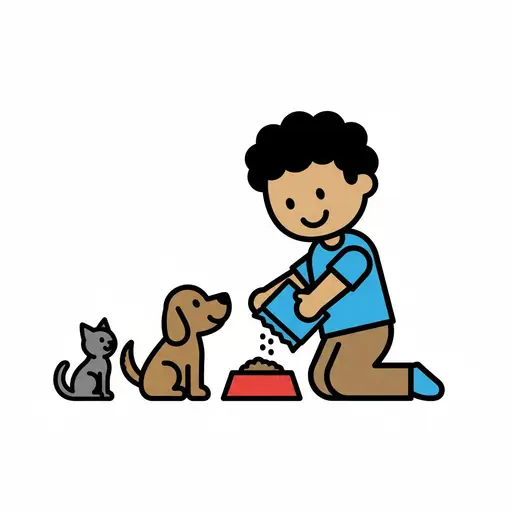
Feed pets
A cartoon image of a child kneeling and pouring food into a red bowl for a dog a...
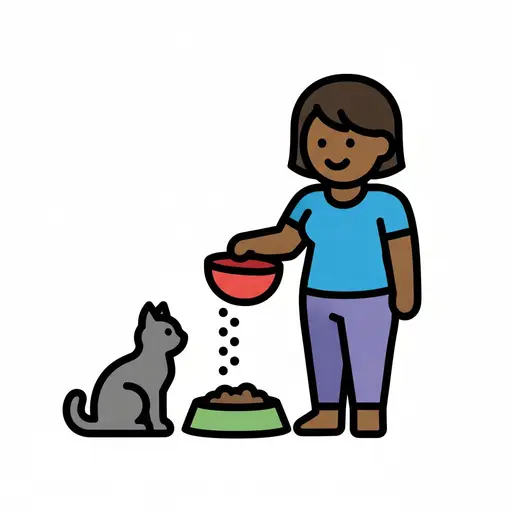
Feed the cat
A smiling person pours dry food from a red bowl into a green feeding dish while ...
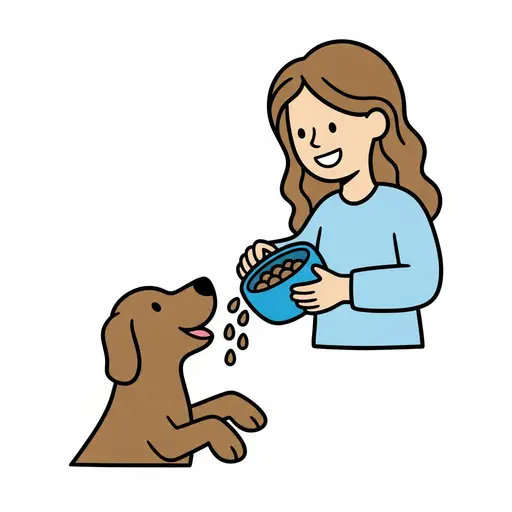
Feed the dog
A girl in a blue top pours food from a blue bowl for a brown dog sitting in fron...
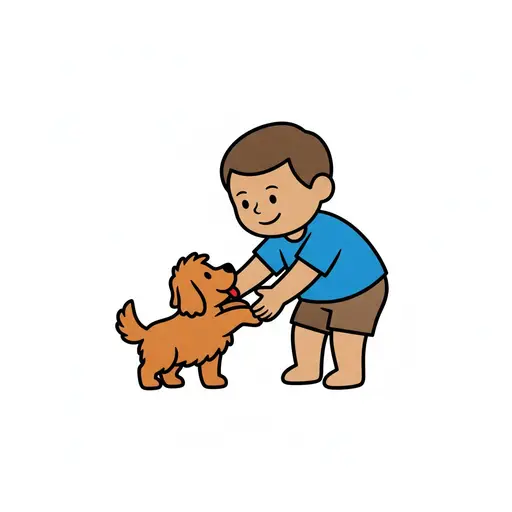
Get Rufus
A child bends down to play with a small brown dog standing on its hind legs.
Take the visual supports with you
In Routined you build schedules from these pictures, add timers and voice instructions, and your child follows the day on their own.


* 14-day free trial, then $2.39 a month or $20.99 a year (US pricing). Cancel anytime.