Free time
For some children, unstructured time is not rest but a task: come up with something on your own, right now. That task can feel heavier than homework, and the visual schedule below offers options so the brain does not have to start from zero.
 ♂
♂Reading and relaxing
A boy sits in a red bean bag chair, happily reading a book, with symbols for sun and music nearby, depicting a relaxed moment.
 ♂
♂Free time
A person sits happily with a remote control, looking at a screen with options for reading, music, games, and documents. A thought bubble above their head contains a sun, a smiling face, and a clock, indicating choosing activities for free time.
 ♂
♂Relaxing
A person is happily relaxing in a yellow hammock between two palm trees, reading a book. The sun shines brightly above them.
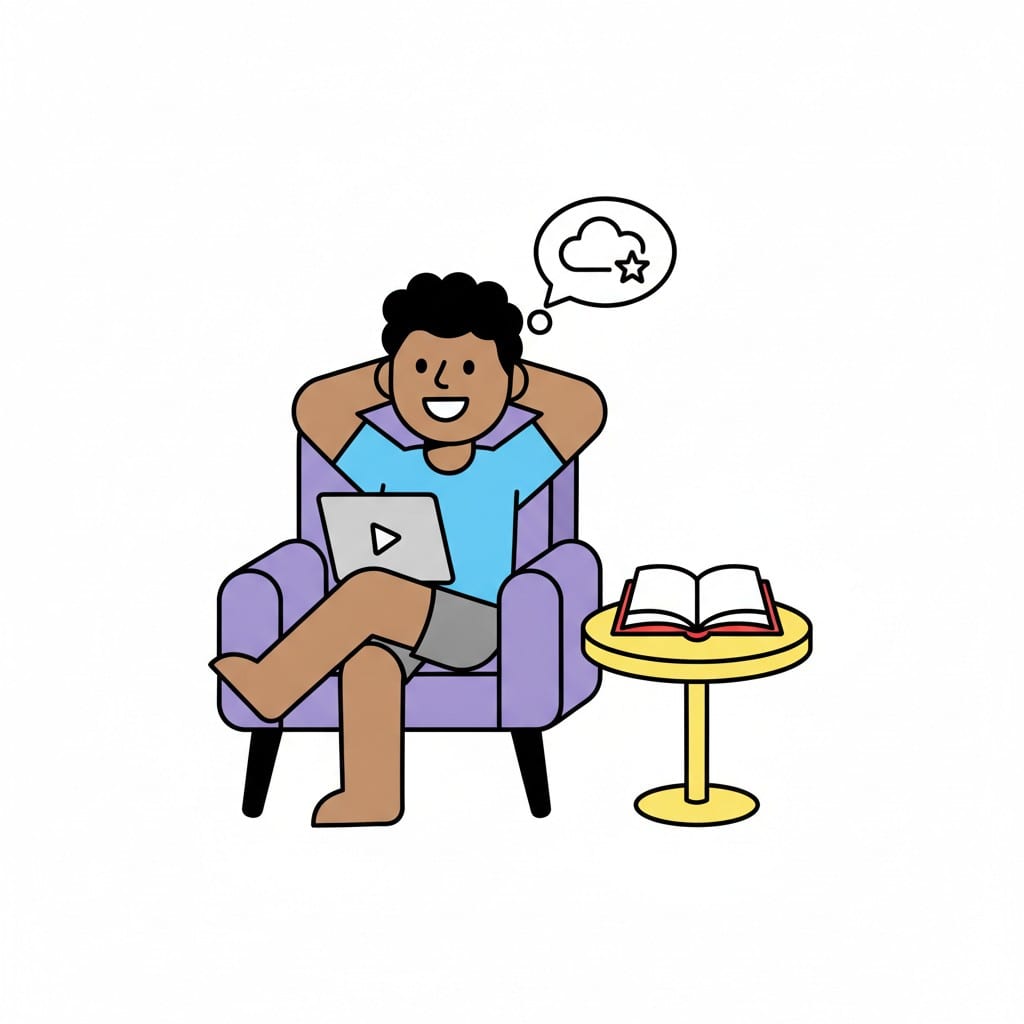 ♂
♂Free time
A person relaxes in an armchair with a tablet showing a play button, a book on a side table.
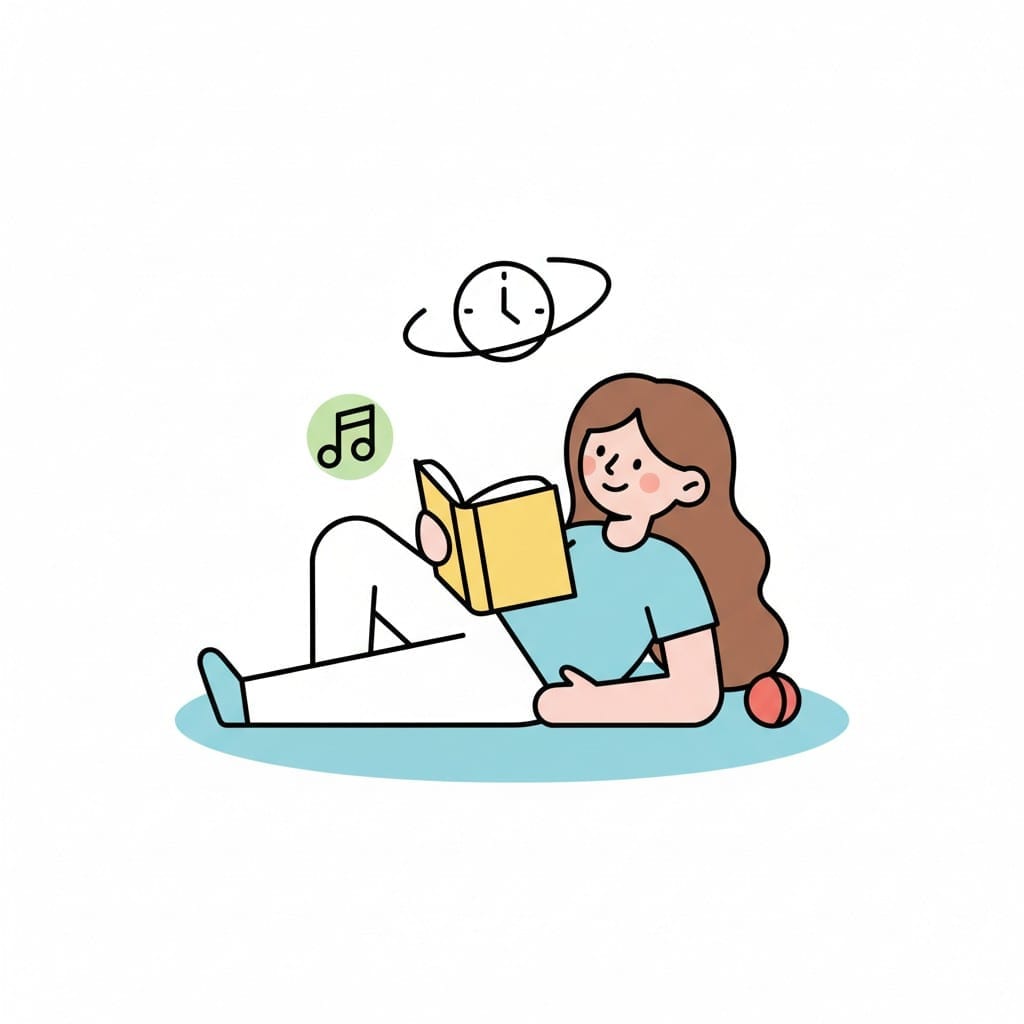 ♀
♀Free time
A woman lies on the floor reading a book, with thought bubbles showing a clock and a music note, representing free time.
 ♀
♀Relaxing
A woman relaxes in a beanbag chair while reading a book. Beside her are a music note, a soccer ball, and a paint palette, symbolizing various leisure activities.
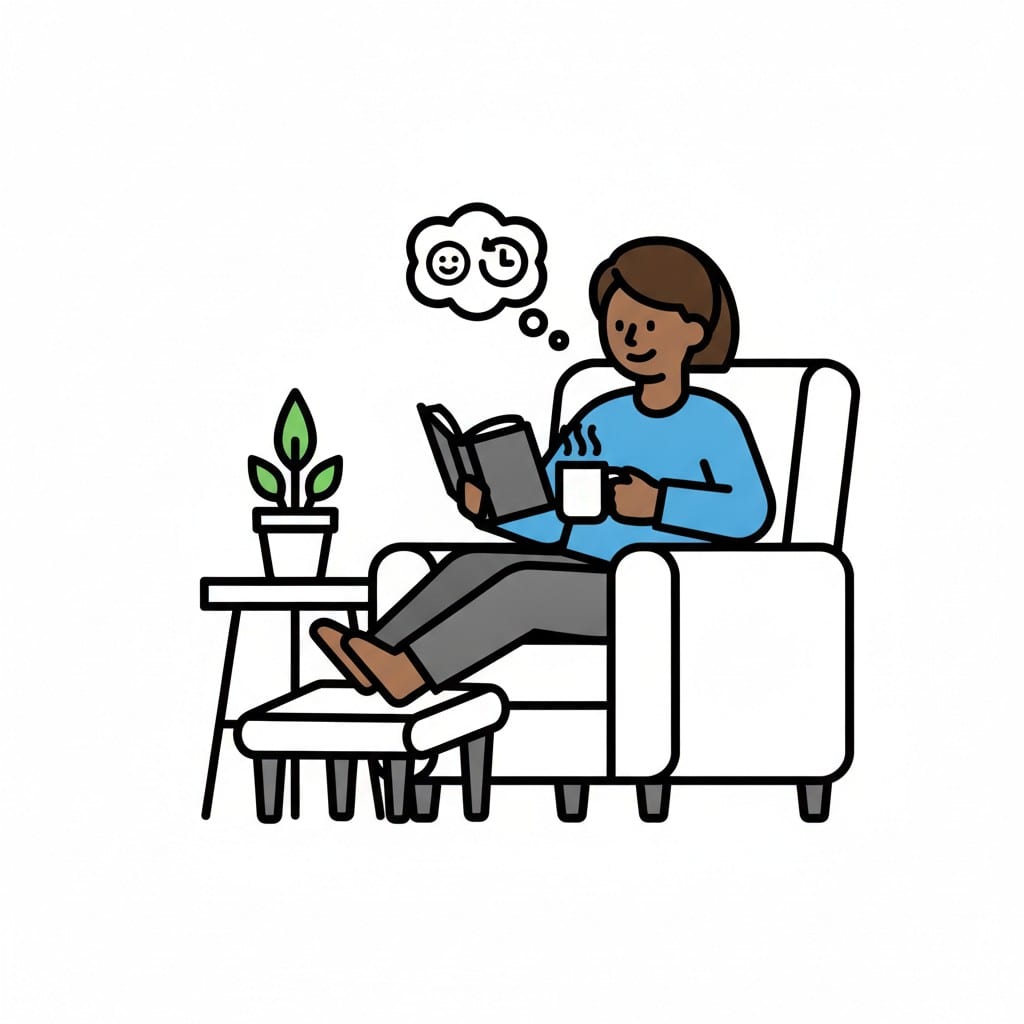 ⚲
⚲Me time
A person relaxes in an armchair with feet up, a book and a cup of tea.
About this visual support
Having free time asks for more executive function than people usually realise. To rest inside unstructured time, a brain needs to be able to start something on its own, switch tracks when it gets dull, and at the same time know that nothing has to be produced. For some children that very first part is a steep step, and the result is either restlessness, screen-reach, or the question what should I do now repeated every two minutes.
A visual schedule for free time makes empty time less open without filling it with tasks. The cards offer a small set of calm options — draw, read, build, listen to music, cuddle the pet — and the child points to whatever pulls. The choice is made in seconds, and the tug-of-war between rest and performance lets go.
A concrete tip: keep the number of cards low, five to seven, and rotate them across the week. Too many options become as hard as none, and a tighter set means the first point actually leads somewhere.
If you also want to mix free-time suggestions with a short rest timer, you can try Routined free for 14 days.
This image is part of these ready-made schedules
Use this image in a schedule
Build your own visual schedule with this image and download it as a print-ready PDF. Completely free.
More similar visual supports

Listen to podcast
A boy listening to a podcast with headphones and a smartphone.
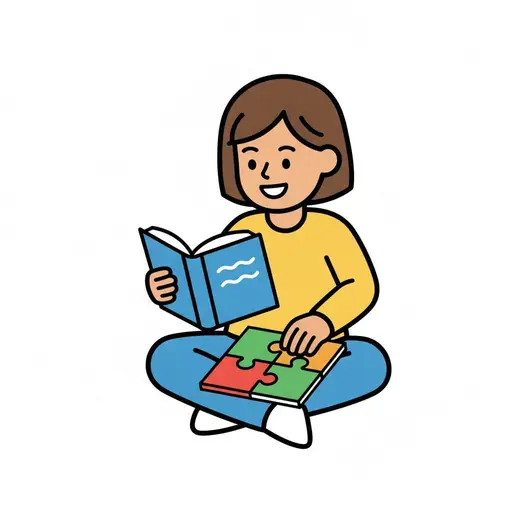
Read and do a puzzle
A girl sits cross-legged holding an open blue book with a colourful jigsaw in he...

Watch television
A child sits in an armchair watching TV.
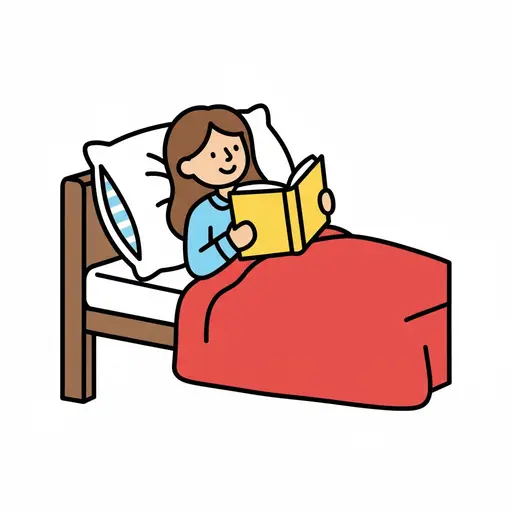
Read a book in bed
A person is sitting in bed with a pillow behind them, reading a book.

Diary
Two hands write with a pen in an open diary with a sun above.
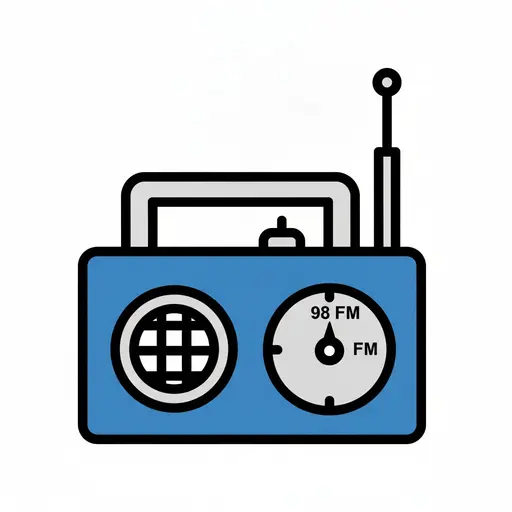
Listen to the radio
A blue radio with an antenna.

Home
A blue house with a yellow heart on the gable.

Read a devotional
A girl holds up an open book with a cross printed on the page and reads it.
This visual support in other languages
Take the visual supports with you
In Routined you build schedules from these pictures, add timers and voice instructions, and your child follows the day on their own.


* 14-day free trial, then $2.39 a month or $20.99 a year (US pricing). Cancel anytime.