Get up and play
In maybe ten minutes the body has to move from lying down to running. That is a big jump for a child who has just opened their eyes. The visual support below sets the tone for the first movements of the day and shows that play is really coming.
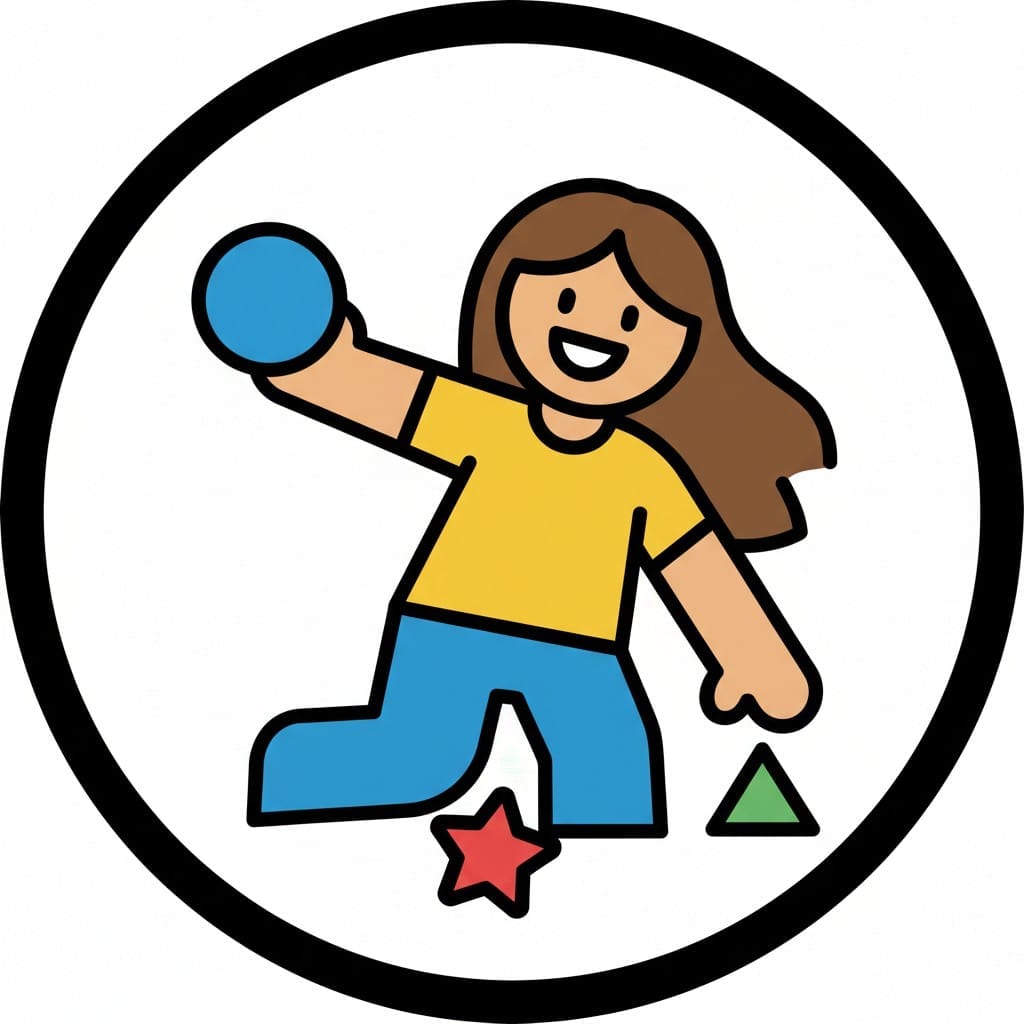 ♀
♀Getting up to play
A smiling girl in a yellow shirt and blue trousers jumping while holding a blue ball, with a red star and green triangle inside a circle around her.
About this visual support
Between the bed and the first game lies a hazy zone. The body is still warm, the eyes used to dim light, and suddenly the child is expected on the floor with energy in their legs. That shift is not automatic, especially for children with long wake-up phases or those who need extra time to switch into play mode.
A visual schedule gives the start of the day a rhythm: first a picture of sitting on the edge of the bed, then one of feet on the floor, then one of the first game waiting — the ball, the blocks or the soft toys. The first movements of the day stop being one big jump and become a string of small steps the body can follow even before the brain is fully online.
A concrete tip: place the toy in the same spot every morning, so the last picture in the sequence always has a real-world match in the room. To link the whole wake-up from first yawn to the first throw of the ball, you can build the sequence in Routined and let the child tick off each step at their own pace.
Use this image in a schedule
Build your own visual schedule with this image and download it as a print-ready PDF. Completely free.

More similar visual supports
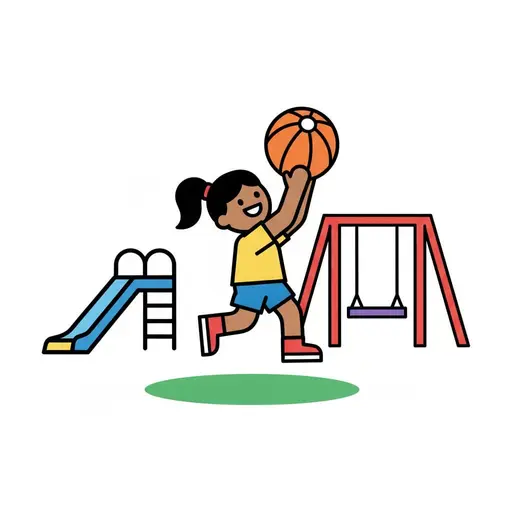
Active play
A girl jumps with a basketball in a playground with a slide and swings.
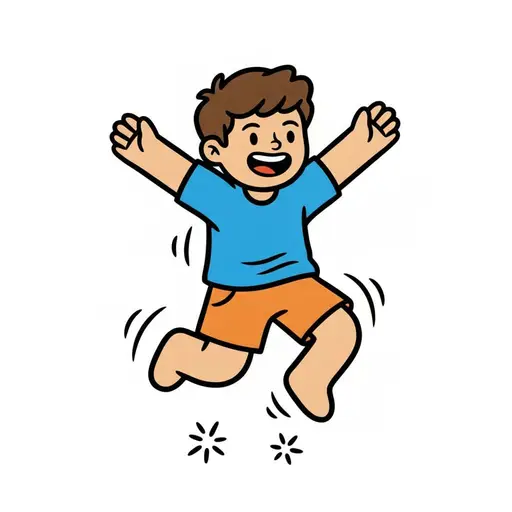
Jump around
A boy jumps barefoot with his arms up and motion lines around his feet.

Morning on vacation
A person smiles holding a mug in front of a palm tree and an ocean with a boat.
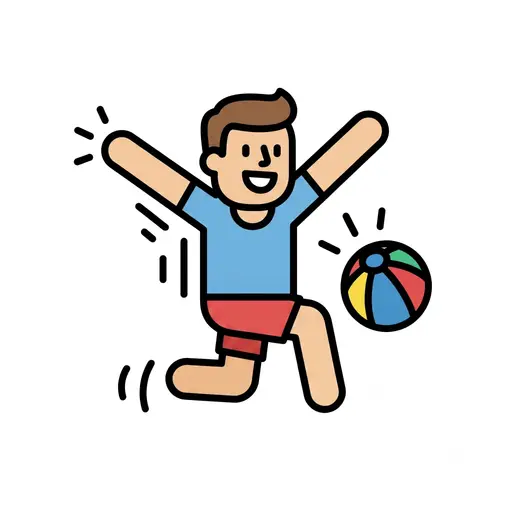
Play and move
A child jumps happily next to a colorful ball.
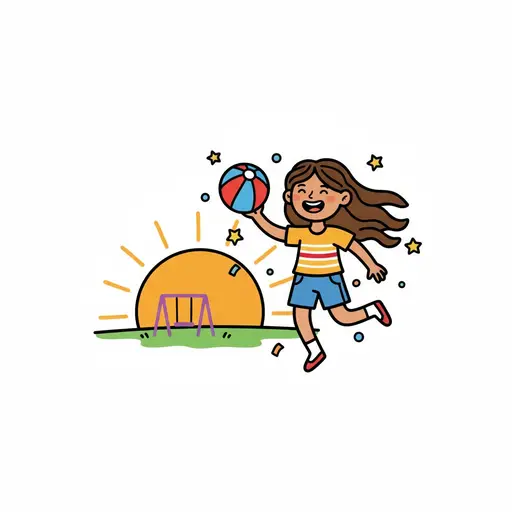
Afternoon playtime
A happy girl runs and plays with a ball outdoors in front of a playground.
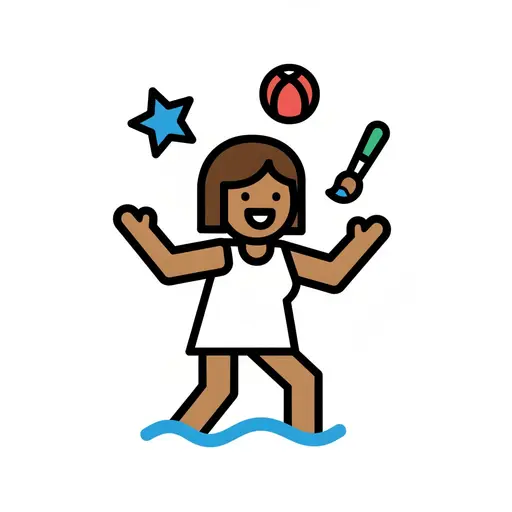
Do activities
A happy girl with arms raised surrounded by a ball, a star and a paintbrush, rea...
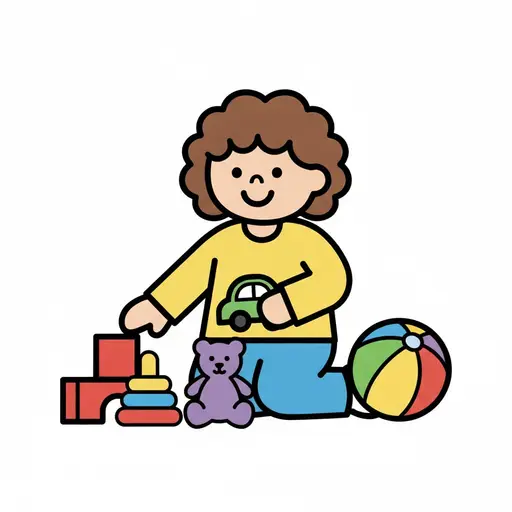
Free play
A girl plays with blocks, a car, a teddy and a ball.
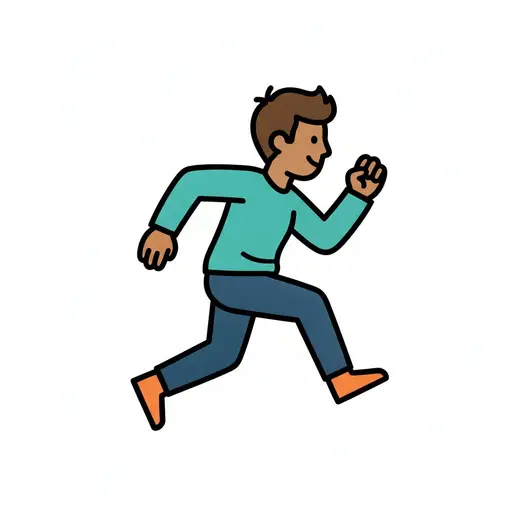
Move around
A person jogs forward in a green top and blue trousers.
Take the visual supports with you
In Routined you build schedules from these pictures, add timers and voice instructions, and your child follows the day on their own.


* 14-day free trial, then $2.39 a month or $20.99 a year (US pricing). Cancel anytime.