Happy
Adults often assume happiness is easy to recognise, but for a child it is not always so. The feeling sits there as warmth, a buzz, an urge to jump, while the brain has not yet labelled it. The visual support below gives the word a picture to hang the feeling on.
 ♂
♂Happy
An illustration of a boy with a wide, open-mouthed smile and closed eyes, expressing happiness.
About this visual support
Naming happiness sounds trivial, but it is one of the early exercises in inner observation. The child has to pull attention away from the outside world – the toy, the friend, the ice cream – and turn it toward the body to notice what is actually happening there. That movement is not obvious, especially when the feeling shows up as a pressure or an explosion rather than as a concept.
Visual support offers an anchor. When the child sees a smiling face or a bouncing body on a card, the blurry experience gains a shape. It becomes easier to ask, am I this picture right now. Over time the child learns that happy is not the same as excited, and not the same as relieved, even if all three can blur in one moment.
A concrete idea: pair the card with a body sensation the child has actually mentioned. The belly tingles, the feet want to move, the mouth smiles on its own. Then the card is no longer an abstract symbol but a bridge to the child own body. The Routined app lets you gather emotion cards in a small series the child can browse in a calm moment.
Use this image in a schedule
Build your own visual schedule with this image and download it as a print-ready PDF. Completely free.
More similar visual supports
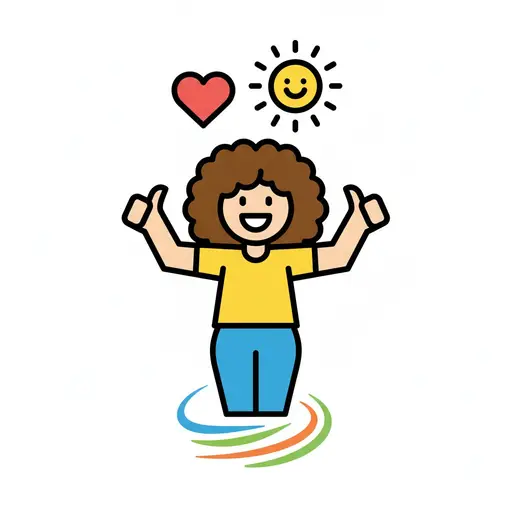
Have fun
A child stands with arms up smiling, with a heart and a happy sun above.
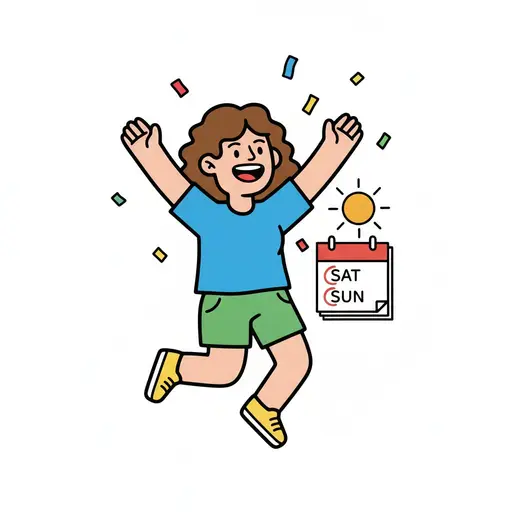
Weekend fun
A child jumps happily amid confetti beside a weekend calendar.
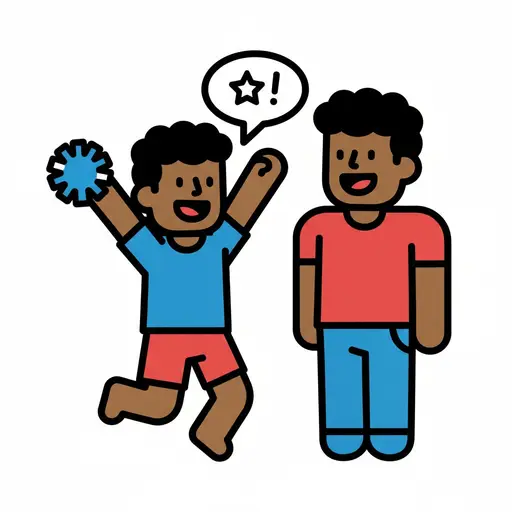
Cheer for Dad
A smiling boy in a blue shirt jumping in the air holding a blue pompom, with a h...

Receive a gift
A woman puts a present into a gift bag.
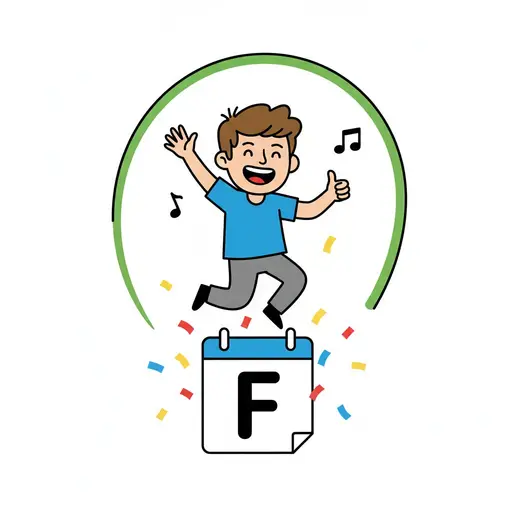
Friday Fun
A happy person jumps over a calendar with the letter 'F' on it. Confetti and mus...

Free activity
A happy person with a ponytail jumps with arms raised above a pile of colourful ...
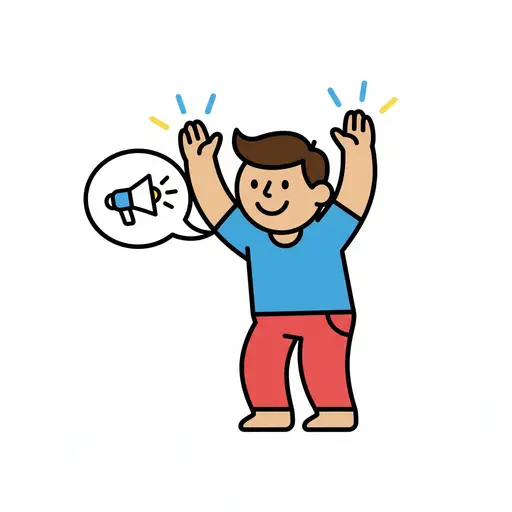
Cheer on
A smiling person in a blue t-shirt and red trousers raising both arms, with a sp...
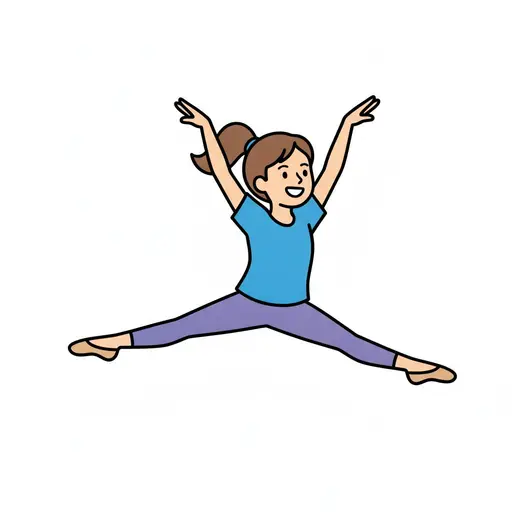
Dance leap
A smiling person with a ponytail in a blue t-shirt and purple trousers floats in...
This visual support in other languages
Take the visual supports with you
In Routined you build schedules from these pictures, add timers and voice instructions, and your child follows the day on their own.


* 14-day free trial, then $2.39 a month or $20.99 a year (US pricing). Cancel anytime.