Have fun
We tell the child we are going to have fun, and mean something completely different from what the child hears. For them, fun might mean undisturbed time with one specific toy, not the festive activity we have planned. The visual support below shows different ways to have fun.
 ♂
♂Boy jumping with confetti
A happy boy is jumping with arms raised and confetti all around him.
 ♂
♂Boy cheering with confetti
A happy boy is cheering with arms raised and confetti all around him.
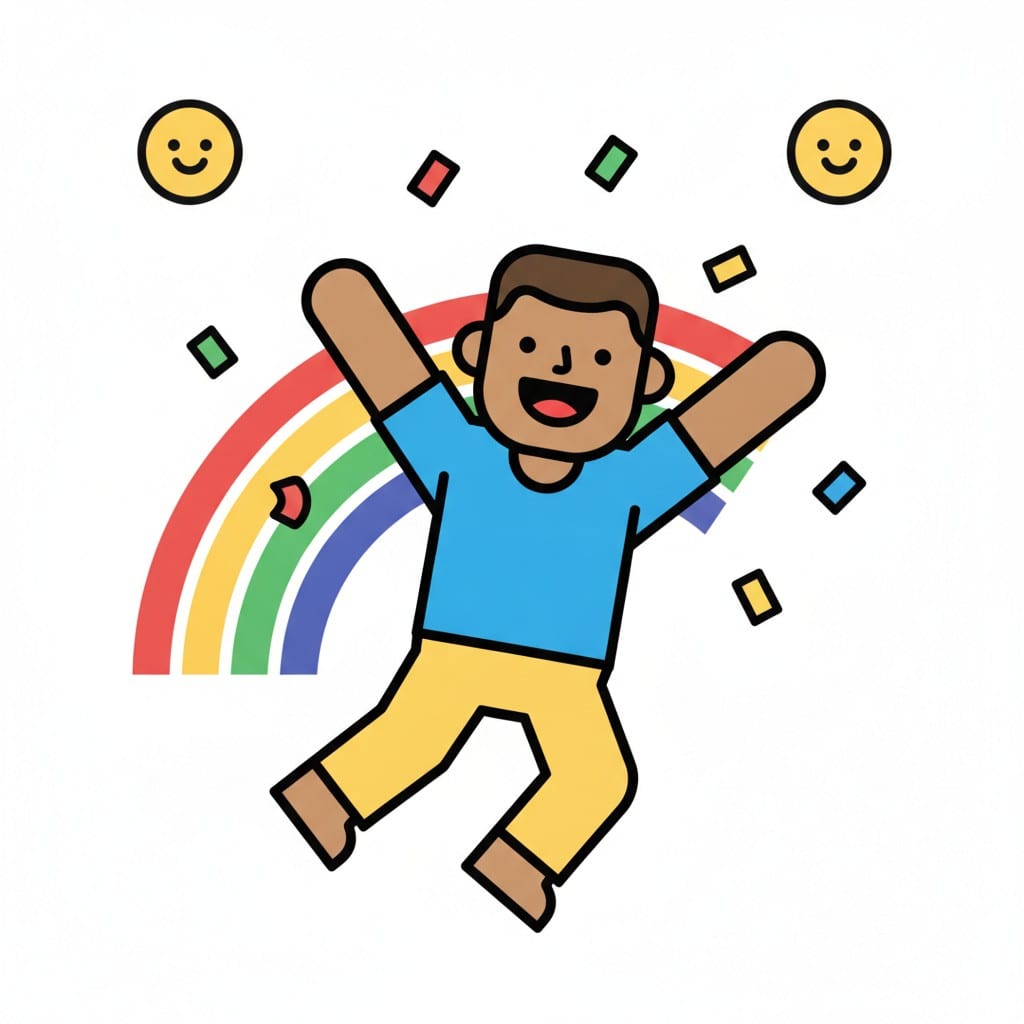 ♂
♂Have fun
A boy leaps with joy in front of a rainbow, surrounded by confetti and smiling faces.
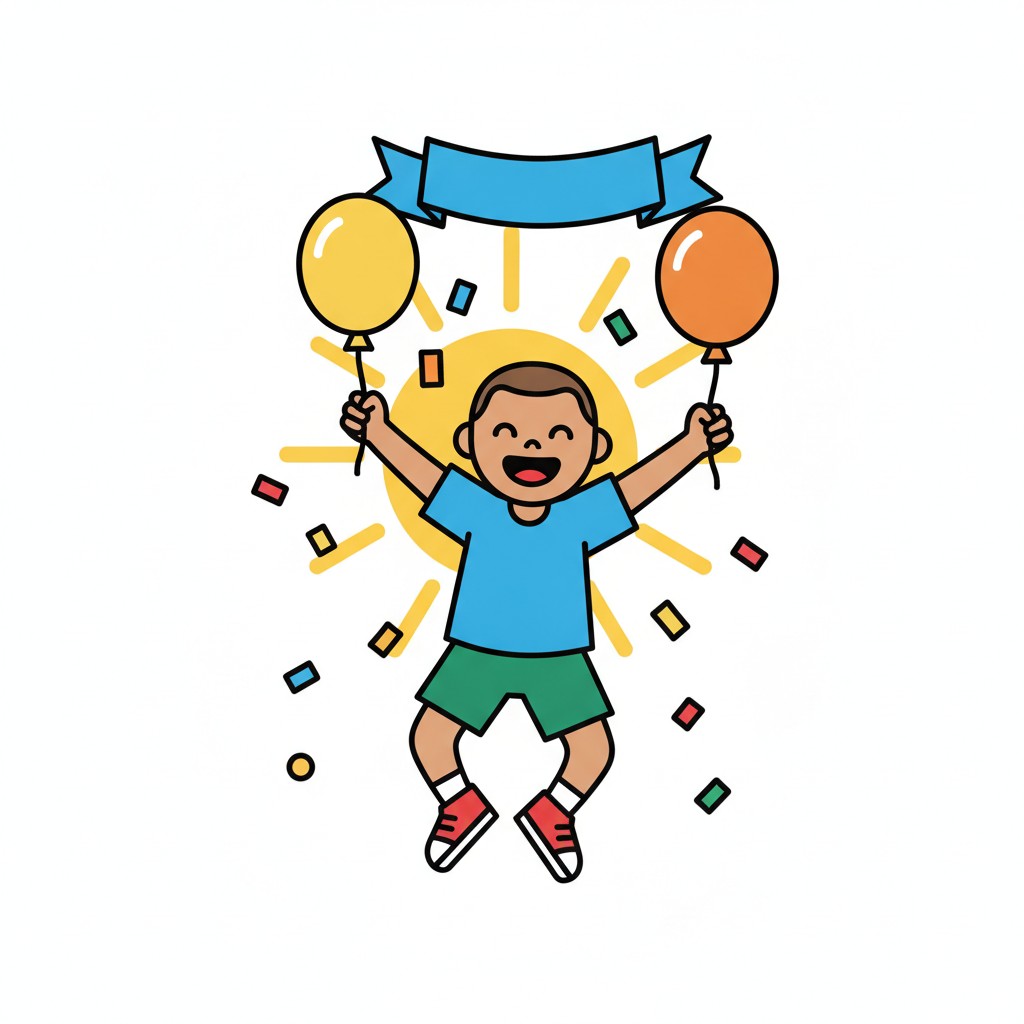 ♂
♂Fun day
A happy boy jumps with balloons and confetti.
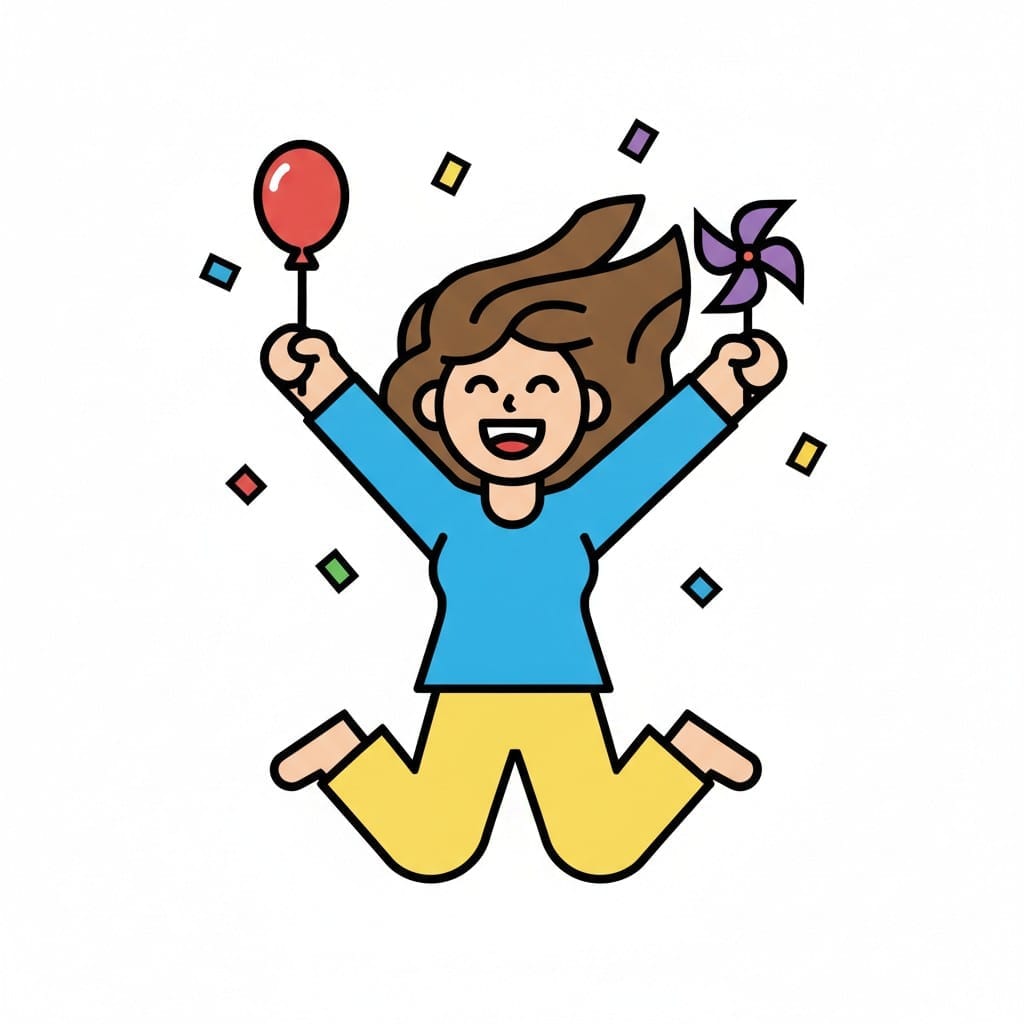 ♀
♀Jumping for joy
A girl leaps into the air holding a red balloon in one hand and a purple pinwheel in the other, with confetti all around.
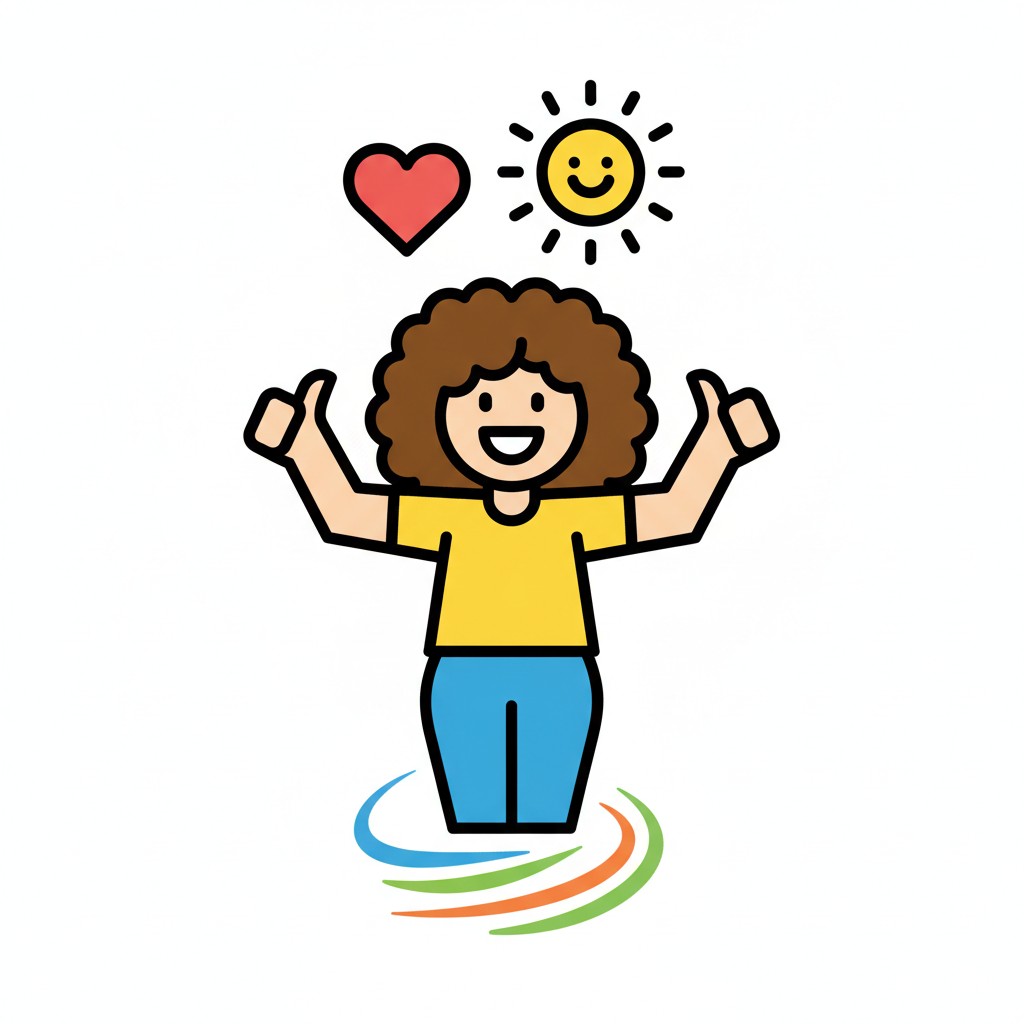 ♀
♀Have fun
A child stands with arms up smiling, with a heart and a happy sun above.
About this visual support
The phrase having fun is invisibly wide. When an adult says it, whole categories are folded in: floor play, outdoor adventure, party with cake, chatting with siblings. The child hears the word and tries to match it against something in their own mind, but does not always find the same picture the adult is holding up. That is where the expectation clash begins.
Visual support lets us make the abstraction concrete before the situation starts. You and the child look at the cards together and point out what is actually meant: dancing fun, building-something fun, or just-being-on-the-sofa fun. That short moment of specifying saves a lot of friction later, because the disappointment over mismatched expectations never gets a chance to form.
A useful move: let the child choose two cards showing what counts as fun for them today. It gives a sense of being co-creator and at the same time gives you information you can actually use. The Routined app lets you save those choices as small sequences, so you can return to them next time.
Use this image in a schedule
Build your own visual schedule with this image and download it as a print-ready PDF. Completely free.

More similar visual supports
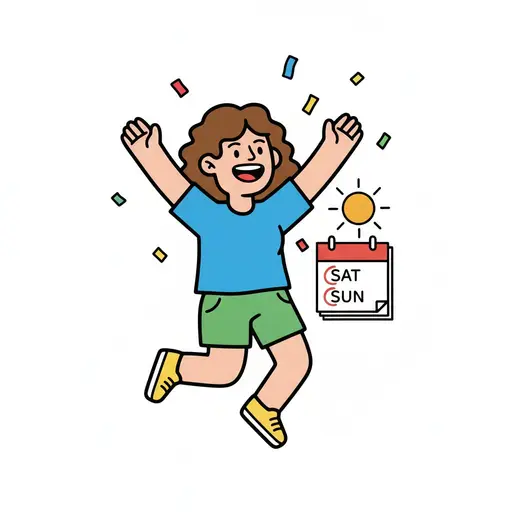
Weekend fun
A child jumps happily amid confetti beside a weekend calendar.
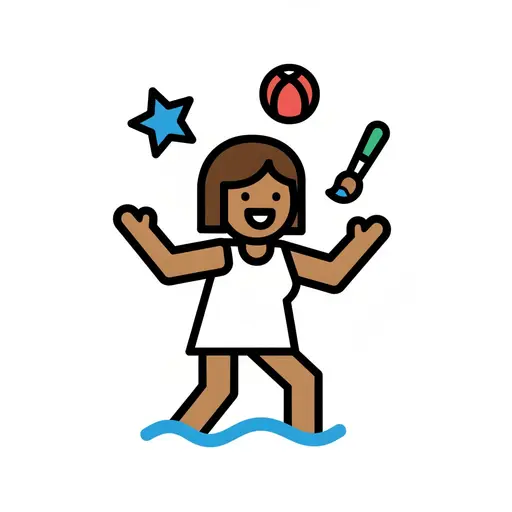
Do activities
A happy girl with arms raised surrounded by a ball, a star and a paintbrush, rea...
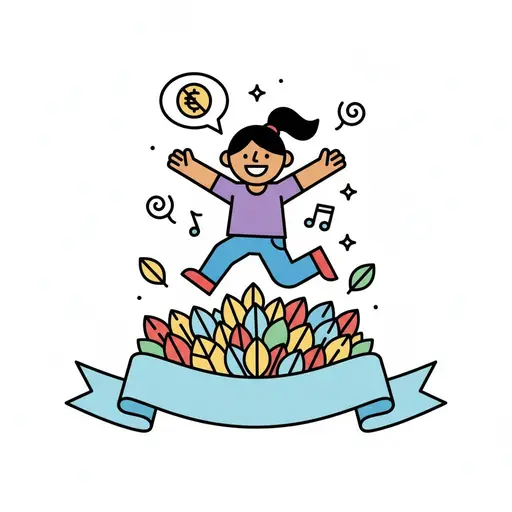
Free activity
A happy person with a ponytail jumps with arms raised above a pile of colourful ...
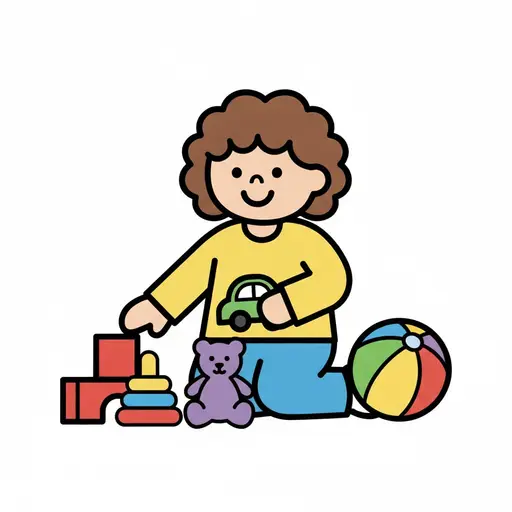
Free play
A girl plays with blocks, a car, a teddy and a ball.

Happy
An illustration of a boy with a wide, open-mouthed smile and closed eyes, expres...
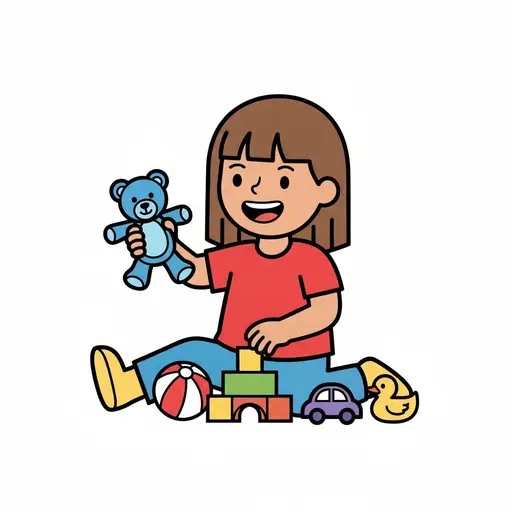
Leisure time
A girl sits on the floor with a teddy, blocks, a ball and a car.
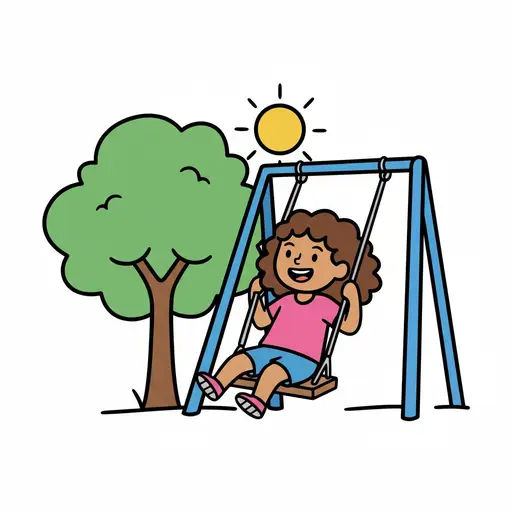
Outdoor Play
A happy girl on a swing in an outdoor setting with a tree and sun.
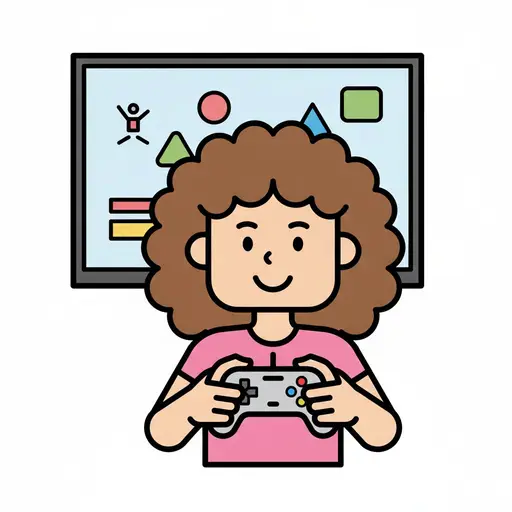
Play games
Holding a controller, a girl with curly hair plays in front of a television show...
Take the visual supports with you
In Routined you build schedules from these pictures, add timers and voice instructions, and your child follows the day on their own.


* 14-day free trial, then $2.39 a month or $20.99 a year (US pricing). Cancel anytime.