Music
The same song can feel cosy to one child and prickly to another, and the volume your friend wants may be all wrong for me. The visual support below gives the child words and pictures to steer how music sounds.
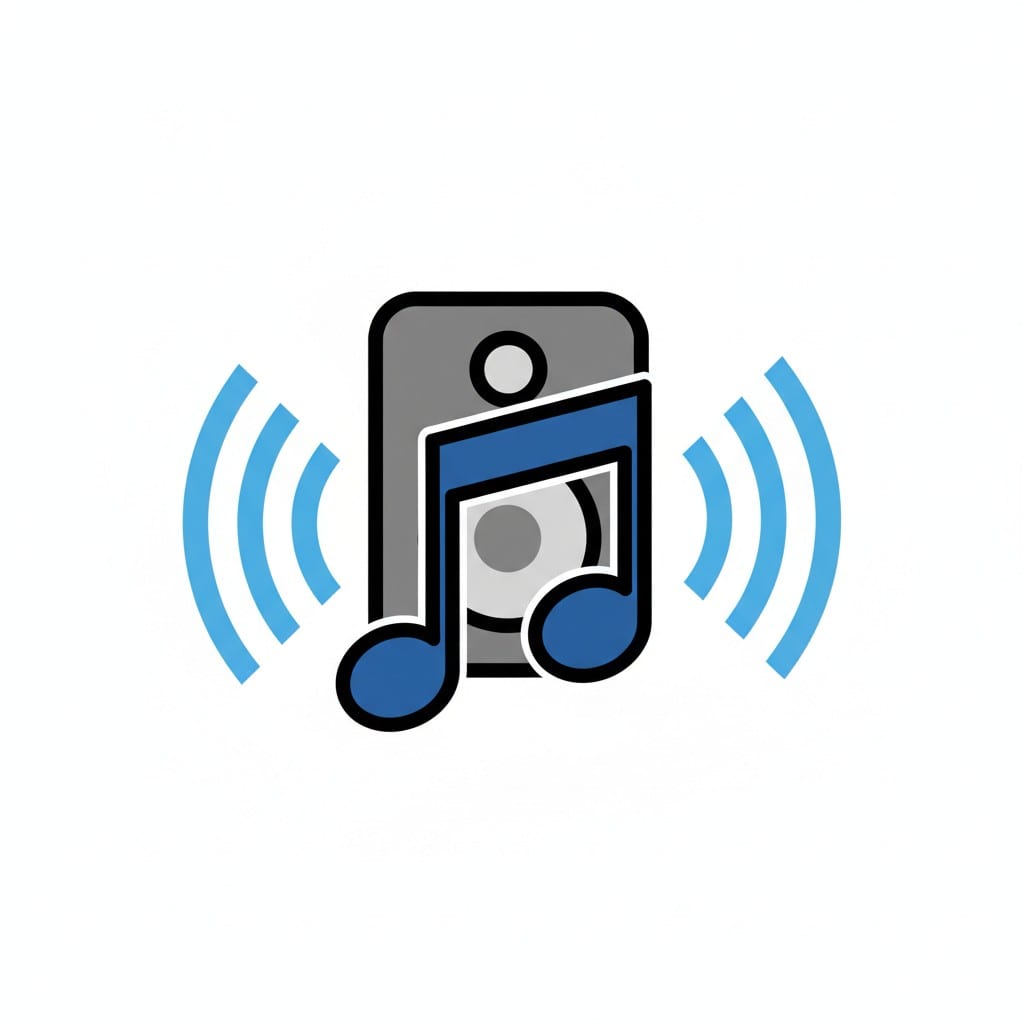
Play music
An icon showing a speaker with a blue musical note, surrounded by blue sound waves, representing playing music.

Listen to music with headphones
An icon showing black headphones with a blue musical note, surrounded by yellow sound waves, representing listening to music.

Headphones with a music note and sound waves
Black headphones with a purple music note in the middle and blue sound waves below.
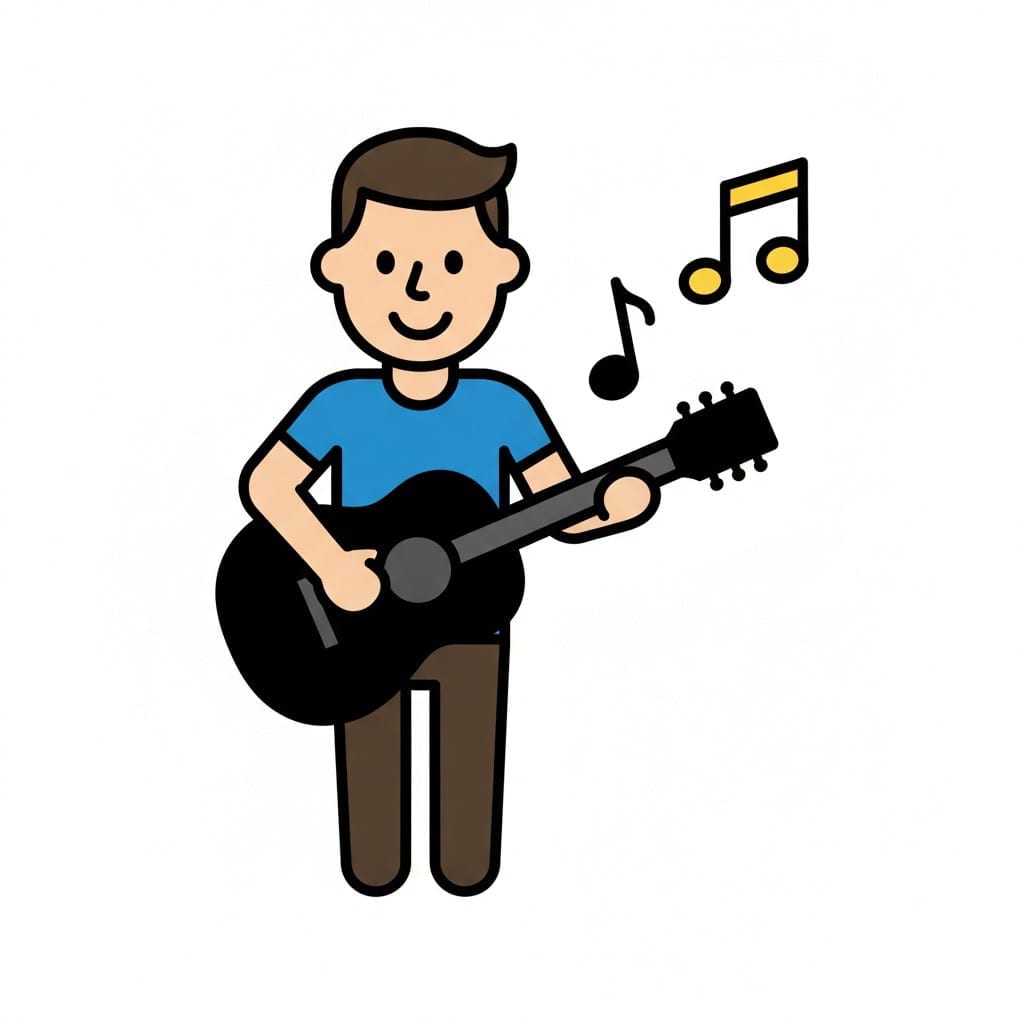 ♂
♂Person playing the guitar
A smiling person in a blue t-shirt plays a black acoustic guitar with music notes floating beside them.

Music notes and treble clef
Two blue musical notes stand next to a yellow treble clef.

Record player with a vinyl record
A turquoise record player with a black vinyl record and tonearm, with a black music note beside it.
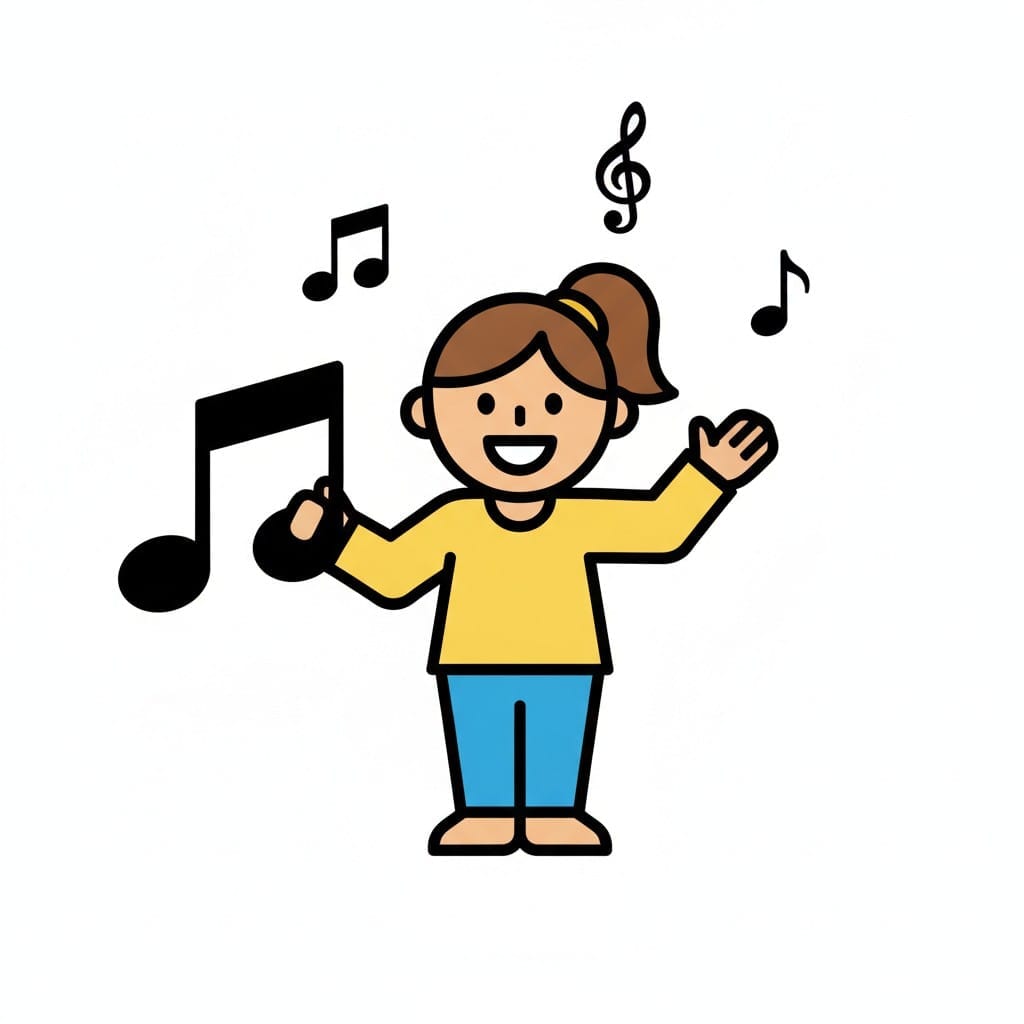 ♀
♀Girl holding a large music note
A smiling girl with a ponytail holds up a large black music note and stretches out her other arm, surrounded by notes and a treble clef.
About this visual support
Music does not pull equally hard on everyone. A calm piano loop can be exactly what one child needs to wind down after preschool, while another child experiences the very same track as intrusive. Add a speaker by a car window, the sound of step-siblings singing along, and a volume someone else has chosen, and it is fair that the body says stop.
Visual support hands control back to the ear that is listening. With a card for song, one for volume up or down, and one for pause, the child can speak up without finding the words in the moment. It also becomes a way to negotiate in a group: two quiet songs, then a livelier one, then a break.
A concrete tip: build a small playlist where every track has its own picture. The choice becomes about pointing, not reading or remembering. In the Routined app, the music session can sit as a recurring slot in the afternoon, so the child knows when it is time to listen and when it is time to switch off.
Use this image in a schedule
Build your own visual schedule with this image and download it as a print-ready PDF. Completely free.

More similar visual supports
Activities
A child surrounded by icons for a book, paint palette, ball and building block.
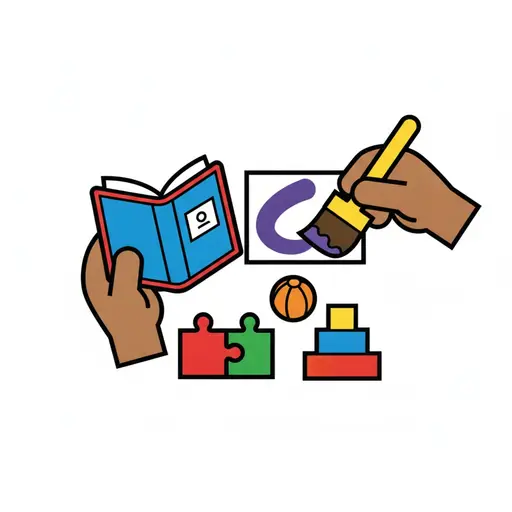
Activity
Hands holding a book and a paintbrush, surrounded by a puzzle, a ball and buildi...
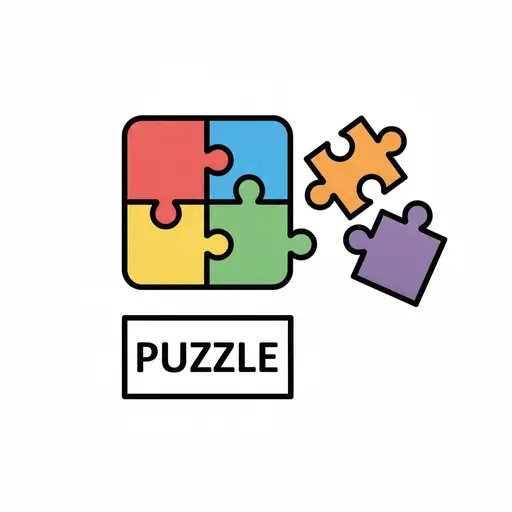
Do a puzzle
Four colourful jigsaw pieces joined, two loose pieces and the word PUZZLE.
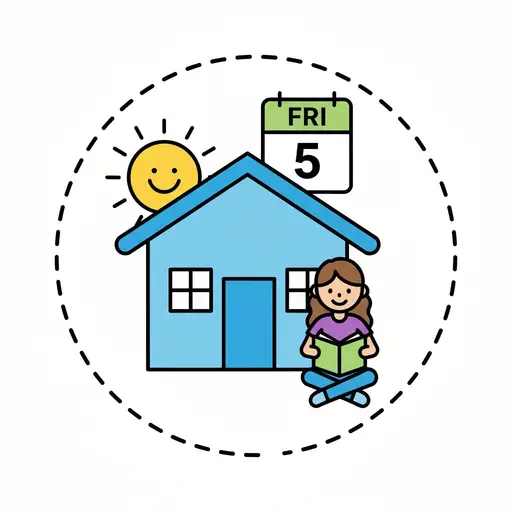
Home Day Friday
A girl sits reading a book outside a house, with a sun and a calendar showing Fr...
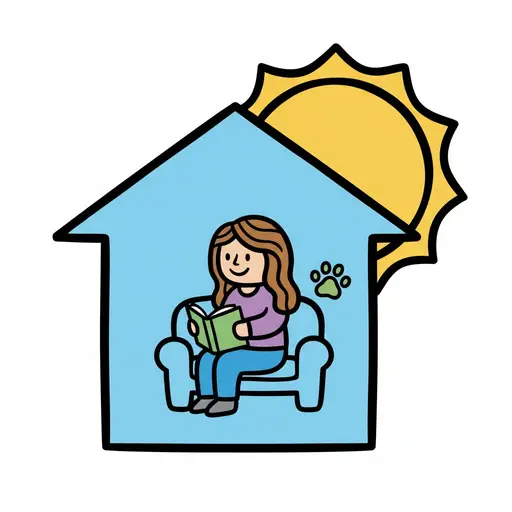
Home today
A girl sits in an armchair reading a book at home while the sun shines
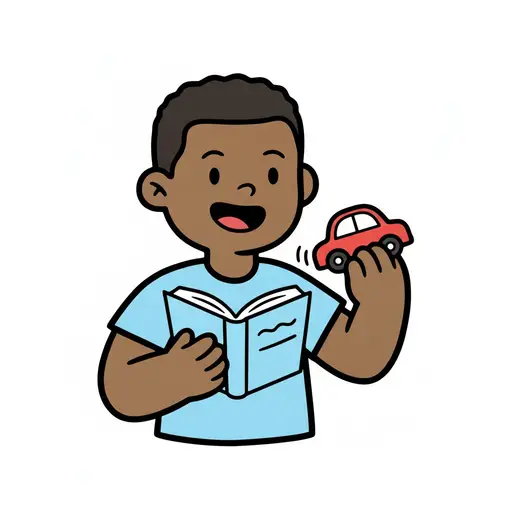
Play and read
A child reads a book while holding up a toy car.

Play stories
A person reads a book and plays with a yellow dinosaur and a red robot.
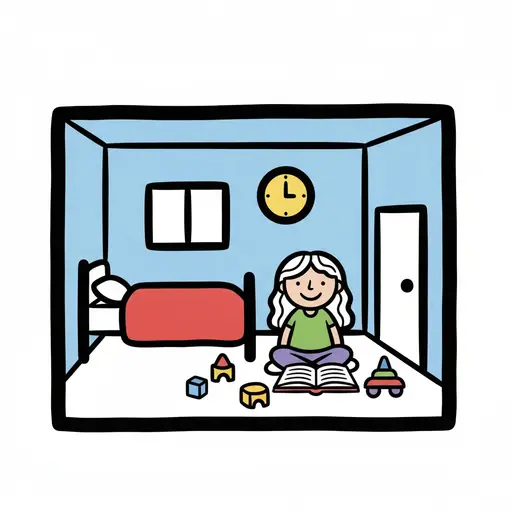
Room time
A girl sits on her bedroom floor with an open book and building blocks around he...
Take the visual supports with you
In Routined you build schedules from these pictures, add timers and voice instructions, and your child follows the day on their own.


* 14-day free trial, then $2.39 a month or $20.99 a year (US pricing). Cancel anytime.