Phone time
Twenty minutes inside a game feel like five, and the ending often hits harder than it should for everyone involved. The visual support below makes the time visible from the first minute, so the stop is something the child can see coming long before it arrives.
 ♀
♀Phone time
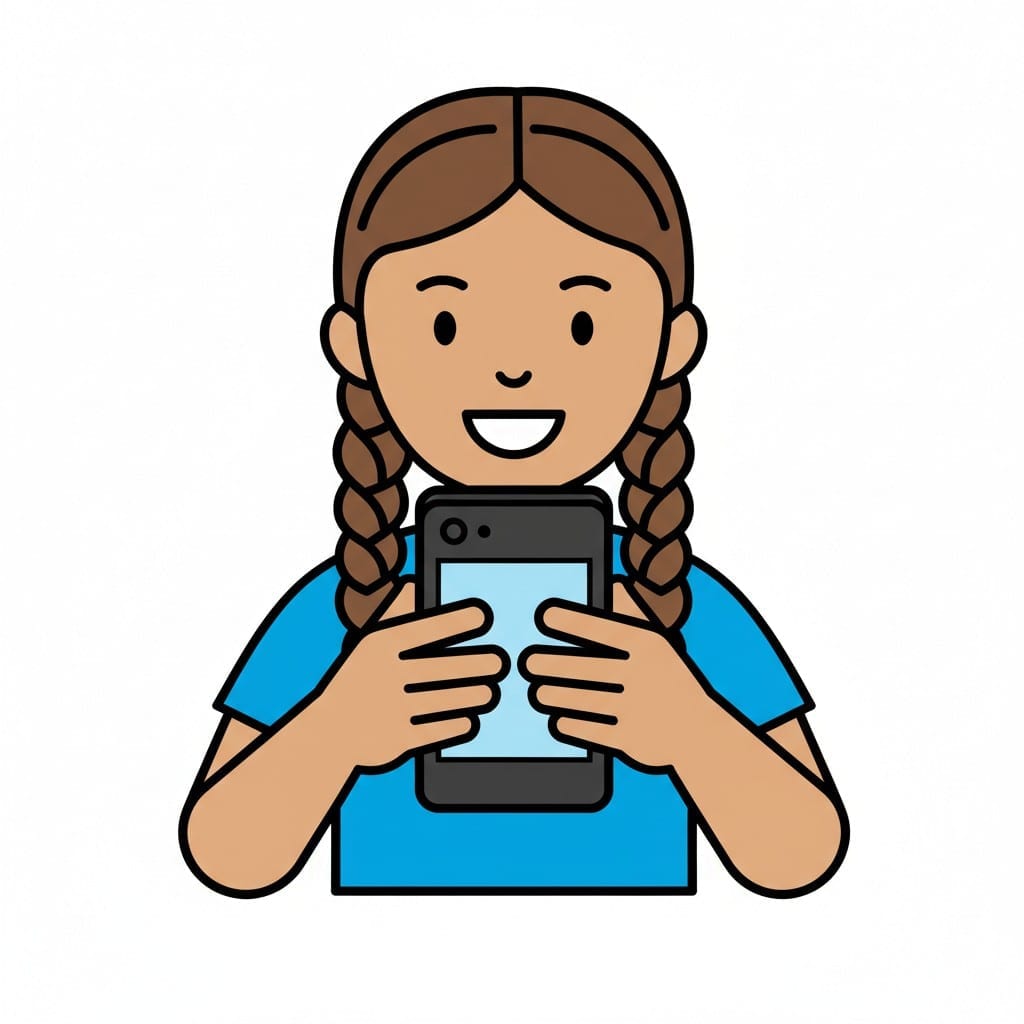
A girl holding a smartphone and looking at the screen.
 ♀
♀Phone time
A person smiling while holding a smartphone and looking at the screen.
 ♀
♀Relaxing with the phone
A woman sits on a beanbag looking at her phone.
About this visual support
Screen time bends a child's sense of minutes. A game pulls them into a state where time compresses, and the moment you announce that the phone is going away, the reaction often feels disproportionate to what just happened. It is not stubbornness – it is the experience of being yanked out of something they were still inside, with no warning that the door was closing.
Making the time visible changes the dynamic. When the child can see when phone time started, when it ends, and one or two warning markers in between, the stop is no longer a surprise sprung on them. They get a chance to finish a level, save progress, or simply prepare mentally for the shift back to the rest of the room.
A practical move: decide in advance what comes AFTER the phone and put that image at the end of the sequence. Something to walk towards is easier than something to walk away from, especially mid-session. In Routined you can pair the visual sequence with a countdown, so the order and the time sit on the same screen. The app comes with a 14-day trial.
Use this image in a schedule
Build your own visual schedule with this image and download it as a print-ready PDF. Completely free.

More similar visual supports

iPhone
An illustration of an iPhone with icons for camera, Apple logo, music, and messa...

Use iPhone
A hand taps the screen of a smartphone.

Use phone
A woman holds a phone with a video on the screen.

Watch mobile
A person with straight hair watching a mobile phone with a play button on the sc...

Check the phone
A child holds a mobile phone and a speech bubble with a search icon appears abov...

Screen time
A girl holds a tablet showing video and search above her head.

Watch phone
A woman holds a phone horizontally and watches the screen.

Circus animals app
A cartoon figure on a trapeze holds a tablet displaying an elephant, while a lio...
Take the visual supports with you
In Routined you build schedules from these pictures, add timers and voice instructions, and your child follows the day on their own.


* 14-day free trial, then $2.39 a month or $20.99 a year (US pricing). Cancel anytime.