Pick a music note
Pointing is faster than speaking. When words run out or vanish in the moment, a visual choice still counts as communication, often a more honest one than the patched-together sentence would have been. The steps below show what that looks like at home.
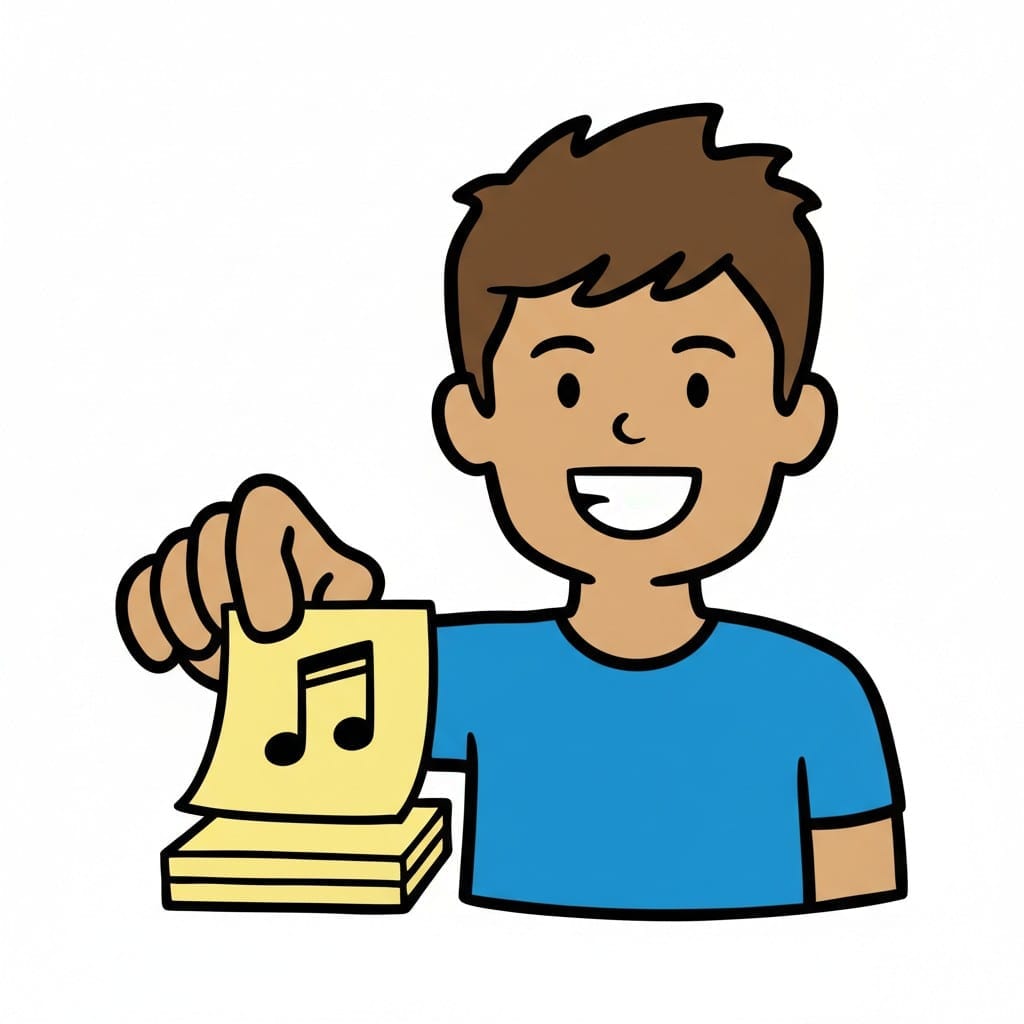 ♂
♂Boy picks music note
A boy holds up a yellow note with a black eighth note symbol on it and smiles. In front of him is a small stack of similar notes.
About this visual support
There is a gap between what the child wants to say and what actually comes out. The thought is there, the feeling is there, but the word does not arrive in time – and by the time it would, the moment has passed. That is not a lack of language; it is a pinch point between idea and expression, and it tends to produce frustration instead of communication.
A visual choice removes that bottleneck. When the options are already laid out as pictures, the decision is half-made before the child reaches for it. A finger is enough; no sentence needs to be built. The exchange happens at the speed thought actually moves, which removes the frustration that builds up when speech cannot keep up.
A practical move: keep the number of options small at first, three is plenty. Long rows of choices turn a low-effort tool into a new kind of strain, even when it is all visual. In Routined you can set up your own small choice boards that match your family's everyday life and language, and the whole app comes with a 14-day trial.
Use this image in a schedule
Build your own visual schedule with this image and download it as a print-ready PDF. Completely free.

More similar visual supports
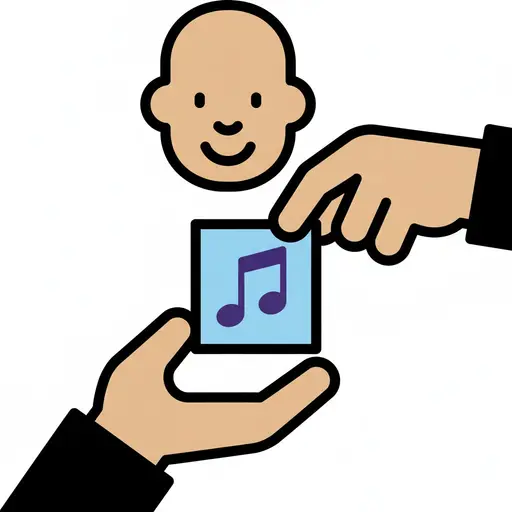
Pick note
One hand hands a blue card with a purple musical note to another hand. A face ic...
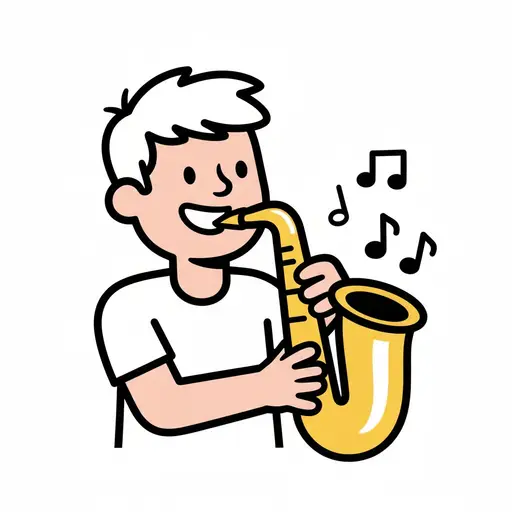
Practise the saxophone
A boy blows into a saxophone while music notes float around him.
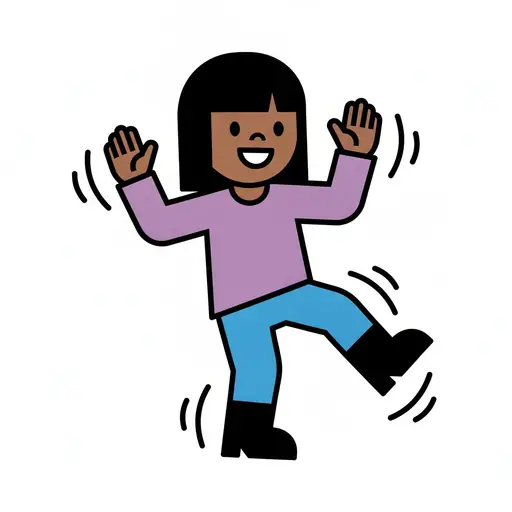
Dance
A girl dances with her arms raised and one leg lifted, with movement lines aroun...
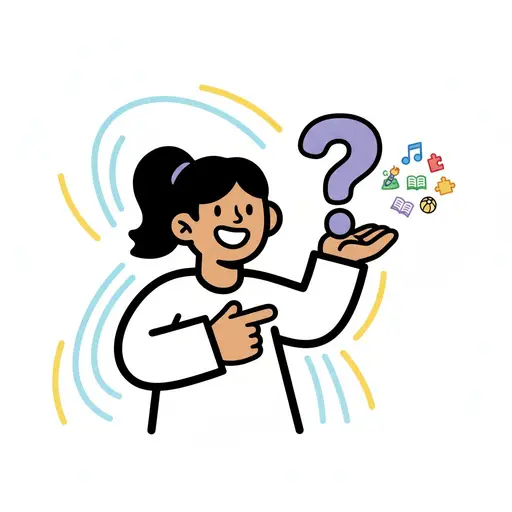
Do an activity
A girl points to one side while holding up a question mark surrounded by icons f...
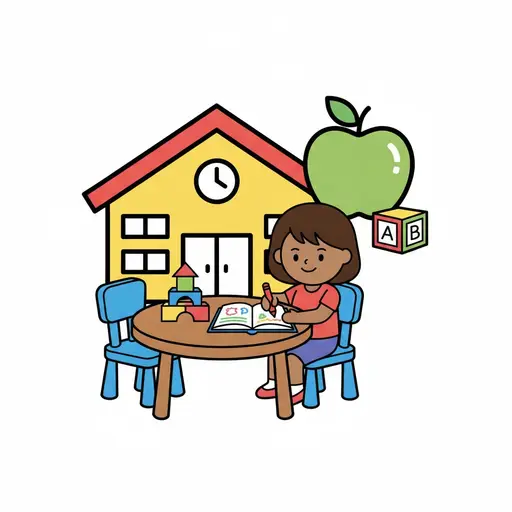
Kindergarten
Three stacked building bricks in red, blue and yellow.
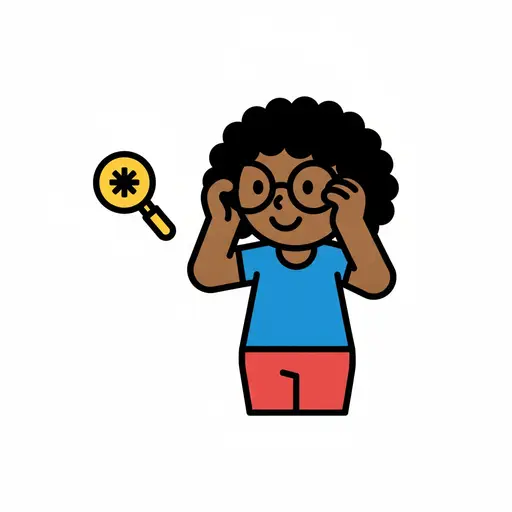
Look
A girl holds her hands to her glasses and looks ahead, with a magnifying glass b...
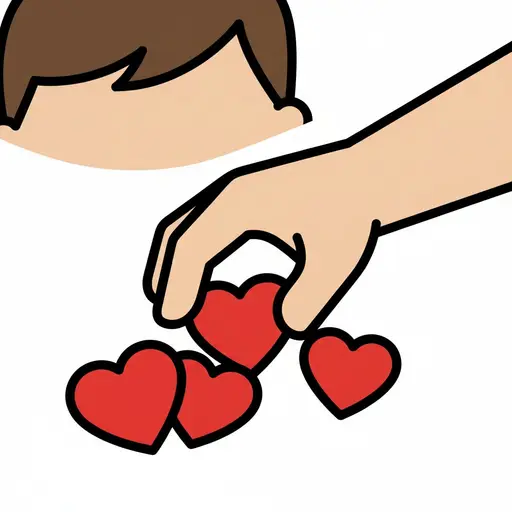
Pick a heart
A hand reaching for one of several red heart shapes lying on a surface.
School activities
A boy stands holding an open book surrounded by symbols of a pencil, a globe, a ...
Take the visual supports with you
In Routined you build schedules from these pictures, add timers and voice instructions, and your child follows the day on their own.


* 14-day free trial, then $2.39 a month or $20.99 a year (US pricing). Cancel anytime.