Play bingo
Bingo lives in the pauses between numbers, and that is exactly where things tend to break. The visual support below gives each step a visible place so shouts and jumps do not take over the round.
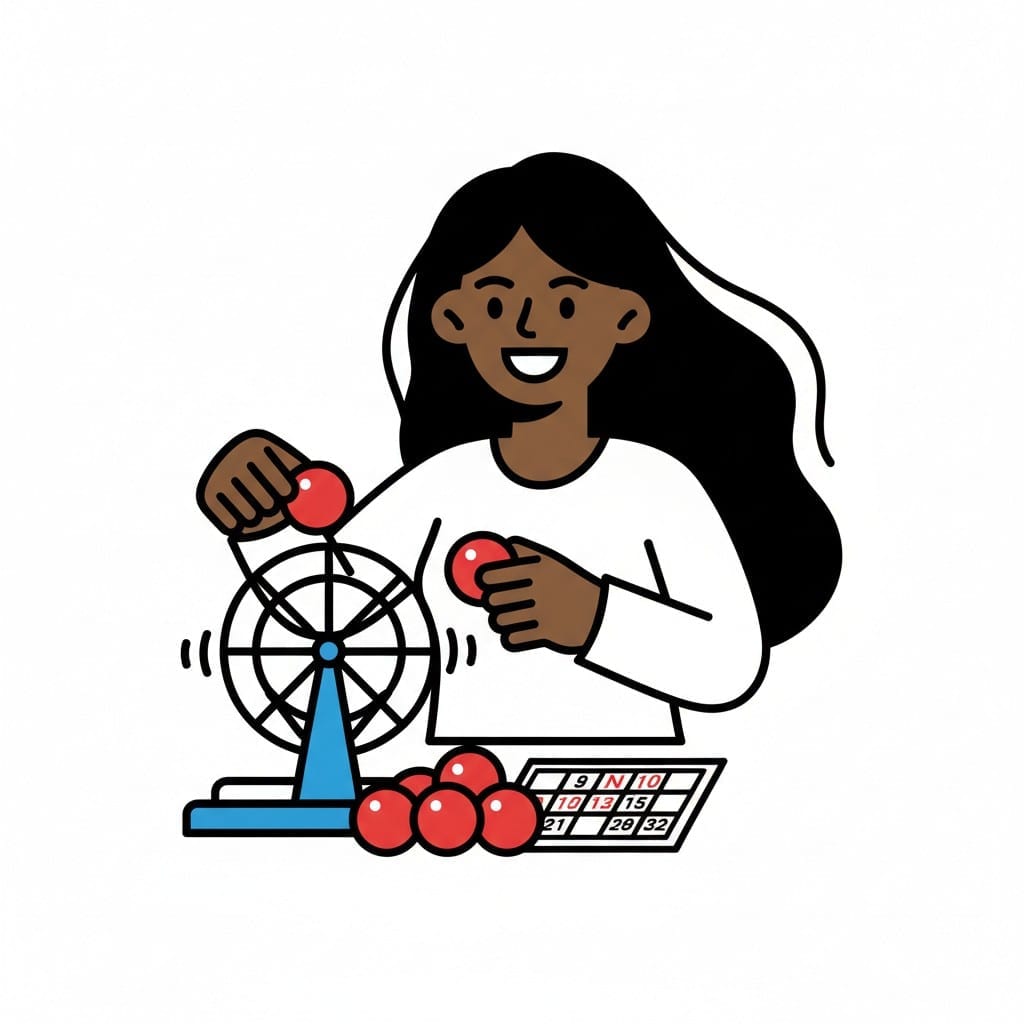 ♀
♀Woman playing bingo
A person with long, dark hair is playing bingo, holding red bingo balls and spinning the bingo wheel next to a bingo card.
About this visual support
Bingo is one of the few games where knowing the rules is not enough, you also have to tolerate the air between the numbers. That is where the brain has to hold a line in memory, scan the card, and at the same time stay quiet. For many children that combination is more demanding than the math.
With visual support each part of the round gets its own square: listen to the caller, search the card, place the marker, wait for the next number. When the child can move a finger from picture to picture, it is clear which step is happening right now, and it becomes easier to hold back the bingo shout until the row is truly full. The win then comes by itself.
A practical tip: place a small card or picture next to each player showing whose turn it is to shout when someone actually has a line. That way the players who have not won know their job right now is to listen, not to correct. To layer the bingo round with a short break and a snack as their own steps, Routined offers a 14-day trial.
Use this image in a schedule
Build your own visual schedule with this image and download it as a print-ready PDF. Completely free.

More similar visual supports
Game
Two hands rolling dice and moving pieces on a colorful board game.
Activity
Hands holding a book and a paintbrush, surrounded by a puzzle, a ball and buildi...
Do puzzle
A girl with brown hair in a ponytail sits at a table assembling a puzzle with se...

Indoor play
A child sits cross-legged on a rug with a tablet, with a teddy and books beside ...
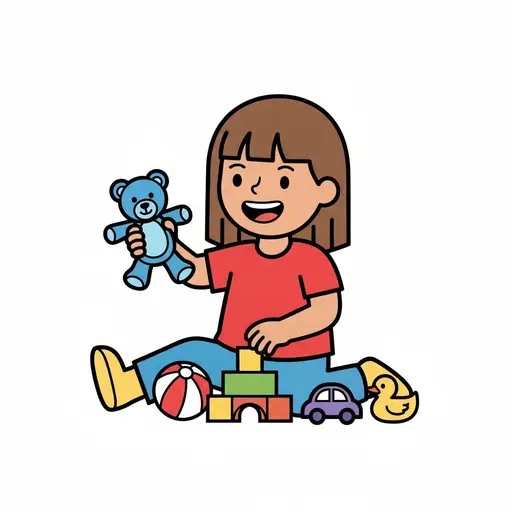
Leisure time
A girl sits on the floor with a teddy, blocks, a ball and a car.
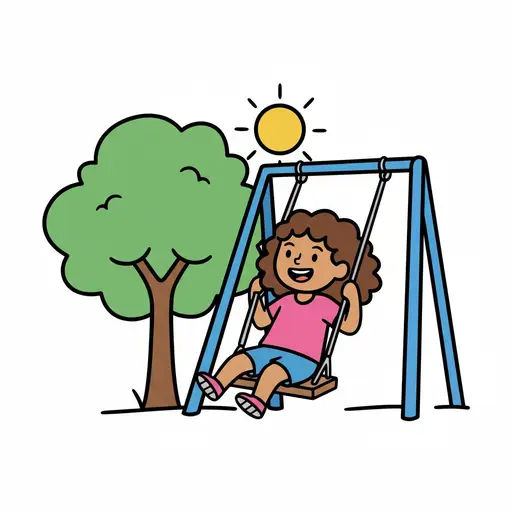
Outdoor Play
A happy girl on a swing in an outdoor setting with a tree and sun.
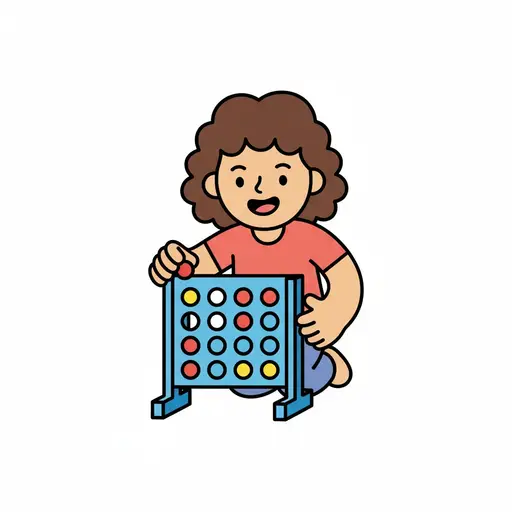
Play Quattro
A child playing the game Quattro, inserting a red disc into the blue grid.

Play time
A happy child holds up a ball, a toy car and a teddy.
Take the visual supports with you
In Routined you build schedules from these pictures, add timers and voice instructions, and your child follows the day on their own.


* 14-day free trial, then $2.39 a month or $20.99 a year (US pricing). Cancel anytime.