Play iPad and toys
The iPad wins every straight comparison. A tower of blocks feels slow next to a game that rewards every second. The visuals below show the swap as an order, so the choice is not screen or nothing.
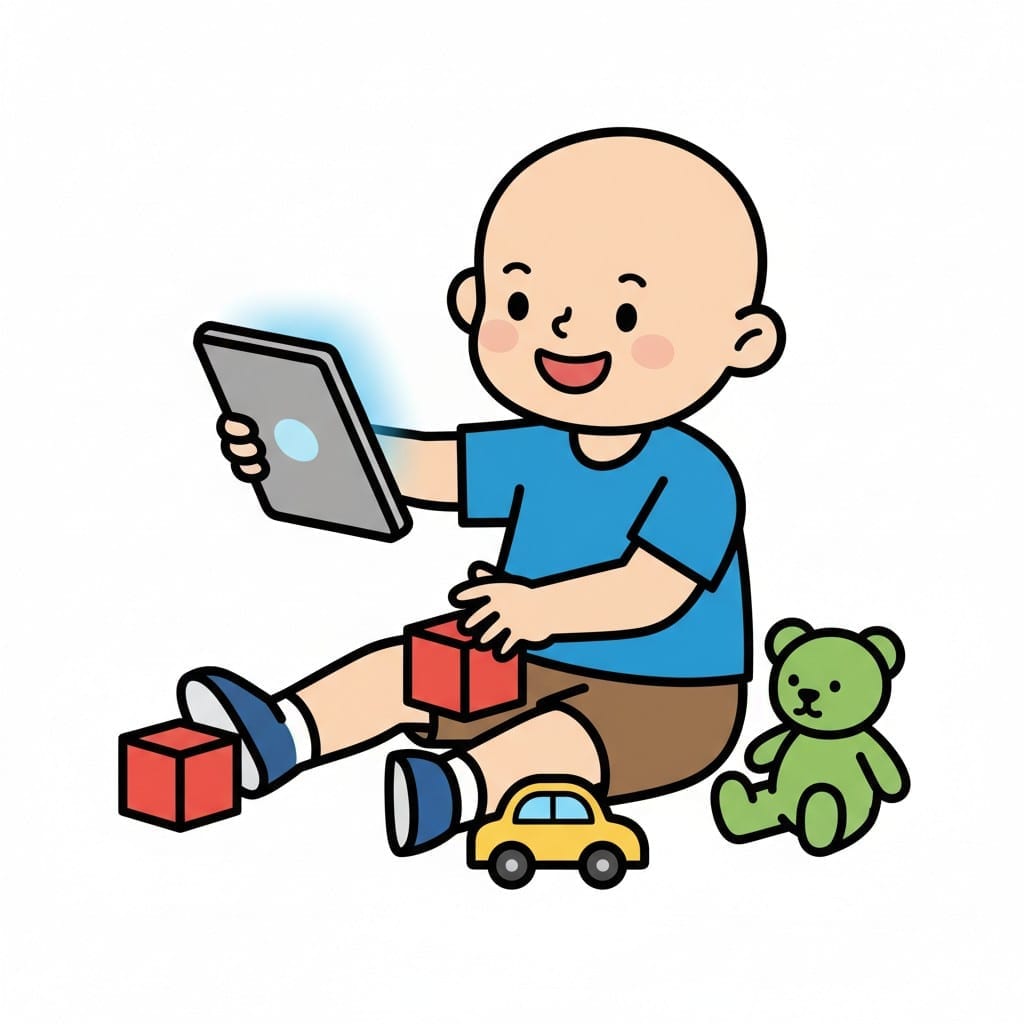 ♂
♂Boy playing iPad and toys
A happy boy is sitting on the floor holding an iPad. Around him are red building blocks, a yellow toy car, and a green teddy bear.
About this visual support
Putting down the iPad to play with blocks is not a fair question if you ask it head-on. The brain compares two things directly: fast reward versus slow build-up. The screen wins that comparison every time, and that is not a sign the child is addicted, it is a sign that the question is wrongly framed.
Visual support replaces the comparison with a sequence. When the child sees toys first, then iPad, then toys again, it is no longer a contest but an order, and the body can let go of the screen because it knows the screen is coming back. This matters especially for kids with ADHD, where the dopamine gap between blocks and games is wider and the transition otherwise turns into a fight every single time.
A concrete tip: insert a short physical step between the screen block and the toys, such as fetching water or doing ten jumps. That breaks the screen rhythm in the body before the blocks have to compete. To put timers on the blocks, you can build it in Routined after a 14-day trial.
Use this image in a schedule
Build your own visual schedule with this image and download it as a print-ready PDF. Completely free.

More similar visual supports
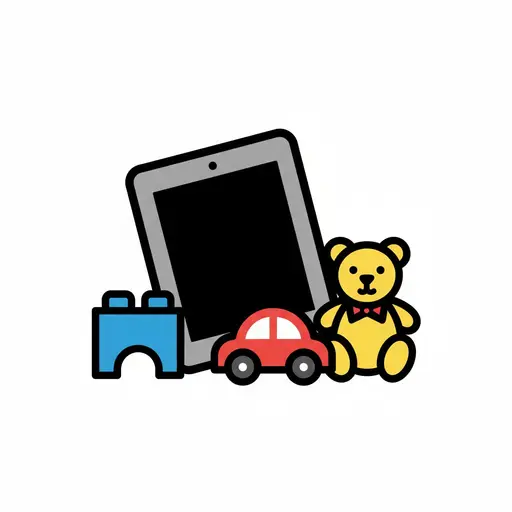
iPad and toys
An iPad is leaning against a blue building block. Next to it are a red toy car a...
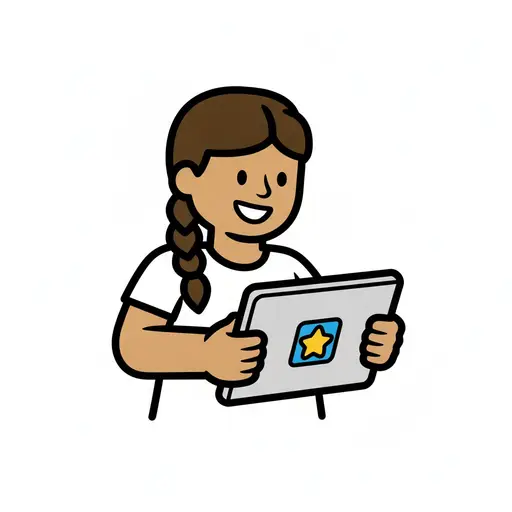
Play on the tablet
A girl with a braid sits at a table and holds a tablet showing a yellow star.
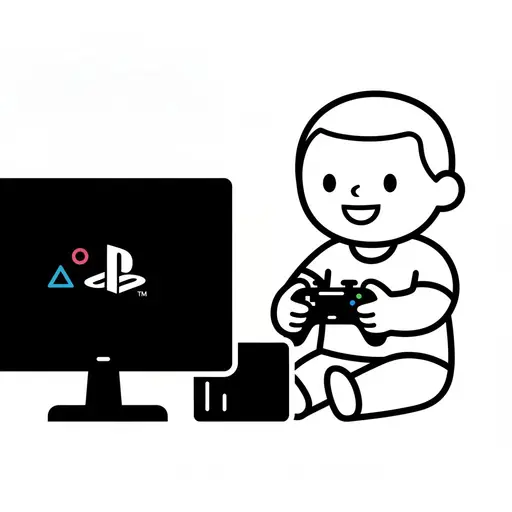
Play Game Console
A happy boy sits on the floor playing a video game with a controller in front of...
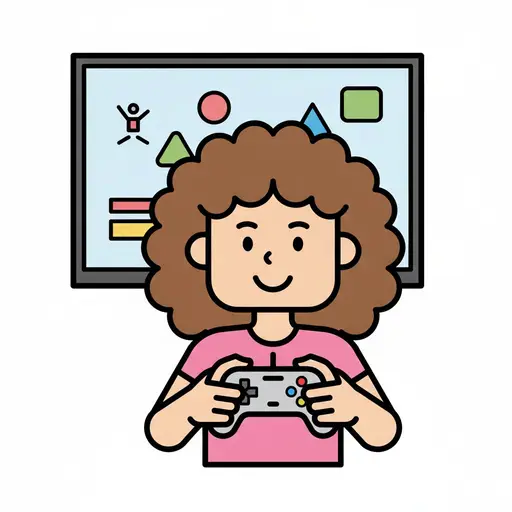
Play games
Holding a controller, a girl with curly hair plays in front of a television show...
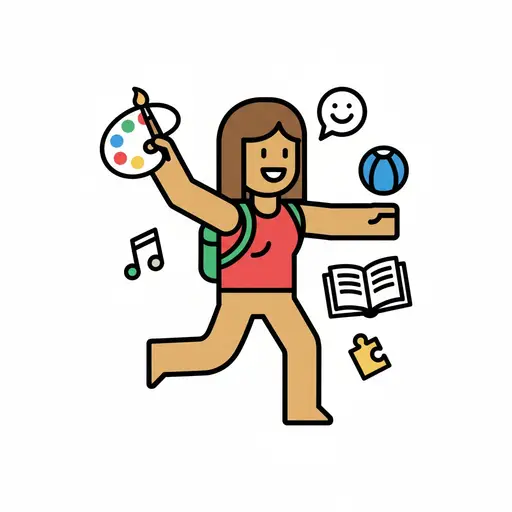
Activities
A child surrounded by icons for a book, paint palette, ball and building block.
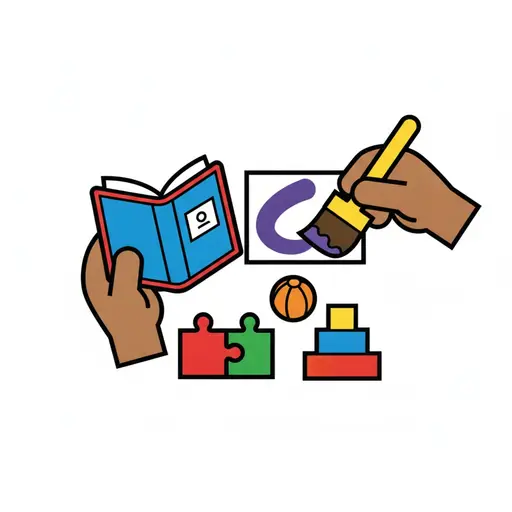
Activity
Hands holding a book and a paintbrush, surrounded by a puzzle, a ball and buildi...
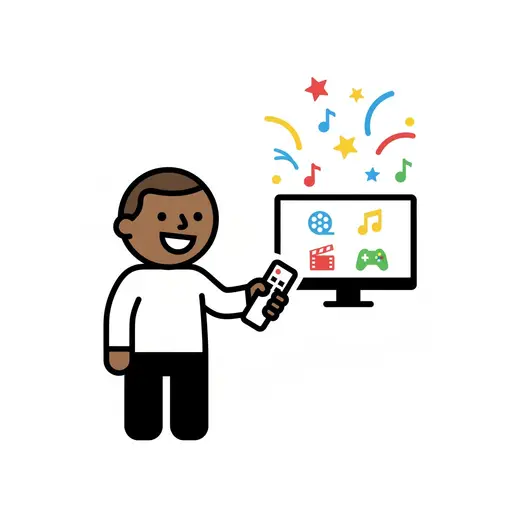
Entertainment
A boy points a remote at a screen showing film, music and game symbols.
Play video games
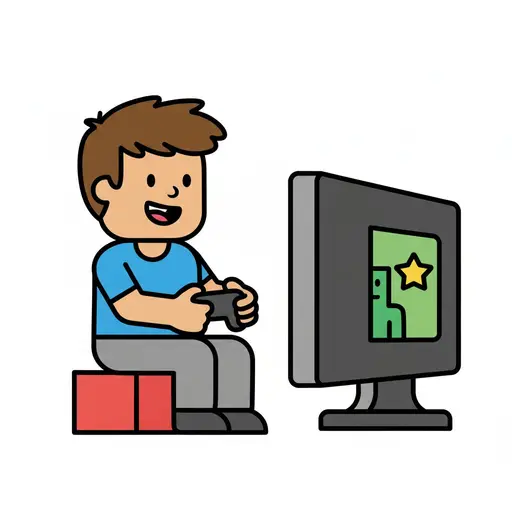
A boy sits playing a video game with a controller in front of a screen.
Take the visual supports with you
In Routined you build schedules from these pictures, add timers and voice instructions, and your child follows the day on their own.


* 14-day free trial, then $2.39 a month or $20.99 a year (US pricing). Cancel anytime.