Play video games
Video games are fun in a way that swallows all sense of time. They start with a quick click on the controller and end forty minutes later in an argument about why the screen has to go off. The visual support below moves the ending from surprise to plan.
 ♂
♂Play video games
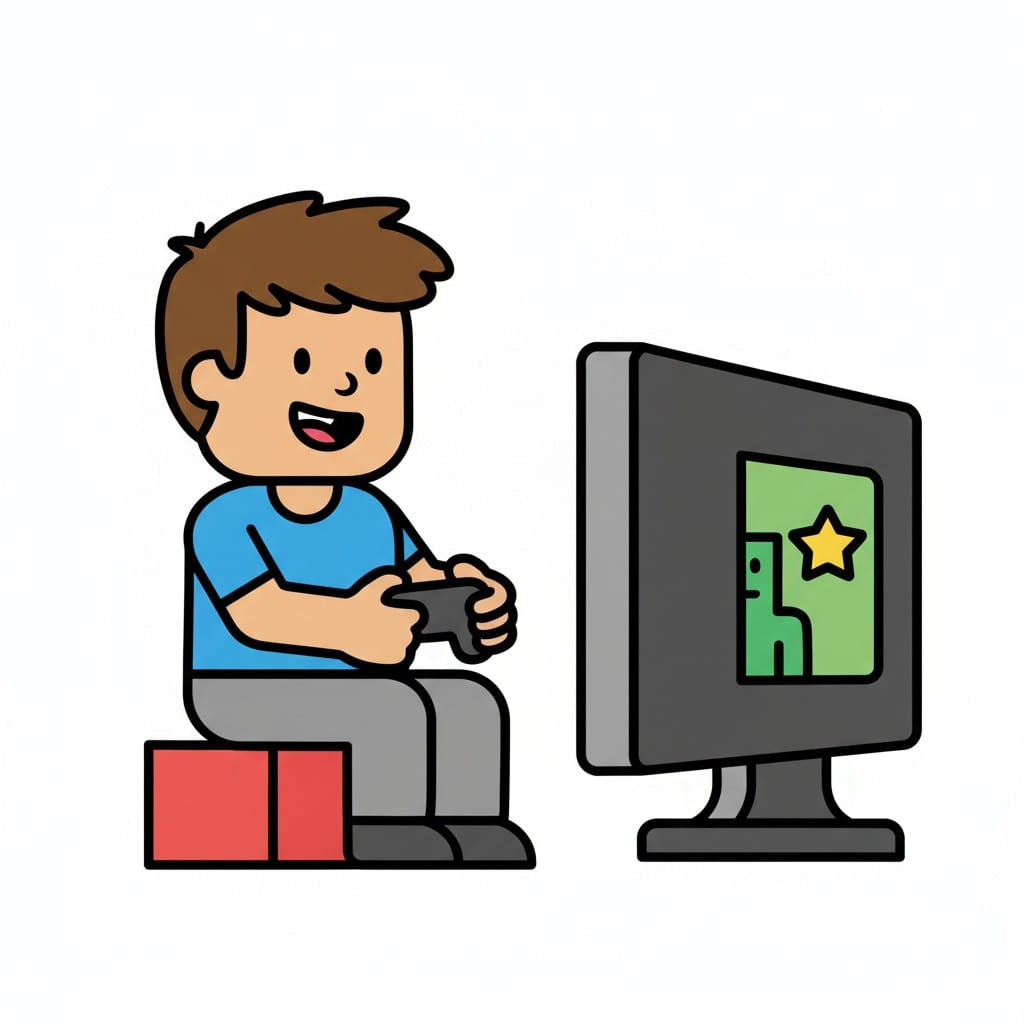
A boy sits playing a video game with a controller in front of a screen.
About this visual support
When a child is playing, the brain is in a rare state of complete focus — and that is exactly what makes stopping so hard. Time stops registering. Ten minutes and forty minutes feel like the same minute to the player. When you say it is time to wrap up, it lands as an external interruption rather than a natural break in the action.
The visual support flips the setup by making the end visible from the start. When the child begins with a picture showing play and a picture showing turn off, the ending is in the same room as the gaming all along. No surprise cut — just the next step in a sequence both of you have seen.
One concrete tip: pair the picture sequence with a visible timer the child can glance at in the corner of the screen. Switch off then stops being your call and becomes the clock's. The discussion shifts from whether the session can keep going to following what was already agreed. If you want to embed screen time in a longer daily routine — homework first, play later — you can build the whole sequence in Routined.
Use this image in a schedule
Build your own visual schedule with this image and download it as a print-ready PDF. Completely free.

More similar visual supports
Play Game Console
A happy boy sits on the floor playing a video game with a controller in front of...

Activities
A child surrounded by icons for a book, paint palette, ball and building block.
Activity
Hands holding a book and a paintbrush, surrounded by a puzzle, a ball and buildi...

Concert
A stage with a guitar, drums and a microphone under colorful lights.
Go to a concert
A person at a concert holds up a phone while music plays.
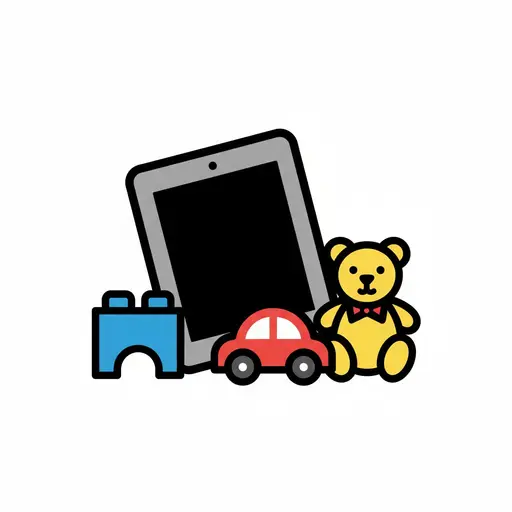
iPad and toys
An iPad is leaning against a blue building block. Next to it are a red toy car a...
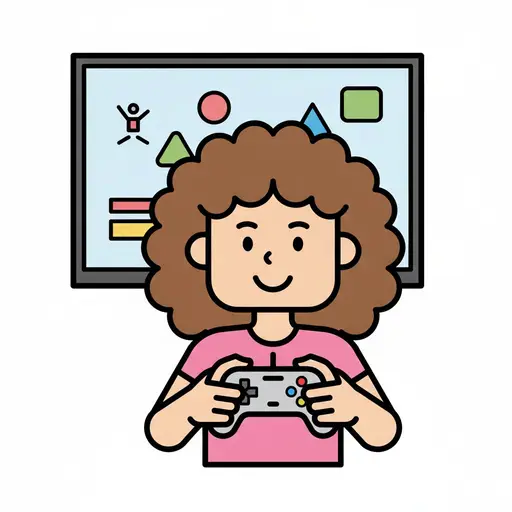
Play games
Holding a controller, a girl with curly hair plays in front of a television show...
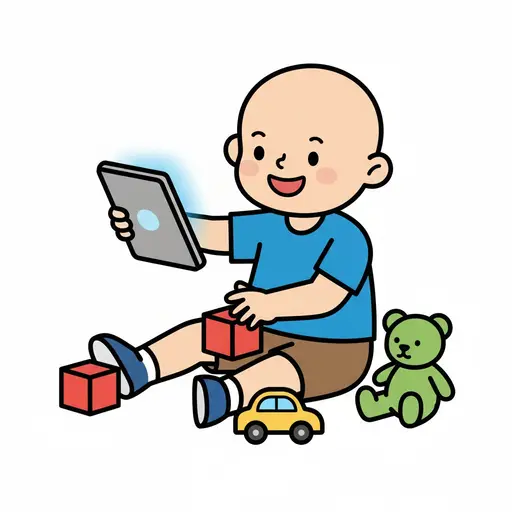
Play iPad and toys
A happy boy is sitting on the floor holding an iPad. Around him are red building...
Take the visual supports with you
In Routined you build schedules from these pictures, add timers and voice instructions, and your child follows the day on their own.


* 14-day free trial, then $2.39 a month or $20.99 a year (US pricing). Cancel anytime.