Quiet reset
Deliberately slowing down feels almost contradictory when the energy still simmers inside and the body flatly refuses to land, however much it ought to rest. Give the wind-down a few concrete, visible anchors to follow with the visual support below.
 ♀
♀Be quiet
A girl holds a finger to her lips as a sign to be quiet.
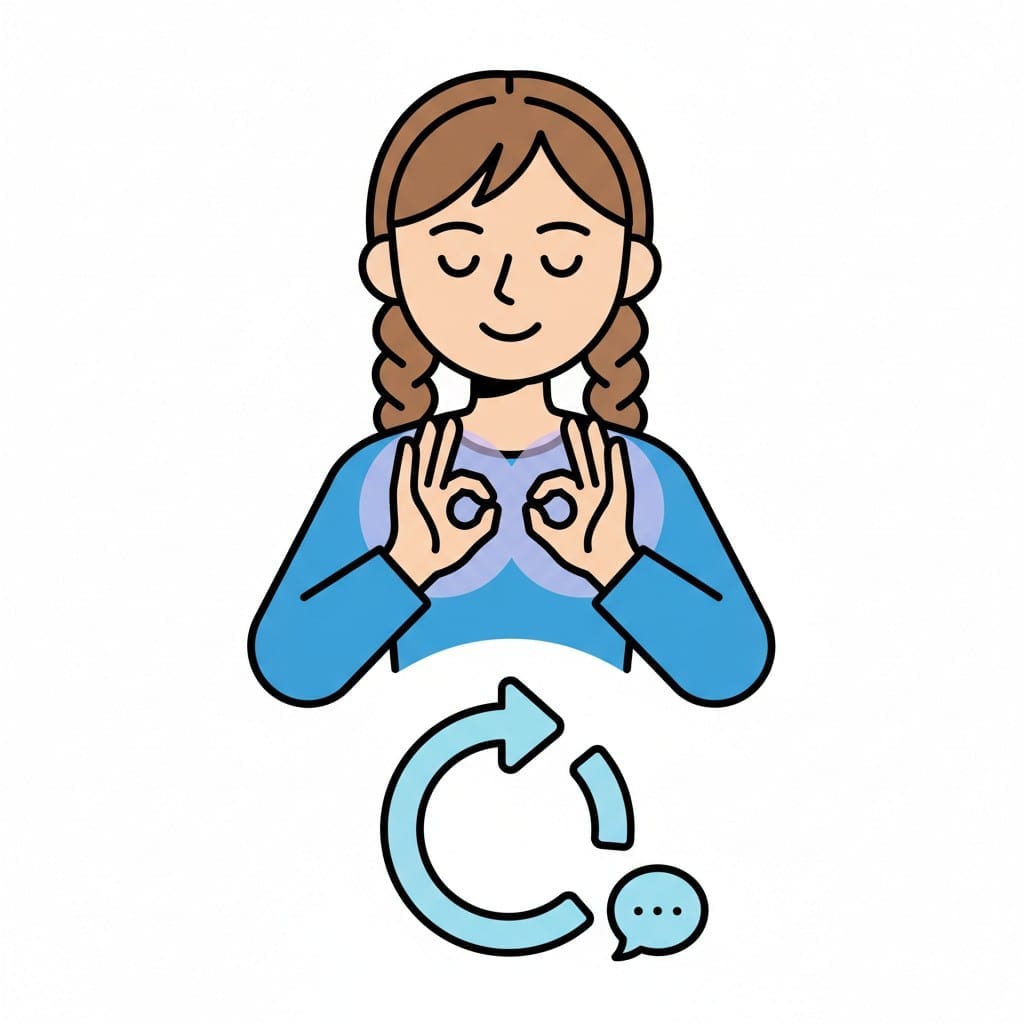 ♀
♀Breathe and calm down
A girl with closed eyes breathes calmly with her hands at her chest beside a reset symbol.
About this visual support
Asking a wound-up body to wind down is almost a paradox. The energy still simmers inside, the thoughts race, and the instruction to be calm can feel like one more thing to fail at. With nothing concrete to do, calm stays a vague idea rather than a step the child can take, and the agitation often keeps simmering.
Visual support gives the wind-down a shape. Instead of the fuzzy calm down, the pictures show solid things the body can do: sit in a set spot, draw breath in slowly, feel the feet on the floor, rest the eyes on something still. When landing becomes a sequence of small visible steps, the child can follow them without first having to want to be calm, and the calm arrives as a side effect of doing.
One concrete tip is to always end the pause the same way, for example with three slow breaths, so the body learns where the rest stops and the next thing begins. The pause then becomes a clear island rather than an endless drift. In Routined you can save your wind-down sequence and place it after playful or intense moments in the day.
Use this image in a schedule
Build your own visual schedule with this image and download it as a print-ready PDF. Completely free.
More similar visual supports
Saturdays
A woman in slippers reads a book in a purple armchair beside a table with a coff...
Sit still
With his eyes closed, a boy sits cross-legged and breathes calmly.

Feeling
A happy child with a heart and sound waves above them.
Calm Activity
A girl builds with blocks with a teddy and books beside her.

Mom reads
A mother smiles while holding an open red book.
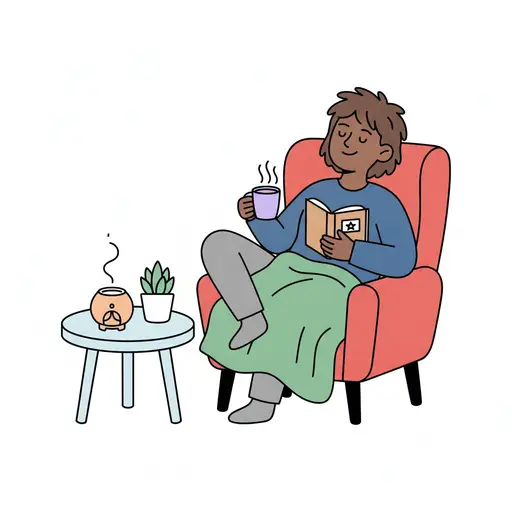
Wind-down time
A person sits in an armchair under a blanket with tea and a book.

Listen to an audiobook
A girl wearing headphones smiles and holds a tablet showing a book.
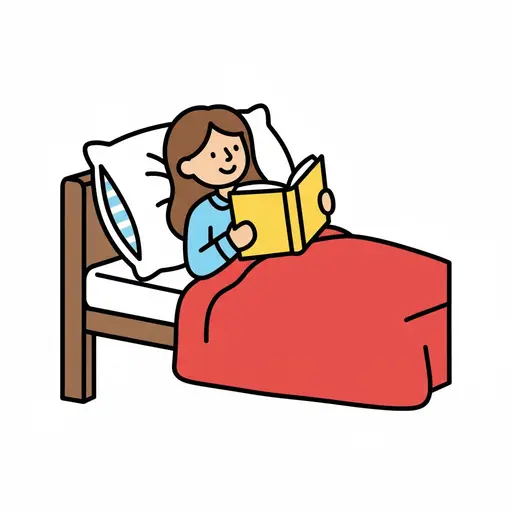
Read a book in bed
A person is sitting in bed with a pillow behind them, reading a book.
This visual support in other languages
Take the visual supports with you
In Routined you build schedules from these pictures, add timers and voice instructions, and your child follows the day on their own.


* 14-day free trial, then $2.39 a month or $20.99 a year (US pricing). Cancel anytime.