Relief
Relief often shows up after the fact, when shoulders drop and breathing slows down. The visual support below gives a child words and pictures for what the body does once a stressful moment is over.
 ♂
♂Feeling relief
A happy person with hands up and a cloud symbolizing stress or heavy thoughts disappearing.
About this visual support
Naming relief is tricky because the feeling is an absence: the stress that is no longer there, the back that is no longer tight. A child who lacked language for the tension in the first place has even less language for its ending. An important body signal slips past without being understood.
Pictures make the abstraction concrete. A face with a softened mouth and dropped shoulders, a deep breath, a hand that uncurls. A visual support for relief works best right after a hard moment: after the dentist, after a test, after guests leave. The child can then look at the image and locate the same shift inside their own body.
One concrete tip: pair the relief card with the feeling that came before it. Match worry with relief, or uncomfortable with calm, so the contrast lands. In Routined you can build a tiny feelings map where the child points to where the feeling sits in the body, both before and after a moment that asked something of them.
Use this image in a schedule
Build your own visual schedule with this image and download it as a print-ready PDF. Completely free.

More similar visual supports

Chill
A girl with a braid lies back in a light blue hammock beside a green plant, with...
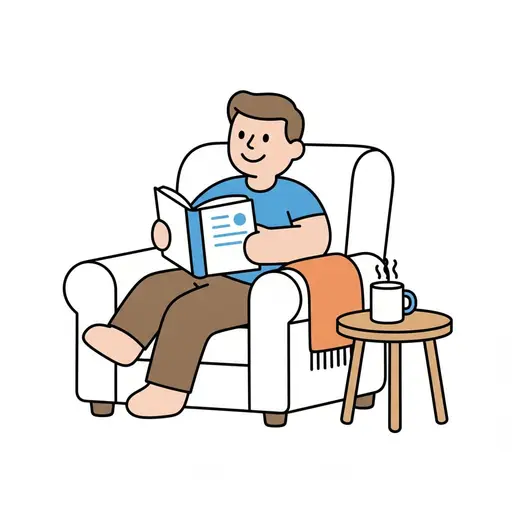
Read and relax
A boy sits relaxed in an armchair reading, with a blanket and a cup of tea nearb...
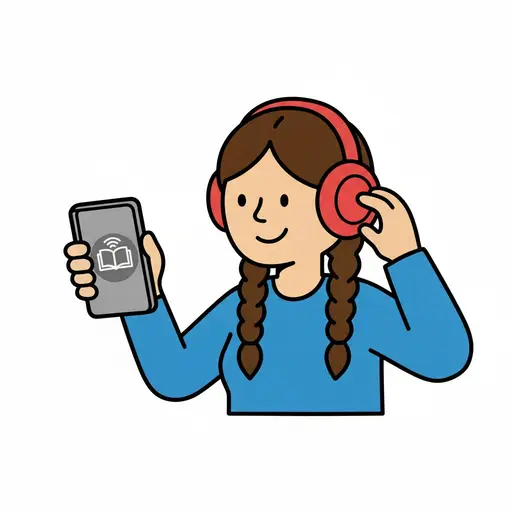
Audiobook time
A smiling girl with braids wears red headphones and holds up a phone showing a b...
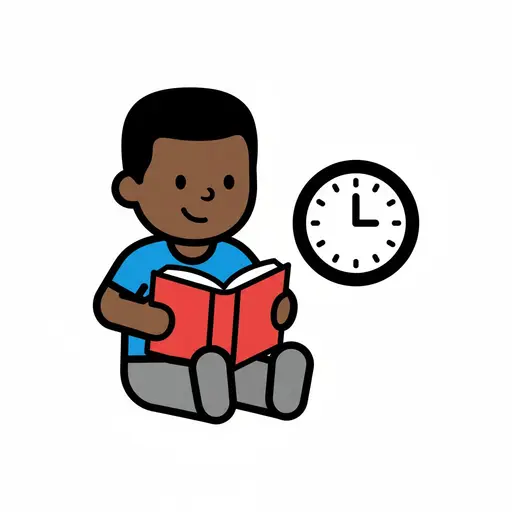
Book time
A boy sits holding a red book, with a clock next to him showing the time as quar...

Books
A stack of three books in red, blue, and yellow.

Day off
A person lounges on a blue sofa with feet up, pointing a remote at a TV, a drink...
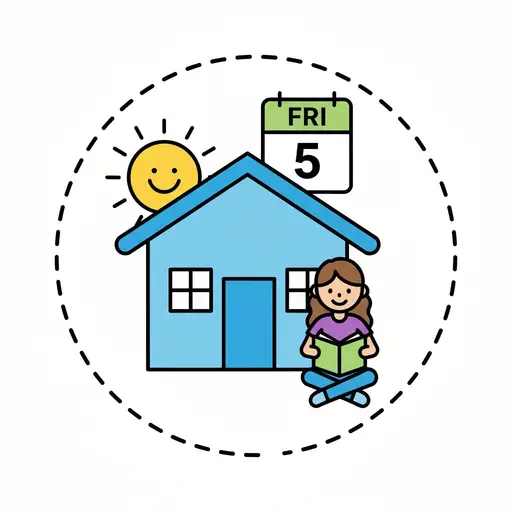
Home Day Friday
A girl sits reading a book outside a house, with a sun and a calendar showing Fr...

Home today
A girl sits in an armchair reading a book at home while the sun shines
Take the visual supports with you
In Routined you build schedules from these pictures, add timers and voice instructions, and your child follows the day on their own.


* 14-day free trial, then $2.39 a month or $20.99 a year (US pricing). Cancel anytime.